
 1 day ago
1
1 day ago
1
If you love Rottweilers but aren’t set on the breed itself, you’re in good company. Maybe you want something slightly smaller, or you’re curious whether another breed matches that signature combo of confidence, loyalty, and protective instincts. Whatever the reason, there are plenty of dog breeds similar to Rottweilers that hit nearly the same notes in 2026 — and a few of them might actually be a better fit for your lifestyle.
This guide covers 10 breeds ranked by how closely they match the Rottweiler’s core traits: muscular build, calm confidence, family loyalty, and natural protectiveness. We’ll also cover what makes the Rottweiler unique, so you can compare honestly. And if you’re already a Rottweiler owner, check out our complete Rottweiler feeding guide to make sure your dog’s diet matches their size and energy level.
Quick Stats: What Makes a Breed “Similar to a Rottweiler”
- Weight range: 70-130+ lbs (Rottweilers average 80-135 lbs)
- Protective drive: High — all 10 breeds have natural guarding instincts
- Trainability: All 10 are intelligent and respond well to consistent training
- Family loyalty: All 10 bond deeply with their immediate family unit
- Experience needed: Most do best with an owner who’s had dogs before
- AKC groups: Working, Herding, and Hound groups dominate this list
10 Dog Breeds Similar to Rottweilers in 2026
1. Doberman Pinscher
The Doberman is probably the closest match to a Rottweiler you’ll find. Both breeds originated in Germany, both have black-and-tan markings, and both are instinctively protective without being erratic or unpredictable. Dobermans are slightly leaner and more athletic, weighing in at 60-100 lbs, but the personality overlap is striking.
What sets the Doberman apart is sheer trainability. They’re faster learners than almost any breed on this list, which is why they’re so common in police and military roles. They’re also more “velcro” dogs — they want to be near their person constantly. If you liked a Rottweiler’s loyalty but want something a bit more energetic and attached, the Doberman delivers. You’ll need at least an hour of exercise daily, though.
2. Cane Corso
The Cane Corso is essentially a Rottweiler with an Italian accent and a slightly more imposing frame. Males can tip the scales at 110 lbs or more, with a broad head and muscular body that commands attention. They were bred as estate guard dogs and hunters of large game — so yes, the protective instinct is real.
What’s interesting about the Corso is how gentle they are inside the home. They’re calm, quiet, and deeply attached to their families. But they need an owner who sets clear rules from day one. Socializing a Cane Corso puppy isn’t optional — it’s the difference between a confident, balanced dog and one that’s reactive toward strangers. If you want to dig deeper into dogs with serious guarding instincts, the Cane Corso is always near the top of that list.
3. German Shepherd
You probably saw this one coming. German Shepherds are one of the most popular breeds in the world, and for good reason — they’re loyal, smart, and protective in a way that feels reliable rather than reactive. They’re a bit more playful and outgoing than a Rottweiler, especially with people they know.
The main differences? German Shepherds are higher energy, shed a lot more, and tend to be more vocal. They also bond easily with children and tend to be more forgiving of strangers once properly introduced. If you have an active family and want a dog that’s both a protector and a playmate, the German Shepherd is hard to beat. They’re one of the most-recommended breeds in any protective dog breeds roundup for a reason.
4. Bullmastiff
Take a Mastiff, add a bit of Bulldog, and you get the Bullmastiff — a breed that was literally designed to silently track and pin estate poachers in 19th century England. That’s a job description that basically defines “similar to a Rottweiler.” These dogs are big (100-130 lbs), calm, and naturally protective without being hyperactive.
Bullmastiffs are lower-energy than Rottweilers, which is actually a plus for some owners. They don’t need a ton of exercise — regular walks and some playtime keep them satisfied. They’re also surprisingly gentle with kids. The trade-off is that they’re stubborn, drool a fair amount, and can be territorial if not socialized early. But if you want a calm, serious protector who’s also a gentle giant at home, Bullmastiffs check every box.
5. Boxer
Boxers share the Rottweiler’s muscular build and deep loyalty, but they bring a lot more goofiness to the table. They’re playful, bouncy, and have a goofy side that Rottweilers generally don’t. That said, they’re still protective — Boxers are alert watchdogs and will bark when something’s off.
What makes the Boxer similar to a Rottweiler is the combination of physical toughness and family devotion. They’re patient with kids, active enough to keep up with a busy household, and smart enough to train easily. They’re one of those tough-looking dogs with genuinely soft hearts. They do better indoors than outside dogs, and they hate being alone.
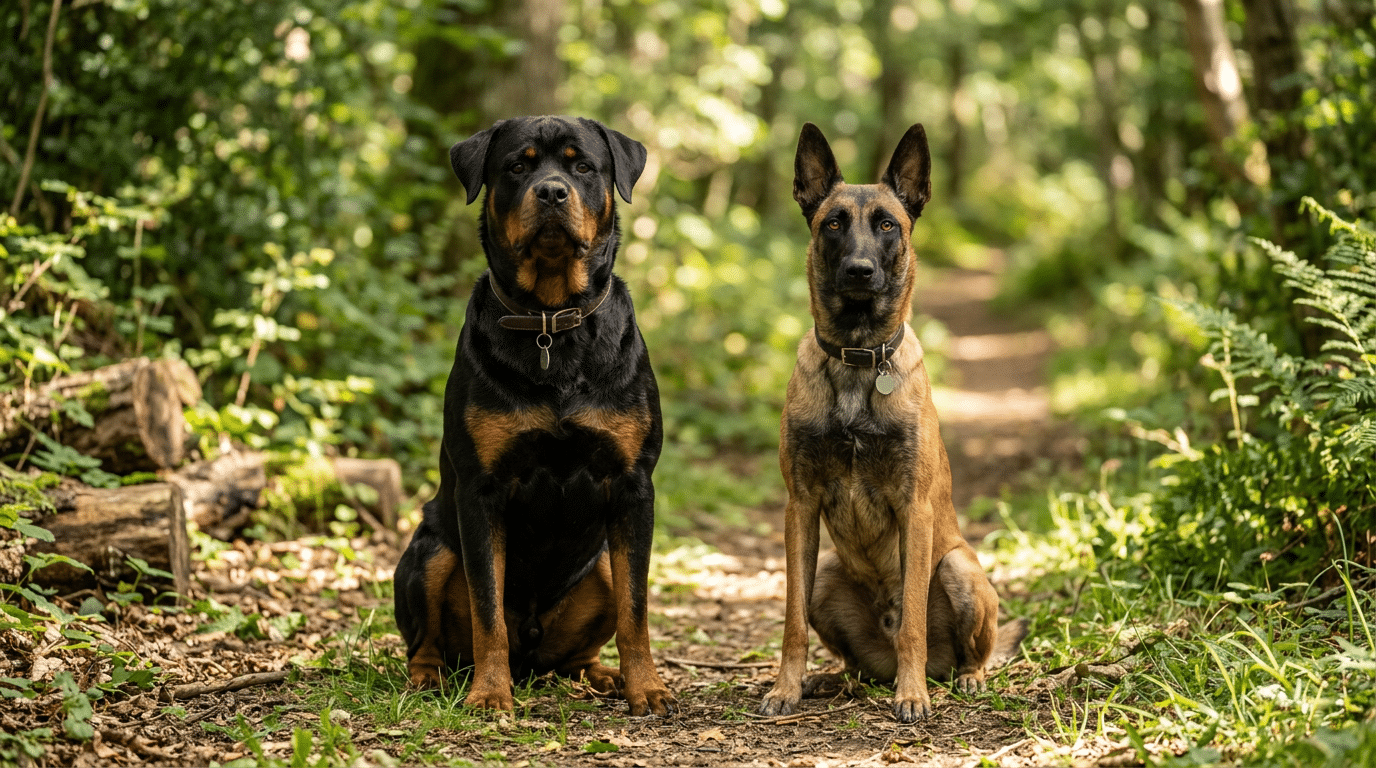
6. Belgian Malinois
The Belgian Malinois looks like a slimmed-down German Shepherd, but the energy level is in a different category. These are the dogs Delta Force operators use — high drive, insanely focused, and capable of learning almost anything. If a Rottweiler is a well-armed security guard, the Malinois is special forces.
For most families, that’s too much dog. They need 2+ hours of hard exercise daily, and they need a job. Without both, they’ll redecorate your house for you. But if you’re an experienced dog owner with an active lifestyle and want a dog that will train for anything and protect everyone you love, the Malinois is genuinely exceptional. Just don’t get one casually — they’re demanding in the best and most intense way possible.
7. Mastiff
The English Mastiff is the gentle giant on this list. Males can weigh 150-200+ lbs, which makes the Rottweiler look compact by comparison. But the temperament? Similar in a lot of ways. Mastiffs are calm, loyal, and naturally protective without aggression. They’re not going to run down an intruder — they’re just going to stand between you and anything unfamiliar until the threat decides it’s not worth it.
Mastiffs are lower maintenance than Rottweilers in terms of exercise, but they do have significant health considerations given their size. Hip problems, bloat, and heart issues are common, and their lifespan is shorter (6-10 years). If you want that same steady, protective energy in a larger, more laid-back package, a Mastiff fits the bill.
8. Great Dane
Great Danes have the commanding physical presence of a Rottweiler times two. They’re enormous, athletic, and confident in their space. But they’re generally friendlier with strangers than most breeds on this list — they tend to be curious rather than suspicious.
The similarity to Rottweilers is more about presence than personality. Both breeds carry themselves with a calm confidence that makes people take notice. Great Danes are excellent family dogs, patient with children, and surprisingly adaptable to apartment or home living (despite the size). They need surprisingly moderate exercise — a good daily walk and some play is enough for most. Health concerns are a real consideration: heart issues and bloat are common, and their lifespan typically runs 7-10 years.
9. Akita
The Akita is one of the more distinct breeds on this list — they’re Japanese, bear-like in appearance, and carry themselves with a quiet dignity that’s almost regal. What they share with Rottweilers is unwavering loyalty to their family and a deep reserve around strangers.
Akitas are independent thinkers, which means training requires patience and consistency. They’re not as eager to please as a Doberman or German Shepherd, so you’ll need to earn their cooperation. They can be dog-aggressive, especially same-sex, so early socialization matters a lot. That said, with the right owner, an Akita is one of the most loyal and impressive companions you’ll find. Hachiko wasn’t just a story — Akitas really do bond like that.
10. Rhodesian Ridgeback
The Rhodesian Ridgeback was bred to track lions in southern Africa, which should tell you everything about their courage and independence. They’re athletic, muscular, and capable of serious speed. And like Rottweilers, they’re loyal to their family while remaining reserved with strangers.
Where Ridgebacks differ is in their stubborn independence. They’re not guard dogs in the traditional sense — they won’t necessarily bark to alert you — but they’ll absolutely protect their family if it comes to that. They need a lot of exercise and do best with experienced owners. If you want an athletic, rugged companion that’s similar to a Rottweiler without the heavy guarding instinct, the Ridgeback is worth a serious look.
Breed Comparison: At a Glance
| Doberman Pinscher | 60-100 lbs | High | Very High | Good |
| Cane Corso | 85-110+ lbs | Moderate | Very High | With Socialization |
| German Shepherd | 50-90 lbs | High | High | Very Good |
| Bullmastiff | 100-130 lbs | Low-Moderate | Very High | Good |
| Boxer | 55-80 lbs | High | Moderate | Excellent |
| Belgian Malinois | 40-80 lbs | Very High | Very High | With Training |
| Mastiff | 150-200+ lbs | Low | High | Very Good |
| Great Dane | 110-175 lbs | Moderate | Moderate | Excellent |
| Akita | 70-130 lbs | Moderate | High | With Socialization |
| Rhodesian Ridgeback | 70-90 lbs | High | Moderate | Good |
What Are Rottweilers Actually Like?
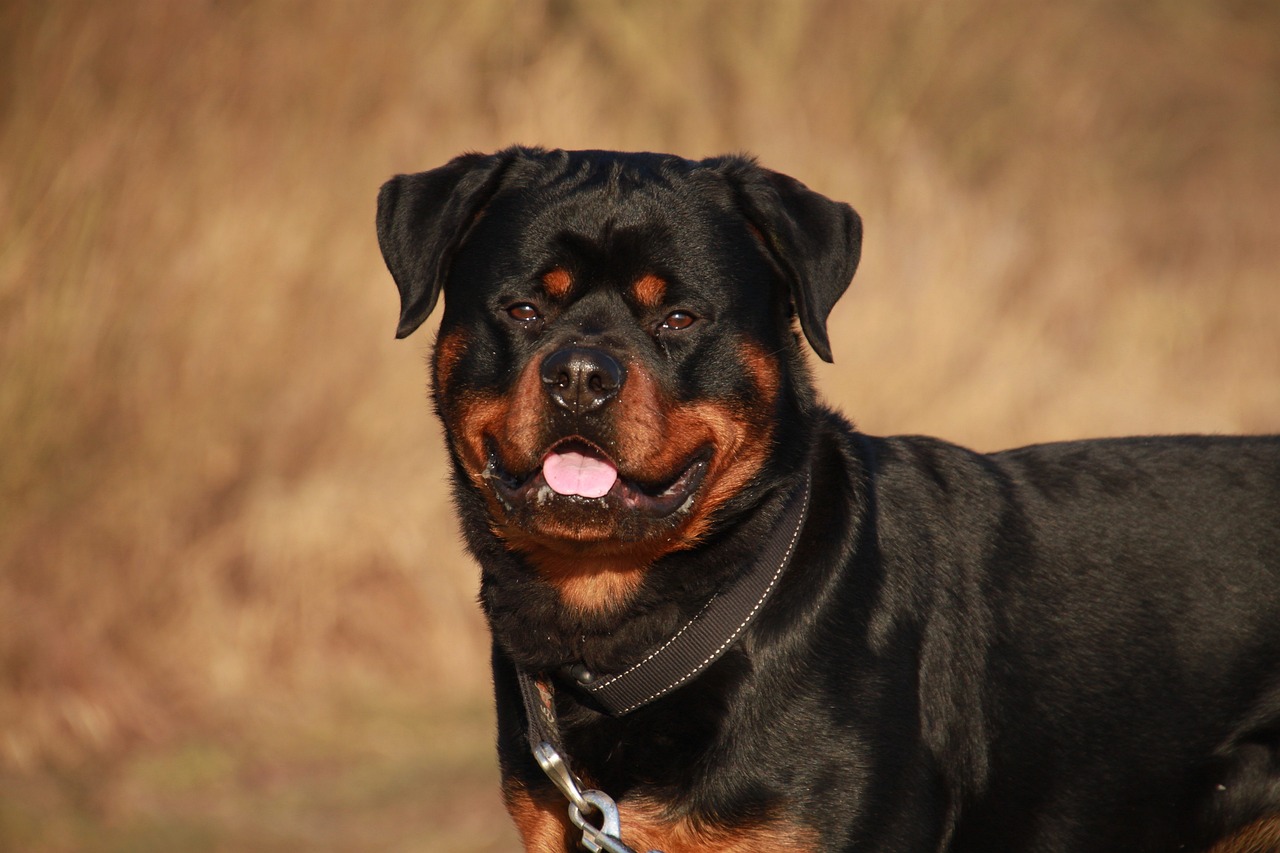
Before you pick an alternative, it’s worth knowing exactly what you’re trying to replicate. Rottweilers are a medium-to-large working breed from Germany, originally used for herding cattle and hauling carts. Adult males typically weigh 95-135 lbs; females run 80-100 lbs. Their signature black coat with rust-colored markings, broad head, and muscular frame are hard to miss.
In terms of personality, Rottweilers are calm and confident. They’re not yappy dogs. They don’t get excited easily. When something actually warrants a reaction, you’ll know — but they don’t treat every passing stranger like a crisis. That emotional steadiness is one of the things people love most about them, and it’s also what makes them genuinely reliable as protection dogs.
They’re devoted to family, sometimes to a single family member in particular. Early socialization is non-negotiable — a Rottweiler that hasn’t been exposed to different people, places, and situations by 16 weeks is a harder dog to manage. With proper training and consistent leadership, though, they’re calm, affectionate, and deeply loyal.
Rottweilers are prone to hip and elbow dysplasia, heart issues, and certain cancers. Their lifespan runs 8-10 years. They need daily exercise — at least 45-60 minutes — and mental stimulation to stay balanced. Check out the best dog foods for Rottweilers to make sure your dog’s nutrition supports their joints and muscle mass as they age. If you have a puppy, our best puppy foods for Rottweilers guide is worth a read too.
One thing that surprises new Rottweiler owners? Their Rottweiler color variations — while black and tan is standard, there’s more variety than most people realize. And if you love the look but want a broader comparison across protective breeds, our roundup of dogs with serious guarding instincts and big hearts is worth bookmarking.

Frequently Asked Questions
What is the most similar dog breed to a Rottweiler?
The Doberman Pinscher is the closest match overall. Both are German breeds, both carry black-and-tan markings, and both are loyal, protective, and highly trainable. The Cane Corso is the second-closest in terms of temperament and guarding instinct, though it’s larger and less energetic than the Doberman.
Is there a smaller version of a Rottweiler?
There’s no official miniature Rottweiler breed. Breeders sometimes advertise “mini Rottweilers,” but these are typically mixed breeds or runts, and they often come with health problems. If you want a smaller dog with similar energy and loyalty, a Boxer or a Doberman Pinscher is a better fit than a so-called miniature.
Are Rottweilers more aggressive than German Shepherds?
Neither breed is inherently aggressive. Both have protective instincts, but aggression is almost always a training and socialization issue rather than a breed trait. Rottweilers tend to be calmer and more reserved, while German Shepherds are generally more outgoing. Either breed can become reactive without proper early socialization.
What dog is closest to a Rottweiler in temperament?
The Bullmastiff and Cane Corso are the closest in temperament — calm confidence, natural protectiveness, and deep family loyalty. The Doberman shares the loyalty and protective traits but brings higher energy into the mix. If calm and steady is what you’re after, the Bullmastiff is a strong match.
Can a Rottweiler alternative work for first-time dog owners?
Some of them, yes. The Boxer and German Shepherd are generally considered more forgiving for owners without prior experience with large, protective breeds. The Cane Corso, Belgian Malinois, and Akita are typically better with experienced owners who understand how to establish consistent leadership.
Do breeds similar to Rottweilers shed a lot?
It varies. German Shepherds are heavy shedders year-round. Dobermans and Boxers are minimal shedders. Bullmastiffs and Mastiffs shed moderately. Rottweilers themselves shed a moderate amount, so most alternatives are comparable or slightly less in that department.
Bottom Line
Every breed on this list captures something essential about the Rottweiler — the loyalty, the calm confidence, the protective instinct, or the muscular presence. But none of them are exact copies, and that’s actually the point. Your choice should come down to your lifestyle, your experience level, and what trade-offs you’re willing to make.
If you want the closest thing to a Rottweiler in personality and appearance, start with the Doberman or Cane Corso. If you need something with a little more flexibility around new people, the German Shepherd is the answer. And if calm and low-maintenance is your priority, you can’t go wrong with a Bullmastiff.
Whatever direction you go, early socialization and consistent training are non-negotiable for all of these breeds. These aren’t dogs you can leave to figure it out on their own. Put the time in at the beginning, and you’ll have an incredibly loyal companion for years.







 English (US) ·