
 1 month ago
55
1 month ago
55
Kibble is convenient, affordable, and shelf-stable. But here’s the thing: even a high-quality dry food leaves some nutritional gaps. Heat processing destroys many naturally occurring enzymes, omega-3 fatty acids break down fast once the bag is opened, and the overall variety of whole-food nutrients your dog would get from a more diverse diet just isn’t there. The good news? You don’t need to overhaul everything. Adding a few simple, real foods on top of your dog’s bowl a few times a week can make a real difference.
These aren’t exotic supplements or expensive products. We’re talking about everyday foods you probably already have in your kitchen. Each one brings something specific to the table: anti-inflammatory compounds, gut-supporting probiotics, cancer-fighting antioxidants, and more. Your vet should always be your first call before making significant diet changes, especially if your dog has a health condition. But for most healthy adult dogs, these whole food additions are safe, easy, and genuinely beneficial.
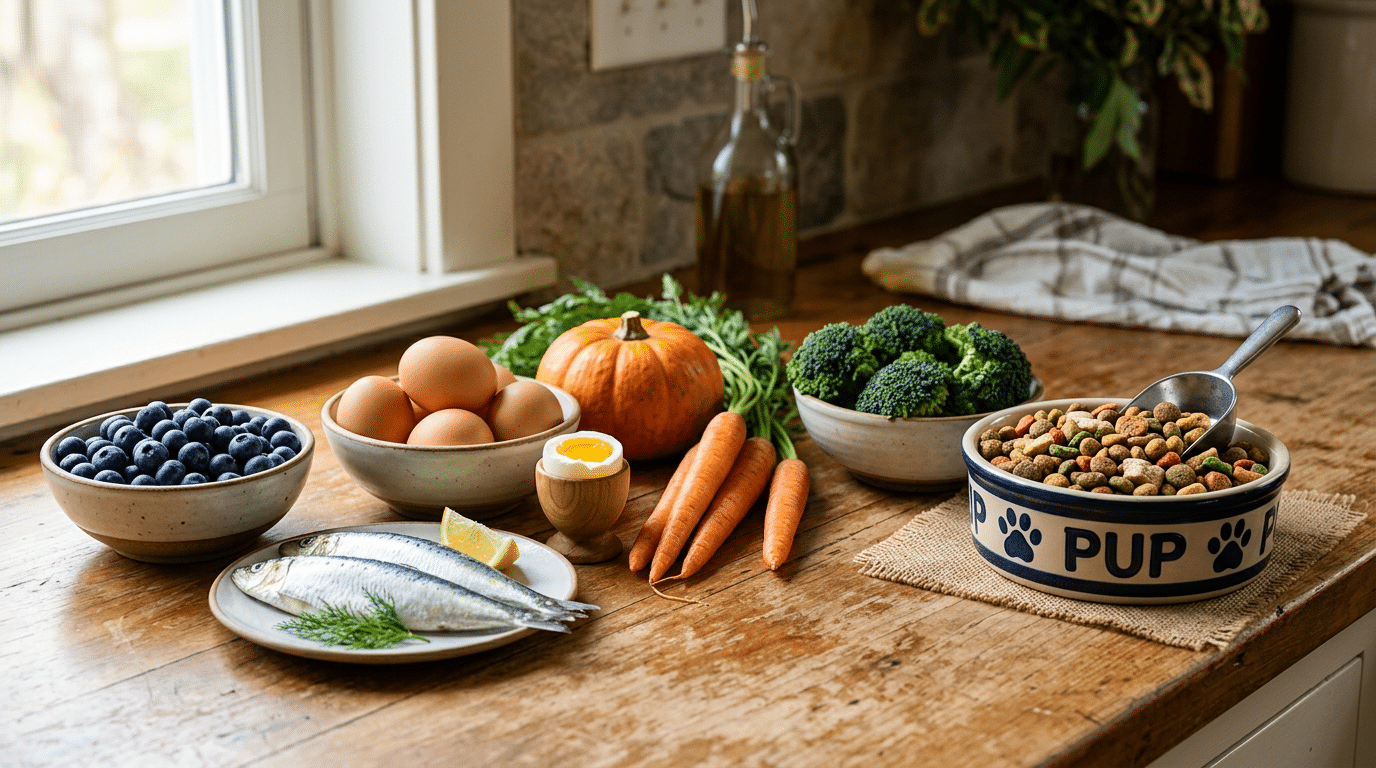
1. Blueberries
Blueberries are small, but they pack a serious nutritional punch. They contain a compound called ellagic acid, a polyphenol antioxidant that blocks certain metabolic pathways linked to cancer cell growth. They’re also loaded with vitamin C, vitamin K, and fiber. Most dogs love them, which makes them one of the easiest toppers to introduce.
Why it helps: The antioxidants in blueberries help neutralize free radicals, reducing oxidative stress that can damage cells over time. Research into ellagic acid suggests it may help starve tumor cells by cutting off their energy supply.
How much to give: For small dogs under 20 lbs, 2-3 blueberries per day is plenty. Medium dogs (20-50 lbs) can handle 5-6. Large dogs can have up to 10. Fresh or frozen both work well.
How to serve: Toss them straight into the bowl. You can also mash them slightly for smaller dogs or senior dogs who might struggle to chew. No prep needed.
2. Sardines
Sardines are one of the best things you can add to your dog’s bowl, full stop. They’re rich in omega-3 fatty acids (EPA and DHA), which have powerful anti-inflammatory effects. Most dry kibble is chronically low in omega-3s because fish oils oxidize quickly during the heat-processing and storage involved in kibble manufacturing. By the time your dog eats that kibble, much of the omega-3 benefit is already gone.
Why it helps: Omega-3 fatty acids have been studied extensively for their role in reducing systemic inflammation, which is a key driver of tumor growth. They also support brain health, coat quality, and joint function.
How much to give: One small sardine per 20 lbs of body weight, 2-3 times per week. So a 40-lb dog gets 2 sardines per serving.
How to serve: Use canned sardines packed in water, not oil, and never in sauce or with added salt. Drain them, break them up over the food, and serve. That’s it.
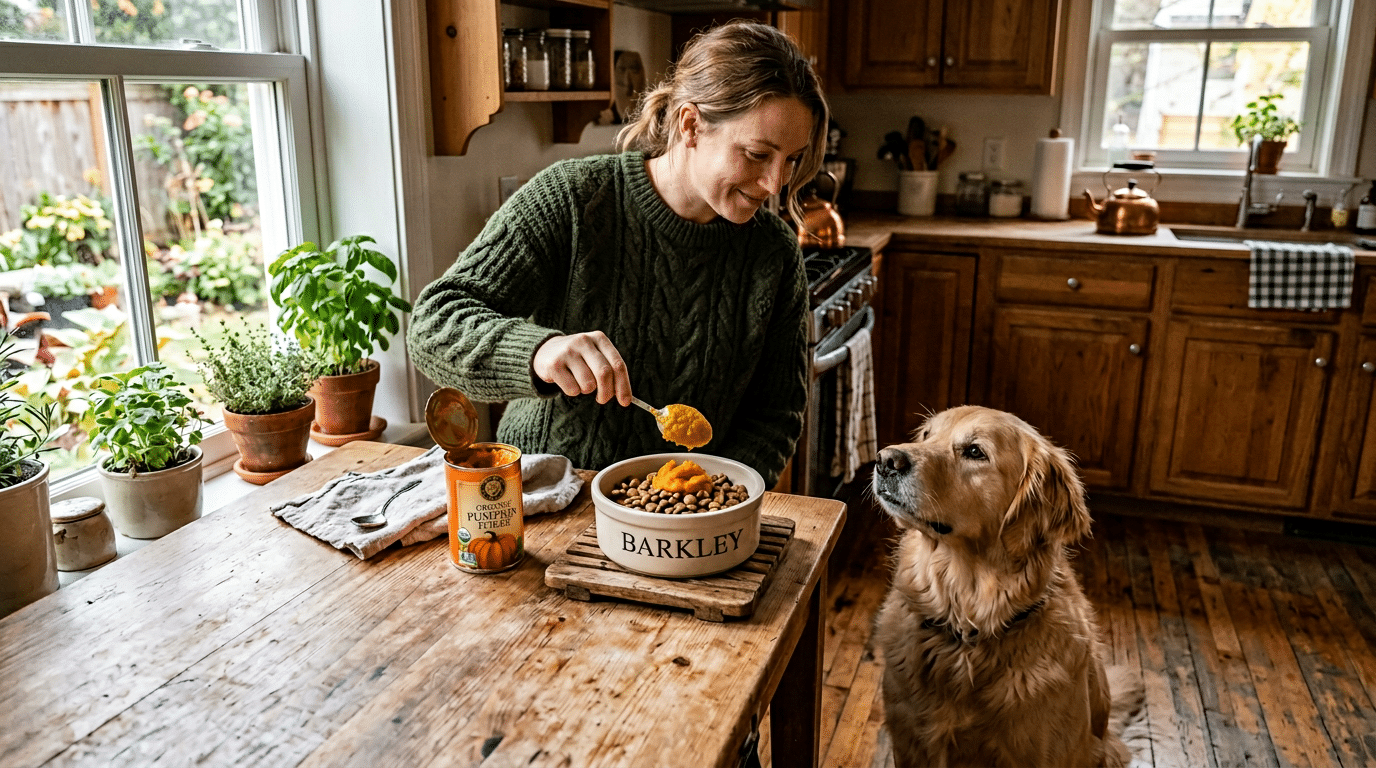
3. Pumpkin
Plain canned pumpkin (not pie filling) is a digestive powerhouse. It’s high in soluble fiber, which feeds beneficial gut bacteria and helps regulate bowel movements in both directions, whether your dog is dealing with loose stools or constipation.
Why it helps: A healthy gut microbiome is closely tied to immune function. Pumpkin’s fiber content supports that microbial balance. It also contains beta-carotene, which the body converts to vitamin A, along with vitamin C and potassium.
How much to give: 1 teaspoon per 10 lbs of body weight, added to meals a few times per week. Start smaller if your dog has a sensitive stomach.
How to serve: Spoon it straight from the can over the food. Buy plain, unsweetened canned pumpkin. Freeze leftover portions in an ice cube tray and thaw as needed.
4. Sweet Potato
Sweet potatoes are one of the most nutrient-dense vegetables you can share with your dog. They’re rich in beta-carotene, B vitamins, vitamin C, potassium, and dietary fiber. Studies on Scottish Terriers found that orange and yellow vegetables were associated with a significantly reduced risk of certain cancers, particularly transitional cell carcinoma of the bladder.
Why it helps: Beta-carotene acts as an antioxidant that helps protect cells from damage. The fiber content supports gut health. Sweet potatoes also have a lower glycemic impact than white potatoes, making them a better choice for most dogs.
How much to give: 1-2 tablespoons for small dogs, up to 1/4 cup for large dogs. A few times per week is ideal.
How to serve: Cook and mash it plain, no butter, no seasoning, no nutmeg. Steamed or baked works well. You can also dehydrate thin slices for a chewy treat.

5. Bone Broth
Homemade or high-quality store-bought bone broth (made for dogs, or human-grade with no onion or garlic) is one of the gentlest ways to boost your dog’s nutrition. It’s particularly useful for picky eaters, senior dogs with reduced appetite, or any dog recovering from illness.
Why it helps: Bone broth is rich in collagen, gelatin, glucosamine, chondroitin, and glycine. These compounds support joint health, gut lining integrity, and liver detoxification. A leaky gut is increasingly linked to systemic inflammation, so keeping that lining healthy matters.
How much to give: Pour 2-4 oz over the bowl at mealtime. Daily use is fine for most dogs.
How to serve: Make sure any store-bought broth contains zero onion, zero garlic, and minimal sodium. Look for versions made specifically for dogs, or make your own by simmering bones for 12-24 hours.
6. Eggs
Eggs are a near-perfect protein source. They contain all essential amino acids your dog needs, plus vitamins A, B12, D, E, riboflavin, folate, and selenium. Honestly, they’re one of the easiest and most affordable additions you can make.
Why it helps: The amino acids in eggs support muscle maintenance, immune function, and cellular repair. Selenium, found in both the yolk and white, acts as an antioxidant and plays a role in thyroid function. Some research also points to selenium’s potential in reducing cancer risk.
How much to give: One egg per day for medium to large dogs. Small dogs do better with half an egg or one egg every other day. Don’t go overboard since eggs are calorie-dense.
How to serve: Scrambled (no oil, no seasoning), soft-boiled, or even raw if you’re comfortable with it. Raw eggs from a known clean source are fine for most healthy dogs. Avoid raw egg whites only, since avidin in raw whites can block biotin absorption.
7. Turmeric
Turmeric’s active compound, curcumin, has been studied extensively for its anti-inflammatory and anti-cancer properties. In laboratory studies, curcumin has shown the ability to inhibit the growth and spread of cancer cells by interfering with multiple cellular pathways. Reducing inflammation at the cellular level is one of the most important things you can do for your dog’s long-term health.
One important note: curcumin can reduce the effectiveness of certain chemotherapy drugs. If your dog is currently being treated for cancer, check with your vet before adding turmeric.
Why it helps: Curcumin is a potent antioxidant that also directly modulates inflammatory signaling pathways. It’s been shown to help with joint pain, cognitive function, and gut health, in addition to its potential cancer-protective effects.
How much to give: About 1/8 to 1/4 teaspoon of turmeric powder per 10 lbs of body weight per day. Always pair it with a fat (like coconut oil) and black pepper to improve bioavailability significantly.
How to serve: Mix into a golden paste: 1/2 cup turmeric powder, 1 cup water, 1/3 cup coconut oil, 1.5 teaspoons freshly ground black pepper. Simmer, stir until thick, refrigerate. Use 1/4 teaspoon per 10 lbs of body weight daily. The fat and pepper dramatically increase how much curcumin your dog actually absorbs.
8. Broccoli
Broccoli is a cruciferous vegetable that contains a compound called sulforaphane, one of the most studied plant compounds in cancer prevention research. A Purdue University study found that dogs fed green vegetables like broccoli, kale, and spinach at least 3 times per week showed a measurably reduced risk of bladder cancer.
Why it helps: Sulforaphane activates the body’s own antioxidant defenses and has been shown to directly inhibit cancer cell growth. Broccoli is also high in vitamin C, vitamin K, and folate.
How much to give: Keep it to under 10% of your dog’s total daily diet. A few florets 3-4 times per week is a reasonable target. Too much can cause gas.
How to serve: Lightly steam and chop into small pieces. Raw broccoli is harder to digest and may cause more gas. No seasoning, no butter, no cheese sauce.
9. Kefir
Kefir is a fermented dairy product that contains far more probiotic strains than regular yogurt. It’s one of the best natural sources of live beneficial bacteria you can add to your dog’s diet. Dry kibble’s processing eliminates virtually all naturally occurring beneficial bacteria, so supplementing with a probiotic-rich food makes a real difference.
Why it helps: A diverse, healthy gut microbiome supports immune function, reduces systemic inflammation, and may play a role in cancer prevention. Kefir also contains vitamins B12, K2, and calcium. Many dogs that are lactose intolerant tolerate kefir well because the fermentation process breaks down most of the lactose.
How much to give: 1 teaspoon for small dogs, 1 tablespoon for medium dogs, 2 tablespoons for large dogs, a few times per week. Start slowly to let your dog’s gut adjust.
How to serve: Plain, unsweetened, full-fat kefir. Never flavored or sweetened varieties. Drizzle over the bowl at mealtime.
10. Coconut Oil
Coconut oil is one of the more divisive additions on this list, so let’s be specific about what the science actually supports. It’s high in medium-chain triglycerides (MCTs), which the body metabolizes differently from long-chain fats. MCTs are converted directly to ketone bodies in the liver, which can serve as an alternative fuel source. For the brain, this is particularly valuable in older dogs.
Why it helps: MCTs have antimicrobial properties and may support cognitive function in aging dogs. There’s also research suggesting that cancer cells have difficulty using ketones for energy, which is part of the rationale behind ketogenic diets for dogs with cancer.
How much to give: Start with 1/4 teaspoon per 10 lbs of body weight and work up to 1 teaspoon per 10 lbs over several weeks. Too much too fast causes diarrhea.
How to serve: Melt slightly and drizzle over food, or mix into golden paste for turmeric. Use unrefined, virgin coconut oil.

11. Spinach
Spinach is loaded with iron, magnesium, potassium, vitamins B6, B9, and E, and a range of antioxidants including lutein and zeaxanthin. It’s one of the green leafy vegetables associated with reduced cancer risk in the Purdue University bladder cancer study mentioned earlier.
Why it helps: The antioxidants in spinach protect cells from oxidative damage. Spinach also contains flavonoids and carotenoids with anti-inflammatory and potentially anti-cancer effects. It’s a versatile source of plant-based nutrition that complements the protein-heavy profile of most kibbles.
How much to give: 1-2 tablespoons of chopped, cooked spinach a few times per week. Don’t overdo it since spinach is high in oxalates, which can contribute to kidney issues in dogs already prone to kidney stones.
How to serve: Lightly steam and chop finely. Raw spinach is harder to digest. Mix into the bowl at mealtime.
12. Carrots
Carrots are probably the most commonly known dog-safe vegetable, and for good reason. They’re high in beta-carotene, fiber, vitamin A, and potassium. They’re low-calorie, naturally sweet, and most dogs genuinely enjoy them. When comparing kibble to fresh food options, carrots represent one of the simplest ways to add real vegetable nutrition to your dog’s bowl.
Why it helps: Beta-carotene, the pigment that makes carrots orange, is a powerful antioxidant that converts to vitamin A in the body. Orange and yellow vegetables were specifically highlighted in the 2005 Scottish Terrier study as protective against transitional cell carcinoma.
How much to give: A few baby carrots or 2-3 tablespoons of shredded carrot daily. Most dogs handle this well long-term.
How to serve: Either finely grate raw carrots (easier to digest and absorb nutrients from than large chunks) or lightly steam and mash. Large chunks of raw carrot can pass through undigested, which means your dog misses the nutritional benefit.

How to Introduce New Foods Safely
Don’t throw everything on this list at your dog’s bowl at once. Seriously. Even with healthy foods, too much too soon causes digestive upset, and then you don’t know which food was the problem.
The right approach is simple:
- Introduce one new food at a time
- Start with a small amount, about half the recommended serving
- Wait 3-4 days before adding anything else
- Watch for soft stools, gas, vomiting, or itching
- If your dog reacts, stop that food and try a different one
Some dogs have sensitive stomachs and need a full week to adjust. That’s fine. The goal is building a diverse, consistent rotation of 3-4 whole food additions that your dog tolerates well and that you can sustain over time. Being thoughtful about what goes into your dog’s bowl, both what to add and what to avoid, is one of the most impactful things you can do for their long-term health.
Always check with your vet if your dog has existing health conditions, is on medication, or is a senior dog with multiple issues. Foods like turmeric, spinach, and coconut oil can interact with certain medical conditions or treatments.
How Much Is Too Much? Serving Size Guide
Quick Serving Size Reference
These are starting points. Every dog is different. When in doubt, start smaller and increase gradually.
| Blueberries | Antioxidants, anti-cancer | 2-10 berries depending on size | Daily |
| Sardines | Omega-3, anti-inflammatory | 1 sardine per 20 lbs | 2-3x/week |
| Pumpkin | Gut health, fiber | 1 tsp per 10 lbs | Daily or as needed |
| Sweet Potato | Beta-carotene, anti-cancer | 1 tbsp (small) to 1/4 cup (large) | 3-4x/week |
| Bone Broth | Joint health, gut lining | 2-4 oz per meal | Daily |
| Eggs | Complete protein, selenium | 1/2 to 1 egg | Daily (large dogs) or every other day |
| Turmeric | Anti-inflammatory, curcumin | 1/8 tsp per 10 lbs | Daily (with fat + black pepper) |
| Broccoli | Sulforaphane, anti-cancer | Under 10% of daily diet | 3-4x/week |
| Kefir | Probiotics, gut microbiome | 1 tsp (small) to 2 tbsp (large) | 3-4x/week |
| Coconut Oil | MCTs, brain health | Up to 1 tsp per 10 lbs | Daily (start slow) |
| Spinach | Antioxidants, iron | 1-2 tbsp cooked | 2-3x/week |
| Carrots | Beta-carotene, fiber | 2-3 tbsp shredded or a few baby carrots | Daily |
Frequently Asked Questions
Still have questions? Here are the ones we hear most often about adding whole foods to dog kibble.
Can I add these foods every day, or just a few times a week?
It depends on the food. Blueberries, carrots, bone broth, and eggs can be daily additions for most dogs without issue. Sardines, kefir, broccoli, and spinach are better suited to a few times per week to avoid overdoing specific nutrients. Check the serving size guide above for each food’s recommended frequency.
Will adding whole foods to kibble cause nutritional imbalances?
Not if you keep the additions to around 10-15% of your dog’s total daily food intake. At that level, you’re topping up nutrition rather than replacing the balanced profile of the kibble. If you want to shift toward a more significant fresh food diet, consult with a veterinary nutritionist to ensure proper balance. Understanding what’s actually in your dog’s dry food helps you make smarter decisions about what to add.
My dog has cancer. Should I be adding these foods?
Some of these foods, particularly sardines, blueberries, and broccoli, are widely considered safe and supportive for dogs going through cancer treatment. However, turmeric and coconut oil can interact with certain treatments. Always run any dietary changes by your veterinary oncologist before making them during active treatment.
Is it safe to add these foods to puppies’ kibble?
Most of these foods are safe in small amounts for puppies over 8 weeks old. Eggs, pumpkin, blueberries, and bone broth are particularly gentle starting points. Avoid high-fat additions like coconut oil in large amounts for puppies, and hold off on turmeric until they’re at least 6 months old. Puppies have more sensitive digestive systems, so introduce things slowly.
What if my dog won’t eat these foods?
That’s pretty common, especially with green vegetables. Start with foods that have stronger natural aromas that dogs find appealing: sardines, bone broth, and eggs tend to win over even the pickiest eaters. Once your dog is used to finding extras in the bowl, they often become more willing to try new things. You can also mix vegetables into bone broth or scramble them into eggs to make them more palatable.
Do I need to change how much kibble I feed when I start adding whole foods?
Yes, if you’re adding calorie-dense foods like eggs, sardines, or coconut oil. Calculate the approximate calories in your additions and reduce kibble slightly to compensate. This is especially important for dogs who tend toward weight gain. Pumpkin, carrots, and leafy greens are low enough in calories that they generally don’t require a kibble adjustment.

Start Simple, See What Your Dog Loves
You don’t need to add all twelve foods at once. Pick one or two that are easy to keep on hand , blueberries and eggs are a solid starting point , and see how your dog responds. Most dogs take to whole food additions quickly. Some are pickier. That’s fine too.
The goal isn’t a perfect diet. It’s a better one than yesterday. Even one or two whole food additions a few times a week can meaningfully improve the nutritional profile of a kibble-based diet over time.
Your dog can’t tell you what they need. But their coat, their energy, and their digestion will. Pay attention to those signals, and you’ll figure out what works for your dog specifically.

















 English (US) ·