
 1 month ago
62
1 month ago
62
You’ve stood in the pet food aisle, staring at shelves packed with cans, pouches, and giant bags of kibble, wondering which one your dog actually needs. Sound familiar? You’re not alone. The debate over wet dog food vs dry dog food is one of the most common questions veterinarians and pet nutrition experts hear. And honestly, there’s no single right answer that works for every dog.
Both types can deliver complete, balanced nutrition. Both have real advantages. The best choice for your dog comes down to their age, health history, dental condition, and your own day-to-day routine. This guide breaks down everything you need to know so you can make a confident, informed decision.
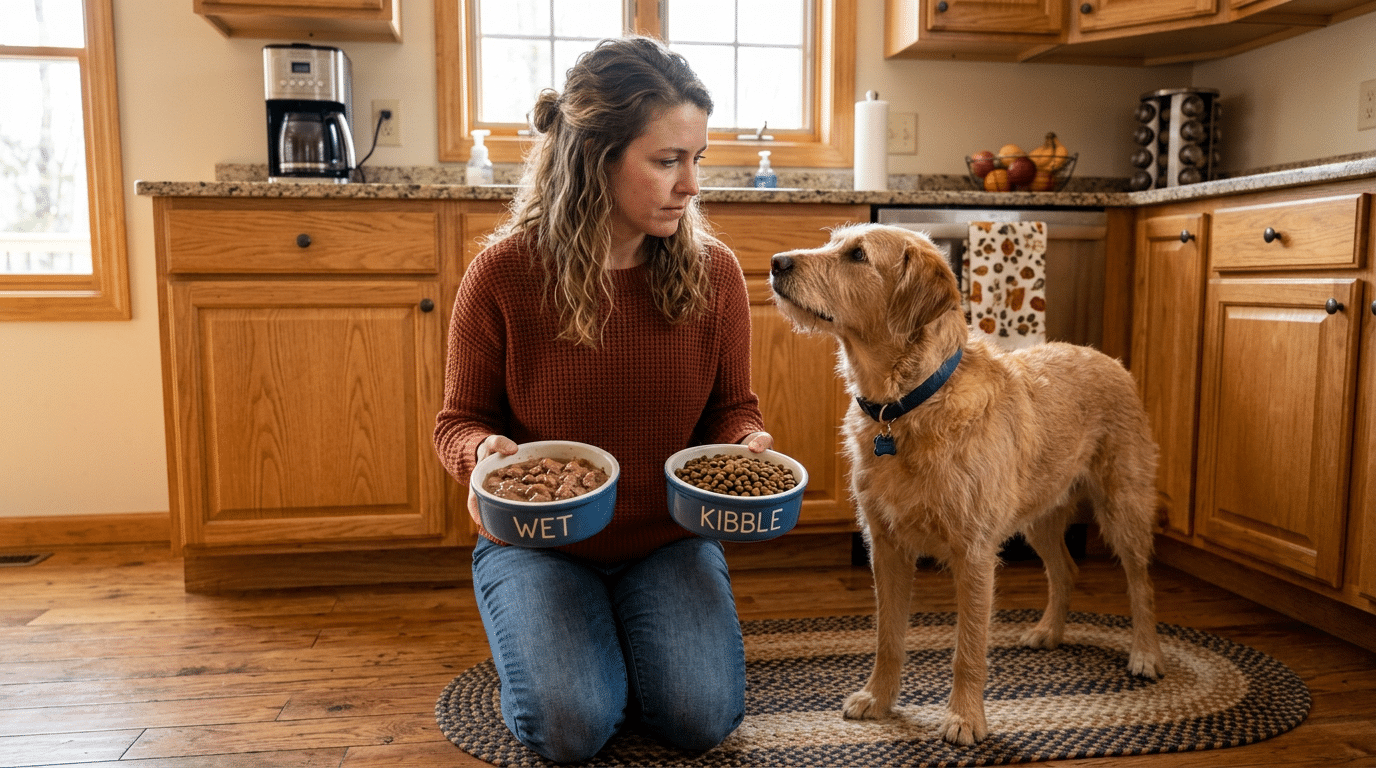
What Is Wet Dog Food?
Wet dog food comes in cans, pouches, or soft trays. It typically contains between 70% and 80% moisture, which is far closer to a dog’s ancestral diet than anything shelf-stable. The high water content comes from the broth, gravy, or gelatin used during manufacturing.
Ingredients usually include real meat, organ meats, fish, or poultry as the primary protein source. Manufacturers then add vitamins, minerals, and sometimes vegetables or grains to round out the nutritional profile. The soft, rich texture makes it highly palatable, which is why most dogs go absolutely wild for it.
Once you open a can or pouch, though, you’ve got a clock ticking. Unused wet food needs to go into the refrigerator and should be used within 2 to 3 days. That’s one of the trade-offs you’ll need to weigh.
What Is Dry Dog Food?
Dry dog food, or kibble, contains roughly 10% moisture. It’s manufactured through a process called extrusion, where ingredients are cooked under high heat and pressure, then pushed through a machine that shapes and dries the final product into those familiar little pellets.
Kibble is shelf-stable for months, comes in formulas for every breed size and life stage, and is generally the most affordable option per calorie. It’s also easy to measure, which makes portion control simple. There are actually several surprising dry food facts that most owners never learn, including how processing affects nutrient availability.
The downside? Some dogs simply don’t find kibble as exciting as wet food. And dogs who don’t drink enough water on their own can fall short on daily hydration when eating a dry-only diet.
The Benefits of Wet Dog Food
Wet food has a lot going for it, especially for dogs with specific health needs.
Hydration support. Dogs eating wet food get a significant portion of their daily water through their meals. This matters most for dogs prone to urinary tract infections, kidney disease, or bladder stones. More moisture in the diet helps flush the kidneys and dilute urine, which can reduce the risk of crystal formation.
Better palatability. The aroma and texture of wet food is hard for most dogs to resist. If your dog is a picky eater, recovering from illness, or has lost interest in food due to stress or aging, wet food can reignite their appetite fast. It’s also ideal for dogs who need to gain weight after illness or surgery.
Easier on the mouth. Dogs with painful teeth, gum disease, or missing molars can struggle with hard kibble. Wet food lets them eat comfortably and still get full nutrition. Senior dogs especially benefit from this.
Lower calorie density per cup. Because wet food is mostly water, it tends to have fewer calories by volume. Dogs who need to lose weight can often eat a larger portion of wet food and still stay within their calorie target, which keeps them feeling full.
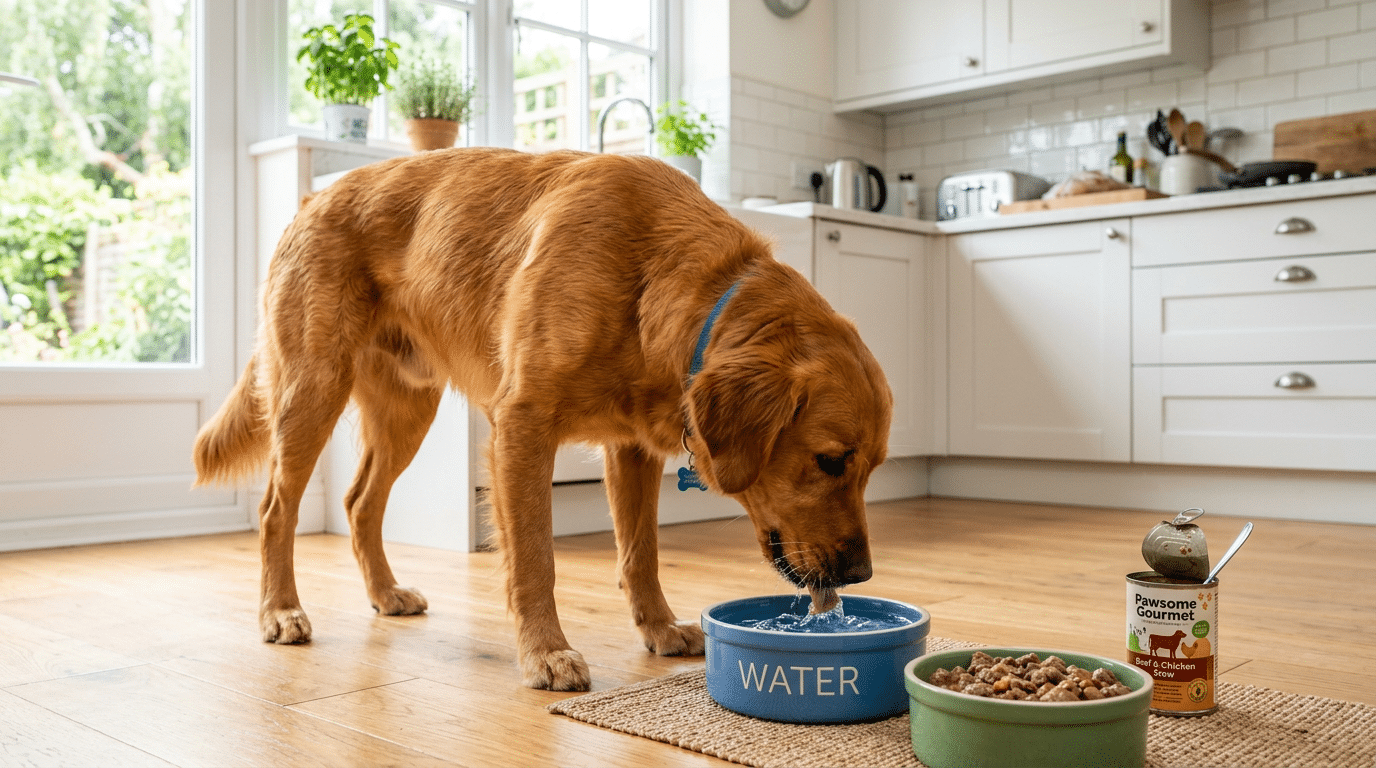
The Downsides of Wet Dog Food
No food is perfect. Here’s what you’ll want to think about before switching to wet-only feeding.
Cost. Wet food costs significantly more per calorie than dry food. For large breeds, a wet-only diet can run two to four times the monthly expense of feeding kibble. That adds up fast.
Dental health concerns. Because wet food doesn’t require much chewing, it doesn’t provide the mechanical scrubbing that helps reduce plaque. Dogs on a wet-only diet may need more frequent professional dental cleanings or daily tooth brushing to compensate.
Short shelf life once opened. Any uneaten portion has to be refrigerated immediately and used within a couple of days. For busy households, that can mean wasted food and wasted money.
Messier feeding. Canned food smells stronger and can stick to bowls. It’s not a dealbreaker, but it’s something to keep in mind if you have a dog who eats enthusiastically and leaves a mess.
The Benefits of Dry Dog Food
Kibble remains the most popular dog food format in the U.S. for good reasons.
Convenience. You can pour it, seal the bag, and move on. No refrigeration required, no clock ticking on spoilage. A bag of kibble can stay fresh for weeks or even months if stored properly in an airtight container.
Cost-effectiveness. Dry food delivers more calories per dollar than wet food. For large dogs or multi-dog households, the savings are meaningful. You’re also less likely to waste food, since kibble doesn’t spoil at room temperature within hours.
Dental benefits. The crunchy texture of kibble encourages chewing, and that mechanical action can help reduce tartar buildup on teeth. It’s not a substitute for brushing, but it does provide some benefit that wet food simply can’t match.
Calorie density for active dogs. Dogs who burn a lot of energy through exercise, work, or play need calorie-dense meals. Dry food delivers that efficiently without requiring huge bowl volumes. If you want to make kibble even more nutritious, there are whole foods to add over kibble that can boost its health value considerably.
The Downsides of Dry Dog Food
Dry food isn’t without its drawbacks either.
Lower moisture content. Dogs eating only dry food depend entirely on their water bowl for hydration. Many dogs don’t drink as much as they need, especially in warmer months. This can put extra strain on the kidneys over time.
Palatability issues. Some dogs, particularly older ones or picky eaters, just don’t find kibble appealing enough to eat consistently. If your dog is leaving their bowl untouched, the texture and scent of dry food may be part of the problem.
Processing concerns. The high-heat extrusion process used to make kibble can degrade some heat-sensitive nutrients. Manufacturers typically add synthetic vitamins and minerals back in after processing, but some pet owners prefer a less processed option. You’ll also want to check labels carefully, since there are several harmful ingredients in dog food that can appear in lower-quality dry formulas.
Ingredient quality varies widely. Not all kibble is created equal. Budget brands may use low-quality proteins, excessive fillers, or artificial preservatives. The price difference between an economy bag and a premium bag often reflects real differences in ingredient sourcing and processing.
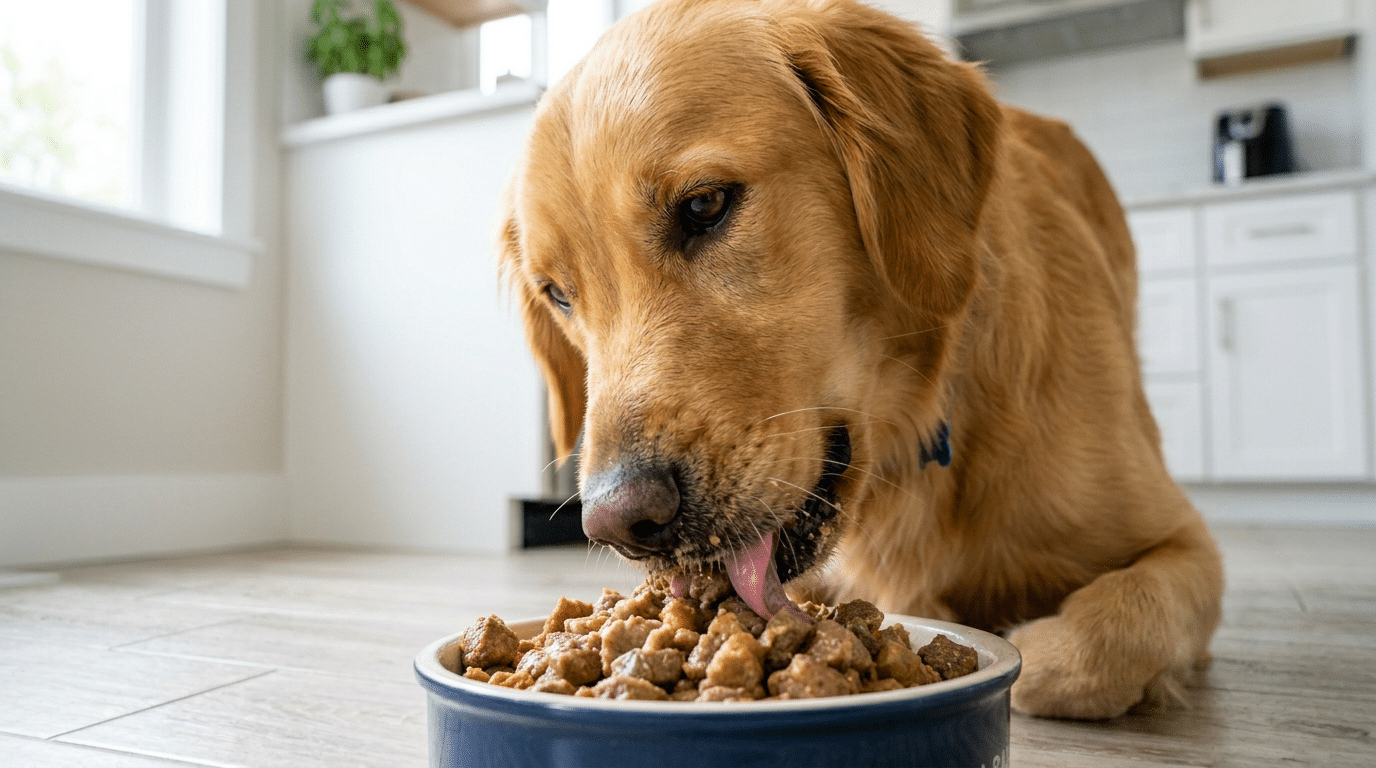
Wet vs. Dry Dog Food: Side-by-Side Comparison
Here’s a quick look at how the two formats stack up across the factors that matter most to most dog owners:
| Moisture Content | 70-80% | ~10% |
| Cost (per calorie) | Higher | Lower |
| Shelf Life (opened) | 2-3 days refrigerated | 4-6 weeks sealed |
| Dental Benefits | Minimal | Moderate (chewing action) |
| Palatability | Very high | Moderate |
| Convenience | Moderate (requires refrigeration) | High (no refrigeration needed) |
| Best For | Seniors, picky eaters, kidney health | Active dogs, large breeds, budgets |
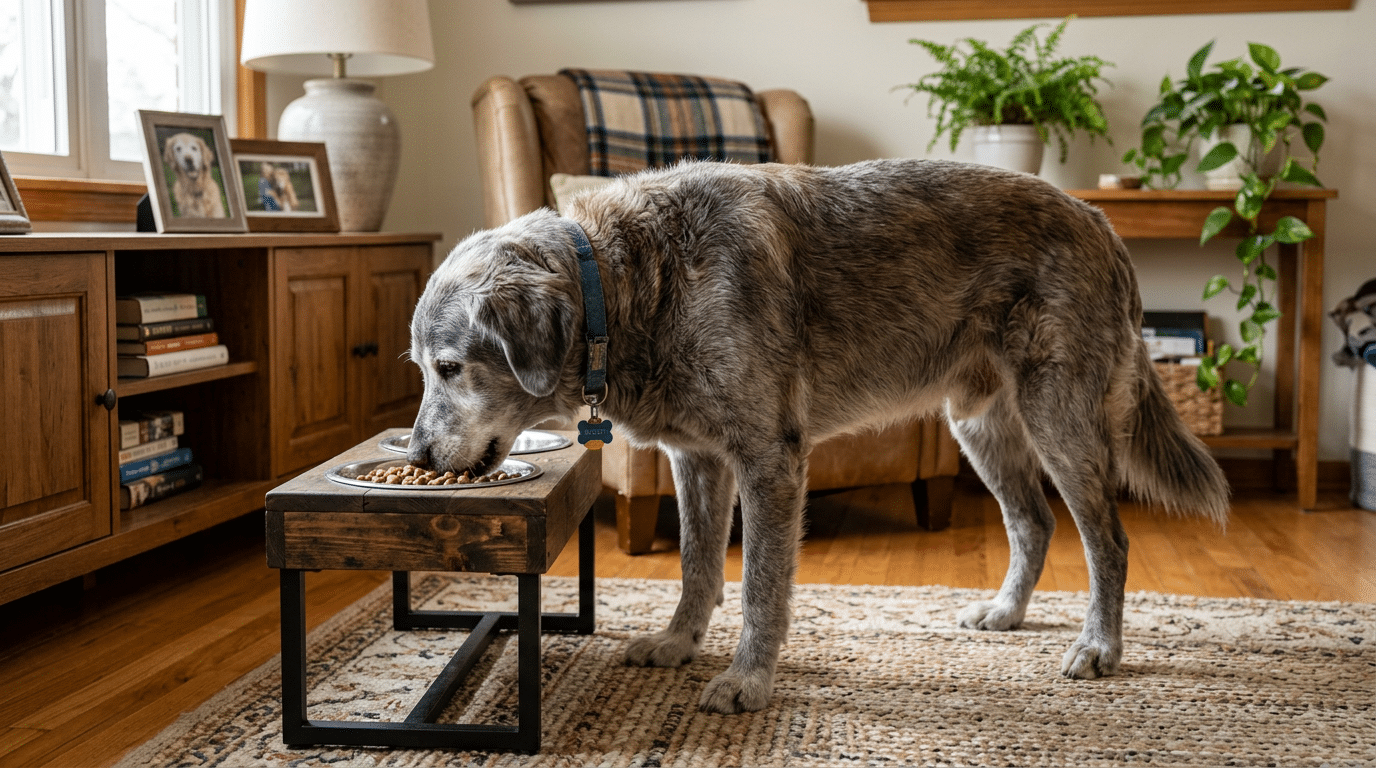
Which Food Works Best at Each Life Stage
Your dog’s nutritional needs change significantly over their lifetime. The right food at 8 weeks old isn’t necessarily the right food at 10 years old.
Puppies. Young puppies transitioning from mother’s milk to solid food often do well with wet food or a softened kibble mix. Wet food is easy to chew and digest, which matters when those tiny teeth are just coming in. As they grow, many owners transition to dry puppy kibble for convenience and dental health.
Adult dogs. Most healthy adult dogs do perfectly well on high-quality dry food, as long as they’re drinking enough water. Active breeds or working dogs especially benefit from the calorie density and convenience of kibble. That said, wet food remains a great option if your adult dog is a picky eater or you want to increase their hydration.
Senior dogs. This is where wet food often pulls ahead. Dogs over 7 or 8 years old frequently develop dental sensitivity, reduced sense of smell and taste, and kidney concerns. Wet food addresses all three: it’s soft on the gums, it’s aromatic enough to entice a fading appetite, and the moisture supports kidney function. Many vets recommend switching at least partially to wet food as dogs enter their senior years.
Small breeds. Tiny dogs can have a harder time with large kibble. They may benefit from small-breed kibble or wet food, which is naturally easier to eat. Small breeds also tend to have faster metabolisms, so calorie density needs careful attention.
Large breeds. Large and giant breeds often thrive on dry food formulated specifically for their size, since it typically includes nutrients that support joint health and controlled bone growth. Some large-breed owners add a spoonful of wet food to the bowl to boost palatability without changing the core diet.
Combination Feeding: The Best of Both
Here’s something many owners don’t consider: you don’t have to choose one or the other.
Mixing wet and dry food is a common practice recommended by many veterinarians. Your dog gets the hydration and palatability benefits of wet food alongside the dental benefits and cost savings of kibble. It’s a middle-ground approach that works well for most healthy adult dogs.
The key is adjusting total portions correctly. If you add half a can of wet food to the bowl, you need to reduce the kibble by a proportional amount to keep calories in check. Overfeeding is easy to do when you’re mixing formats, especially if you eyeball portions rather than measuring them.
A good rule of thumb: calculate your dog’s total daily calorie target (your vet can help, or check the feeding guide on the bag), then split that between wet and dry in whatever ratio works best for your household. Even a small amount of wet food stirred into dry kibble can make a significant difference for a picky dog. You might also be surprised by the key facts about kibble that can help you make combination feeding work better.
How to Transition Your Dog’s Food Safely
Switching foods too quickly almost always causes digestive upset. Loose stools, gas, vomiting, and a reluctant dog at mealtime are all signs the transition moved too fast.
The standard approach is a 7 to 10 day transition. Start with 75% old food and 25% new food for the first two or three days. Then move to 50/50 for another two to three days. Then 25% old food and 75% new food. By days 8 through 10, you’re feeding the new food exclusively.
Some dogs with sensitive stomachs need an even slower transition, stretching it out over two to three weeks. If your dog shows persistent digestive issues during the switch, slow down, and consider checking with your vet to rule out a food sensitivity or intolerance.
Not sure where to start? Begin by noting what your dog currently eats, what their digestion is like, and whether they’re leaving food in the bowl. Those three observations will tell you a lot about whether a change is even necessary.
How to Choose the Right Dog Food
Before you reach for a bag or a can, it’s worth spending a few minutes thinking through your specific situation.
Check the AAFCO statement. Every quality dog food should carry an AAFCO nutritional adequacy statement. This confirms the food meets minimum nutritional standards for the stated life stage. Look for “complete and balanced” on the label.
Prioritize protein sources. Real, named meats (chicken, beef, salmon) should appear near the top of the ingredient list. Generic “meat meal” or “animal by-products” aren’t automatically bad, but you want to know what’s actually in the food.
Consider your dog’s health history. Dogs with kidney disease, urinary issues, or chronic dehydration benefit from wet food. Dogs with dental disease that you’re actively managing may actually do better with dry kibble to reduce plaque. Talk to your vet about any specific conditions.
Think about your budget and lifestyle. A premium wet-only diet for a 70-pound Labrador can cost $200 or more per month. That’s not realistic for every household. A high-quality dry food with occasional wet food mixed in delivers excellent nutrition at a fraction of that cost.
Watch your dog. The best feedback you’ll get is from the dog in front of you. A healthy coat, good energy, firm stools, and an enthusiastic appetite are all signs a food is working. Dull fur, low energy, frequent loose stools, or food refusal are signs it may be time to reassess.
Frequently Asked Questions
Is wet food healthier than dry food for dogs?
Neither is automatically healthier. Both can provide complete, balanced nutrition when they’re made with quality ingredients and carry an AAFCO “complete and balanced” designation. The right choice depends on your individual dog’s needs, not a blanket rule about food format.
Can dogs eat wet food every day?
Yes. Wet food can be fed daily as long as it meets nutritional standards and is given in appropriate amounts. The main things to watch are total calorie intake and dental hygiene, since wet-only diets require more attention to oral health.
Does wet food cause dental problems?
Wet food doesn’t actively damage teeth, but it doesn’t help clean them either. Dogs on a wet-only diet tend to accumulate tartar faster than those eating dry food. Regular brushing or dental chews can compensate for the lack of mechanical chewing action.
How do I know if my dog needs more moisture in their diet?
Signs of low hydration include darker yellow urine, dry or tacky gums, lethargy, and a dog who rarely drinks from the water bowl. If your dog eats dry-only and you’re concerned about hydration, adding wet food or topping kibble with warm water are both effective strategies.
Is it okay to mix wet and dry dog food?
Absolutely. Combination feeding is a common and perfectly healthy approach. Just make sure you’re adjusting total portions to avoid overfeeding. Use the calorie information on both labels and aim for a total that matches your dog’s daily energy requirement.
How long can wet dog food sit out?
Wet food should not sit out at room temperature for more than 2 to 4 hours. Bacteria can grow quickly in moist food, especially in warm weather. If your dog doesn’t finish a meal, refrigerate any leftovers promptly and use them within 2 to 3 days.
The Bottom Line: Which Food Is Right for Your Dog?
There’s no single right answer, and that’s genuinely okay. Wet food wins on moisture and palatability. Dry food wins on convenience and dental support. And combination feeding gives you the best of both.
What matters most is choosing food with real, recognizable ingredients, the right protein for your dog’s needs, and a feeding routine your dog actually enjoys. Watch how your dog responds. Shiny coat, healthy weight, good energy, solid digestion , those are your real indicators, not the marketing on the bag.
Start with what works for your budget and lifestyle. Adjust from there. And don’t overthink it , a consistent, quality diet beats a perfect one you can never maintain.
















 English (US) ·