
 9 hours ago
1
9 hours ago
1
iHeartDogs is reader-supported. When you buy via links on our site, we may earn an affiliate commission at no extra cost to you.
Short answer: K9 Belly Bliss works for a lot of dogs — and it doesn’t work for some. If your dog has chronic loose stools, excessive gas, or that general “off” feeling after meals, there’s a real chance this prebiotic food topper is worth trying. But it’s not magic, and understanding what it actually does will save you from expecting more than it can deliver.
We broke down every ingredient, dug through hundreds of real owner reviews, and put together the most honest breakdown of K9 Belly Bliss you’ll find. Here’s everything you need to know before you buy.
Quick Verdict: K9 Belly Bliss Reviews 2026
| Rating | ⭐⭐⭐⭐ (4.2/5) |
| Best For | Dogs with mild-to-moderate digestive sensitivity, gas, or loose stools not caused by food allergies |
| Form | Powder food topper (chicken flavor) |
| Key Ingredients | L-Glutamine, N-Acetyl D-Glucosamine, Prebiotics (Inulin/FOS) |
| Certifications | GMP-certified, vet-approved formula |
| Typical Results Timeline | 2-3 weeks for noticeable change; 30 days for full evaluation |
| Price Range | $$-$$$ (mid-to-premium tier) |
| Where to Buy | Amazon (with verified reviews) |
What Is K9 Belly Bliss?
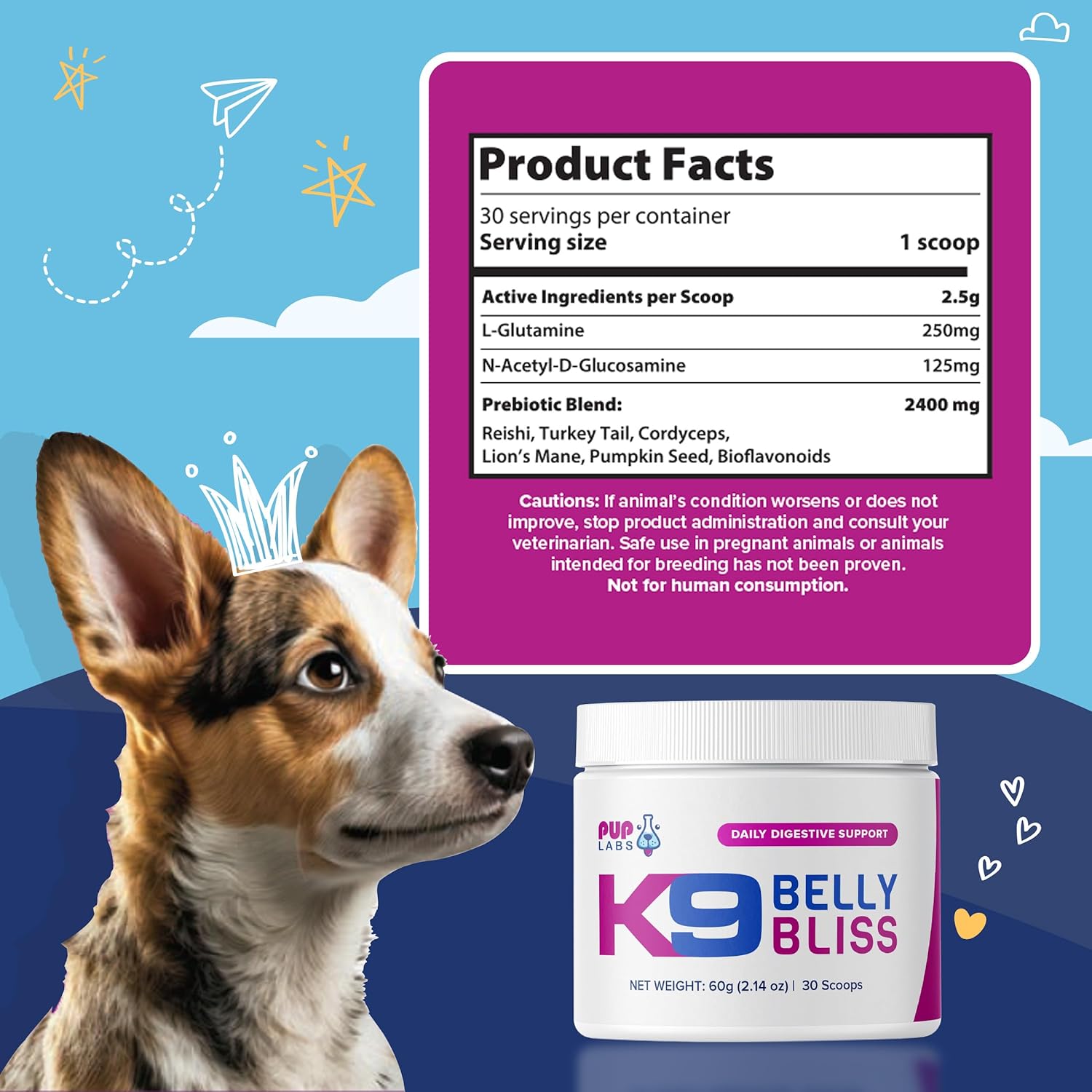
K9 Belly Bliss is a prebiotic digestive supplement made by Pup Labs, a pet health company that focuses specifically on dog wellness products. It comes as a fine powder that you sprinkle over your dog’s food — dry kibble, wet food, raw, whatever you’re already using. No pill-hiding, no mixing into special recipes. Just scoop and sprinkle.
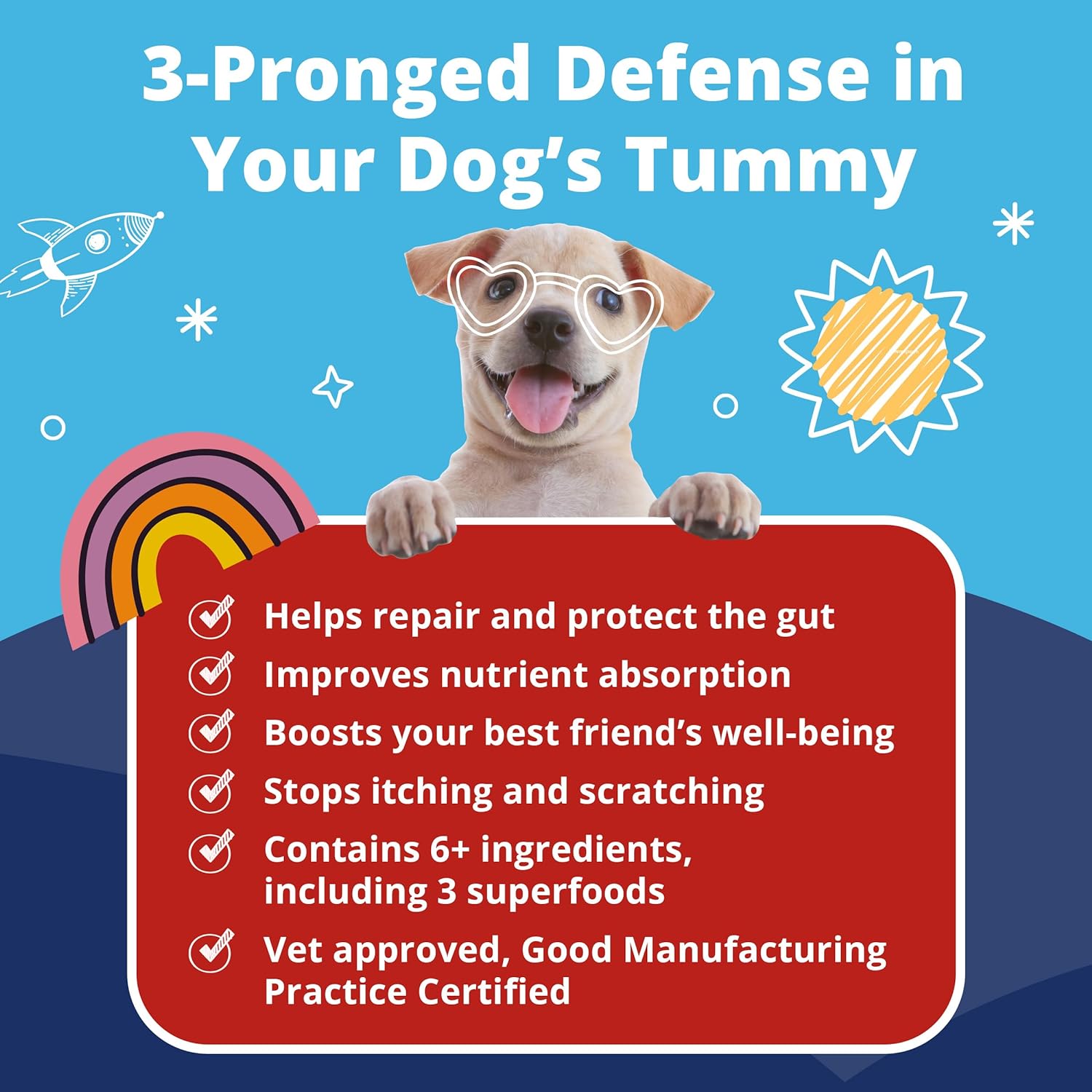
The core concept is what Pup Labs calls their “3-Pronged Defense” — three specific ingredients that work on the gut from different angles at the same time. One repairs the gut wall lining, one protects it from irritants, and one rebalances the bacterial environment over time. That framing is a bit marketing-heavy, but the underlying science isn’t made up. These are real mechanisms, and the ingredients do have research behind them.
It’s GMP-certified, which means the manufacturing facility follows Good Manufacturing Practices — a real regulatory standard, not a self-awarded sticker. Pup Labs says the formula is vet-approved, though they don’t name specific vets in their packaging materials.
One thing worth knowing: K9 Belly Bliss is a prebiotic supplement, not a probiotic. That’s a meaningful distinction. Prebiotics feed the good bacteria already living in your dog’s gut. Probiotics introduce new strains of bacteria. If you’ve been reading about the best probiotics for dogs, you’ll see these two products often work well together — but they’re not the same thing.
Ingredient Breakdown: What’s Actually Inside
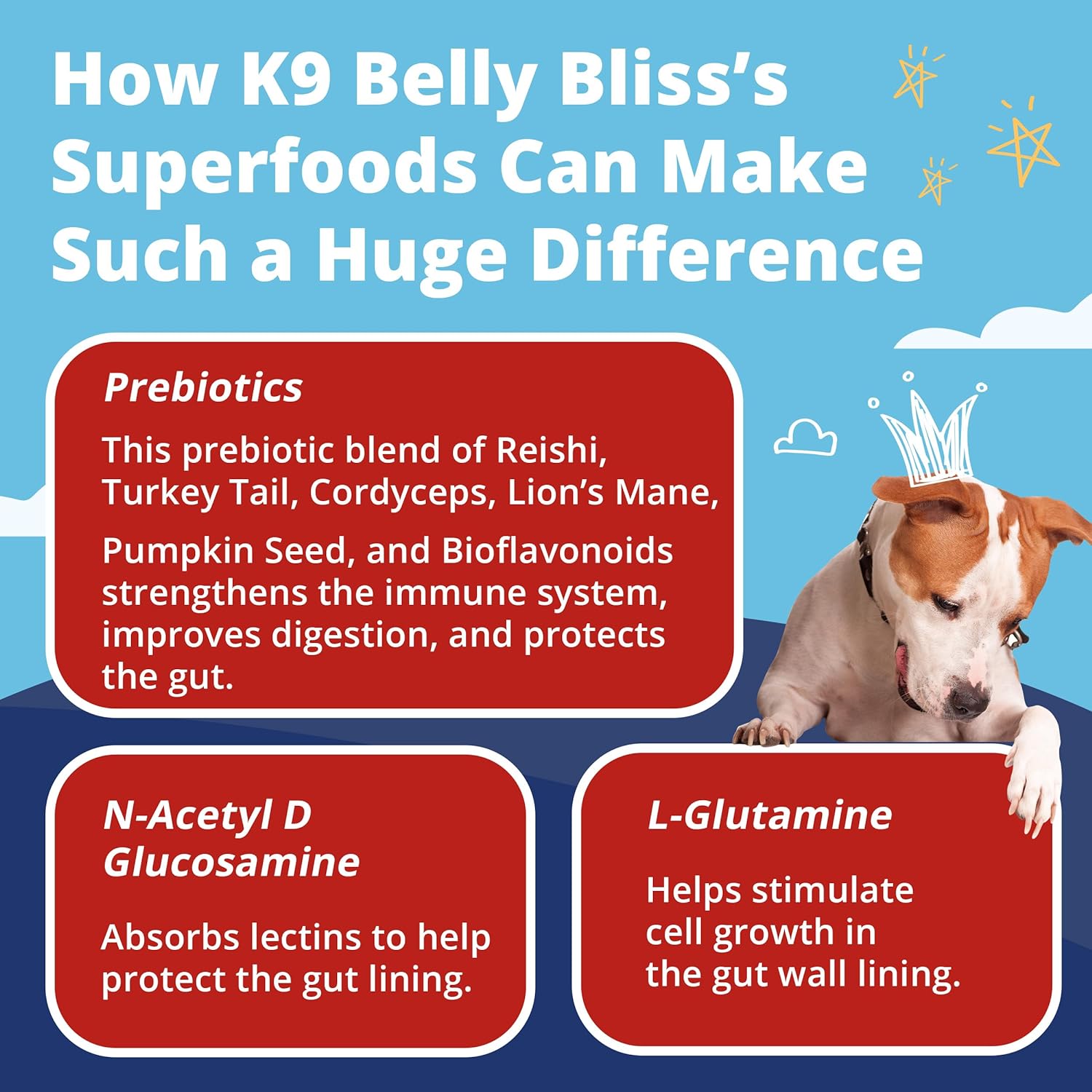
Three active ingredients do the work here. No proprietary mystery blends, no hidden amounts — the formula is transparent about what’s in it and why.
K9 Belly Bliss: Ingredient Deep Dive
| L-Glutamine | Amino acid that fuels gut wall cell growth and repairs damaged intestinal lining. Helps seal a leaky gut. | Strong — well-studied in humans and dogs; used in vet GI recovery diets |
| N-Acetyl D-Glucosamine (NAG) | Modified glucosamine that coats and protects the gut lining mucus layer. Absorbs lectins and irritants before they cause damage. | Moderate — used in GI support formulas; fewer dog-specific studies than L-Glutamine |
| Prebiotics (Inulin/FOS) | Feed beneficial gut bacteria, support a balanced microbiome, improve stool consistency and immune response over time. | Strong — prebiotics are widely used in canine GI and digestive support formulas |
L-Glutamine is the standout here. Your dog’s gut wall cells use it as their primary fuel source. When the lining gets inflamed or damaged — from stress, antibiotics, poor diet, or even just aging — L-Glutamine helps kick-start the repair process. You’ll find it in veterinary GI recovery diets for a reason. It’s not a trendy add-on; it’s a core gut-health ingredient.
N-Acetyl D-Glucosamine is the protective layer piece. You’ve probably heard of glucosamine for joint support. This modified form works in the gut instead, helping form and maintain the protective mucus lining. Think of it as a shield that keeps food particles and irritants from making direct contact with the gut wall.
The prebiotics are the microbiome piece. They don’t introduce new bacteria into your dog’s system — that’s probiotics. What they do is feed the beneficial bacteria already living in your dog’s gut, helping them multiply and crowd out the less helpful strains. For dogs whose gut bacteria have been disrupted by stress, travel, or antibiotics, this can make a real difference over 3-4 weeks of consistent use.
How the 3-Pronged Defense Actually Works
Pup Labs frames these three ingredients as working simultaneously:
- Repair — L-Glutamine stimulates cell regeneration in the gut wall lining, helping close gaps that allow toxins to enter the bloodstream.
- Protect — NAG coats the gut lining and intercepts lectins and other irritants before they can cause damage or trigger inflammation.
- Rebalance — Prebiotics shift the gut microbiome toward more beneficial bacteria over time, improving digestion and immune function.
These mechanisms are recognized in veterinary nutrition. The “3-Pronged Defense” label is marketing language, sure — but it’s describing real processes. That said, you’re not getting probiotics or digestive enzymes here. This is a prebiotic and gut-wall support formula specifically. If your dog needs live bacterial strains, you’d need to add a probiotic separately.
If your dog recently finished a course of antibiotics, stacking this with a quality probiotic makes a lot of sense. Check out our list of top-rated probiotic supplements for dogs on Chewy for options that pair well with a prebiotic like K9 Belly Bliss.
Real Results: What Owners Are Reporting in 2026
This is what most people actually want to know. So let’s talk about it directly.
Across hundreds of verified Amazon reviews, a clear pattern shows up. Dogs with chronic soft stools or excessive gas — especially smaller breeds and seniors — tend to see the most consistent improvement. The timeline goes something like this:
- Week 1-2: Not much visible change yet. The gut microbiome doesn’t shift overnight. Some dogs experience temporary gas while adjusting — this is normal and usually fades.
- Week 2-3: Stool consistency starts to improve. Many owners report firmer, better-formed stools and less straining. Gas frequency drops.
- Week 4 and beyond: Dogs that respond well show improved energy at mealtimes, better coat quality (a sign of improved nutrient absorption), and noticeably fewer episodes of stomach upset.
Dogs that don’t respond as well? Usually those whose digestive issues stem from a food allergy or protein sensitivity — not a gut microbiome problem. A supplement can support the gut environment, but it can’t override an immune reaction to chicken, beef, or grain. If you suspect a food intolerance, adding high-fiber foods to your dog’s diet and working through an elimination protocol is the better first step.
One complaint worth flagging: a handful of owners have noted that the scoop count didn’t match the label — some got 25 usable scoops instead of the stated 30. Not universal, but worth checking when your order arrives.
Dosage and How to Use It
Dead simple. Sprinkle the powder over your dog’s food once per day. It works with dry kibble, wet food, or raw — just mix it in so your dog gets the full dose.
- Under 25 lbs: 1/2 scoop daily
- 25-75 lbs: 1 full scoop daily
- Over 75 lbs: 2 scoops daily
The chicken flavor means most dogs eat it without complaint. A few picky eaters push back at first. If that’s your dog, start with a small amount mixed into wet food and increase gradually over a week. Most dogs adjust within 7-10 days.
One important tip: start with half the recommended dose for the first week, especially if your dog has a sensitive stomach. Jumping straight to a full dose can cause temporary gas while the microbiome adjusts. That’s true of most prebiotics — not unique to this formula.
Who Should Buy Belly Bliss for Dogs
K9 Belly Bliss is a good fit if your dog deals with:
- Chronic loose stools or soft stools that aren’t tied to a specific food allergy
- Frequent gas or bloating after meals
- Signs of poor nutrient absorption — dull coat, low energy, difficulty maintaining weight
- GI sensitivity after stress events like boarding, travel, or changes in routine
- Post-antibiotic gut disruption (though pairing with a probiotic is recommended in this case)
- General digestive maintenance as a daily supplement for senior dogs
Senior dogs in particular tend to see good results. As dogs age, the gut lining becomes more vulnerable and the microbiome less balanced. A daily prebiotic that also supports gut wall integrity hits both of those issues at once.
Who Should Skip It (Or Pair It with Something Else)
If your dog has a diagnosed food allergy or protein intolerance, K9 Belly Bliss won’t fix that. It supports the gut environment, but it can’t stop an immune response to a specific protein. In that situation, the diet needs to change first.
Dogs with serious inflammatory bowel disease (IBD) or any GI condition requiring veterinary management need medical treatment — not just a supplement. K9 Belly Bliss might be part of a management plan, but it’s not a replacement for vet care.
And if your dog needs probiotics specifically — live bacterial strains, especially after antibiotics — this won’t provide them. You’d need to add a probiotic separately. Our PetLab Co Probiotics review is a good starting point if you want to see what a paired option looks like.
Pros and Cons
What We Like
- Transparent ingredient list — you know exactly what’s in it and why
- GMP-certified manufacturing — real quality assurance
- Easy food topper format — no pill hiding, no drama
- Chicken flavor means most dogs actually eat it
- Works with dry, wet, and raw food
- Consistent positive results for dogs with mild-to-moderate GI sensitivity
- L-Glutamine is one of the few gut-wall repair ingredients with real vet backing
What to Watch Out For
- Price point is higher than many basic prebiotic powders
- Some batches come up short on scoops — verify when you receive it
- Won’t address GI issues rooted in food allergies or protein sensitivities
- No probiotics included — dogs that need live bacteria strains will need something additional
- A small number of dogs experience temporary gas during the first week of adjustment
- No digestive enzymes — if enzyme deficiency is the issue, this won’t solve it
How K9 Belly Bliss Compares to Alternatives
K9 Belly Bliss vs. Popular Alternatives
| K9 Belly Bliss | Prebiotic + gut repair | L-Glutamine, NAG, Inulin/FOS | Gut wall repair + microbiome support | $$-$$$ |
| PetLab Co Probiotic | Probiotic | Multi-strain probiotics, prebiotics | Post-antibiotic recovery, live bacteria strains | $$ |
| Ruff Greens | Full-spectrum supplement | Enzymes, vitamins, probiotics, omega-3s | Dogs needing broad nutritional support | $$$ |
| Basic Probiotic Powder | Probiotic | Lactobacillus, Bifidobacterium strains | Budget option, general maintenance | $ |
If your main concern is gut wall integrity and microbiome support — not enzyme deficiency or broad nutritional gaps — K9 Belly Bliss is the most targeted option in this category. For a more complete picture of what’s out there, our Ruff Greens review covers a product that takes a broader full-spectrum approach if you want to compare.
Where to Buy K9 Belly Bliss
The easiest place to buy it is Amazon, where you can also read through the verified buyer reviews before you commit. The return policy through Amazon makes it a lower-risk first purchase if you’re not sure it’s the right fit for your dog.
You’ll sometimes find it on the Pup Labs website directly as well. Pricing is similar, though Amazon tends to be more competitive. Subscribe and Save on Amazon can knock down the per-unit cost if your dog responds well and you want to continue long-term.
Frequently Asked Questions About K9 Belly Bliss
How long does K9 Belly Bliss take to work?
Most owners notice changes in stool consistency within 2-3 weeks of daily use. The gut microbiome doesn’t shift fast — you need consistent daily dosing for the prebiotics to have a measurable effect. Give it at least 30 days before deciding. Some dogs need the full month before results become obvious.
Can I use K9 Belly Bliss with a probiotic?
Yes, and it’s actually a smart combination. Prebiotics feed beneficial bacteria; probiotics introduce new strains. Using both together tends to be more effective than either alone, especially after a course of antibiotics. Our review of PetLab Co Probiotics for dogs covers one well-rated pairing option.
Is K9 Belly Bliss safe for puppies?
The label doesn’t specify an age restriction, but if your puppy is under 12 weeks or has any existing health conditions, check with your vet first. The ingredients are gentle, but a puppy’s gut is still developing and responds differently than an adult dog’s. No need to rush supplements before 3-4 months unless your vet recommends it.
Does belly bliss for dogs help with yeast-related gut issues?
The prebiotics support a more balanced gut environment, which can indirectly help keep yeast in check. That said, serious yeast overgrowth usually needs a more targeted approach than prebiotics alone. See our guide to probiotics for dogs with yeast infections if that’s your main concern — you’ll likely need something more specific.
My dog has diarrhea from antibiotics. Will this help?
It may help, but it’s not the most targeted solution for antibiotic-related GI disruption. A high-quality probiotic with documented strains — Lactobacillus acidophilus or Bifidobacterium — is typically recommended first for post-antibiotic recovery. Adding bone broth for dogs can also soothe the gut during that window. K9 Belly Bliss can be a useful follow-on once the acute phase settles.
Is K9 Belly Bliss worth the price?
If your dog has chronic loose stools or ongoing GI sensitivity and cheaper options haven’t helped, yes — the ingredients are legitimate and the quality controls are real. If you’re buying it for occasional mild stomach upsets, a less expensive basic prebiotic might get the job done for less money. The sweet spot for this product is dogs with persistent, recurring digestive issues.
Bottom Line
K9 Belly Bliss isn’t magic. But it’s not snake oil either. The ingredients are real, the manufacturing standards are real, and a meaningful portion of dog owners see genuine improvement in their dog’s digestion after consistent use.
The product works best for dogs with mild-to-moderate GI sensitivity where the root cause is a compromised gut lining or microbiome imbalance. If your dog has food allergies, a specific protein sensitivity, or needs live probiotic strains after antibiotics, you’ll want to address those issues separately or in addition to this.
Here’s the practical filter: if your dog has dealt with chronic loose stools, frequent gas, or poor nutrient absorption and you haven’t found a supplement that actually helps yet, K9 Belly Bliss is a reasonable next step. The 30-day trial window — especially with Amazon’s return policy as a safety net — makes it a low-risk experiment for most dog owners.
Some owners also choose to pair a simpler prebiotic powder with K9 Belly Bliss periodically, using this product specifically for the L-Glutamine component during recovery periods. That’s a cost-effective approach if budget is a concern.
Check the current price on Amazon and browse the verified buyer reviews before you decide. And if you want to see how K9 Belly Bliss fits into a fuller supplement routine, our guide to the best probiotics for dogs is a solid next read.















 English (US) ·