
 1 month ago
40
1 month ago
40
Ticks are the bane of every dog lover’s existence. Worse than fleas, these blood-sucking arachnids can carry serious diseases like Lyme disease, ehrlichiosis, Rocky Mountain spotted fever, and anaplasmosis. Veterinarians agree that year-round flea and tick prevention is essential, especially in areas where ticks are common, which today includes much of the United States.
The tricky part? Ticks are experts at hiding. Some are no larger than a poppy seed before feeding, making them easy to miss during a quick once-over. That’s why knowing exactly where to look on your dog is so important. A thorough tick check after hikes, walks in wooded areas, or even backyard playtime can help protect your dog from dangerous tick-borne illnesses.

Using a flea and tick comb to brush through your dog’s coat is a great start, but there are several easy-to-miss places where ticks commonly hide. Here are the most overlooked areas to check for ticks on dogs, plus expert tips for safe tick removal and prevention.
Why Thorough Tick Checks Matter
Ticks don’t just bite — they attach and feed for hours or even days. The longer a tick stays attached, the greater the chance it can transmit disease. Daily tick checks are especially important during spring and summer, though some ticks remain active year-round in mild climates.
When checking your dog for ticks, run your hands slowly over their entire body, feeling for small bumps or unusual lumps. Part the fur carefully and inspect the skin closely under bright lighting.
#1 – In the Ears
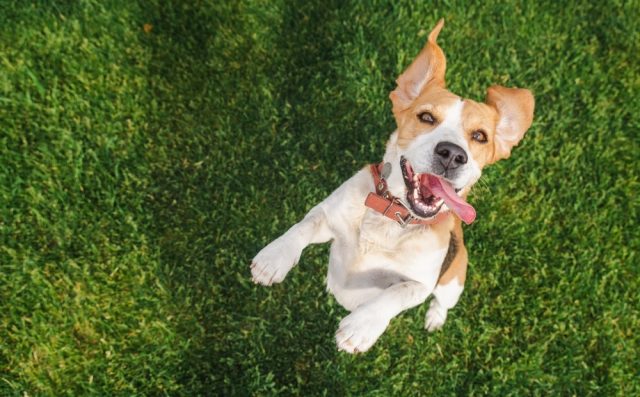
Ticks often wait in tall grass and shrubs for an animal to brush past. Since dogs love sticking their noses and faces into bushes, it’s no surprise ticks frequently end up inside the ears.
A dog’s ears provide the perfect hiding place: warm, moist, and full of folds and crevices where ticks can remain unnoticed until fully engorged. Dogs with long or floppy ears are especially vulnerable because thick ear flaps can conceal attached ticks.
How to Check
- Lift both ear flaps and inspect the inner and outer ear carefully
- Look deep into folds and wrinkles
- Feel for bumps hidden beneath fur
- Use a flashlight if needed
If you notice redness, swelling, excessive scratching, or head shaking, inspect the ears immediately.
#2 – Under the Collar or Harness
Many pet parents rarely remove their dog’s collar except during baths. Unfortunately, ticks love hidden, protected areas beneath collars, harness straps, bandanas, and dog clothing.
Ticks can crawl under accessories and remain hidden against the skin for days.
How to Check
- Remove collars and harnesses completely
- Comb through the fur underneath
- Check the collar itself for crawling ticks
- Pay close attention to thick fur around the neck
Because ticks can be extremely small, inspecting under accessories with good lighting is important.
#3 – Between the Toes and Paw Pads
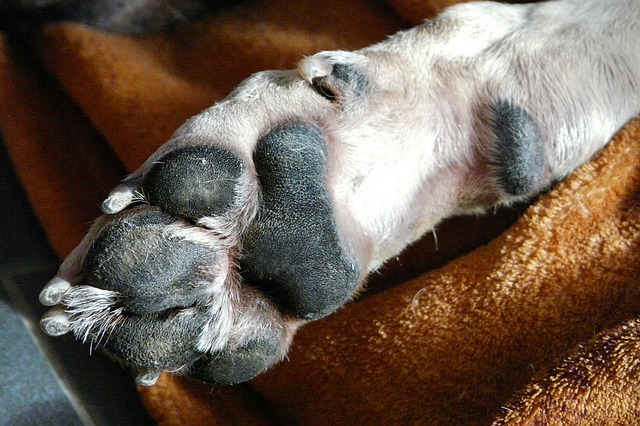
Ticks commonly crawl upward from grass and can attach between your dog’s toes or around the paw pads. These tight spaces are easy to overlook during routine grooming.
Some dogs become obsessed with licking or chewing their feet when a tick is attached.
How to Check
- Spread each toe gently apart
- Inspect between the pads
- Feel for tiny bumps
- Check around the nail beds
- Use a flea comb if possible
Dogs with long fur between their toes may require extra careful inspection.
#4 – In the Groin and Tail Area
Ticks love warm, dark, protected areas, making the groin and perianal region a favorite hiding place.
Because many owners don’t routinely inspect this area closely, ticks can stay attached for an extended period before being discovered.
How to Check
- Inspect around the genitals
- Lift the tail and examine underneath
- Check skin folds carefully
- Feel for bumps hidden beneath fur
Even though it may feel awkward, thorough groin checks are important for catching ticks early.
#5 – Around the Eyes and Eyelids
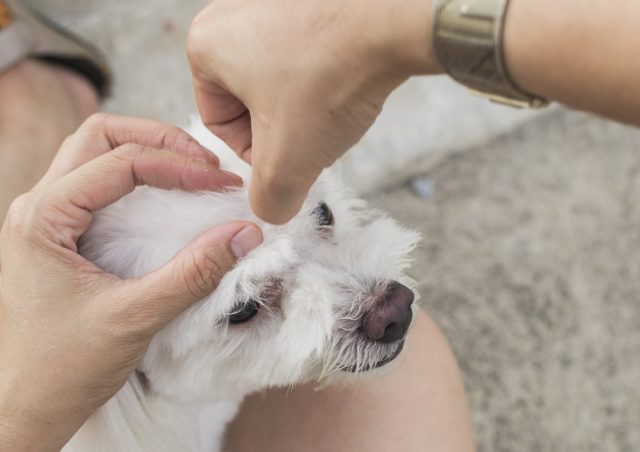
Ticks sometimes attach near the eyes, where they can easily resemble skin tags or small growths. This area requires extra caution because the skin is delicate and close to the eye itself.
How to Check
- Inspect eyelids carefully in bright light
- Look for tiny dark bumps
- Part surrounding fur gently
- Never pull at anything unless you’re sure it’s a tick
If you’re uncertain whether a growth is a tick or skin tag, contact your veterinarian before attempting removal.
#6 – Inside the Mouth
Although uncommon, ticks can attach inside a dog’s mouth. Dogs that chew grass, sticks, or brush may accidentally pick up ticks while exploring outdoors.
How to Check
- Inspect the gums and lips carefully
- Look under the tongue if your dog allows it
- Check along the inner cheeks
- Watch for excessive drooling or mouth discomfort
Because the mouth is sensitive, it’s best to let your veterinarian remove ticks found there.
#7 – Around the Neck and Chin

Ticks often attach around the chin, throat, and neck because dogs lead with their heads while exploring outdoors. Thick neck fur can make ticks especially difficult to spot.
How to Check
- Run your fingers against the grain of the fur
- Inspect under the chin
- Check around loose skin folds
- Use a flea comb for dense coats
Dogs with heavy double coats may require extra time during inspections.
#8 – Under the Front Legs (Armpits)
The armpits are another warm, hidden area where ticks commonly attach. Since the skin folds naturally in this area, ticks can remain concealed during quick checks.
How to Check
- Lift each front leg gently
- Inspect the skin folds thoroughly
- Feel for small bumps
- Look for redness or irritation
Ticks in this area are easy to miss without a hands-on inspection.
#9 – Around Skin Folds and Wrinkles
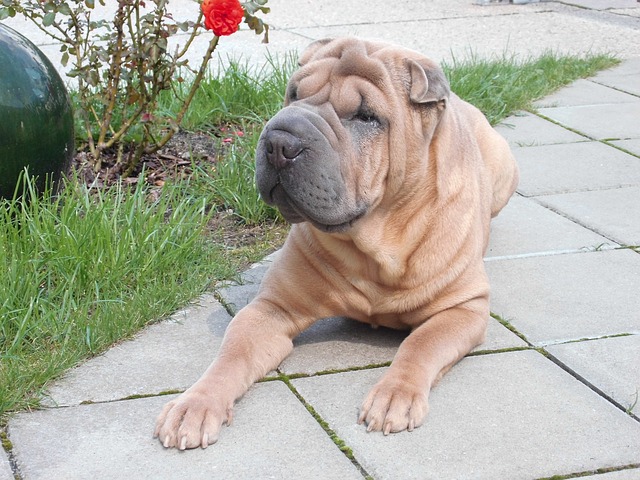
Wrinkly breeds like Bulldogs, Shar-Peis, Pugs, and Mastiffs are particularly vulnerable to hidden ticks. Skin folds provide dark, moist hiding places where ticks can remain undetected.
How to Check
- Separate wrinkles gently
- Inspect deep folds carefully
- Look for redness or swelling
- Feel along folds with your fingertips
Regular wrinkle cleaning can also help you spot ticks sooner.
How to Remove a Tick From Your Dog Safely
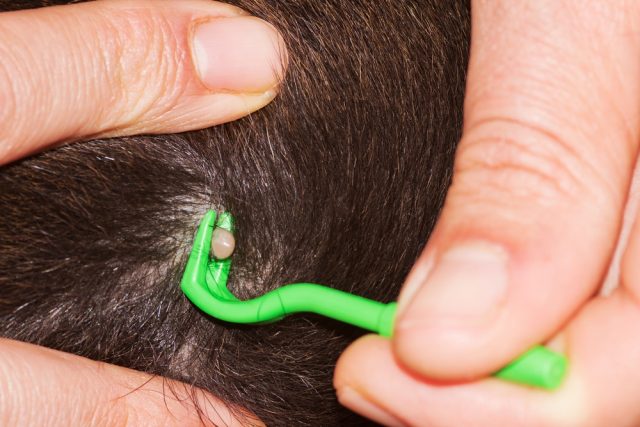
If you find a tick on your dog, remove it as quickly and carefully as possible.
Safe Tick Removal Steps
- Use fine-tipped tweezers or a tick removal tool
- Grasp the tick as close to the skin as possible
- Pull upward steadily without twisting
- Avoid crushing the tick
- Clean the area with antiseptic afterward
- Wash your hands thoroughly
What NOT to Do
- Don’t burn the tick
- Don’t use petroleum jelly or nail polish
- Don’t squeeze the tick’s body
- Don’t yank suddenly
Improper removal can leave mouthparts embedded in the skin or increase disease transmission risk.
When to Call the Vet
Contact your veterinarian if:
- The tick is embedded deeply
- You can’t remove it fully
- The bite area becomes swollen or infected
- Your dog develops lethargy, fever, limping, or loss of appetite afterward
Best Tick Prevention Tips for Dogs
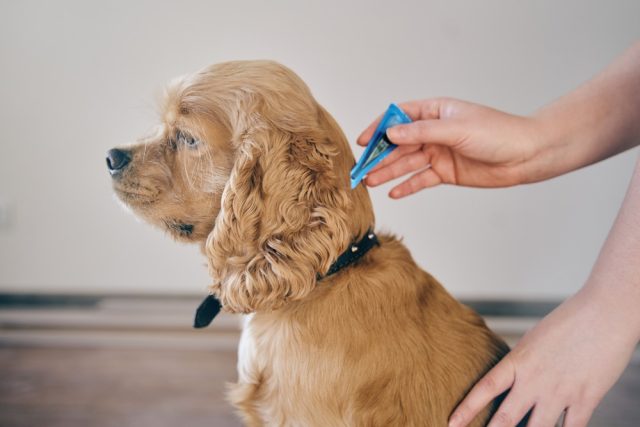
The best defense against tick-borne disease is prevention.
Use Year-Round Flea and Tick Prevention
Talk to your veterinarian about the best preventative product for your dog, including:
- Oral preventatives
- Topical treatments
- Tick collars
- Prescription medications
Avoid Tick-Heavy Areas
Ticks thrive in:
- Tall grass
- Wooded trails
- Leaf piles
- Overgrown brush
Stay on clear paths whenever possible.
Keep Your Yard Tick-Free
Reduce tick populations around your home by:
- Mowing grass regularly
- Removing leaf litter
- Trimming shrubs
- Creating gravel barriers between wooded areas and lawns
Check Your Dog Daily
Daily tick checks are one of the most effective ways to prevent disease transmission.
Groom Your Dog Regularly
Frequent brushing and bathing help you spot ticks before they become fully attached.
Protect Your Dog From Hidden Tick Dangers
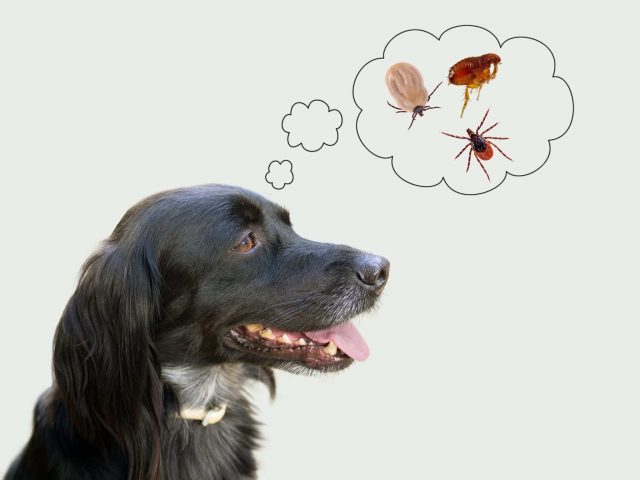
Ticks may be tiny, but the health risks they pose are enormous. Since these parasites can hide in surprising places, from inside the ears to between the toes, a quick glance isn’t enough to keep your dog safe. Thorough daily inspections, proper tick removal, and consistent preventative care are the best ways to reduce your dog’s risk of tick-borne illness.
By knowing where ticks hide and acting quickly when you find one, you can help your dog stay healthy, comfortable, and ready for every outdoor adventure.









 English (US) ·