
 3 weeks ago
56
3 weeks ago
56
Picking a Corgi and wondering what colors actually exist? You’re in good company. Between the Pembroke Welsh Corgi and the Cardigan Welsh Corgi, there are more than a dozen AKC-recognized color combinations, plus a handful that show up in real life but don’t make the official standards. This guide covers all of them. We’ll break down every color by breed type, explain what’s common vs. genuinely rare, and give you a quick look at the genetics behind the coat. No fluff, just everything you actually want to know about Corgi colors in 2026.
Pembroke vs. Cardigan: AKC Color Standards at a Glance
| Red | ✓ AKC recognized | ✓ AKC recognized |
| Sable | ✓ AKC recognized | ✓ AKC recognized |
| Fawn | ✓ AKC recognized | ✓ AKC recognized |
| Black and Tan | ✓ AKC recognized | ✓ AKC recognized |
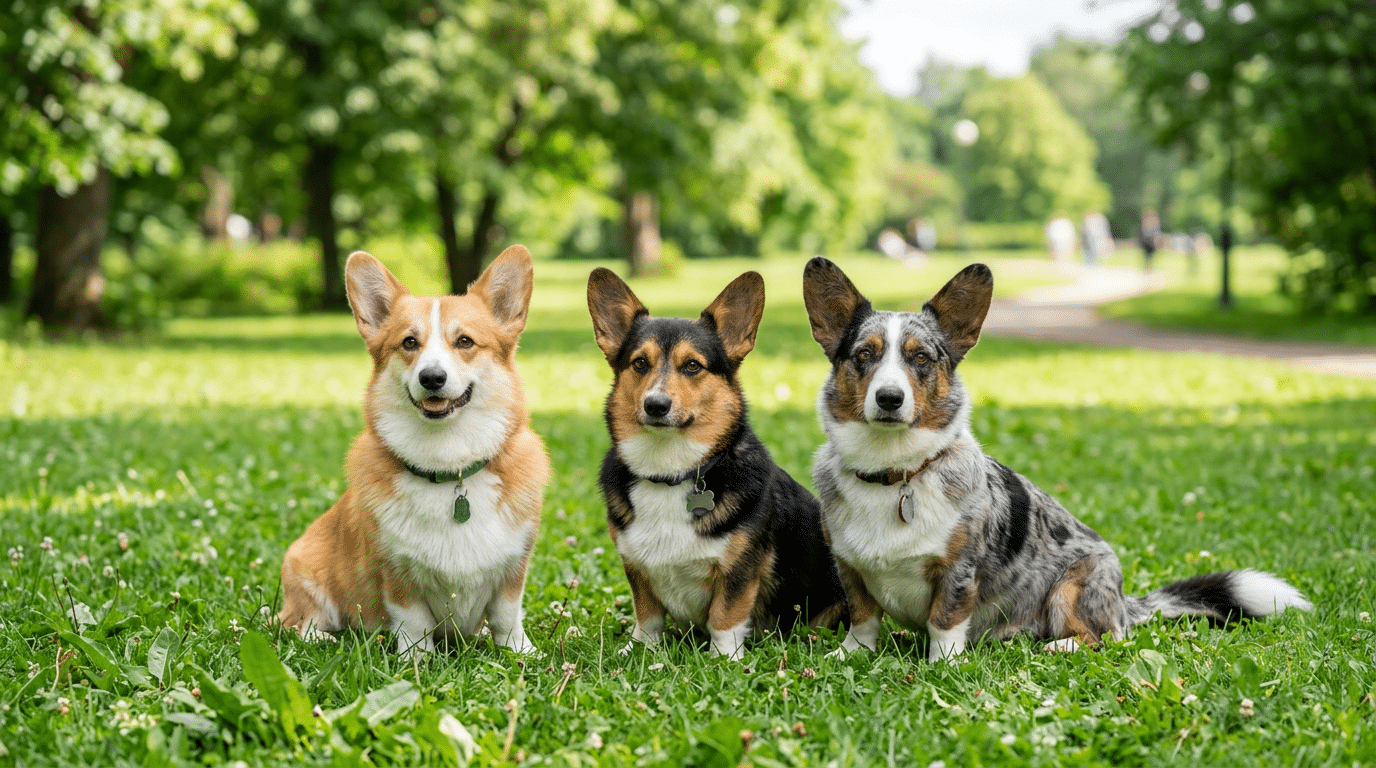
| Tri-Color (Black/Tan/White) | ✓ AKC recognized | ✓ AKC recognized |
| Blue Merle | ✗ Not recognized | ✓ AKC recognized |
| Brindle | ✗ Not standard | ✓ AKC recognized |
| Black and White | ✗ Not recognized | ✓ AKC recognized |
Pembroke Welsh Corgi Colors
The Pembroke is the more popular of the two Corgi types, and the one most people picture when they hear “Corgi.” The AKC recognizes four base colors for Pembrokes, all of which can appear with or without white markings on the chest, neck, legs, and face. White should never dominate the coat; it’s always the accent, not the main event.
Red
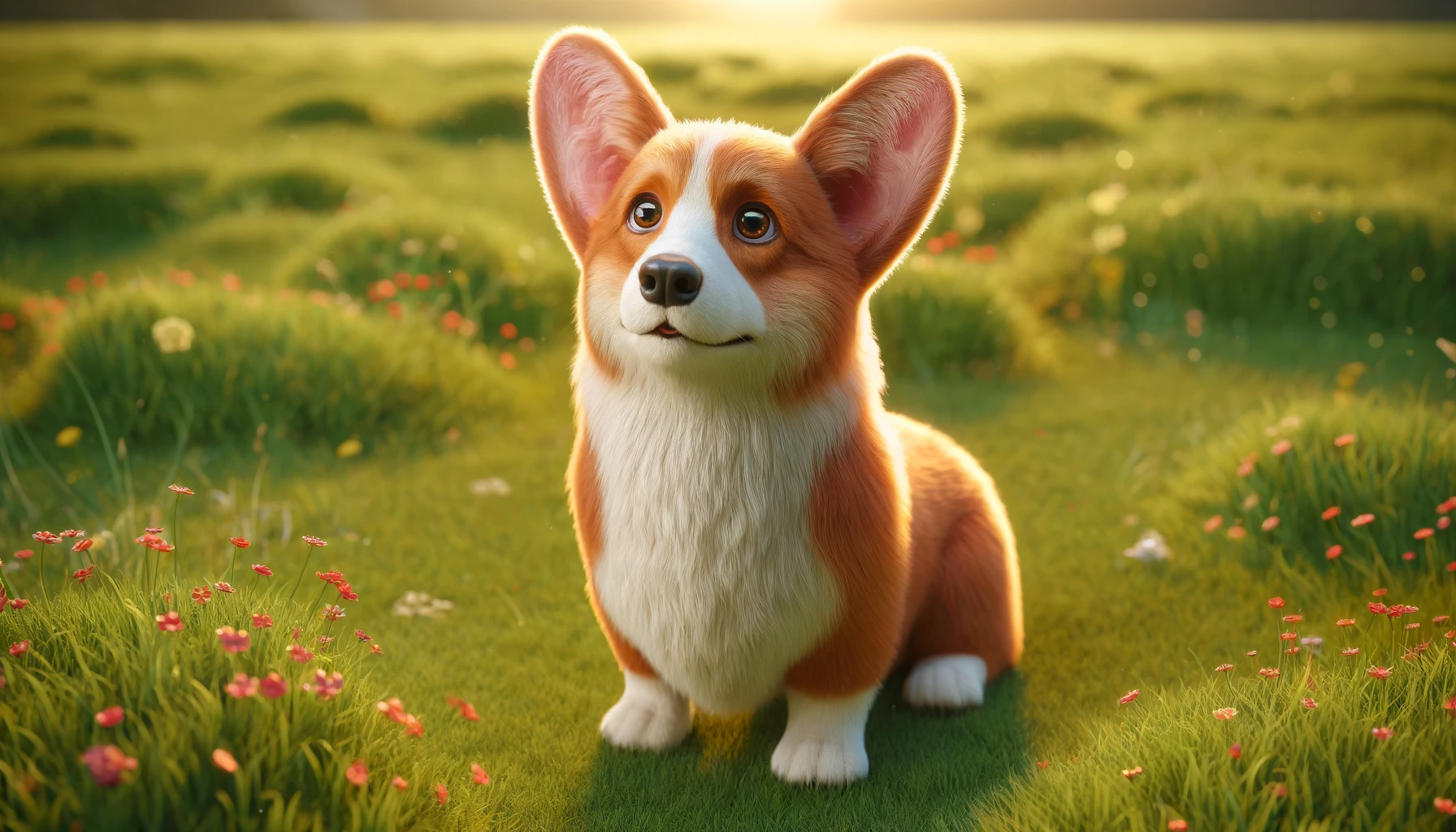
Red is the most recognizable Pembroke color, and it’s probably what you picture when someone says “Corgi.” The shade ranges from a pale honey-gold all the way to a deep rust-red. Most red Pembrokes have a white blaze on the face, white collar, white chest, and white socks. The coat itself is uniform; you won’t see the multicolored individual hairs that sable dogs have.
Red Pembrokes are extremely common, especially from reputable breeders who show their dogs. If you’re looking for a puppy and aren’t particular about color, red will be your easiest option to find.
Sable
Sable Corgis are striking in a way that’s hard to explain until you see one in sunlight. Each individual hair has multiple color bands, typically black tips fading to gold or tan toward the base, which creates that signature shimmering, shifting appearance. No two sable dogs look quite the same, even from the same litter.
Puppies are often born much darker than they’ll be as adults. That dark “cap” on a sable puppy’s head usually lightens considerably by six months. Sable can range from a light golden sable to a heavy, dark-headed sable where the black tipping is so dense the dog almost looks like a different color. It’s one of the most variable expressions in the breed.
Fawn

Fawn is the softest, most muted color in the Pembroke palette. Think pale tan to light cream, often with white markings on the classic spots (face, chest, neck, paws). The coat should be even in tone with minimal variation. No sabling, no dark overlay. Fawn dogs can sometimes get overlooked at shows because judges prefer the richer, more vivid sable and red coats, but fawn Pembrokes are genuinely beautiful in a quieter way.
Fawn and light red can look very similar at first glance, by the way. The difference is in the depth of pigment. Fawn is distinctly paler, without the warmth of a red coat.
Black and Tan

Black and tan Pembrokes are less common than red or sable, but they’re striking. Deep black covers the back, top of the head, and sides, while rich tan points appear above the eyes, on the cheeks, under the tail, and down the legs. Without white markings, the dog looks like a small, very low-slung Doberman. Most black and tan Pembrokes also carry white on the chest, creating a tri-color effect, but technically, “black and tan” and “tri-color” are two separate AKC designations based on the degree of white present.
Tri-Color

Tri-color is one of the cleanest, most visually bold looks any Corgi can wear. Black dominates the body; crisp white covers the chest, neck, and legs; rich tan points show above the eyes, on the cheeks, and inside the ears. The markings are usually precise and well-defined. Tri-color Pembrokes tend to be popular in the show ring because the three-color contrast makes their conformation easy for judges to read.
These dogs are fairly common and show up regularly in litters from sable-carrying parents. If both parents are sable, you can still get tri-color puppies depending on what recessive genes they carry.
Want to know what it actually costs to bring one home? Check out the real cost of a Corgi puppy by US region; prices vary more than most people expect.
Cardigan Welsh Corgi Colors
Cardigans have a broader color range than Pembrokes, and the AKC gives them a lot more flexibility in the show ring. You’ll see colors in Cardigans that simply don’t exist as AKC-recognized options for Pembrokes. The breed has a tail (one of the main physical differences from Pembrokes) and slightly larger, more rounded ears, and its color genetics have been maintained on a separate track.
Blue Merle
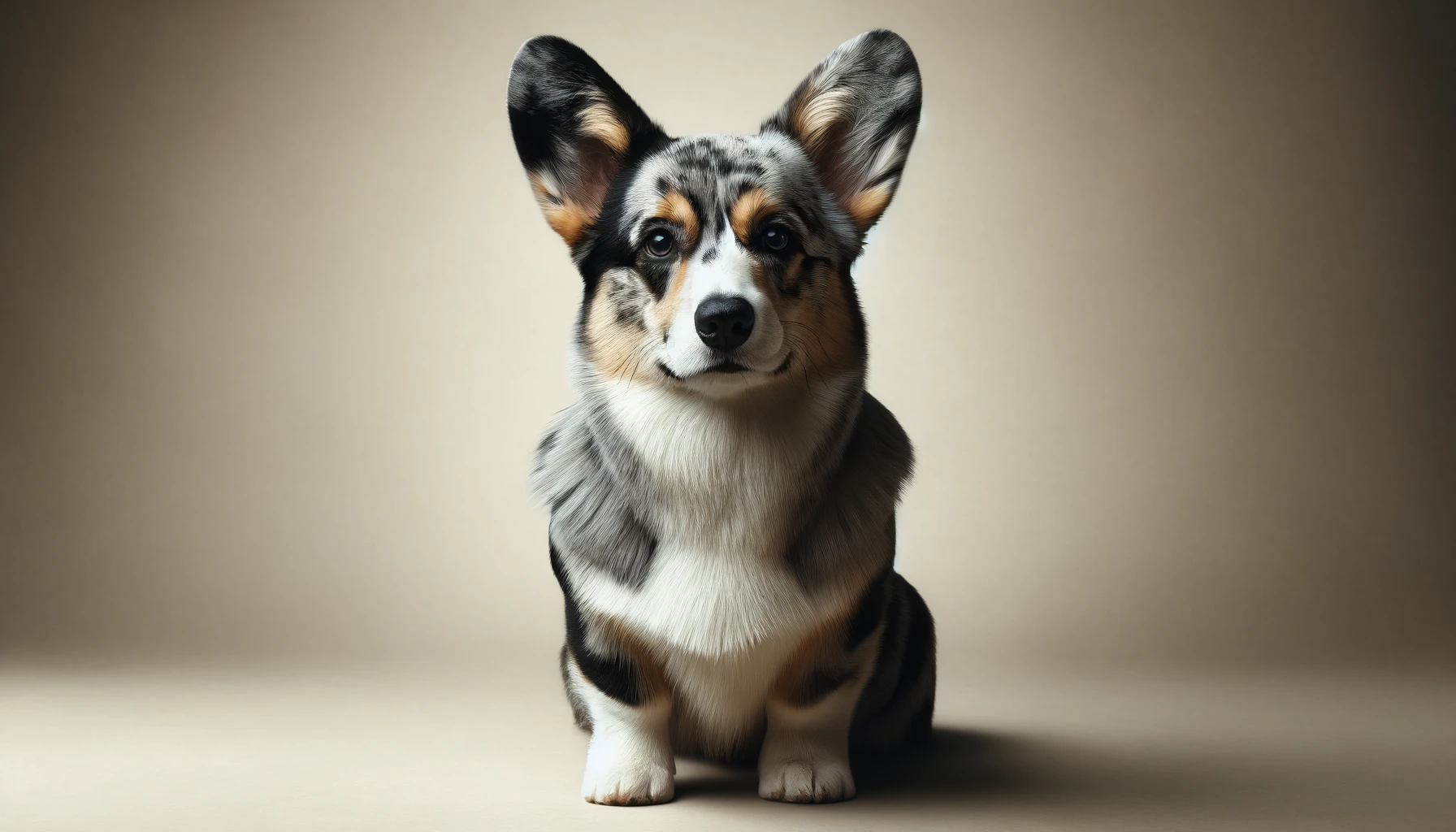
Blue merle Cardigans are genuinely eye-catching. The coat is a marbled mix of blue-gray, black, and sometimes lighter patches, created by a gene that dilutes black pigment in irregular patches. Many blue merles also have blue eyes or one blue and one brown eye (heterochromia), which adds to their striking look.
Blue merle is exclusively a Cardigan trait. If someone is trying to sell you a “blue merle Pembroke,” that dog either isn’t a purebred Pembroke or there’s been a misunderstanding about the breed. It doesn’t exist as a recognized Pembroke color. Curious about other breeds with this pattern? Take a look at our guide to merle dog breeds for the full picture.
One important note: breeding two merle dogs together produces “double merle” puppies with a high risk of deafness, blindness, or both. Responsible Cardigan breeders never pair merle to merle. If you’re buying a blue merle Cardigan, ask about the parents’ colors and any genetic testing done.
Brindle
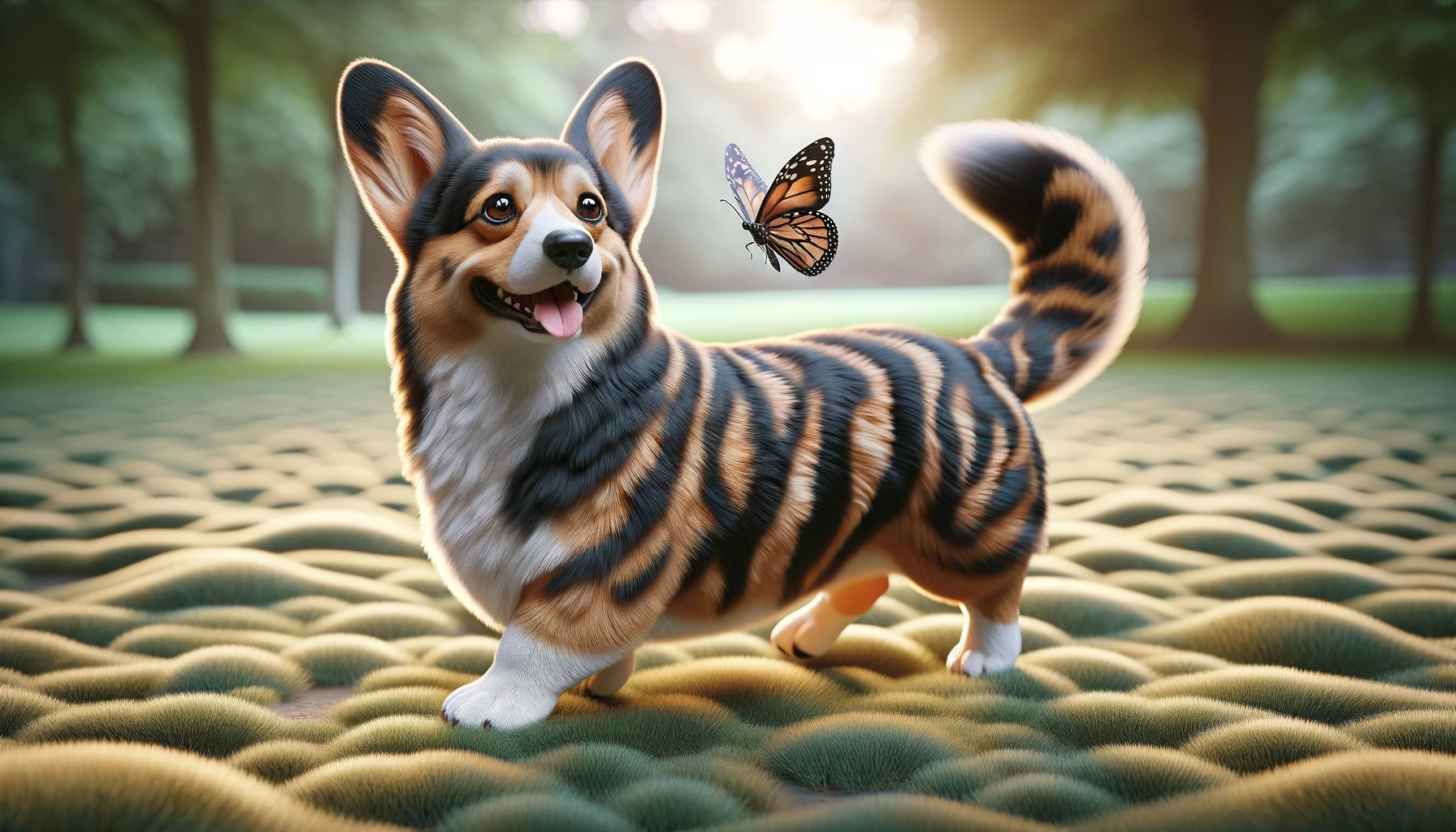
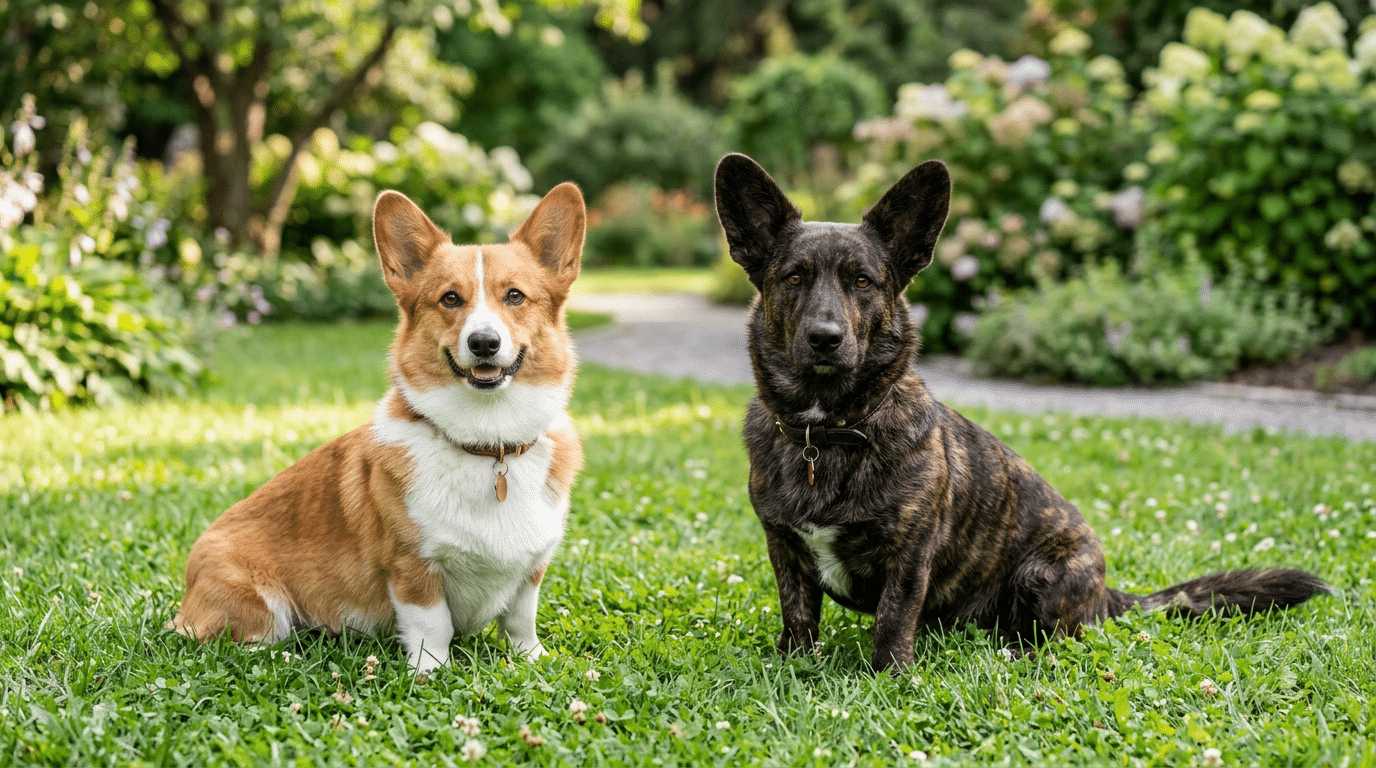
Brindle is a tiger-stripe pattern: dark stripes layered over a base color of red, fawn, or gold. The intensity varies a lot. Some brindles have heavy, bold striping while others show subtle dark streaks that you might not notice until you look closely. The base color underneath can be any warm shade.
Brindle is recognized by the AKC for Cardigans and is one of the breed’s most distinctive looks. In Pembrokes, true brindle doesn’t occur as a standard color and would indicate mixed ancestry. So if you’re shopping specifically for a brindle Corgi, a Cardigan is what you want.
Red and Sable (Cardigan)
Cardigans can also be red or sable, just like Pembrokes, but they look a bit different on the Cardigan’s larger, heavier frame. The AKC recognizes red and sable as standard Cardigan colors, with white markings in the usual spots. Cardigan red tends to read as a slightly darker, richer shade because the overall dog is bigger and the coat is a bit heavier than on a Pembroke.
Black and White
This is a Cardigan-only color not seen in Pembrokes. Black and white Cardigans have predominantly black coats with white markings, but without the tan points that define the black-and-tan or tri-color pattern. It’s a clean, graphic look. The AKC recognizes it as a separate color from tri-color, because the absence of tan points makes it genetically distinct.
Other AKC-Recognized Cardigan Colors
The Cardigan standard also allows for sable and white, red and white, and various brindle-and-white combinations. White on the collar, chest, and legs is expected and desirable on most Cardigan colors. What you won’t ever see as a recognized Cardigan color is a dog that’s predominantly white. White shouldn’t cover more than roughly half the body on any Corgi in either breed.
Corgi Color Rarity Guide
| Red | Pembroke | Very common (easiest to find) |
| Tri-Color | Pembroke/Cardigan | Common (shows up in most litters) |
| Sable | Pembroke/Cardigan | Common but highly variable |
| Fawn | Pembroke | Less common than red or sable |
| Black and Tan | Pembroke/Cardigan | Moderate (depends on breeder) |
| Brindle | Cardigan only | Uncommon (seek Cardigan specialists) |
| Blue Merle | Cardigan only | Rare (limited breeding population) |
| Black and White | Cardigan only | Rare (few breeders specialize) |
The Genetics Behind Corgi Colors
You don’t need a genetics degree to understand the basics. Here’s how it works.
Coat color in dogs is controlled by a set of gene loci. Think of each one as a switch with different settings. The two most important pigments are eumelanin (black/brown) and phaeomelanin (red/yellow). Which genes are “on” and which are “off” determines what color your Corgi ends up being.
Sable dogs have the agouti gene in a specific form that causes banded hairs. Each hair is not one flat color; it has segments of black and yellow pigment along its length. The A locus controls this, and sable (Ay) is dominant over the tan-point pattern (at) that creates black-and-tan and tri-color dogs. That’s why sable Corgis are so common: they only need one copy of the sable allele to show the sable coat.
Merle is a different mechanism entirely. The M locus carries a SINE insertion that disrupts pigment distribution in random patches, creating that mottled look. Merle is dominant, so one copy (Mm) creates a merle pattern. Two copies (MM) creates a double merle, which is where the health problems come in. Those dogs often lack pigment in critical areas of the eye and ear.
Brindle comes from the K locus. The brindle allele (kbr) sits between dominant black (KB) and non-black (ky) in dominance order, and it creates striped pigment distribution on a phaeomelanin base.
The short version: color genetics in Corgis is predictable. Responsible breeders can use genetic testing to know what colors a pairing will produce before the breeding happens. If you’re curious what color puppies a specific breeding will likely throw, ask the breeder. A good one will know exactly.
Does Color Affect Health or Temperament?
For the most part, no. A red Pembroke and a tri-color Pembroke have the same energy level, herding instinct, and stubborn streak. Color doesn’t change who the dog is.
The one real exception is the merle gene. As described above, double merle dogs (two copies of the M allele from breeding merle-to-merle) face significantly elevated risk of deafness and vision problems, sometimes being completely blind or deaf at birth. Single-copy merle Cardigans (one M and one non-merle) are generally healthy. This is a breeding ethics issue, not a color cosmetics issue, but it does mean that if health is your primary concern, a blue merle Cardigan from a reputable breeder who tests their breeding dogs is perfectly fine. One from a backyard breeder who paired two merles together without genetic testing is a different story.
Beyond merle, no color-linked health issues affect Pembrokes or Cardigans. Black and tan dogs aren’t healthier or sicker than red dogs. Fawn dogs aren’t more prone to anything than sable dogs. Just make sure you’re buying from a breeder who screens for IVDD (intervertebral disc disease), degenerative myelopathy, and hip dysplasia. Those are the actual health concerns to watch in both Corgi types.
Feeding your Corgi well matters far more for long-term health than coat color ever will. Check out the ideal diet for Corgis to make sure your dog is getting what they need, and see the best dog foods for Corgis for specific product picks. Also helpful: how much to feed a Corgi at each life stage.
One practical note that has nothing to do with genetics: darker-coated Corgis tend to show less visible dirt and mud, which is mildly useful if your dog is an outdoor enthusiast. Red and fawn Corgis show every bit of grime. You’ll want a good vacuum either way; both Corgi types shed heavily year-round, with major seasonal blowouts twice a year. A vacuum built for pet hair will make your life noticeably easier.
Frequently Asked Questions About Corgi Colors
What are the most common Corgi colors?
For Pembrokes, red is the most common, followed by sable, tri-color, fawn, and black and tan. Sable covers a wide range of expressions, so a “sable” Corgi can look like a dozen different things depending on how dark or light it is. For Cardigans, red, sable, and brindle are all relatively common, with blue merle and black and white being harder to find.
Can a Pembroke Welsh Corgi be blue merle?
No. Blue merle is not a recognized Pembroke color, and purebred Pembrokes don’t carry the merle gene. If you see a dog advertised as a “merle Pembroke,” it’s either a Cardigan or it has mixed ancestry. Blue merle is exclusively a Cardigan Welsh Corgi color under AKC standards.
What is the rarest Corgi color?
Blue merle and black and white Cardigans are the rarest because the Cardigan breed itself has a smaller overall population than Pembrokes, and these specific color variants have fewer dedicated breeders. Among Pembrokes, black and tan without significant white markings is less common than red or sable.
Do Corgi colors change as they grow?
Yes, especially in sable puppies. Sable Corgis are often born very dark and lighten significantly over their first six months to a year. The dark “saddle” or “cap” on a sable puppy’s head can fade dramatically. Red puppies may also deepen slightly in tone as they mature. Fawn dogs are usually stable in color from a young age. All Corgis tend to develop some gray around the muzzle as they get older.
Does the merle gene cause health problems in Corgis?
The merle gene itself, in a single copy, doesn’t typically cause problems. The risk comes from breeding two merle-colored dogs together, which can produce “double merle” puppies with a high rate of blindness and deafness. A responsibly bred blue merle Cardigan from health-tested parents is perfectly safe. Always ask a breeder about the colors and genetic testing status of both parents before buying a merle puppy.
Are there color rules for Corgis in dog shows?
Yes. For Pembrokes, the AKC accepts red, sable, fawn, black and tan, and tri-color. White markings are acceptable but shouldn’t dominate. For Cardigans, the AKC accepts all of the above plus blue merle, brindle, black and white, and several combinations. Any dog with more than 30% white (sometimes called a “mismark” or “fluffy” in casual breeding parlance) may be penalized in the show ring.
Can two sable Corgis have tri-color puppies?
Yes, they can, if both parents carry the recessive tan-point gene (at) in addition to the sable allele. Because sable is dominant, a dog can look sable on the outside while carrying a hidden tan-point gene. When two sable carriers are paired, some puppies can receive two copies of the tan-point allele and express it as black and tan or tri-color. This is why color prediction requires knowing each parent’s underlying genotype, not just their visible coat.
What color Corgi sheds the least?
All of them shed. A lot. Coat color has zero effect on shedding volume in Corgis. Both Pembrokes and Cardigans have a dense double coat that blows heavily twice a year. The only difference is visibility: lighter-colored hair (from fawn and red dogs) tends to show up more on dark furniture and clothing, while darker hair (from tri-color or black and tan dogs) is more visible on light surfaces. Regular brushing and a good vacuum are non-negotiable regardless of which color you choose.
Bottom Line
Corgi colors are genuinely varied, and understanding the difference between Pembroke and Cardigan standards saves you a lot of confusion when you’re researching breeders. Pembrokes come in red, sable, fawn, black and tan, and tri-color. Cardigans add blue merle, brindle, and black and white to the mix. The rarest colors, blue merle and black and white, are Cardigan-exclusive and require finding a specialist breeder.
Color is fun to think about, but it shouldn’t be the main factor in your decision. The dog’s health history, the breeder’s testing practices, and the individual puppy’s temperament matter far more. That said, knowing exactly what AKC colors exist and what’s actually possible helps you spot misleading ads and ask smarter questions when you’re ready to bring a Corgi home.







 English (US) ·