
 3 weeks ago
48
3 weeks ago
48
Don’t let the short legs and floppy ears fool you. Dachshunds have a bite force that’s genuinely worth understanding — and bite statistics that might surprise you. Despite their small size, Dachshunds regularly top bite-prone breed lists. So what’s the actual dachshund bite force in PSI, why does this small dog bite so readily, and what can you do about it? Let’s break it all down.
Dachshund Bite Force: The PSI Numbers
Bite force is measured in pounds per square inch (PSI) — how much pressure a dog’s jaws can apply at a single point. Dachshunds land around 100 PSI. That’s below the human average of 120-140 PSI, and well below large breeds. But here’s the thing: for their size, it’s substantial. Their jaws were built for a specific purpose, and that purpose wasn’t gentle.
Dachshund Bite Force vs. Other Breeds
| Kangal | 743 PSI |
| Rottweiler | 328 PSI |
| Rhodesian Ridgeback | 224 PSI |
| Labrador Retriever | 230 PSI |
| German Shepherd | 238 PSI |
| Dachshund | ~100 PSI |
| Human | 120-140 PSI |
| Chihuahua | ~100-150 PSI |
By raw numbers, the Dachshund doesn’t look scary. But PSI alone doesn’t tell the full story. A Dachshund that bites often is far more dangerous than a Rottweiler that never bites at all. And Dachshunds bite more than you’d expect.
The Jaw Structure Behind the Bite
Dachshunds have an elongated skull designed for a very specific job: following prey into underground burrows. Their jaws are strong relative to their head size, their teeth are sharp and narrow, and their bite grip is tenacious. They don’t let go easily. That was a feature in the badger tunnels of 18th-century Germany. In your living room, it’s worth being aware of.
Their elongated snout actually gives them slightly more leverage than a snub-nosed dog of similar weight. Short-snouted breeds like Bulldogs have less mechanical advantage in their jaw structure. Dachshunds, with their longer face, bite with more efficiency per pound of body weight.
Does It Hurt? What a Dachshund Bite Actually Feels Like
Short answer: yes, it hurts. A lot of people assume small dogs can’t do real damage. That assumption gets them bitten.
A Dachshund’s teeth are sharp and come to a narrow point. That shape penetrates skin cleanly, which means a bite creates a clean puncture rather than a scraping wound. Puncture wounds from dog bites carry a higher infection risk than surface scratches — bacteria get pushed deep into tissue where it’s warm and moist. Clean the wound immediately, regardless of how small it looks.
At 100 PSI, a Dachshund isn’t going to crush your hand. But they can absolutely break skin, draw blood, bruise, and in rare cases with small children, create lacerations that require medical attention. Any bite that breaks skin should be cleaned and evaluated by a doctor, especially if the dog’s vaccination status is unknown.
Why Dachshunds Bite More Than Their Size Suggests
Here’s what surprises most people: Dachshunds consistently rank among the top breeds for bite incidents, despite being small. Studies from organizations like the American Veterinary Medical Association have found that Dachshunds bite more frequently per capita than many much larger breeds.
Why? Three main reasons:
1. Hunting Heritage
Dachshunds were developed specifically to go underground after badgers — animals that fight back hard and aren’t inclined to surrender. The dog that backed down from a badger was useless. Generations of selective breeding produced a dog with courage, stubbornness, and willingness to bite far beyond its size class. That instinct doesn’t disappear because your Dachshund now hunts throw pillows.
2. Small Dog Syndrome (And How It Gets Enabled)
Small dogs get away with behavior that would land a large dog in serious trouble. A Dachshund puppy that growls over its food bowl looks cute. A 90-pound dog doing the same gets immediate correction. That inconsistency teaches small dogs that growling and snapping work. Over time, the behavior escalates. See these dog training tips for how to set consistent boundaries regardless of size.
3. Pain Sensitivity
Dachshunds are prone to back problems, specifically intervertebral disc disease (IVDD). A dog that’s quietly hurting will bite when touched unexpectedly or in the wrong spot. If your normally gentle Dachshund suddenly starts snapping, get them to a vet before assuming it’s a behavior problem.
Dachshund Temperament and Bite Risk
Dachshunds are loyal, funny, and deeply attached to their people. They can also be territorial, stubborn, and prickly with strangers. This isn’t a contradiction — it’s a complete personality.
The bite risk comes from specific triggers:
- Strangers approaching too fast — Dachshunds are not always welcoming to unfamiliar people
- Children handling them roughly — low tolerance for grabbing, pulling, or being startled
- Resource guarding — food, toys, sleeping spots, and their favorite person
- Pain — especially back pain, which is extremely common in the breed
- Being cornered or restrained — their survival instinct kicks in fast
Understanding these triggers lets you manage the environment before a bite happens. The goal isn’t to make your Dachshund mellow — that’s not who they are. It’s to make sure they never feel they need to use their jaws to communicate.
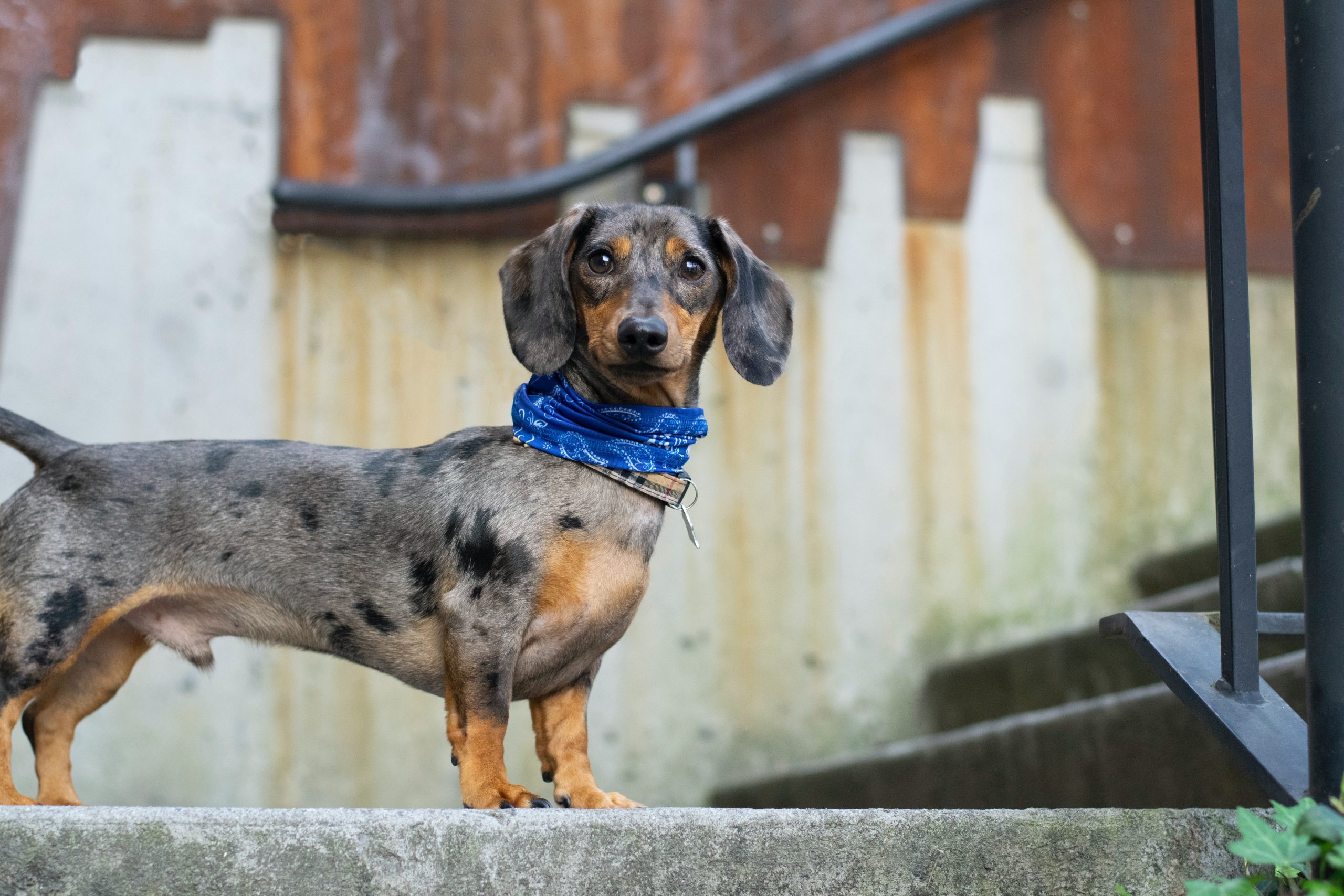
Bite Inhibition Training for Dachshunds
You can absolutely train a Dachshund not to bite. It just takes consistency — and it works best when started young.
Here’s what actually moves the needle:
- Yelp method (puppies): When your pup bites too hard, say “ouch!” sharply and end play for 30-60 seconds. This teaches them that hard bites end the fun — which is the last thing a Dachshund wants.
- Redirect immediately: Always have a chew toy handy. The moment mouthing starts, replace your hand with the toy. No hand is ever a toy.
- Don’t roughhouse: Wrestling, rough play, and letting small children chase or grab the dog creates confusion. The dog can’t always tell when “play biting” crosses a line.
- Socialize early: Expose your Dachshund puppy to different people, sounds, and environments between 8-14 weeks. This is the critical window. Dogs that see new things as normal are much less likely to bite out of fear.
- Consistent commands: “No bite,” “off,” or “gentle” said the same way every time help build a shared vocabulary. Dachshunds respond well to consistent rules — it’s inconsistency that confuses them.
For adult dogs with established biting habits, it takes more time, but it’s not hopeless. Consulting a certified professional dog trainer who uses positive reinforcement methods is worth the investment. Read more about dog bite prevention strategies that work for stubborn small breeds.
Comparing Dachshund Bite Risk to Other Small Breeds
Wondering how the Dachshund stacks up against other small dogs? The English Bulldog’s bite force is actually much higher, but Bulldogs are generally more laid-back and less prone to biting. The Rhodesian Ridgeback has a higher PSI at around 224, but statistically bites far less often. This comparison shows clearly that temperament matters more than jaw strength.
For Dachshund-specific behavior and breed information, check out the breed guide section — we have detailed deep-dives on all the common breed questions owners ask.
When to See a Doctor After a Dachshund Bite
Don’t dismiss a Dachshund bite because the dog is small. Clean any bite wound immediately with soap and water for at least 5 minutes. See a doctor if:
- The bite breaks the skin (any puncture wound)
- Bleeding won’t stop after 10 minutes of direct pressure
- You see signs of infection within 24-48 hours (redness spreading, warmth, pus, fever)
- The dog’s vaccination status is unknown
- The wound is on the face, hands, or feet
Dachshund bites, being narrow puncture wounds, carry a real infection risk. Dog mouths contain bacteria including Pasteurella, Staphylococcus, and Capnocytophaga. Most resolve without incident with proper care — but proper care means cleaning it right away, not hoping for the best.
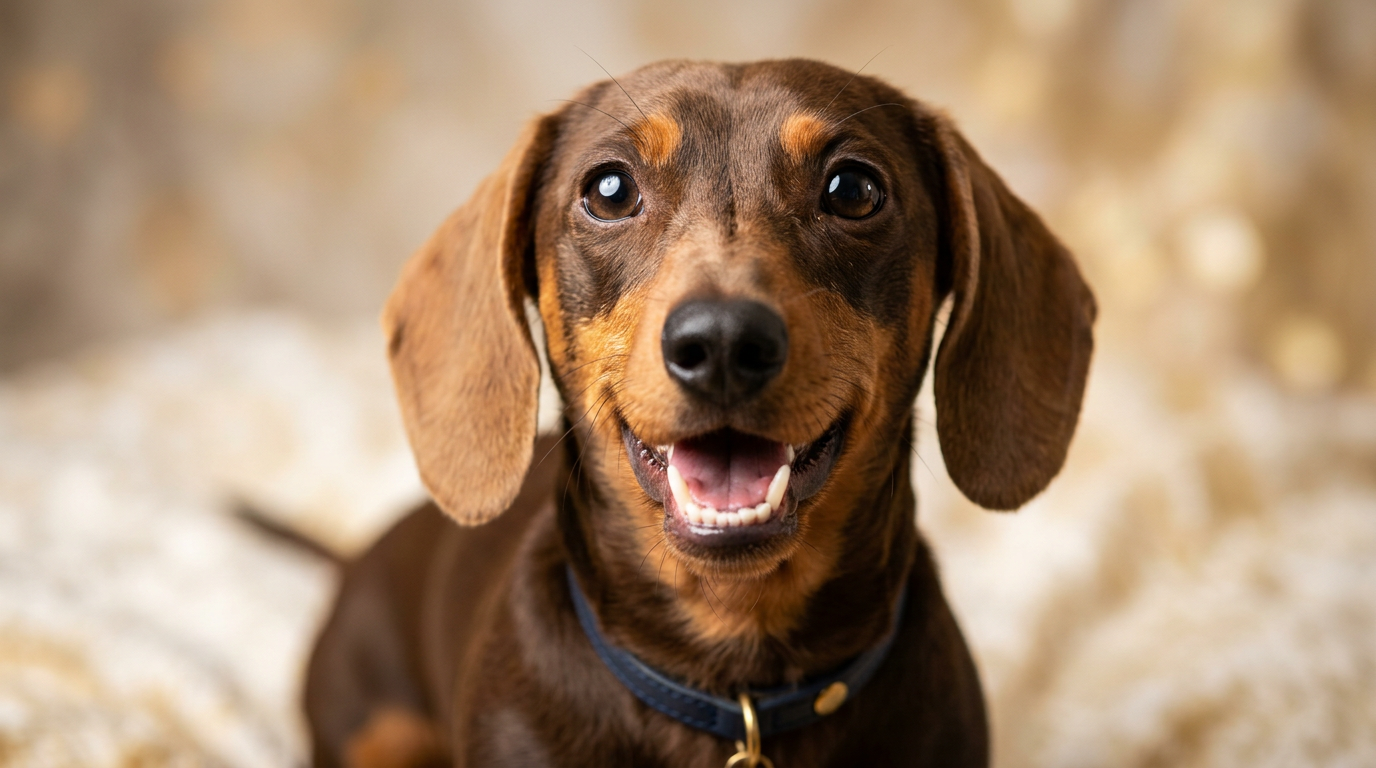
Frequently Asked Questions About Dachshund Bite Force
What is the bite force of a Dachshund in PSI?
Around 100 PSI. Lower than larger breeds, but still enough to break skin and cause real pain. Their narrow, sharp teeth make puncture wounds the primary concern.
Does a Dachshund bite hurt?
Yes. Their teeth are built to pierce cleanly. A bite will hurt and can draw blood, especially if the dog bites with full intent. Don’t underestimate it because of the dog’s size.
Are Dachshunds more likely to bite than other breeds?
Studies suggest yes — they bite more frequently per capita than many breeds, including some much larger ones. Their hunting background and temperament contribute to a lower threshold for biting when stressed or threatened.
Why do Dachshunds bite so much?
Centuries of breeding to hunt badgers underground produced a dog that’s fearless, tenacious, and willing to use its teeth. Add in pain from common back problems and small dog syndrome (where biting gets tolerated because the dog is small), and you have a recipe for frequent bite incidents.
How do I stop my Dachshund from biting?
Start early with bite inhibition — yelp, stop play, redirect to toys. Socialize during the puppy window (8-14 weeks). Never use hands as toys. Enroll in obedience class. For adult dogs with established habits, work with a certified trainer.
Are Dachshunds safe with children?
With proper supervision and teaching kids to respect the dog’s space — yes. Without it, the risk is real. Dachshunds have low tolerance for rough handling. Teach children never to startle, corner, or grab a Dachshund.
Small Dog, Real Bite — Here’s What That Means for You
The Dachshund’s bite force isn’t the most impressive number in the dog world. At 100 PSI, they’re no Mastiff. But bite force isn’t why Dachshunds bite. They bite because they were built to, because they’re often given a pass when they shouldn’t be, and because they can experience real pain from back problems that owners don’t always notice.
If you have a Dachshund, start training early and stay consistent. Respect their triggers. Watch for signs of pain. And don’t let anyone — including yourself — dismiss a growl or snap just because the dog is small. A well-trained Dachshund is a fantastic companion: loyal, funny, and fiercely attached to the people they love. Getting the bite piece right just makes that relationship better for everyone.











 English (US) ·