
 3 weeks ago
45
3 weeks ago
45
St. Bernards are famous for being gentle giants — the kind of dog that could knock you over with a wagging tail and then try to sit in your lap. But they’re also massive animals with powerful jaws, and people naturally wonder: just how strong is a Saint Bernard’s bite force? Is it something to worry about?
Short answer: their bite force is real and significant — around 230-250 PSI — but Saint Bernards are among the least aggressive large breeds you’ll find. Understanding the numbers in context makes a lot more sense than just citing a scary-sounding PSI figure.
📊 Saint Bernard Bite Force: Key Numbers
- Estimated bite force: 230-250 PSI
- Average human bite force: 120-160 PSI
- Typical dog bite force range: 150-400 PSI
- Ranked among top bite forces: Upper-mid range for large breeds
- Temperament classification: Gentle, calm (not selectively bred for protection)
What Is Bite Force PSI, and How Is It Measured?
PSI stands for pounds per square inch — a measure of pressure applied over a given area. When measuring dog bite force, researchers use specialized instruments that measure the force a dog’s jaw exerts when biting. It’s worth noting that bite force measurements vary across studies and are affected by how the measurement is taken, the individual dog, and whether the dog is biting at full effort. The numbers you see cited online — including for Saint Bernards — are estimates based on available data, not precise lab measurements for every individual dog.
That said, the general ranges are useful for comparison. Human bite force averages around 120-160 PSI. The average pet dog bites between 150-250 PSI depending on size and breed. Large working breeds typically fall in the 250-400 PSI range. Dogs specifically bred for bite work (like Kangals, Mastiffs, or Rottweilers used in protection sports) can reach 500+ PSI in some estimates.
Saint Bernard Bite Force: 230-250 PSI
The Saint Bernard’s estimated bite force is around 230-250 PSI. That’s stronger than most humans, and strong enough to cause serious injury if a bite occurs with real intent. But it’s also on the lower end for giant breeds — comparable to a German Shepherd or Labrador Retriever, and well below the Rottweiler (328 PSI) or Mastiff (556 PSI).
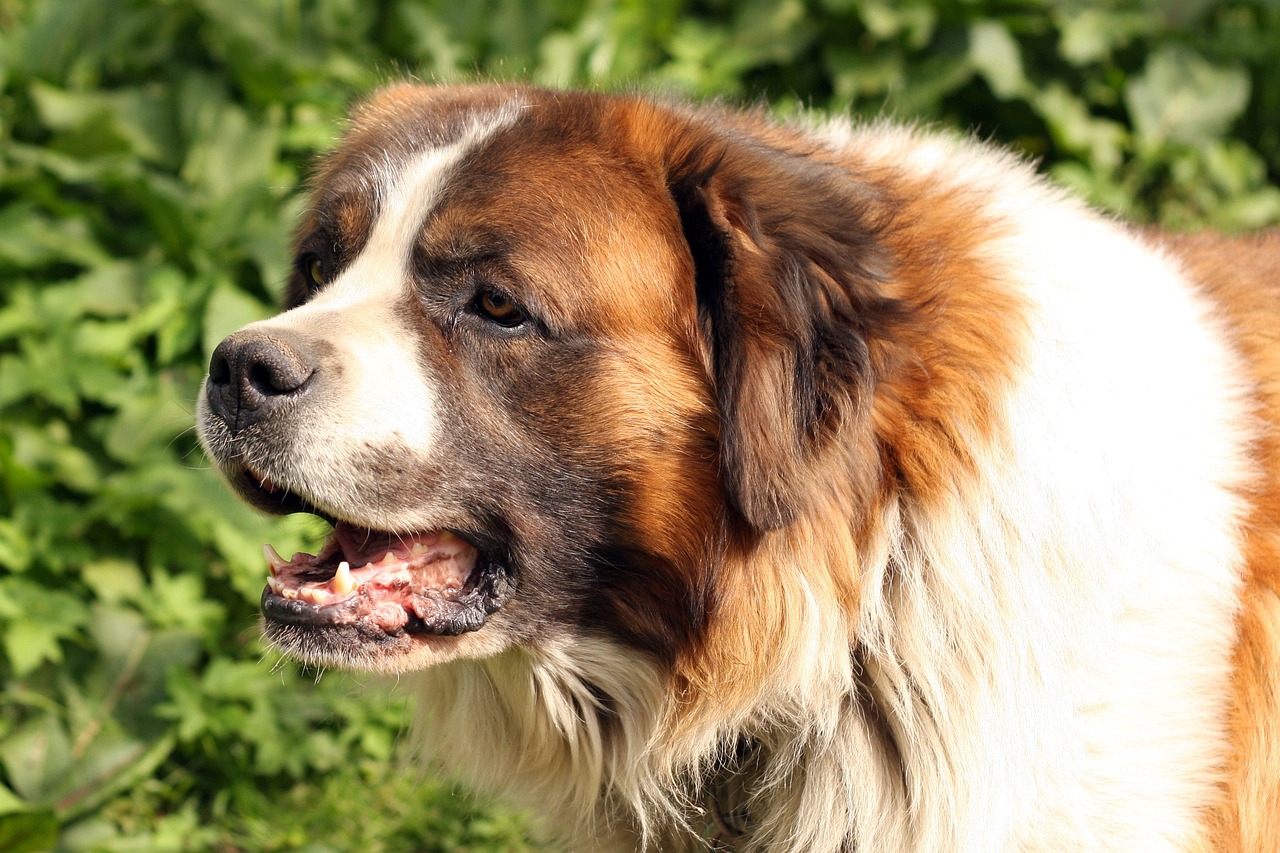
The Saint Bernard has a broad, muscular skull and powerful jaw muscles that support this bite force. Their head structure was developed for the Swiss Alps, not for fighting or protection — these dogs were bred to find and rescue avalanche victims, which required physical power but not aggressive jaw strength. Their bite force is incidental to their size, not a deliberate breeding goal.
How Does the Saint Bernard Compare to Other Large Breeds?
| Kangal | 743 PSI | Protective, independent |
| Mastiff | 556 PSI | Gentle, loyal |
| Rottweiler | 328 PSI | Protective, loyal |
| German Shepherd | 238 PSI | Protective, trainable |
| Saint Bernard | 230-250 PSI | Gentle, calm |
| Labrador Retriever | 230 PSI | Friendly, gentle |
| Doberman | 228 PSI | Protective, loyal |
| Pit Bull | 235 PSI | Variable (depends on individual) |
| Average human | 120-160 PSI | N/A |
What’s notable here: Saint Bernards have a bite force similar to breeds like German Shepherds and Dobermans — dogs often associated with protection work. But unlike those breeds, Saint Bernards have essentially no history of being bred for guarding or attack work. That context matters a lot when thinking about actual risk.
Does a Saint Bernard Bite Hurt?
Yes. Any bite from a dog this size hurts. A Saint Bernard can weigh 140-180 pounds, and their jaw muscles are proportional to that frame. If a Saint Bernard bites with full force and intent, it causes serious injury — broken skin, tissue damage, and potentially broken bones in smaller individuals or children.
But here’s the thing: Saint Bernards almost never bite with full force and intent. They’re consistently rated as one of the least aggressive large breeds. Their bite inhibition is naturally good, and they’re not predisposed to conflict. When Saint Bernards do bite, it’s almost always a fear response, a pain response, or a case of a dog that was severely neglected or abused — not a breed tendency.
That’s different from breeds specifically selected for protective aggression, where a bite impulse is literally part of their genetic programming.
Saint Bernard’s Jaw Structure: Built for Size, Not Aggression
The Saint Bernard has a broad, massive skull with a well-developed stop (the indentation between the eyes) and powerful jaw muscles anchored to a wide, deep muzzle. This physical structure generates significant bite force as a byproduct of their overall size — not because they were bred for biting power specifically.
Their lips are also notably loose (jowly), which contributes to the Saint Bernard’s famous drooling but reduces precision bite engagement. A breed built for protection work typically has tighter lips, a longer muzzle, and jaw muscles specifically optimized for grip strength. The Saint Bernard’s jaw architecture is designed for carrying things and eating, not for sustained bite grip.
Why Would a Saint Bernard Bite?
Saint Bernards bite for the same reasons any dog bites — and understanding those reasons is key to preventing incidents:
- Fear: A cornered, frightened Saint Bernard may bite. Their size means they can’t easily escape, which increases the chance they’ll respond defensively.
- Pain: Dogs in pain bite. A Saint Bernard with untreated joint pain, injury, or illness may react with snapping or biting when touched in a sensitive area.
- Resource guarding: Some Saint Bernards guard food, toys, or space — though this is more behavioral than breed-typical.
- Play biting: Especially as puppies, Saint Bernards mouth and nip. At 20+ pounds (and growing fast), “puppy biting” stops being cute very quickly and needs to be addressed with bite inhibition training early.
- Overstimulation: Very excited dogs sometimes bite harder than they intend during play. With a 150-pound dog, this matters.
Bite Inhibition: Teaching a Saint Bernard How Hard Is Too Hard
Bite inhibition is the ability of a dog to control the force of their bite. Dogs learn this through puppy play — when they bite a littermate too hard, the other puppy yelps and stops playing. That feedback teaches them that hard biting ends the fun.
For Saint Bernards, this training is genuinely important. A play nip from an 8-pound puppy is annoying. The same behavior from a 140-pound adult dog is dangerous — not because of aggression, but because of sheer size and force. Start bite inhibition training early and consistently:
- Yelp and stop play immediately when the puppy bites too hard. Withdraw all attention.
- Redirect to toys — never allow a Saint Bernard to practice biting hands, even gently.
- Reward soft mouthing if it happens, but the goal is no mouth on skin at all.
- Be consistent across all family members. If some people allow it and others don’t, the dog gets confused.
Training and Socialization
A well-socialized Saint Bernard is about as dangerous as a large, friendly boulder. Proper training and early socialization are what produce that result:
- Start early: Socialize Saint Bernard puppies between 3-16 weeks with as many people, dogs, sounds, and environments as possible. This window is critical.
- Positive reinforcement works best: Saint Bernards are sensitive dogs that respond much better to reward-based training than harsh corrections. Positive training builds confidence and reduces fear-based behavior.
- Obedience training is non-negotiable at this size: A Saint Bernard that doesn’t respond to basic commands is a management problem. “Sit,” “stay,” and “leave it” aren’t just nice to have — they’re safety tools when you’re managing a 150-pound dog around children or guests.
- Watch for behavioral changes: Any sudden shift in your Saint Bernard’s personality — increased irritability, snapping, withdrawal — is worth a vet visit. Pain-based aggression is common in large breeds with joint issues, and Saint Bernards are prone to hip dysplasia.
Frequently Asked Questions About Saint Bernard Bite Force
What is the bite force of a Saint Bernard?
The Saint Bernard’s estimated bite force is approximately 230-250 PSI (pounds per square inch). This is on par with German Shepherds and Labradors, and well below high-bite-force breeds like Rottweilers or Mastiffs. It’s strong enough to cause serious injury, but Saint Bernards are not an aggressive breed and rarely bite with intent.
Are Saint Bernards dangerous dogs?
Saint Bernards are not considered dangerous dogs by temperament. They’re consistently rated as gentle and calm, even with children. Their size creates potential risk — not their aggression. A Saint Bernard that knocks over a child while playing is more likely to cause injury than one that bites. Proper training and supervision are important at this size, but the breed itself is not inherently dangerous.
Are Saint Bernards naturally aggressive?
No. Saint Bernards were bred as alpine rescue dogs, not guard or protection dogs. Their natural disposition is gentle and friendly, especially when well-socialized and trained. Fear, pain, or severe neglect can produce aggression in any dog, including Saint Bernards — but it’s not a breed tendency.
How can I stop my Saint Bernard puppy from biting during play?
Redirect attention to toys and offer positive reinforcement when they play gently. If they bite, stop the play immediately and withdraw attention. The message: biting ends the fun. Be consistent across all family members, and start this training from day one — don’t wait until the puppy is big enough to hurt someone.
Why does my Saint Bernard growl or snap when approached while eating?
This is resource guarding — a behavior where a dog becomes possessive of food. It’s trainable, but should be addressed early and consistently. Work with a trainer if the behavior persists or escalates. Do not try to take food away forcibly as a “dominance” exercise — that approach typically worsens resource guarding.
Is a Saint Bernard’s bite more dangerous because of their size?
Yes, in the sense that any bite from a large dog causes more potential damage than a bite from a small dog, regardless of PSI. A Saint Bernard biting a child can cause serious injury even without intent to harm. This is why size-appropriate training and supervision matter, even with a gentle breed.
How does bite inhibition training work?
Bite inhibition teaches dogs to control how hard they bite. In puppies, you interrupt biting on skin with a yelp and withdrawal of play. Over time, the puppy learns that hard biting loses them what they want (your attention and play). The goal for large breeds is zero tolerance for teeth on skin, not just “soft” biting — because even a gentle bite from a 140-pound dog can be accidental injury.
Is neutering or spaying effective in reducing aggressive behavior?
Neutering can reduce hormone-driven aggression in some dogs, but it’s not a solution for other types of aggression. Training and socialization are more consistently effective. If your Saint Bernard shows aggression after neutering, consult a veterinary behaviorist.
What should I do if my Saint Bernard bites someone?
Separate your dog from the injured person immediately. Assess the injuries and get medical attention if needed. Document what happened — where you were, what preceded the bite, and who witnessed it. Contact your vet to rule out a medical cause for the behavior. Consult a professional trainer or behaviorist. Depending on the severity, you may also need to notify local animal control.
Is teething why my Saint Bernard puppy bites a lot?
Yes — teething puppies bite more as they try to soothe sore gums. Provide safe chew toys, redirect biting to those items, and reinforce the habit. The teething phase typically peaks around 4-6 months and improves once the adult teeth are fully in by about 7 months. Don’t wait for teething to pass before starting bite inhibition training, though — start from day one.
Big Dog, Gentle Soul — But Size Demands Respect
A Saint Bernard’s bite force of 230-250 PSI is real and worthy of respect — not fear. The breed is one of the gentlest of any large dog, with a history of saving human lives rather than threatening them. But “gentle” doesn’t mean “can’t cause harm,” especially when you’re talking about a dog that might outweigh a grown adult.
The practical takeaway: train early, socialize consistently, watch for pain-based behavioral changes, and never let the gentle disposition make you complacent about supervision around small children or strangers. A well-raised, well-trained Saint Bernard is a remarkable family dog. Their bite force just means the training part isn’t optional.
If you’re dealing with sudden behavioral changes in your dog that include increased aggression or irritability, get a vet check before anything else — pain is the most common overlooked cause of biting in dogs who weren’t previously aggressive. And if you’re considering a Saint Bernard and want to know more about giant breed growth and size expectations, that’s worth reading before bringing one home.















 English (US) ·