
Bottom line: Following is normal when your dog feels calm and secure. It becomes a problem when your dog can’t cope without constant access to you.
1. Strong Bonding and Attachment (Most Common Reason)
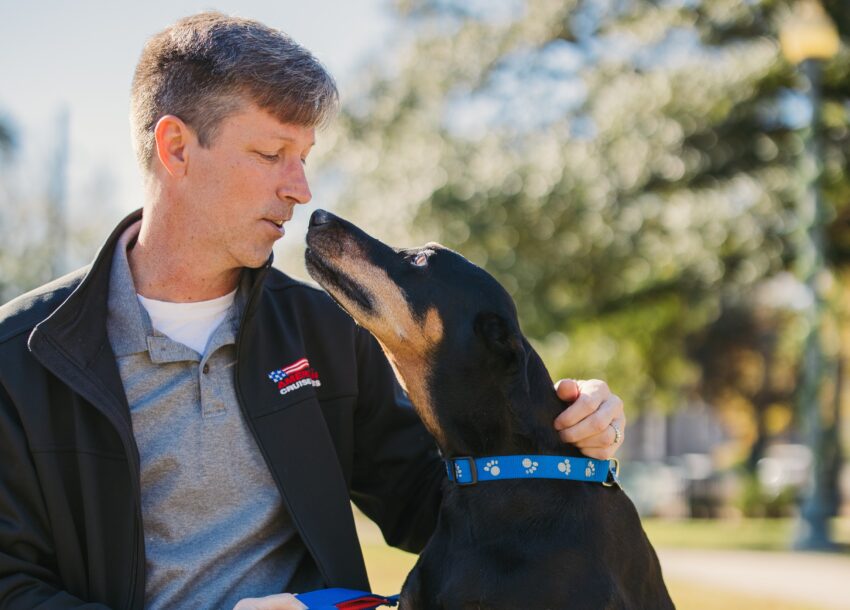
The most common reason dogs follow their owners everywhere is simple attachment — your dog feels safest and most secure near you. Dogs are social animals, and many naturally choose one “primary person” to shadow, especially if that person handles feeding, walking, training, or most daily routines.
This behavior often becomes more noticeable when:
- You’ve been spending more time at home (WFH, schedule changes)
- Your dog has matured into adulthood and formed a stronger bond
- You’re the main source of rewards, comfort, and predictability
In these cases, following you isn’t anxiety — it’s preference.
What This Usually Looks Like
- Your dog calmly trails you from room to room
- They settle nearby without demanding attention
- They’re relaxed if you step away briefly
This is healthy attachment, not clinginess.
When Bonding Turns Into “Too Much”
Even normal attachment can drift into overdependence if a dog never practices independence. Dogs that get constant attention simply for following may learn that shadowing = reward.
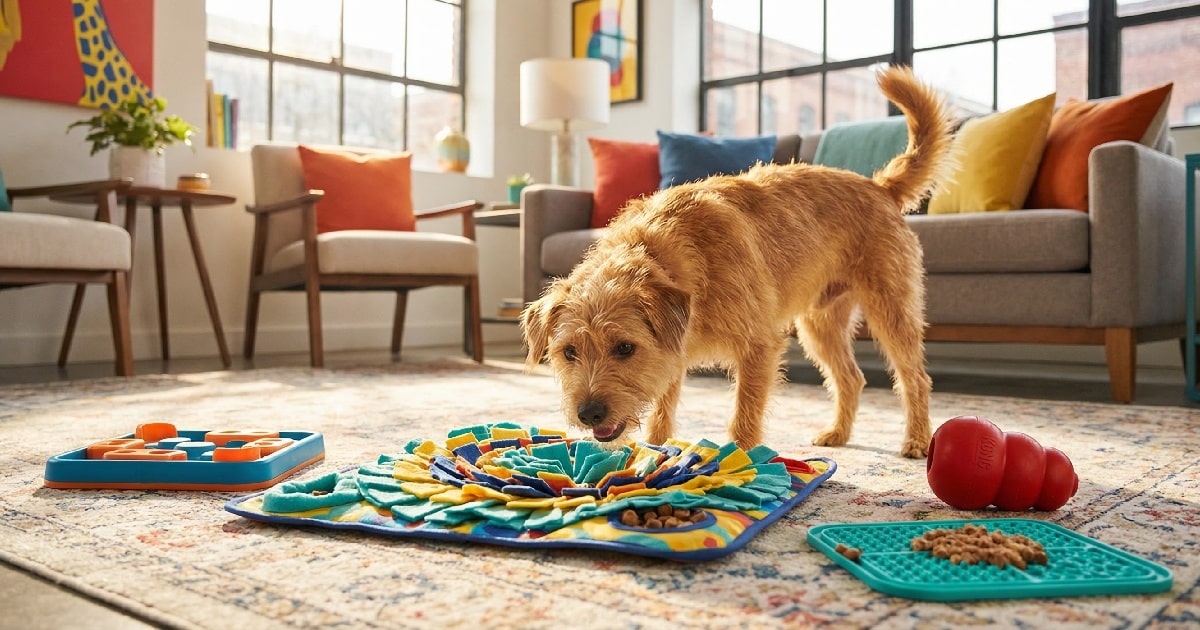
That’s where intentional enrichment helps. Using tools like food puzzles, snuffle mats, or classic rubber toys from brands like KONG gives your dog something productive to focus on without needing to be glued to you.
Choose this approach if:
- Your dog follows you but seems relaxed
- You want to encourage confidence and independence
Watch more closely if:
- Your dog can’t settle unless touching you
- Following is paired with stress signals
2. Anxiety or Stress (A Very Common Cause of Sudden Following)
If your dog started following you everywhere suddenly, anxiety or stress is one of the most likely explanations. When dogs feel uncertain, they stay close to the person who represents safety and stability — you.
This kind of following is different from bonding because it’s driven by reassurance-seeking, not preference.
Common Triggers for Anxiety-Driven Following
- Changes in routine (new job hours, school schedules, travel)
- Moving to a new home or rearranging the current one
- New pets, babies, or frequent visitors
- Loud or unpredictable events (storms, fireworks)
- Time apart after increased togetherness (post-vacation, return to office)
Even changes that seem minor to us can feel huge to a dog.
Signs the Following Is Anxiety-Based
- Your dog seems tense or hyper-alert
- They follow every movement, even short ones
- Whining, pacing, panting, or restlessness when separated
- Difficulty settling unless you’re in sight
In these cases, following is a coping strategy.
How to Support an Anxious Dog (Without Reinforcing Fear)
The goal isn’t to push your dog away — it’s to help them feel safe without needing constant proximity.
Helpful supports may include:
- Predictable daily routines
- Calm independence-building activities (food puzzles, quiet chew time)
- Environmental calming tools, like pheromone diffusers from Adaptil
- Pressure-based calming wear, such as ThunderShirt, which some dogs find soothing during stressful periods
These tools don’t “fix” anxiety on their own, but they can lower the baseline stress level so training and routine changes actually work.
⚠ Heads-up: If anxiety-driven following escalates or comes with destructive behavior, accidents, or panic, it’s worth talking to a vet or certified trainer sooner rather than later.
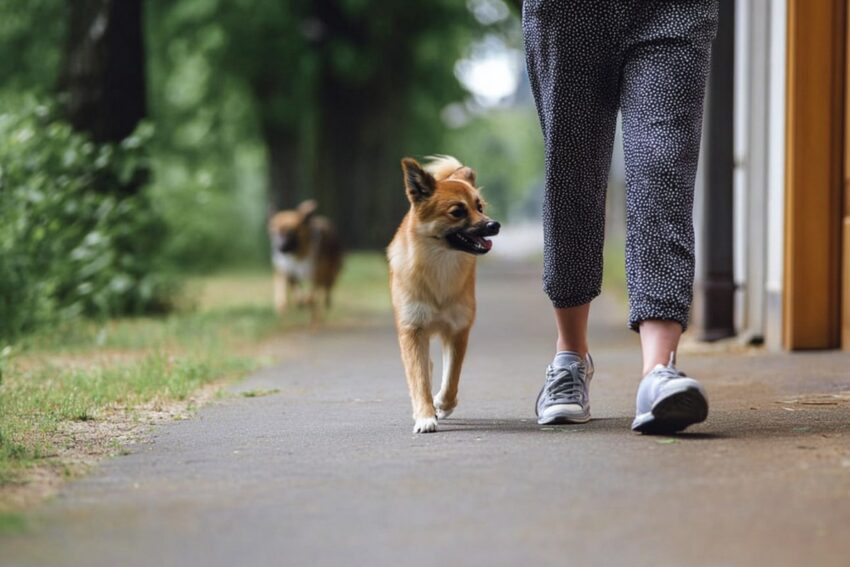
3. Changes in Routine or Environment
Dogs often start following their owners everywhere when their daily routine or environment changes, even if the change seems positive or minor. When predictability drops, dogs anchor themselves to the one constant they trust most — you.
This is one of the most overlooked reasons because nothing feels “wrong” to the human.
Common Routine Changes That Trigger Following
- A new work schedule or return to the office
- Kids going back to school or home for summer
- Moving homes — or even rearranging furniture
- New walking times, feeding schedules, or exercise patterns
- Guests staying over or frequent visitors
From a dog’s perspective, these shifts can disrupt their internal sense of timing and safety.
What This Type of Following Looks Like
- Your dog checks in more often than usual
- They follow you but remain calm and quiet
- They settle once the environment feels predictable again
In most cases, this behavior fades on its own as your dog adjusts.
How to Help Your Dog Adjust Faster
The fastest way to reduce routine-based following is to restore predictability, not attention.
Helpful steps include:
- Keeping feeding and walk times consistent
- Creating a reliable “settle spot” (bed or mat used daily)
- Adding structured enrichment during transition periods
Food-based enrichment — like puzzle feeders or slow-feeding toys — can be especially helpful because they give your dog a job during moments when the household feels different, rather than relying on you for constant reassurance.
Good news: If following is driven by routine changes alone, it usually resolves within a few weeks as your dog learns the new normal.
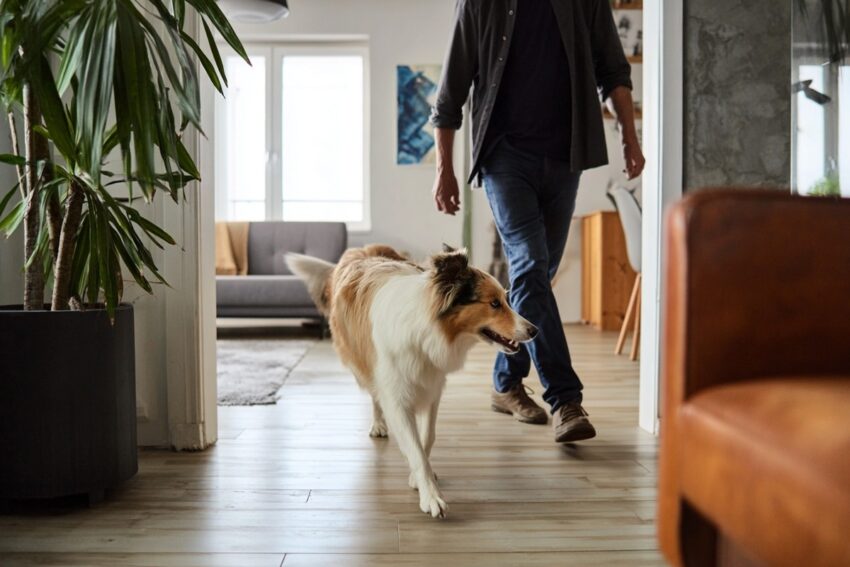
4. Breed Traits (“Velcro Dog” Genetics)
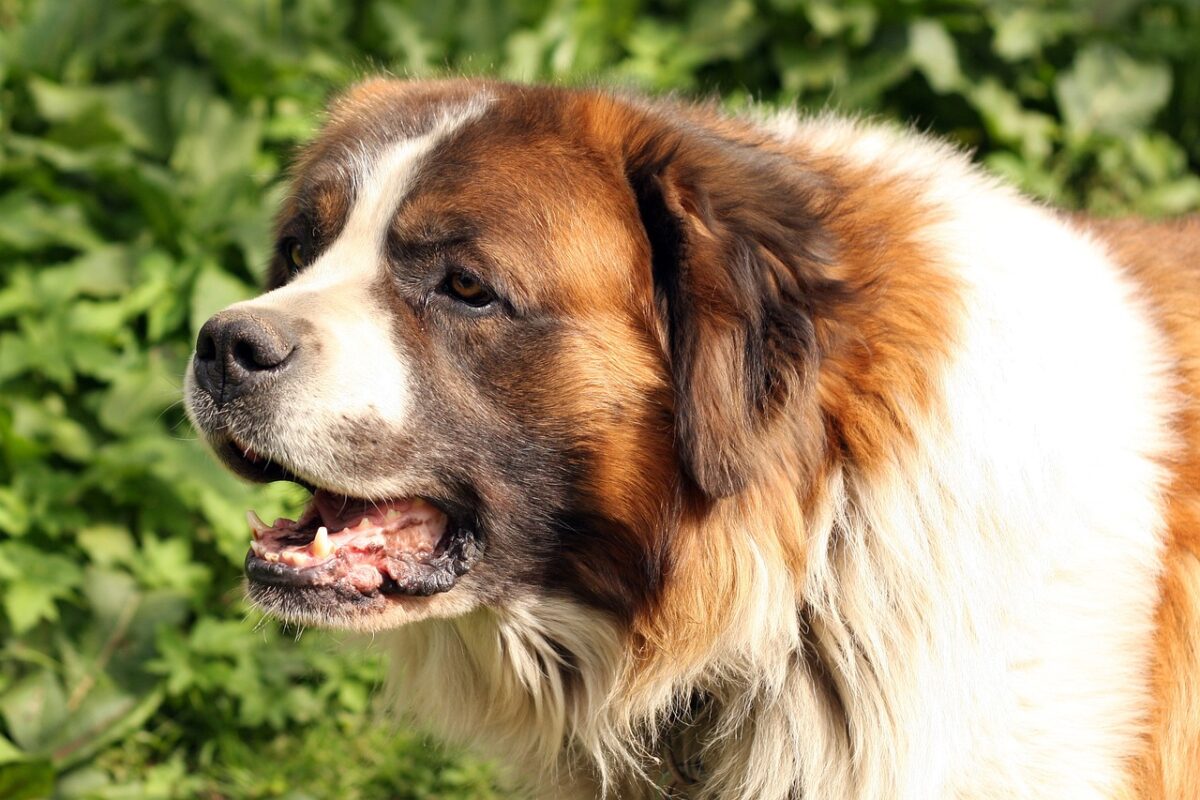
Some dogs follow their owners everywhere because they were literally bred to stay close to humans. For certain breeds, shadowing isn’t anxiety or insecurity — it’s instinct.
Dogs developed for companionship, herding, or close cooperation tend to monitor their people constantly. Staying nearby was part of the job.
Breeds More Likely to Be “Velcro Dogs”
While any dog can be clingy, this behavior is especially common in:
- Herding breeds (bred to watch and respond to human movement)
- Companion and toy breeds (bred for constant human presence)
- Working dogs with strong handler focus
In these dogs, following you room to room often means engagement, not distress.
What Breed-Driven Following Looks Like
- Calm, alert observation rather than panic
- Following without whining or stress behaviors
- Ability to relax once they know where you are
This type of following is usually stable and lifelong, not sudden or escalating.
When Genetics Aren’t the Whole Story
Even naturally “Velcro” breeds can tip into clinginess if:
- Their mental stimulation is too low
- They don’t get enough structured activity
- Independence is never practiced
Breed tendencies explain why a dog likes being close — but environment determines whether that closeness stays healthy.
Key takeaway:
If your dog has always been a shadow and seems calm doing it, breed traits are likely at play. If the behavior appeared suddenly or feels tense, another reason on this list is probably involved.
5. Age-Related Changes (Puppies and Senior Dogs)
Dogs often start following their owners more closely during major life stages, especially puppyhood and old age. At both ends of the age spectrum, dogs rely more heavily on their humans for guidance, comfort, and reassurance.
Why Puppies Follow You Everywhere
For puppies, following is part of normal development.
- They’re learning what’s safe
- They haven’t built independence yet
- You’re their primary source of security
This kind of following usually decreases naturally as confidence and training increase.
Why Senior Dogs Become More Attached
In older dogs, sudden following can be linked to:
- Reduced vision or hearing
- Cognitive changes
- Joint pain or general discomfort
Staying close helps senior dogs feel oriented and secure, especially in unfamiliar or low-light situations.
What Age-Related Following Looks Like
- Calm but frequent check-ins
- More following at night or in new spaces
- Increased need for reassurance without panic
In many cases, this behavior is adaptive, not problematic.
How to Support Puppies and Seniors
For puppies, focus on:
- Gradual independence training
- Short, positive separation periods
For senior dogs, comfort and predictability matter most:
- Consistent layouts (avoid rearranging furniture)
- Easy-to-reach resting spots
- Supportive beds or mobility-friendly setups
Vet Tip: If a senior dog’s following appears suddenly or comes with confusion, accidents, or nighttime restlessness, a veterinary check is important to rule out medical causes.
6. Learned Behavior (Accidental Reinforcement)
Sometimes dogs follow their owners everywhere simply because they’ve learned that it works. If following you consistently leads to attention, treats, talking, or physical contact, your dog may repeat the behavior—not out of anxiety, but because it’s been unintentionally rewarded.
This is especially common in households where dogs get frequent interaction throughout the day.
How Dogs Learn This Behavior
Following can become reinforced when:
- You pet or talk to your dog every time they trail you
- You give treats “just because” they’re nearby
- You respond immediately to hovering, even to say “go lie down”
- You work from home and interact constantly without breaks
From your dog’s perspective, following = engagement.
What Learned Following Looks Like
- Calm, expectant behavior rather than stress
- Increased following during high-attention moments (meals, work breaks)
- Quick response when attention is offered
This type of following is usually habit-based, not emotional.
How to Reduce Reinforced Clinginess
The solution isn’t ignoring your dog entirely—it’s being intentional about when attention happens.
Helpful strategies include:
- Rewarding your dog for settling independently
- Offering enrichment before they start hovering
- Using toys or chews that encourage solo time
Interactive toys and long-lasting chews from trusted brands like Outward Hound can help shift your dog’s focus away from constant proximity and toward independent engagement.
Key takeaway: If your dog seems relaxed but overly attached to your movements, learned behavior may be the driver—and that’s one of the easiest causes to adjust.
7. Medical Issues or Physical Discomfort
If your dog started following you everywhere very suddenly, physical discomfort or an underlying medical issue should be considered. Dogs often seek proximity when they’re in pain, confused, or not feeling well — even if symptoms aren’t obvious yet.
This type of following is about security and support, not behavior.
Medical Factors That Can Increase Following
- Joint pain or arthritis
- Digestive discomfort or nausea
- Vision or hearing loss
- Hormonal or neurological changes
- Cognitive changes in senior dogs
Dogs can’t tell us something feels “off,” so staying close becomes their way of coping.
What Medical-Related Following Looks Like
- Sudden increase in shadowing after being previously independent
- More following at night or in unfamiliar areas
- Slower movement, stiffness, or hesitation
- Subtle behavior changes without clear anxiety triggers
Even mild discomfort can change how secure a dog feels.
When to Call the Vet
It’s a good idea to schedule a veterinary visit if:
- The behavior appeared abruptly with no routine changes
- Following is paired with appetite changes, lethargy, or confusion
- Your dog is a senior and the behavior is new
Vet Tip: Behavioral explanations are common, but medical causes should always be ruled out first when a change is sudden.
When Does Following Become a Problem?
Following becomes a problem when your dog can’t cope emotionally without constant access to you. The issue isn’t closeness — it’s distress and loss of independence.
Following Is Usually Normal If:
- Your dog appears calm and relaxed
- They can settle alone when needed
- The behavior is consistent, not escalating
- There’s no panic when you leave the room
In these cases, following is simply a sign of trust and attachment.
Following May Be a Problem If:
- Your dog whines, paces, pants, or trembles when separated
- They can’t relax unless physically touching you
- They follow every small movement obsessively
- The behavior is getting worse over time
- Sleep is disrupted — for you or your dog
These signs suggest the behavior is stress-driven, not just affectionate.
Common Mistakes That Increase Clinginess
- Constant reassurance during anxious moments
- Never rewarding independent settling
- Responding immediately every time your dog follows
- Replacing enrichment with attention
Independence is a learned skill — most dogs need help practicing it.
When to Intervene
- Mild: New behavior that’s improving → focus on routine and enrichment
- Moderate: Persistent tension → consider training or anxiety support
- High: Panic, destruction, accidents → talk to a vet or certified trainer
Bottom line:
Most dogs follow their owners because they feel safe. It becomes a concern only when your dog feels unsafe without you.











 English (US) ·