
 1 month ago
38
1 month ago
38
 Shutterstock
Some animals are designed to blend in. Reptiles didn’t get that memo. The most colorful reptiles on earth look like someone commissioned a professional artist and said “no limits.” Electric blues, screaming oranges, ghostly whites, iridescent scales that shift color depending on the light — the reptile world has all of it.
And the colors aren’t just pretty. They mean something. Warning, camouflage, communication, temperature regulation, mating display — every hue has a job. The more you know about what you’re looking at, the more incredible it gets.
Here are the most strikingly colorful reptiles on the planet, including what makes each one special and — for anyone considering one as a pet — an honest care difficulty rating.
Colorful Reptiles at a Glance
| Panther Chameleon | Blue, red, green, orange | Madagascar | Hard |
| Rainbow Boa | Iridescent spectrum | South America | Medium |
| Green Tree Python | Vivid green + white | New Guinea, Australia | Hard |
| Veiled Chameleon | Green, blue, yellow, red | Yemen, Saudi Arabia | Medium-Hard |
| Madagascar Day Gecko | Bright green + red spots | Madagascar | Medium |
| Blue-Tongue Skink | Orange-tan + blue tongue | Australia | Easy |
| Collared Lizard | Green, blue, orange | SW United States | Medium |
| Gila Monster | Orange/pink + black | SW US, Mexico | Not legal as pet (most states) |
| Mexican Milk Snake | Red, black, white bands | Mexico | Easy-Medium |
| Painted Turtle | Red, yellow, green shell | North America | Easy |
1. Panther Chameleon
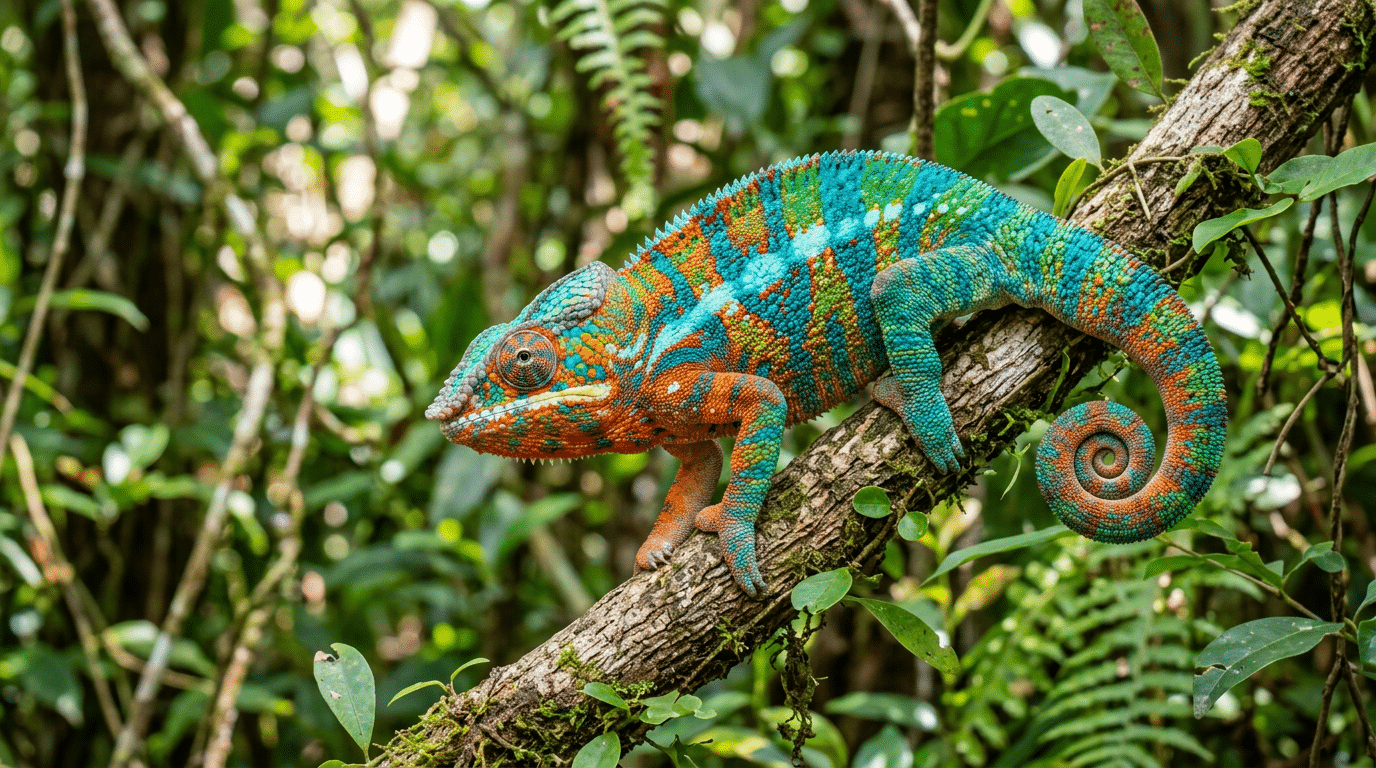
If you had to pick one reptile that looks like it was painted by someone on a sugar rush, the Panther Chameleon from Madagascar wins. Males display electric turquoise, cobalt blue, vivid orange, and bright red — sometimes all on the same animal at the same time.
Here’s the wild part: Panther Chameleons don’t just have one color scheme. They shift. Mood, temperature, social signaling, mating status — all of it changes their color display in real time. A calm male resting in the morning looks completely different from an aggressive male defending territory from another male. The color change isn’t about blending in with the background (though some species do that). It’s mostly about communicating.
Different geographic localities in Madagascar produce different base color patterns. Ambilobe panther chameleons tend to be the most vividly blue and red. Nosy Be animals lean toward turquoise. Experienced keepers collect them by locale like rare stamps.
As a pet: Beautiful but challenging. They need precise humidity and temperature, live food only (crickets, dubia roaches, hornworms), UVB lighting, and they stress easily from handling. Not for beginners. But experienced reptile keepers find them endlessly rewarding.
Care Difficulty: Hard
2. Rainbow Boa
 Shutterstock
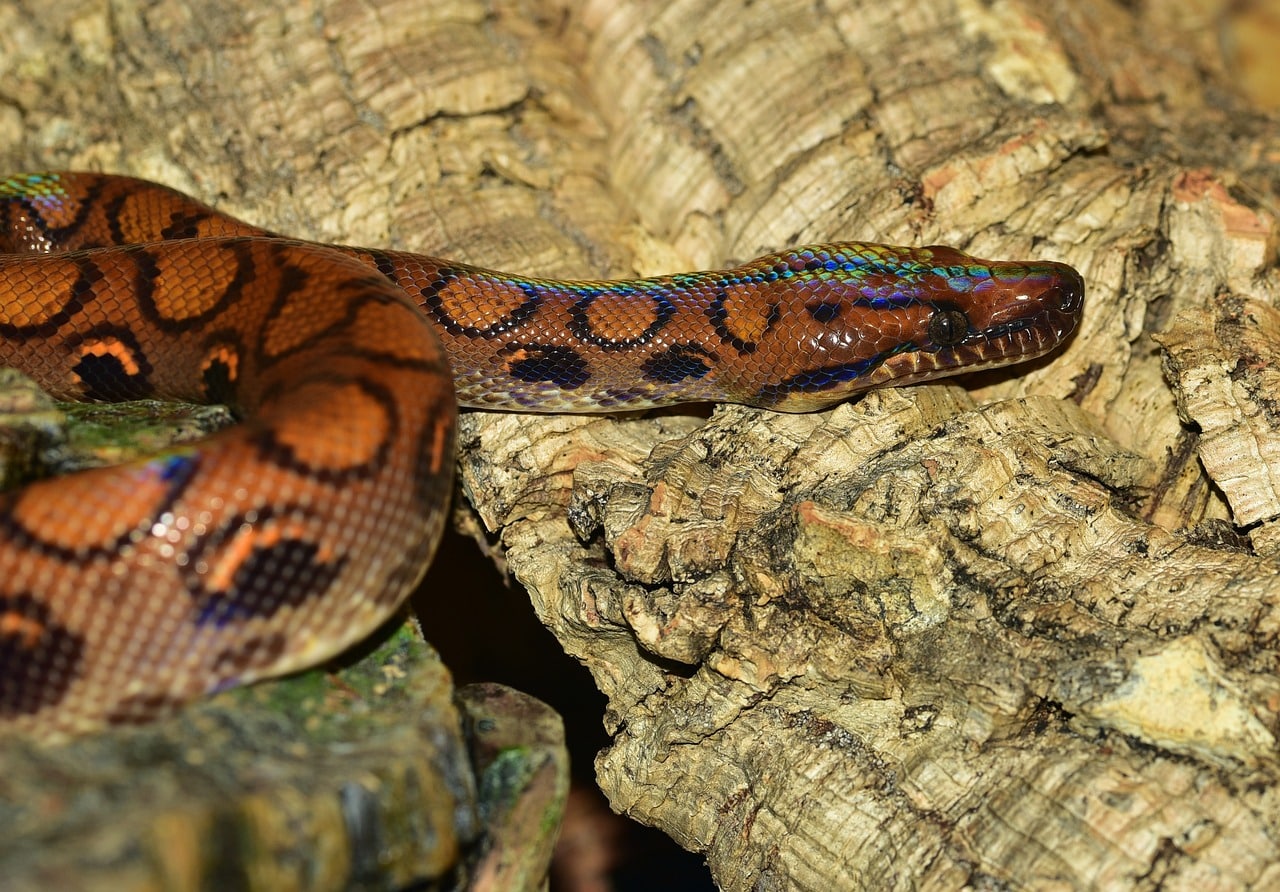
The Rainbow Boa from Central and South America looks like it was dipped in motor oil — in the best possible way. Its scales are coated in specialized microstructures that act like prisms, breaking white light into its full spectrum. In sunlight, the whole animal shimmers with blues, greens, and purples overlaid on its natural red-orange-brown base color.
The Brazilian Rainbow Boa (Epicrates cenchria) is the most iridescent of the subspecies — the one people are usually talking about when they say rainbow boa. It’s also one of the most striking snakes you can legally own in most US states.
The iridescence isn’t pigment. It’s structural coloration — like a CD or a soap bubble. The microscopic structure of the scales themselves creates the rainbow effect. No paint, no dye. Just physics.
As a pet: Manageable for intermediate keepers. They require high humidity (90%+ for Brazilian subspecies), appropriately sized prey, and some handling to stay tame. Young animals can be nippy but usually mellow out with regular handling.
Care Difficulty: Medium
3. Green Tree Python
 Shutterstock
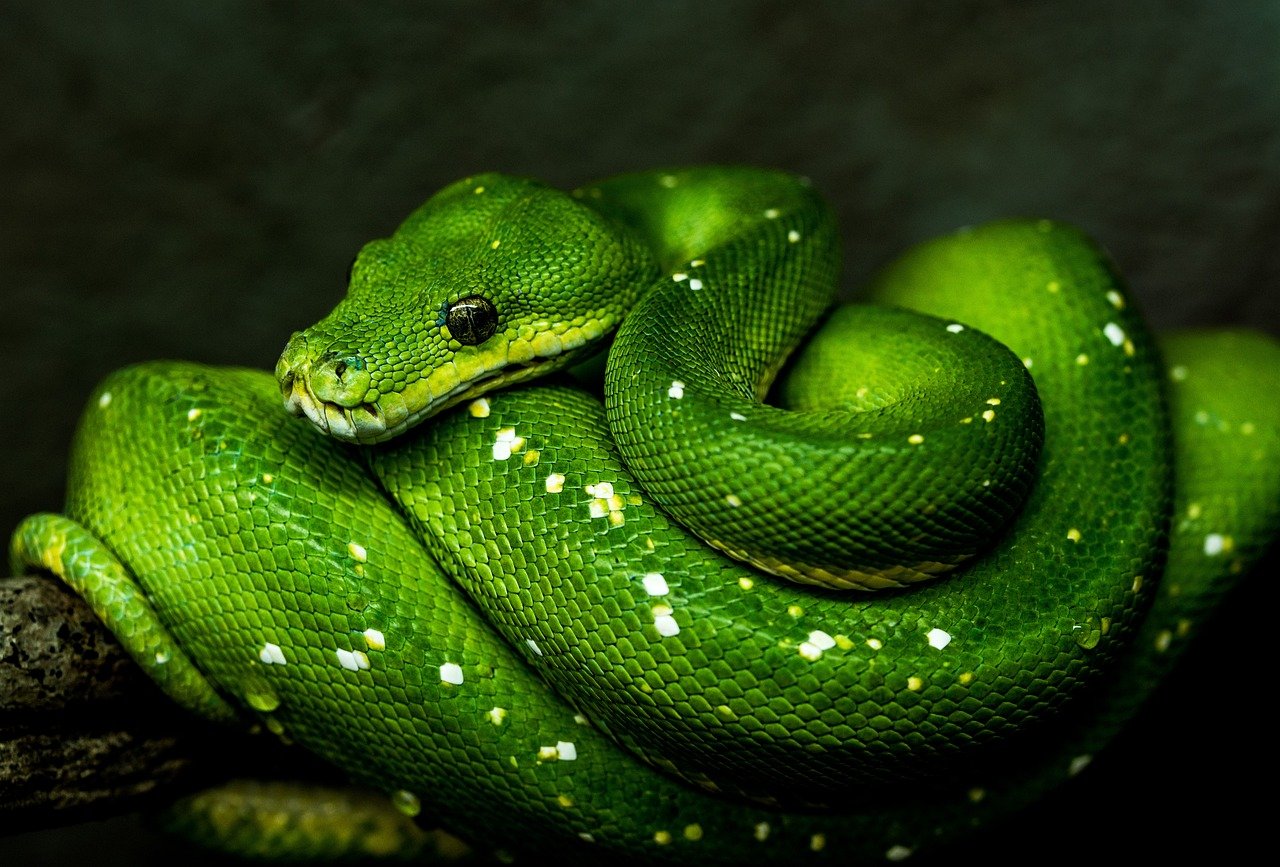
The Green Tree Python is a slow-motion ambush predator from the rainforests of New Guinea and northern Australia. It spends most of its day draped over a branch like wet rope — and it looks absolutely electric doing it.
Adult animals are vivid leaf-green with scattered white scales along the spine. Juveniles are yellow or red-orange (depending on locality), then gradually transform to green during their first year of life. Watching a young red-phase animal start to turn green is genuinely one of the more bizarre and beautiful things in reptile keeping.
The resting posture — coiled in a saddle loop over a horizontal branch with the head nestled in the middle — is iconic. If you’ve ever seen a stock image of “beautiful green snake on a branch,” it was probably this species.
As a pet: Intermediate to advanced. They’re not handleable show animals — they prefer to perch and be observed. But they’re stunning display animals. They need precise temperatures, proper arboreal (branch-heavy) enclosures, and they can be defensively nippy if disturbed while resting.
Care Difficulty: Hard
4. Veiled Chameleon
 Shutterstock
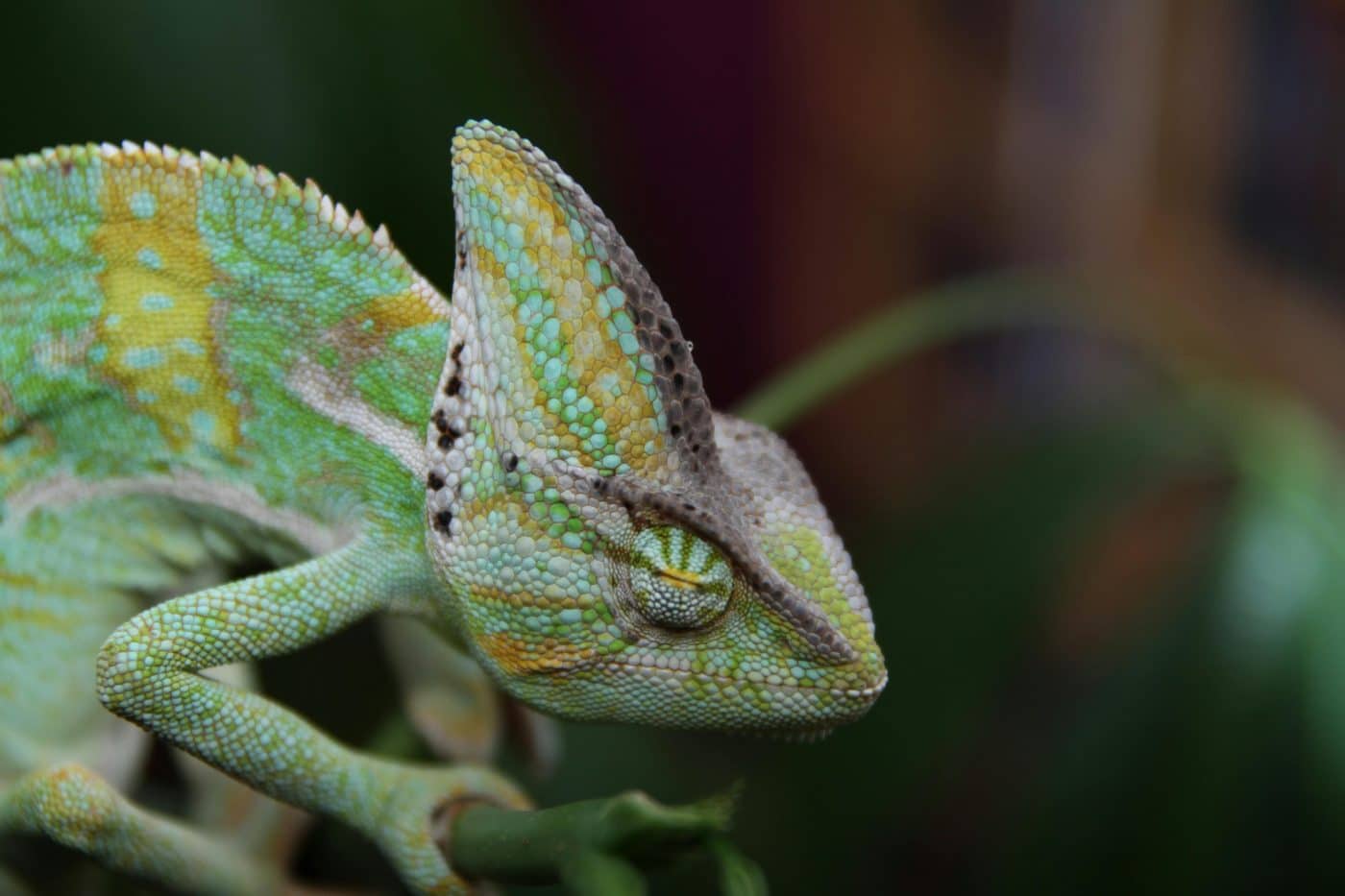
The Veiled Chameleon from Yemen and Saudi Arabia is the entry-level chameleon in the pet trade — but “entry-level” for a chameleon is still a seriously impressive animal. Males display dramatic green bodies banded with yellow, blue, orange, and black. Their namesake casque (the helmet-like crest on their head) is one of the more distinctive silhouettes in the reptile world.
Color changes in veiled chameleons are primarily emotional, not camouflage. A calm, content animal rests in greens. A stressed or angry animal fires up with bright yellow bands and blue accents. A female rejecting a male’s advances turns dark with bright spots — and she’s not subtle about it.
They’re omnivores, unlike most chameleons — they’ll eat leafy greens and plant material in addition to insects, which actually simplifies feeding somewhat.
As a pet: Challenging but doable for dedicated intermediate keepers. Proper humidity, temperature gradient, UVB, and live insects are non-negotiable. They’re not cuddly but they’re endlessly watchable.
Care Difficulty: Medium-Hard
5. Madagascar Day Gecko
 Shutterstock
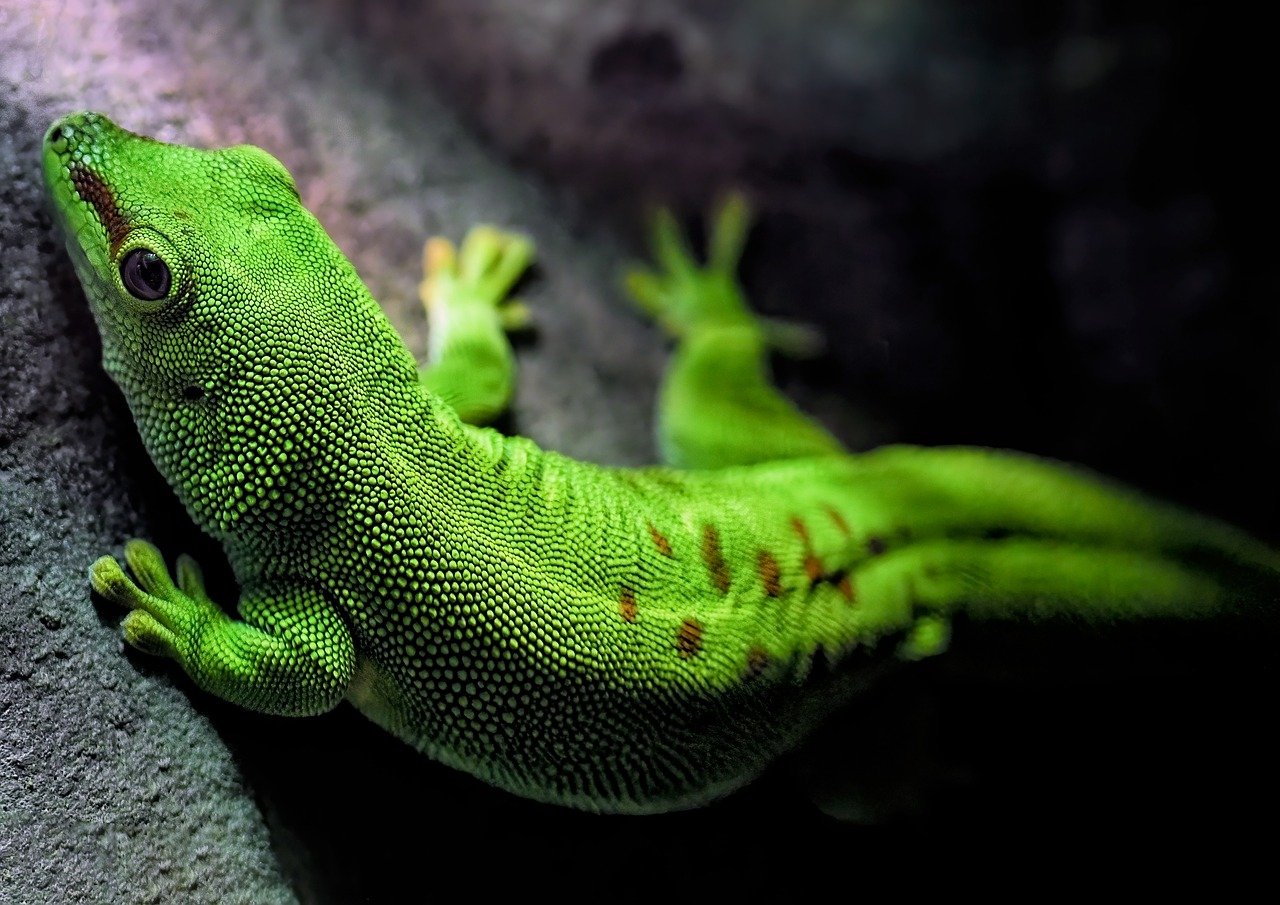
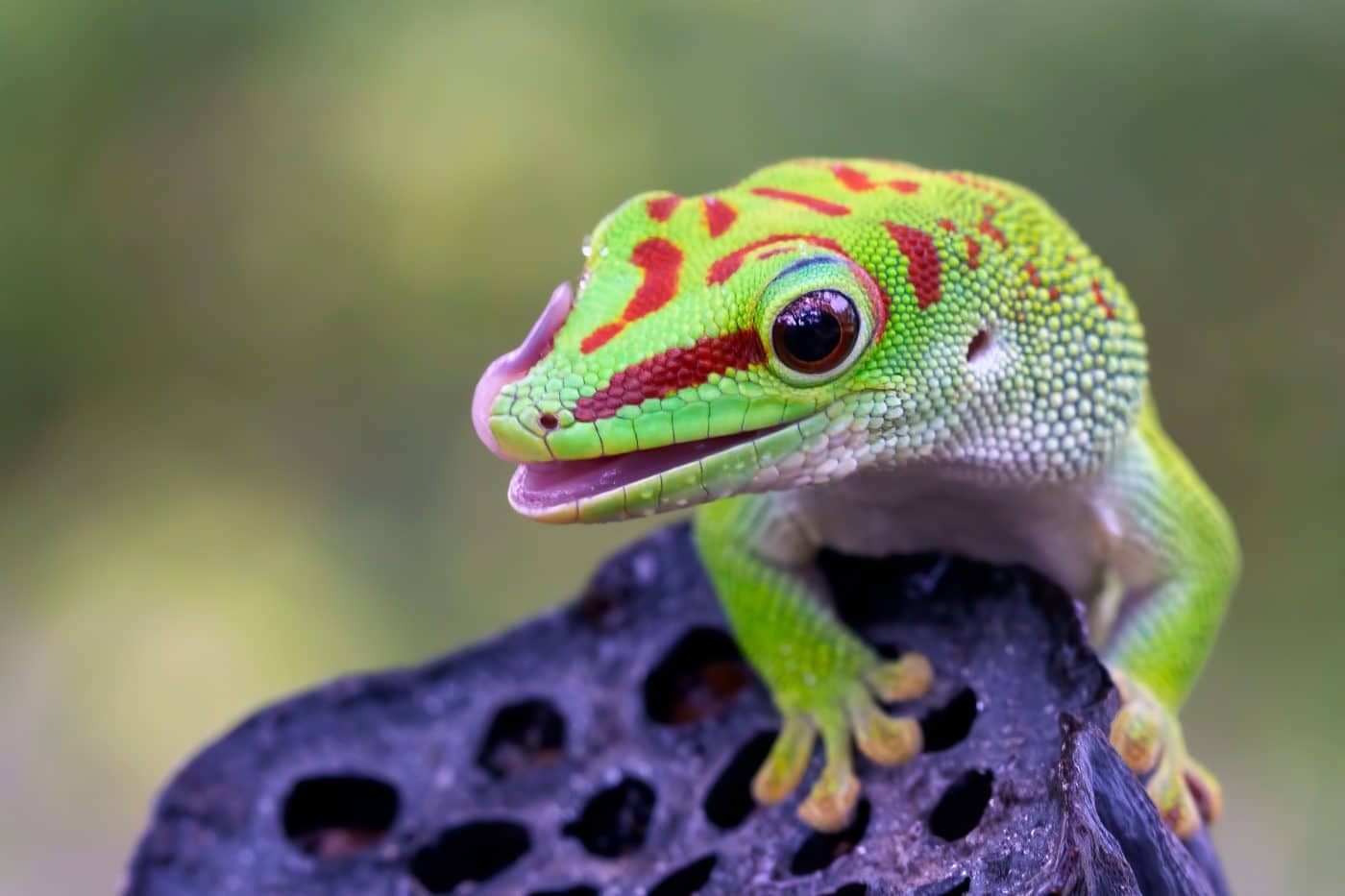
Giant Madagascar Day Geckos are the Kermit-the-Frog green of the reptile world, but make Kermit look washed out. Their bodies are an intense emerald green with brick-red spots dotting the back and a red streak running from the nose to the eye. The color combination looks almost artificially vivid — like someone turned up the saturation in Photoshop.
They’re named for their unusual habit of being active during the day (most geckos are nocturnal). This diurnal activity means you actually get to see them being their colorful selves, moving around their enclosure under bright lights rather than hiding until midnight.
Unlike most pet geckos, they’re not great for handling. Their skin is delicate and they’re fast, stress easily, and can detach their tail if grabbed. They’re best enjoyed as a visual experience in a well-planted vivarium.
As a pet: Medium difficulty. They need tropical temperatures and humidity, live insects, and shouldn’t be handled much. The reward is a genuinely stunning display animal that will make everyone who visits want one.
Care Difficulty: Medium
6. Collared Lizard
 Shutterstock
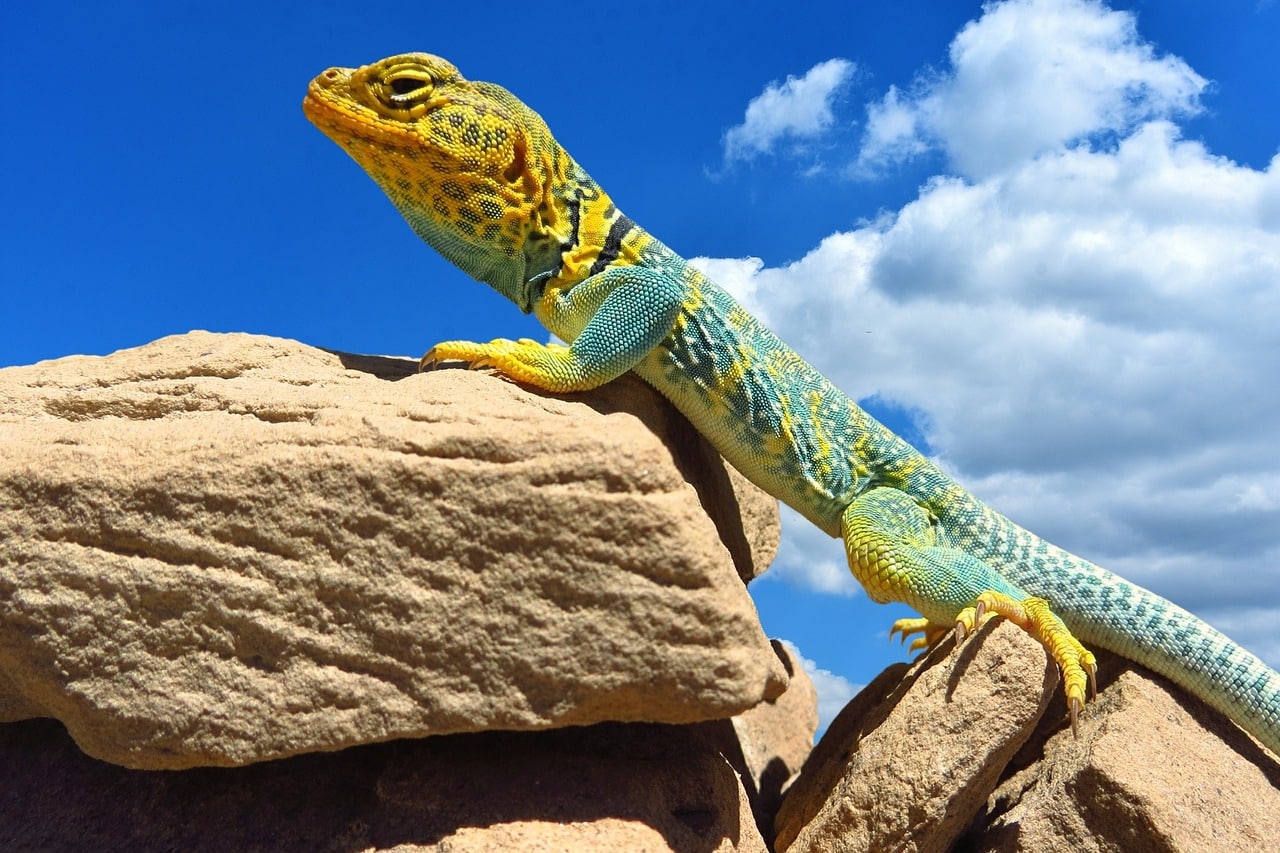
The Eastern Collared Lizard from the American Southwest is what happens when a lizard decides that subtle is overrated. Males in breeding condition display brilliant turquoise-green bodies with yellow spotting, orange sides, and the distinctive double-black “collar” marking around the neck. They look like tiny, fast dinosaurs that hired a colorist.
These lizards run on their hind legs when going full speed — a legitimately surprising thing to see in person. They sprint bipedally like miniature T-Rexes, which matches their personality: confident, territorial, and willing to challenge anything that moves.
Female collared lizards change appearance during pregnancy, developing bright orange spots on their sides to signal their status. It’s one of the more unusual examples of female color signaling in North American lizards.
As a pet: Manageable for intermediate keepers. They need hot basking spots (105-115°F), full-spectrum UVB lighting, live insects, and space to move. Well-socialized individuals can become remarkably tame.
Care Difficulty: Medium
7. Gila Monster
 Shutterstock
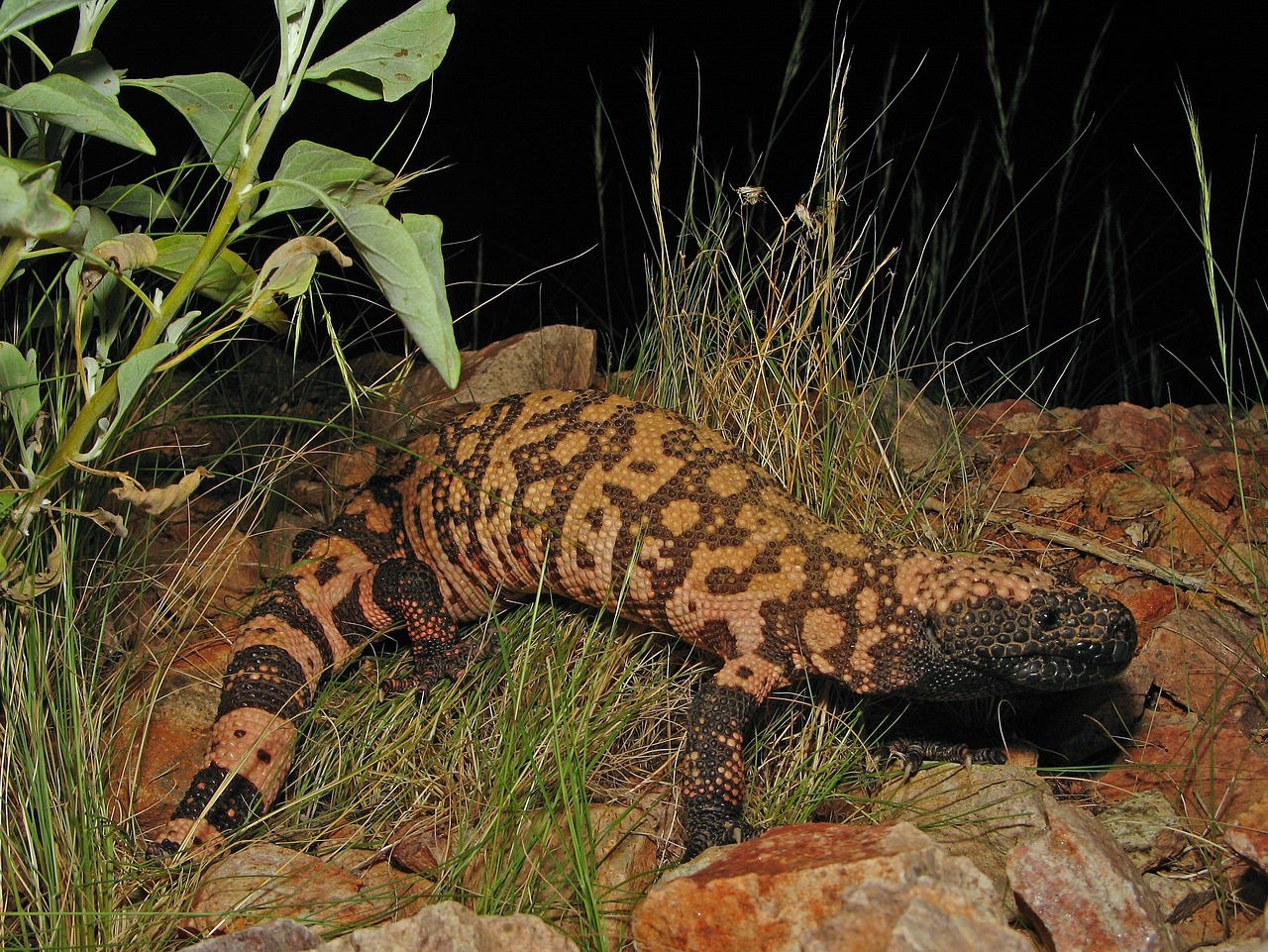
The Gila Monster from the Sonoran and Mojave Deserts of the American Southwest is one of only two venomous lizards native to North America. Its orange, pink, and black beaded scales aren’t subtle. They’re a billboard: I am dangerous, don’t touch me.
This is aposematic coloration — warning colors evolved specifically to advertise toxicity. The Gila Monster’s venom is delivered through grooved teeth by a chewing motion rather than the fangs-and-inject method of venomous snakes. The bite is painful and the venom causes significant local tissue damage. They don’t let go quickly. The advice “don’t provoke a Gila Monster” is actually unnecessary because they’re slow, docile, and spend most of their time underground. They just happen to look absolutely intimidating.
Interestingly, a diabetes drug called exenatide was developed from proteins in Gila Monster saliva. This 22-pound lizard with warning coloring has probably helped more diabetics than you’d expect.
As a pet: Illegal to collect in the wild and restricted or banned as pets in most US states. Not a practical option. Admire from a respectful distance in the desert.
Care Difficulty: Not recommended / Not legal in most states
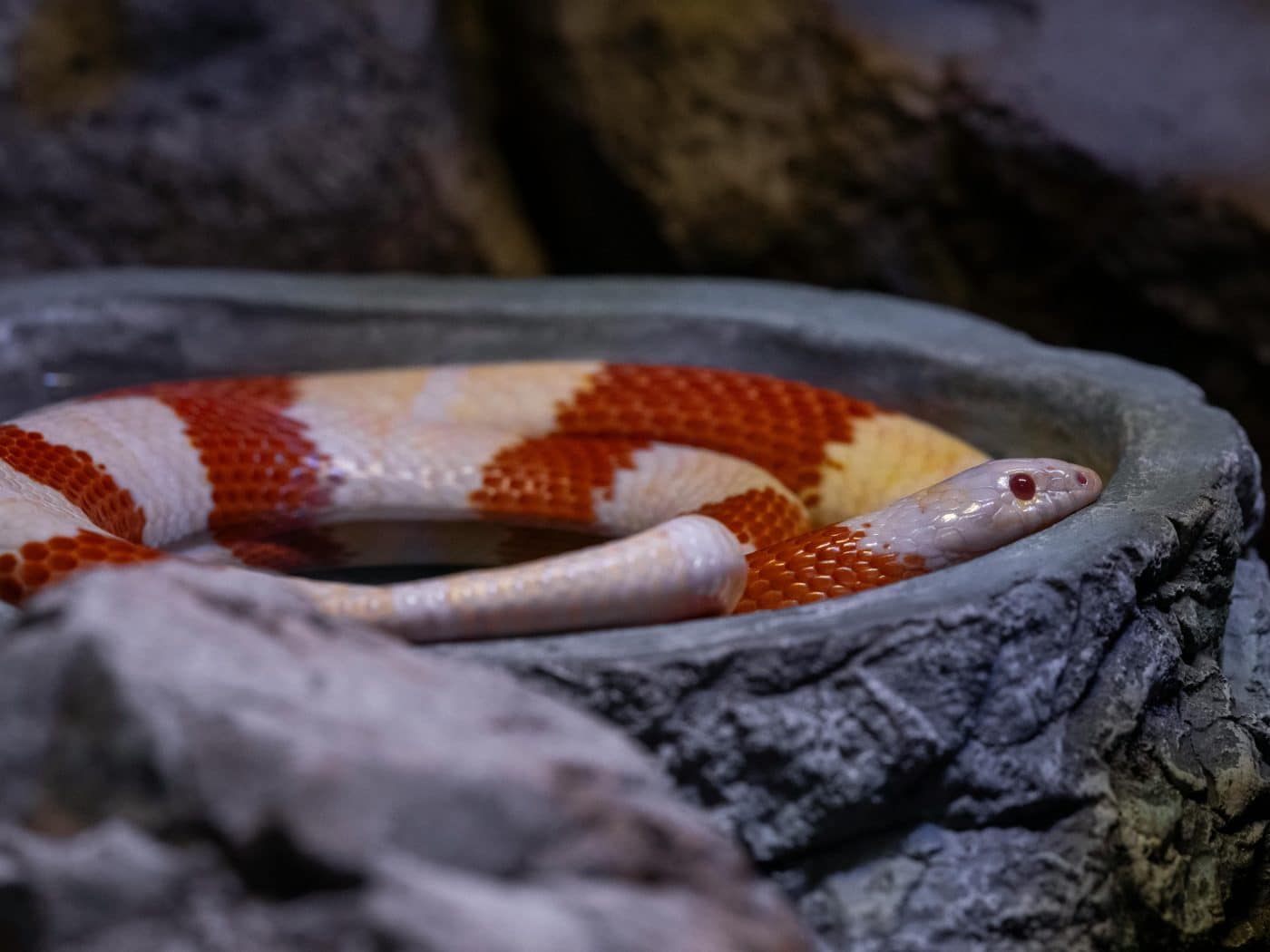
8. Mexican Milk Snake
 Shutterstock
The Mexican Milk Snake pulls off a remarkable evolutionary trick: it wears the color scheme of the deadly Eastern Coral Snake without any of the venom. Red, black, and white bands in a pattern close enough to the coral snake that predators in overlapping habitats give them a pass. This is Batesian mimicry — looking dangerous without being dangerous.
It works. Birds and mammals that have learned to avoid the coral snake’s red-yellow-black bands leave milk snakes alone. The snake basically outsourced its defense system to another species.
The old rhyme “red touches yellow, kill a fellow; red touches black, friend of Jack” helps distinguish coral snakes from milk snakes in the US — though it doesn’t apply everywhere and shouldn’t be used as a handling guide.
As a pet: One of the more beginner-friendly colorful snakes. They stay under 4 feet, eat frozen/thawed mice, tolerate moderate handling, and don’t require extreme humidity or temperatures. Good choice for someone who wants a striking snake without chameleon-level complexity.
Care Difficulty: Easy-Medium
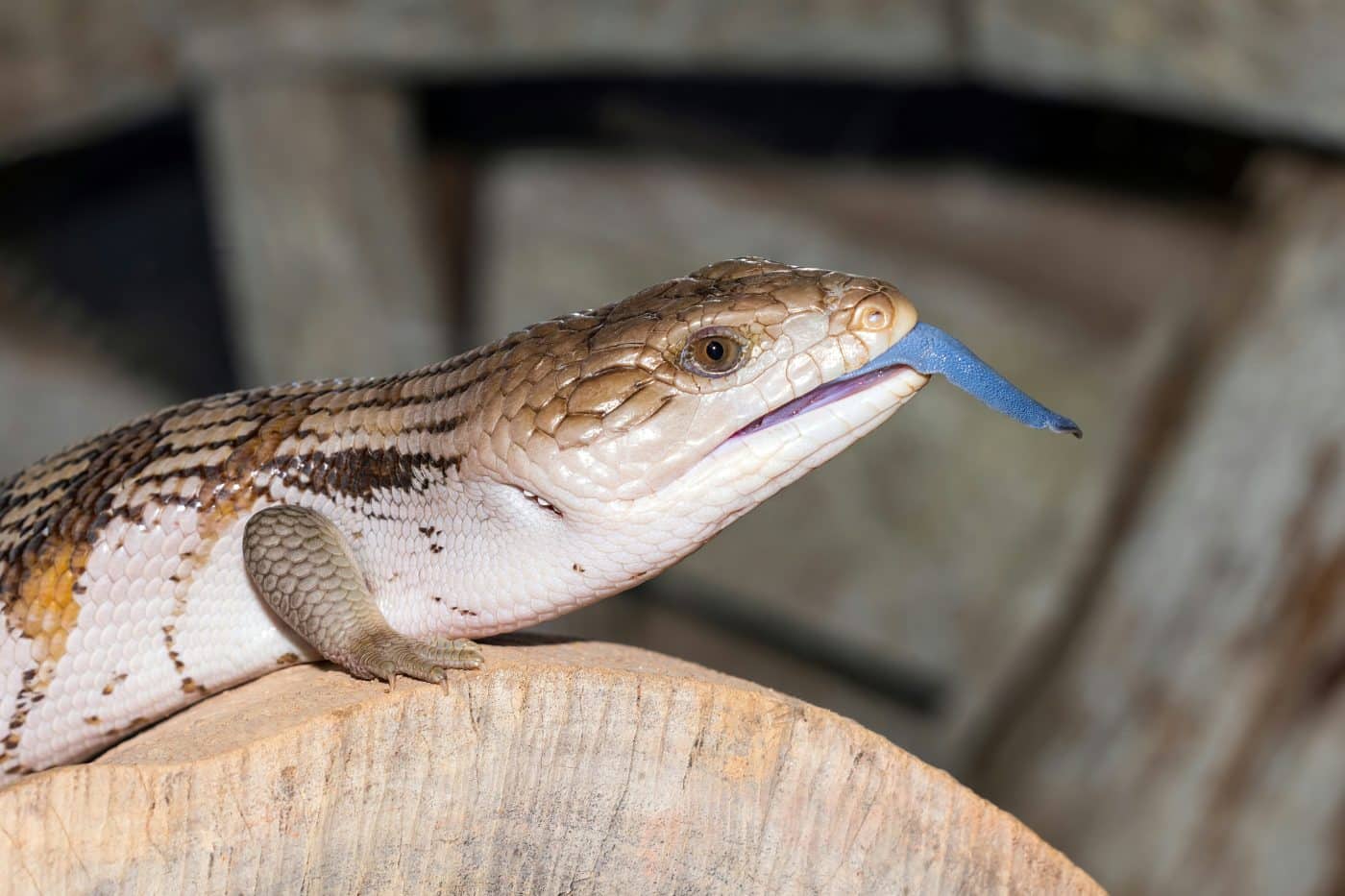
9. Blue-Tongue Skink
 Shutterstock
The Blue-Tongue Skink from Australia and New Guinea isn’t colorful in the same explosive way as the chameleons. Its body is earthy — orange-brown banding on tan, with dark stripes. But then it opens its mouth and produces that tongue. Electric blue. Cobalt. Bright enough to make you do a double-take.
The blue tongue is a bluff. The skink flattens its body, hisses, and displays the tongue to make a predator think something weird and possibly toxic is happening. The tongue may also UV-reflect in ways that are particularly startling to birds and reptiles with UV vision. The actual skink is harmless — it’s all theater.
Blue-Tongue Skinks are one of the best beginner reptile pets on this list. They’re docile, tolerate handling well, eat a varied omnivore diet (vegetables, fruits, protein), and have solid lifespans of 15-20 years with good care.
As a pet: Excellent for beginners and experienced keepers alike. They’re responsive, recognizable to their owners, and legitimately enjoyable to interact with.
Care Difficulty: Easy
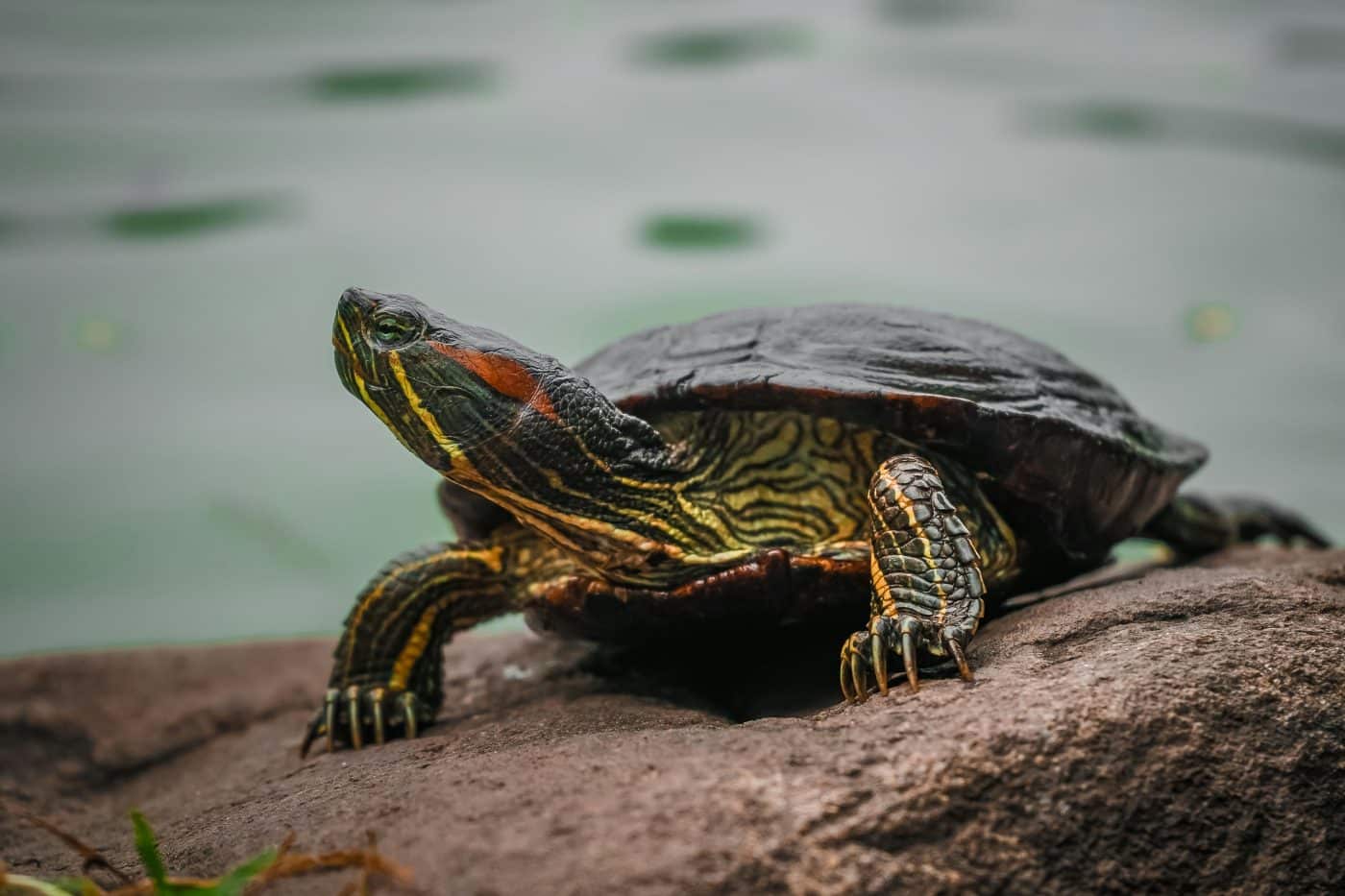
10. Painted Turtle
 Shutterstock
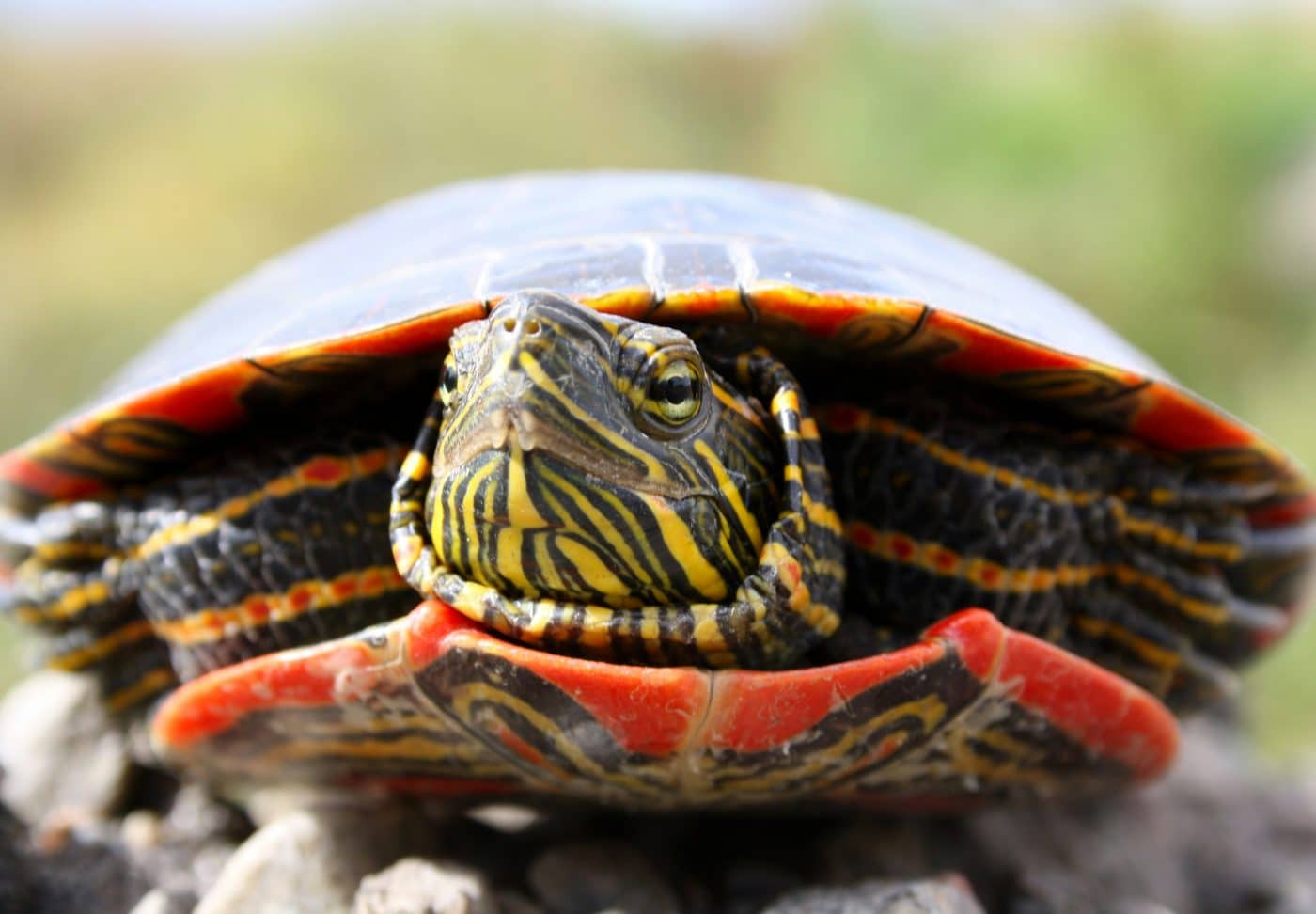
The Painted Turtle is North America’s most colorful native turtle. Its name is earned — the carapace (top shell) is dark olive-green to black with red and yellow markings along the edges. The plastron (bottom shell) is yellow, sometimes with orange-red patterns. The neck and legs have yellow and red stripes. The whole package looks hand-painted.
Painted turtles are also one of the most cold-tolerant reptiles in the world. They overwinter by hibernating at the bottom of ponds, sometimes in water just above freezing, breathing through specialized skin areas. Hatchlings can actually survive being frozen solid. This species has been pushing its northern range limits for tens of thousands of years.
As a pet: Doable with the right setup. They need a proper aquatic enclosure with a basking area, UVB lighting, clean water filtration, and a varied diet. They’re not handleable the way mammals are, but they’re active, interesting to watch, and long-lived (20-30+ years with good care).
Care Difficulty: Easy
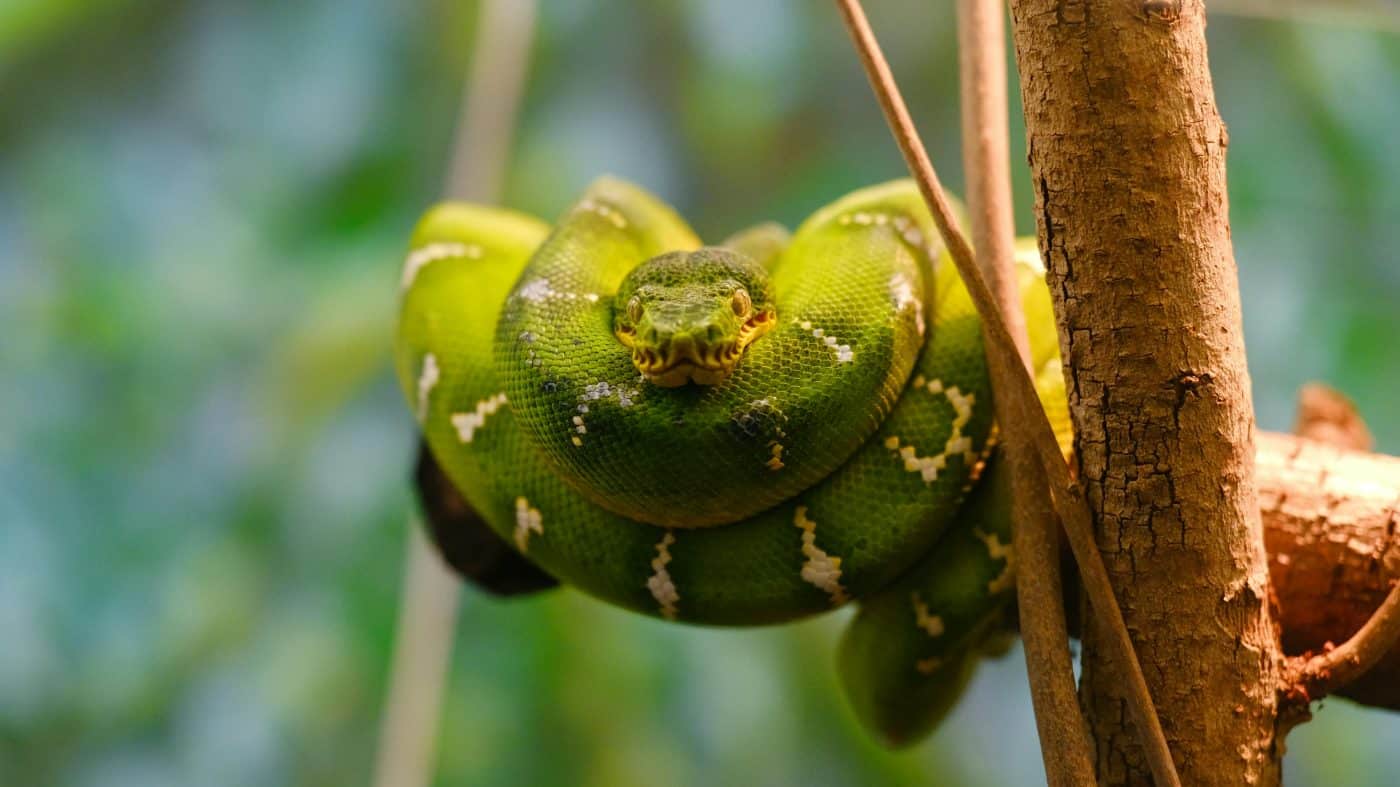
11. Emerald Tree Boa
 Shutterstock
The Emerald Tree Boa from South America looks almost identical to the Green Tree Python from the other side of the world — same vivid green, same white dorsal striping, same dramatic saddle-perch posture on branches. They’re not closely related. They evolved separately on different continents to fill the same ecological role. This is textbook convergent evolution.
Both species are arboreal ambush predators that hunt birds and small mammals at night. Both have heat pits around their lips to detect warm-blooded prey in darkness. Both drape themselves identically over branches during the day. The similarity is so striking that early naturalists assumed they were the same species.
Emerald Tree Boas have juveniles that are brick red or orange-red, transforming to green as adults — exactly like Green Tree Pythons. Same lifestyle, same solution, different continents.
As a pet: Advanced. Fussy about humidity, temperature, and feeding. Beautiful display animals. Not for beginners.
Care Difficulty: Hard
Frequently Asked Questions About Colorful Reptiles
What is the most colorful reptile in the world?
The Panther Chameleon from Madagascar is widely considered the most colorful reptile. Males display an extraordinary range of electric blues, vivid reds, oranges, and greens — and they can shift between color patterns based on mood, temperature, and social signaling. The variation between geographic localities also means each population has its own signature palette.
Why are some reptiles so colorful?
Color in reptiles serves several purposes: warning predators of toxicity or danger (Gila Monster, milk snakes), camouflage (Green Tree Python), communication with other members of the same species (chameleons), attracting mates (collared lizards), and structural iridescence for temperature regulation and signaling (Rainbow Boa). Most bright coloration evolved for a specific survival advantage.
What is the easiest colorful reptile to keep as a pet?
The Blue-Tongue Skink and Mexican Milk Snake are the most beginner-friendly colorful reptiles. Blue-Tongue Skinks are docile, eat a varied diet, and tolerate handling well. Milk snakes eat frozen-thawed mice, stay a manageable size, and don’t require extreme humidity or lighting setups.
Can chameleons really change to any color?
No — chameleons change between their natural color range, not to any arbitrary color. They can’t turn bright red if red isn’t in their palette. What they can do is shift between shades, intensify or dull their existing colors, and create patterns and bands. The Panther Chameleon has the widest range of any chameleon species.
Do colorful reptiles make good pets for beginners?
Depends on the species. Some of the most visually striking reptiles — Panther Chameleons, Green Tree Pythons, Emerald Tree Boas — require advanced care. But Blue-Tongue Skinks, Milk Snakes, and Painted Turtles are excellent beginner options that offer genuine visual appeal without punishing care requirements.
 Shutterstock
Nature’s Palette Never Runs Out of Colors
Every animal on this list evolved its color for a reason. Warning, camouflage, attraction, communication, thermal regulation — the biological reasons are fascinating. But honestly, sometimes it’s enough to just look at a Panther Chameleon cycling through its entire color vocabulary on a sunny morning and appreciate that evolution produced something this absurdly beautiful.
If you’re considering a colorful reptile as a pet, start with the species that match your experience level. A Blue-Tongue Skink or Milk Snake will reward a beginner with years of interaction. Work your way toward chameleons as you build your reptile-keeping skills. And if you want to admire a Gila Monster — do it from a trail in Arizona, not a living room enclosure.
















 English (US) ·