
 1 day ago
3
1 day ago
3
 Shutterstock
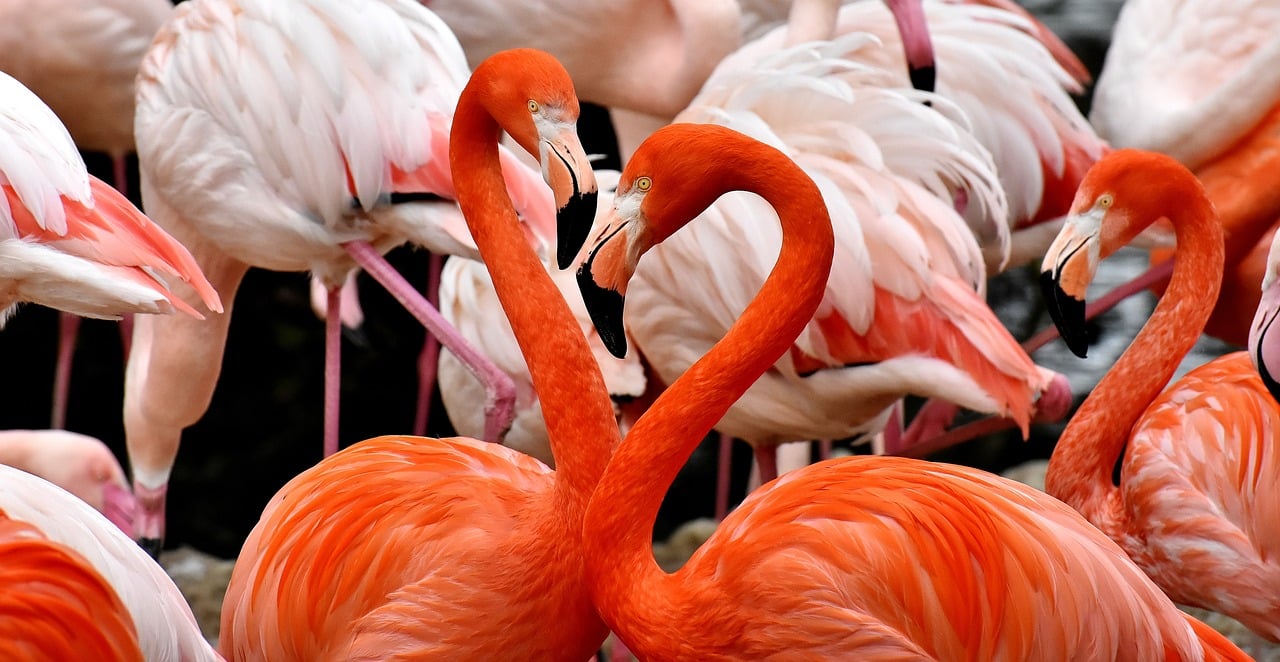
The planet we live on is genuinely absurd in the best possible way. Creatures that look hand-painted, wings that shift color with every flutter, coats so thick and white they seem to glow — nature didn’t hold back. If you’ve ever found yourself staring at a nature documentary with your jaw slightly open, you already know what we mean.
This list rounds up 27 of the most beautiful animals around the world in 2026, spanning every habitat from icy Arctic tundra to humid rainforests and tropical coastlines. Some of these animals are famous. Others you might not have heard of. All of them are genuinely stunning.
And yes — dogs made the list. Because of course they did.
📊 Beautiful Animals: By The Numbers
- 8.7 million estimated animal species on Earth — only ~1.5 million have been formally described
- ~17,000 species are currently threatened with extinction, including several on this list
- Mantis shrimp can see 16 types of color receptors — humans only have 3
- Blue Whale hearts weigh up to 400 lbs and can be heard from 2 miles away
- Peacock tail feathers can span up to 6 feet in length during a full display
- Snow Leopard population: fewer than 4,000 remain in the wild as of 2024
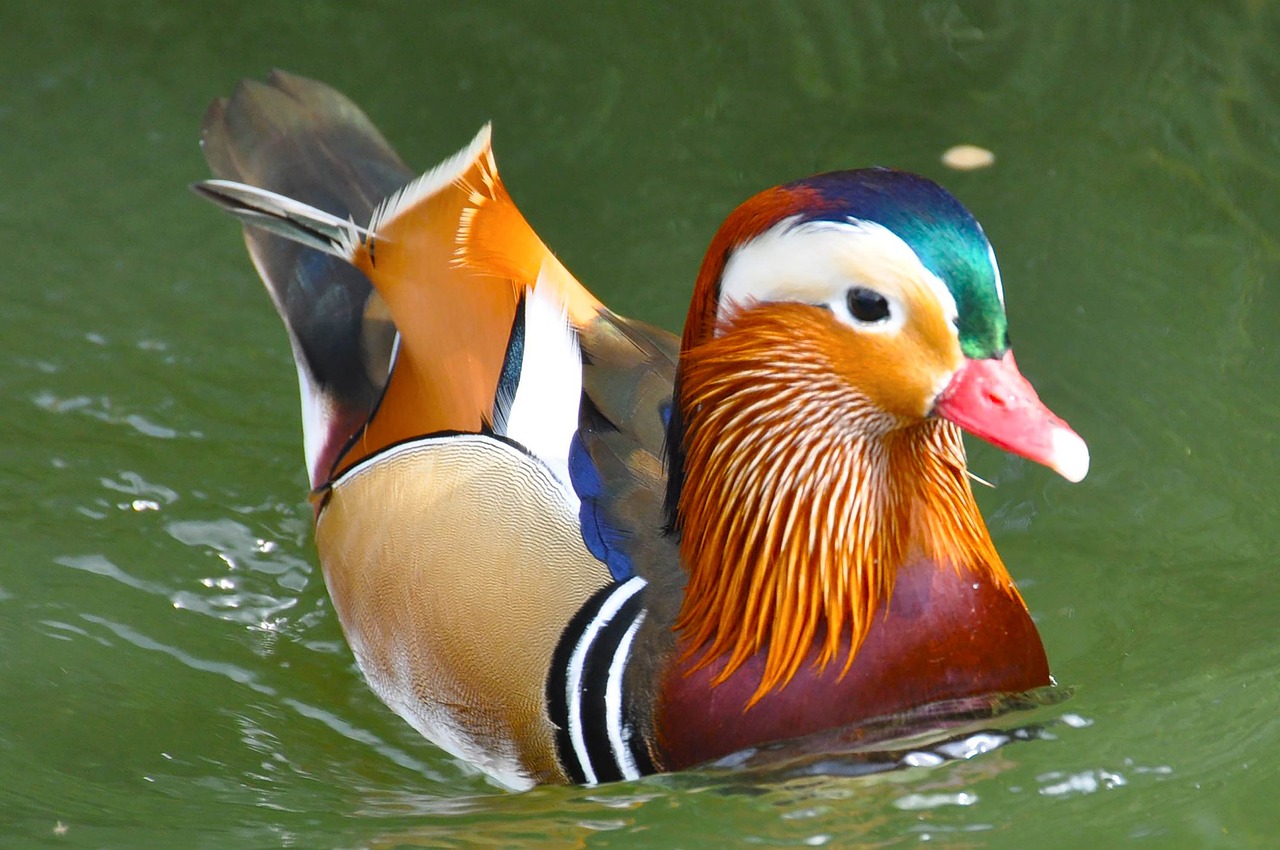
1. Mandarin Duck
 Shutterstock
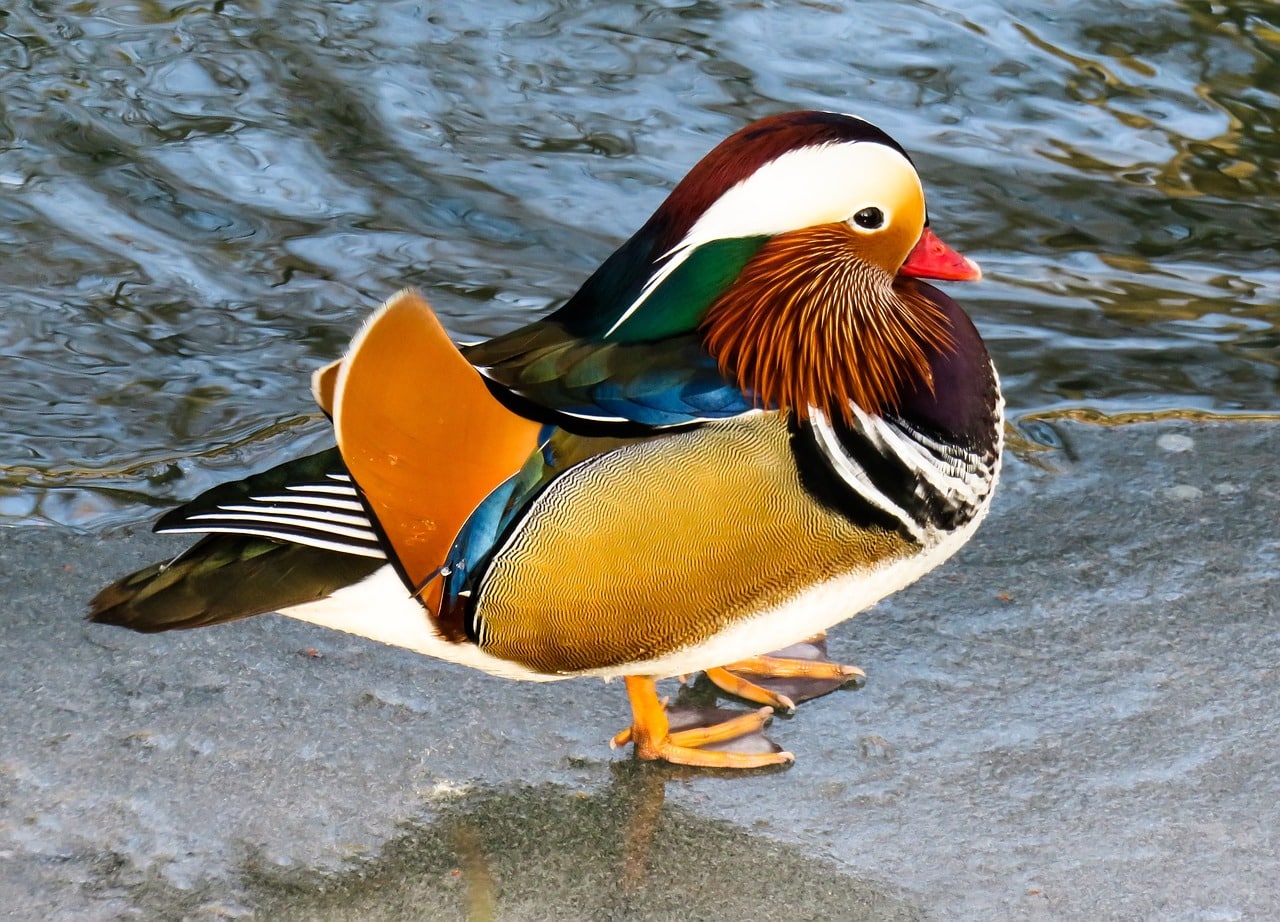
If you had to pick one bird that looks too beautiful to be real, the Mandarin Duck would win. Native to East Asia, the male’s plumage stacks iridescent blues, deep purples, burnt oranges, and a distinctive upswept “sail” feather on its back. It’s not subtle. It doesn’t try to be. During breeding season, the male puts everything on display to attract a mate — and honestly, it works.
Female Mandarins are more muted in color, but they have their own quiet elegance. The pair together is striking. They’ve been symbols of love and fidelity in Chinese culture for centuries, which makes perfect sense once you see them swimming side by side.
2. Peacock
 Shutterstock
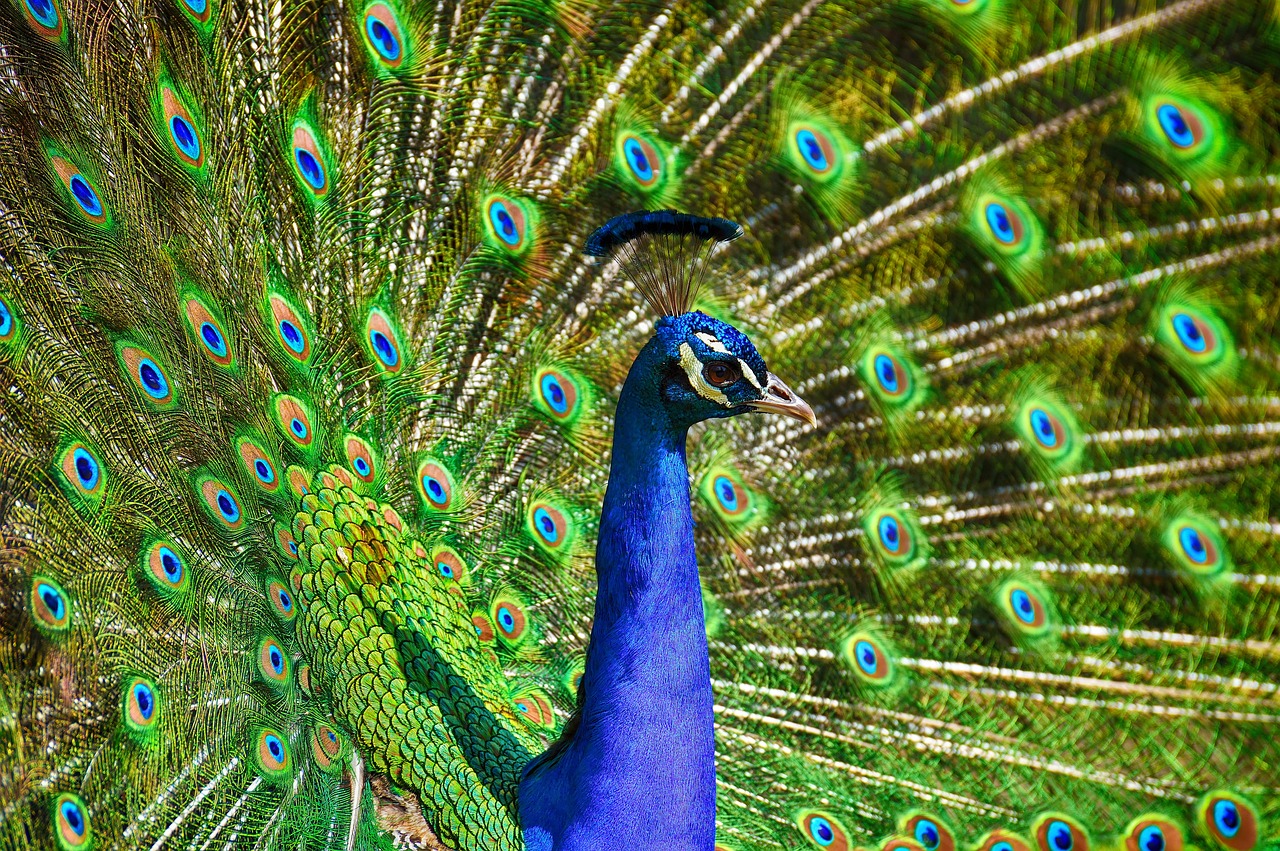
There’s a reason the peacock became the universal symbol of beauty. Those tail feathers — up to six feet long, covered in shimmering “eye” patterns in greens, blues, and gold — fan out into a display that makes every other bird look underdressed. Native to South Asia, the Indian Peafowl has been wowing humans for thousands of years, appearing in royal courts and religious art across multiple cultures.
What’s easy to overlook: the iridescence isn’t pigment. It’s structural coloration — microscopic crystal lattices in the feathers that refract light differently depending on your angle. The peacock is literally refracting rainbows. That’s not metaphor. That’s physics.
3. Scarlet Macaw
 Shutterstock
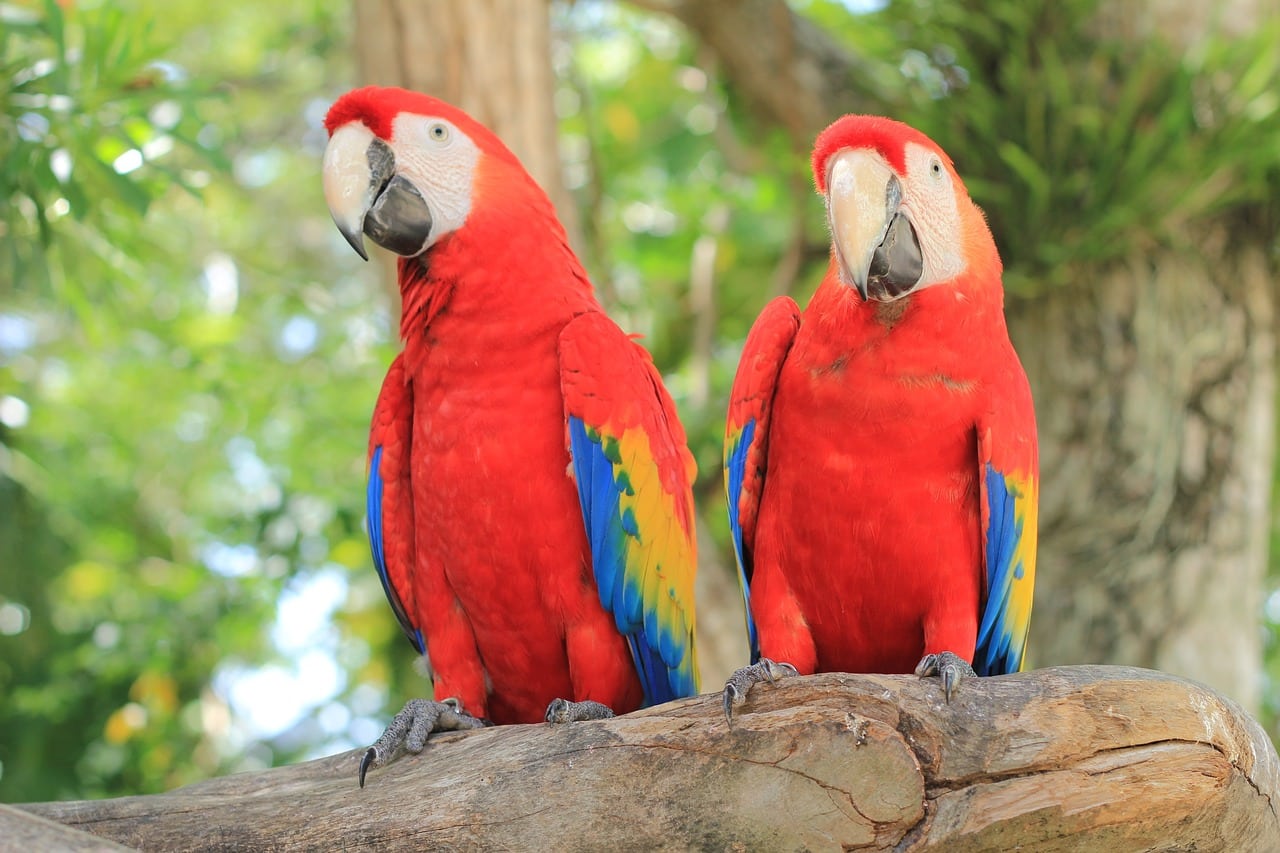
Red, yellow, blue — the Scarlet Macaw is basically a living flag, painted in the most saturated colors nature could pull together. Found across tropical rainforests from Mexico to Bolivia, these large parrots are hard to miss. Their calls echo through the canopy before you ever see them, and then suddenly there they are: a flash of crimson cutting through green leaves.
They’re also genuinely intelligent, capable of mimicking speech and solving puzzles. Beautiful and clever. Not a bad combination.
4. Siberian Tiger
 Shutterstock
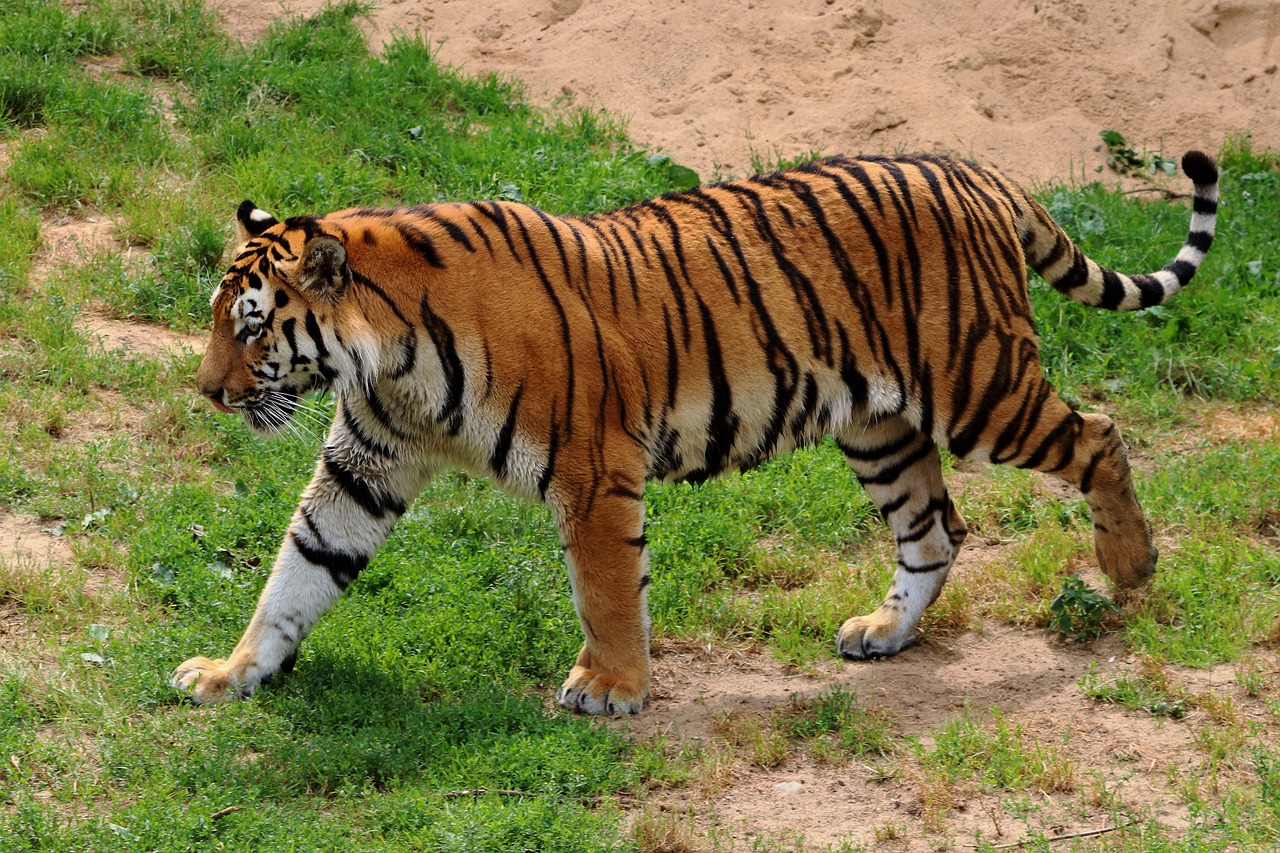
The Siberian Tiger — also called the Amur Tiger — is everything a big cat should be, just more so. Their thick orange coats with bold black stripes are built for Russia’s brutal winters, giving them a plush, almost regal look that no other tiger subspecies quite matches. They’re the largest wild cats on the planet, and they carry that size with a casual grace that’s honestly a little humbling.
Fewer than 500 Siberian Tigers remain in the wild. Every time one crosses a snow-covered clearing, it’s a sight fewer and fewer people will ever get to witness.
5. Blue Morpho Butterfly
 Shutterstock
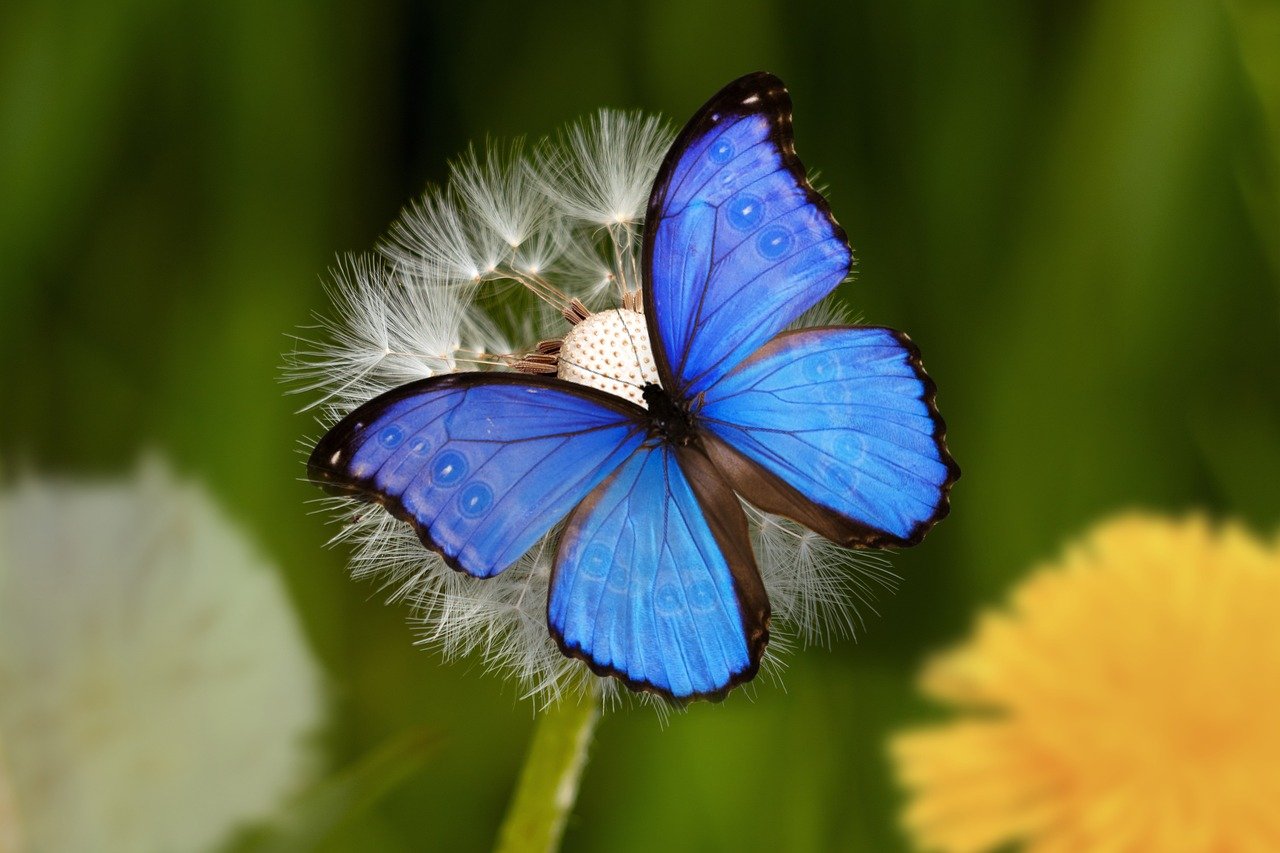
You’ll see the Blue Morpho before you even process what you’re looking at. That flash of electric blue through the rainforest canopy stops you cold. With wingspans up to eight inches, these butterflies cruise through Central and South American forests looking like something from a dream sequence.
Here’s the wild part: the blue isn’t pigment. The wings’ microscopic structure reflects blue light while absorbing everything else — so the color shifts as the butterfly moves. Wings closed, they’re a dull brown. Wings open, they’re one of the most vivid blues in the natural world. The contrast makes their flutter almost strobe-like to watch.
6. Arctic Fox
 Shutterstock
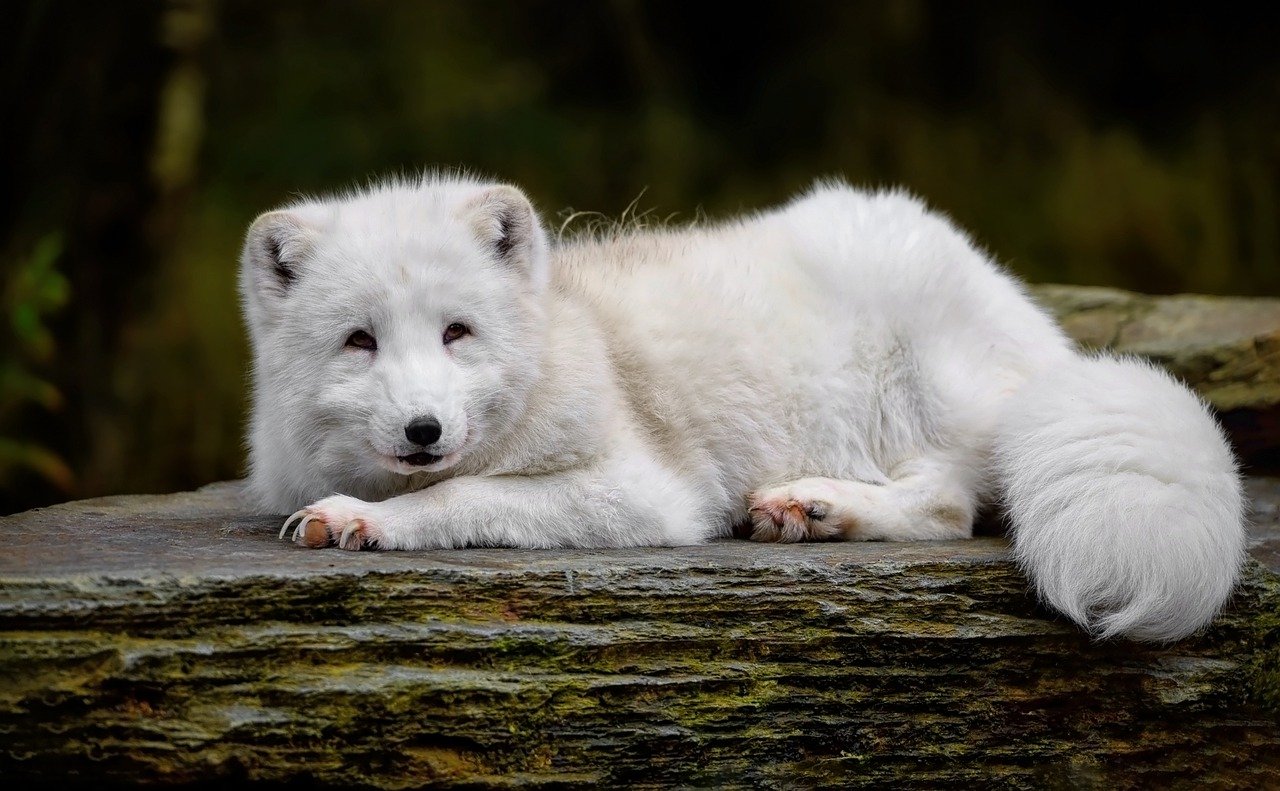
In winter, the Arctic Fox is pure white — so pure it almost looks photoshopped against the snow. That thick, fluffy coat keeps them warm in temperatures down to -58°F and doubles as near-perfect camouflage on the tundra. Come summer, the same fox fades to grey or brown, blending into the rocky terrain just as seamlessly.
They’re small — roughly the size of a large house cat — but they carry themselves with a confidence that’s completely at odds with their delicate appearance. If dogs had a wild, beautiful cousin built for extreme cold, the Arctic Fox would be it.
7. Glasswing Butterfly
 Shutterstock
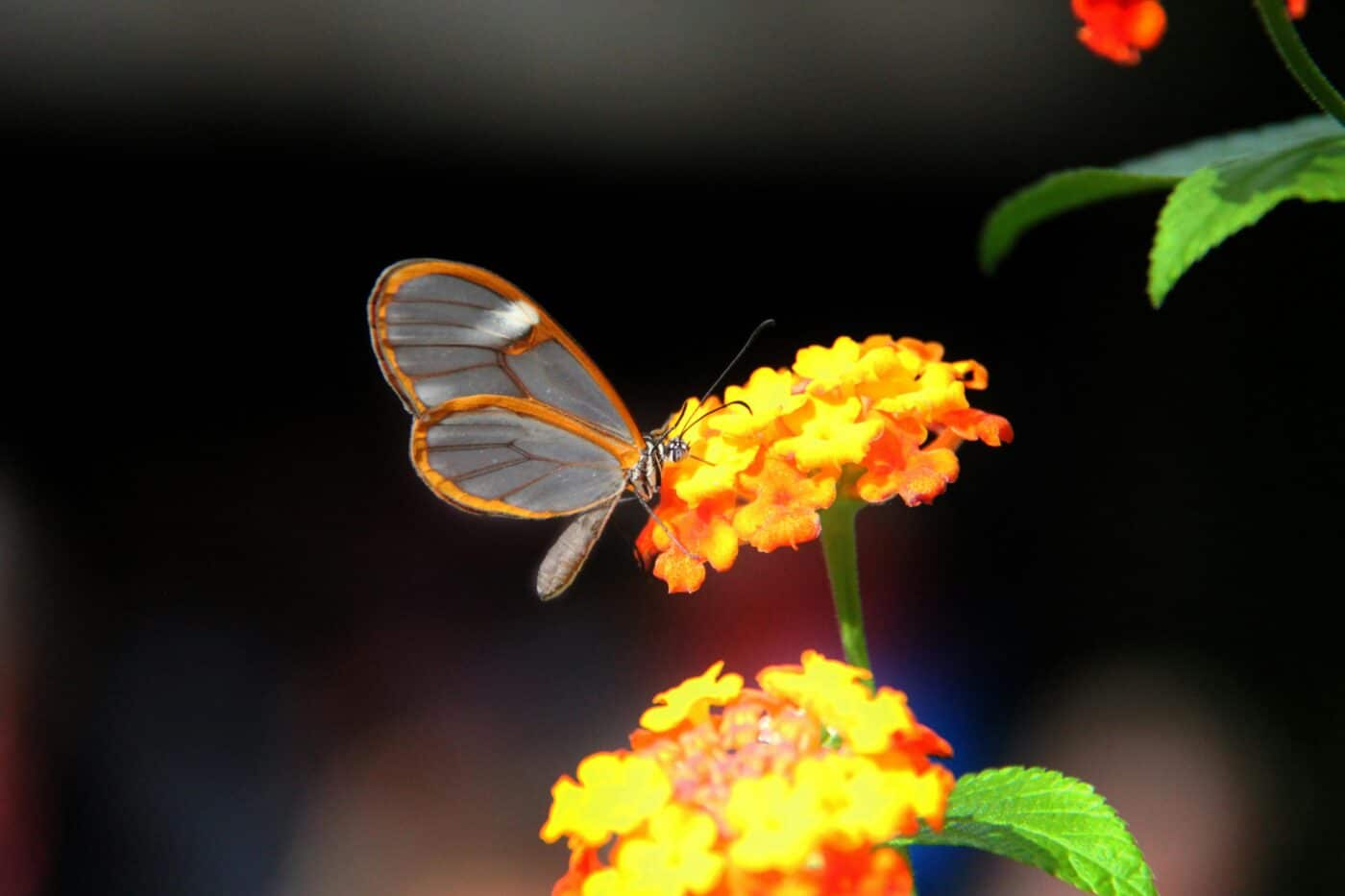
The Glasswing Butterfly’s wings are almost entirely see-through. Not frosted, not tinted — just clear, like a tiny stained glass window with brown and orange edging. You can read through them. Found in Central and South America, they’re notoriously hard to spot in the wild because you’re essentially looking for an outline.
That transparency is a survival strategy: without color to track, predators can’t gauge speed or direction during flight. Beauty and stealth, combined.
8. Snow Leopard
 Shutterstock
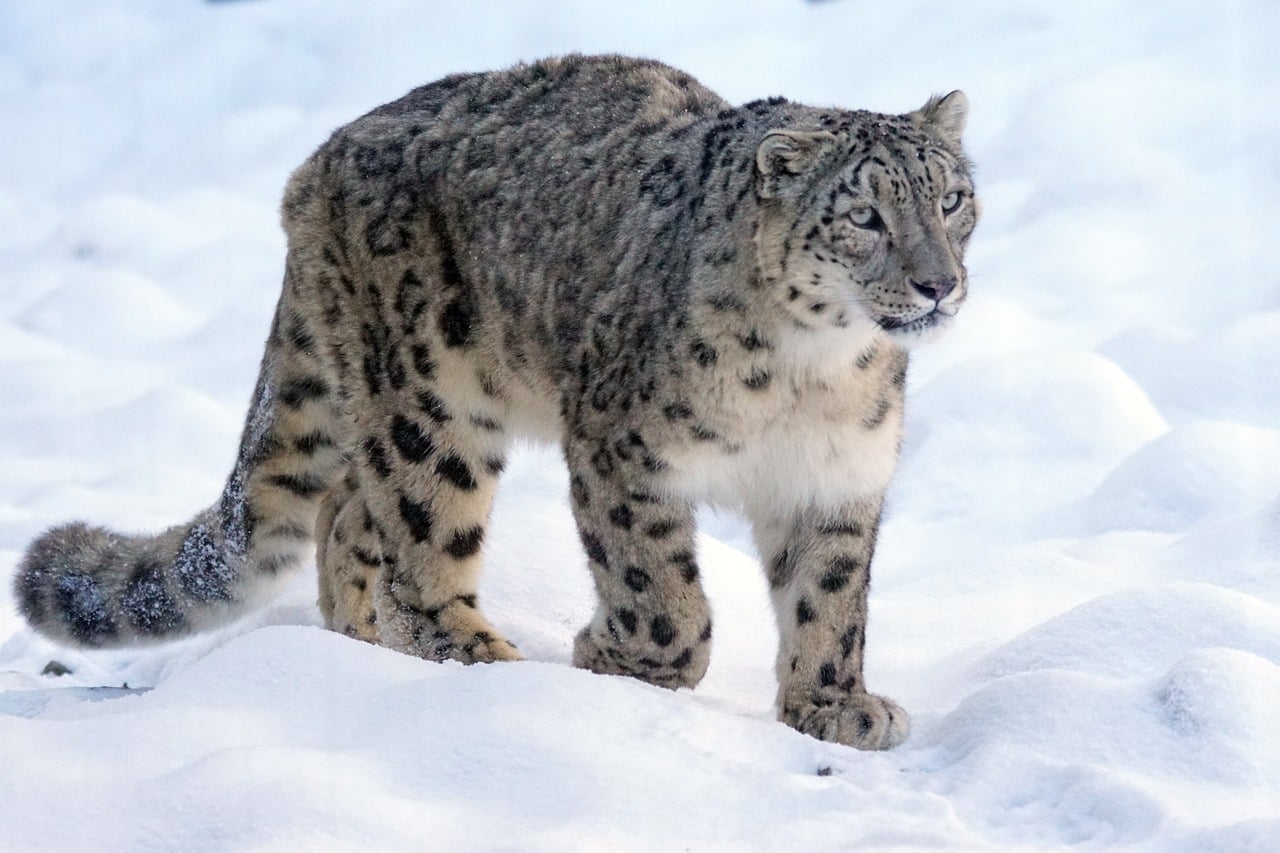
They call the Snow Leopard the “Ghost of the Mountains” for a reason. These cats roam the high-altitude ranges of Central Asia — mostly above 10,000 feet — and they’re so good at staying hidden that researchers often go years without a confirmed sighting in a study area. When you do see one, the pale grey coat patterned with dark rosettes against a snowy cliff is genuinely breathtaking.
Their tails are almost comically long — up to three feet — used for balance on steep terrain and warmth when wrapped around the face while sleeping. Fewer than 4,000 remain in the wild. Every photo of one feels like a gift.
9. Flamingo
 Shutterstock
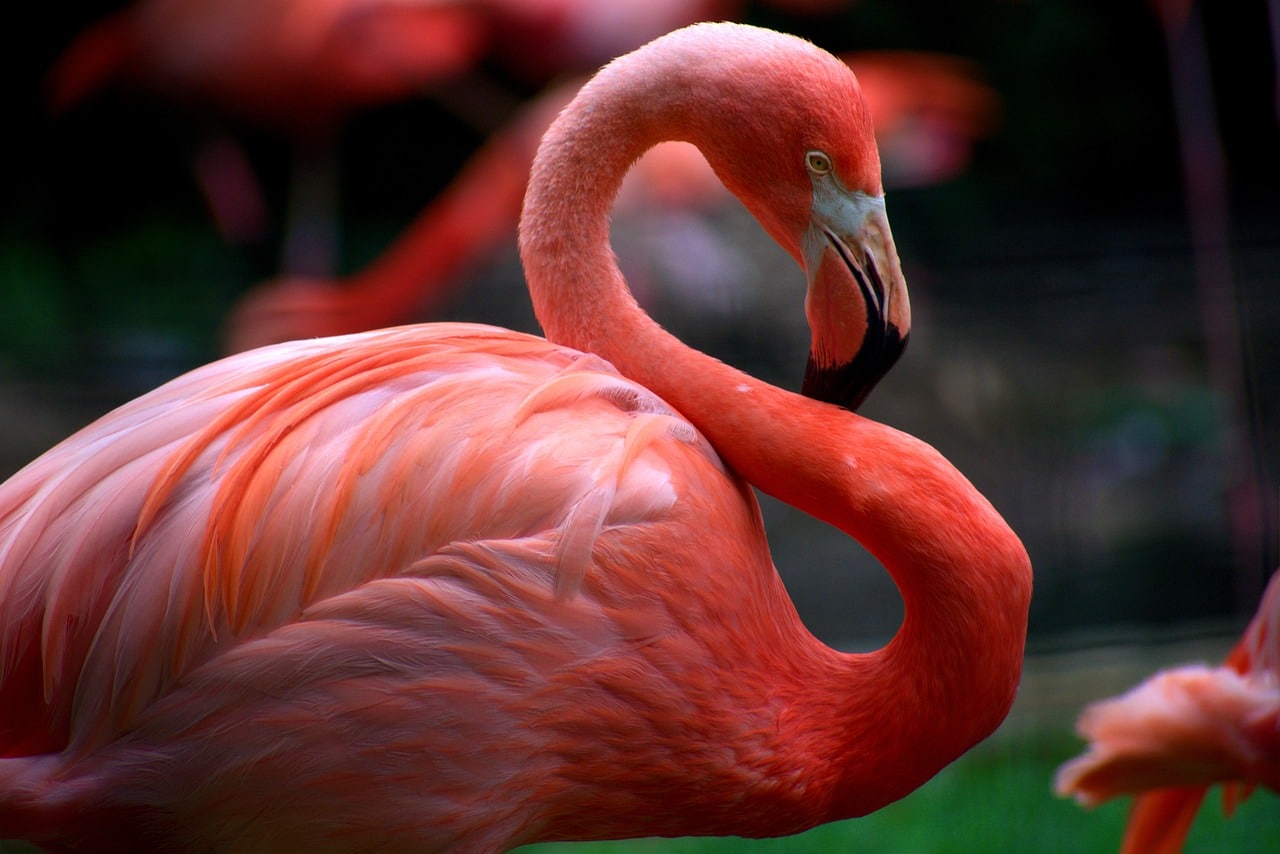
Flamingos are born white. That vivid pink comes entirely from their diet — the carotenoid pigments in algae and brine shrimp they filter through their uniquely bent bills. A flamingo that eats poorly is a pale flamingo. They literally are what they eat.
A flock of flamingos over a shallow lake is one of the most photographed wildlife spectacles on the planet. When they move together, synchronized in slow circles or sudden flight, the pink mass against blue water is almost too pretty to believe. Some lakes host over a million flamingos at peak season. That’s not a typo.
10. Red Panda
 Shutterstock
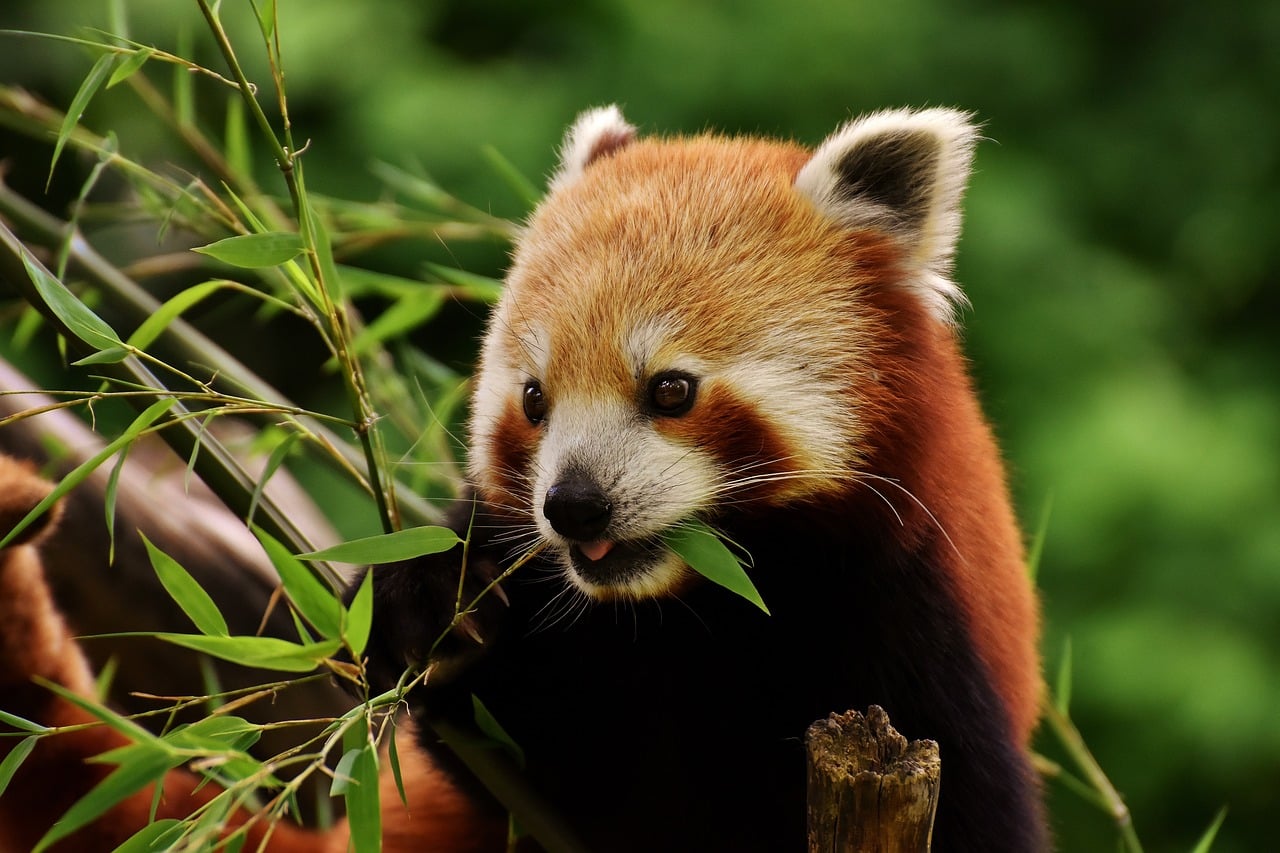
Red Pandas have been winning the internet for years, and it’s completely deserved. Native to the Himalayas and southwestern China, they’re about the size of a domestic cat with rusty reddish-brown fur, a bushy ringed tail, and a masked face that looks like a very stylish raccoon. They spend most of their time in trees, moving slowly and deliberately like a tiny, adorable sloth.
They’re also endangered. Habitat loss and poaching have dropped wild populations to an estimated 2,500 individuals or fewer. Seeing one in the wild is increasingly rare — which makes every photo that much more valuable.
11. Victoria Crowned Pigeon
 Shutterstock
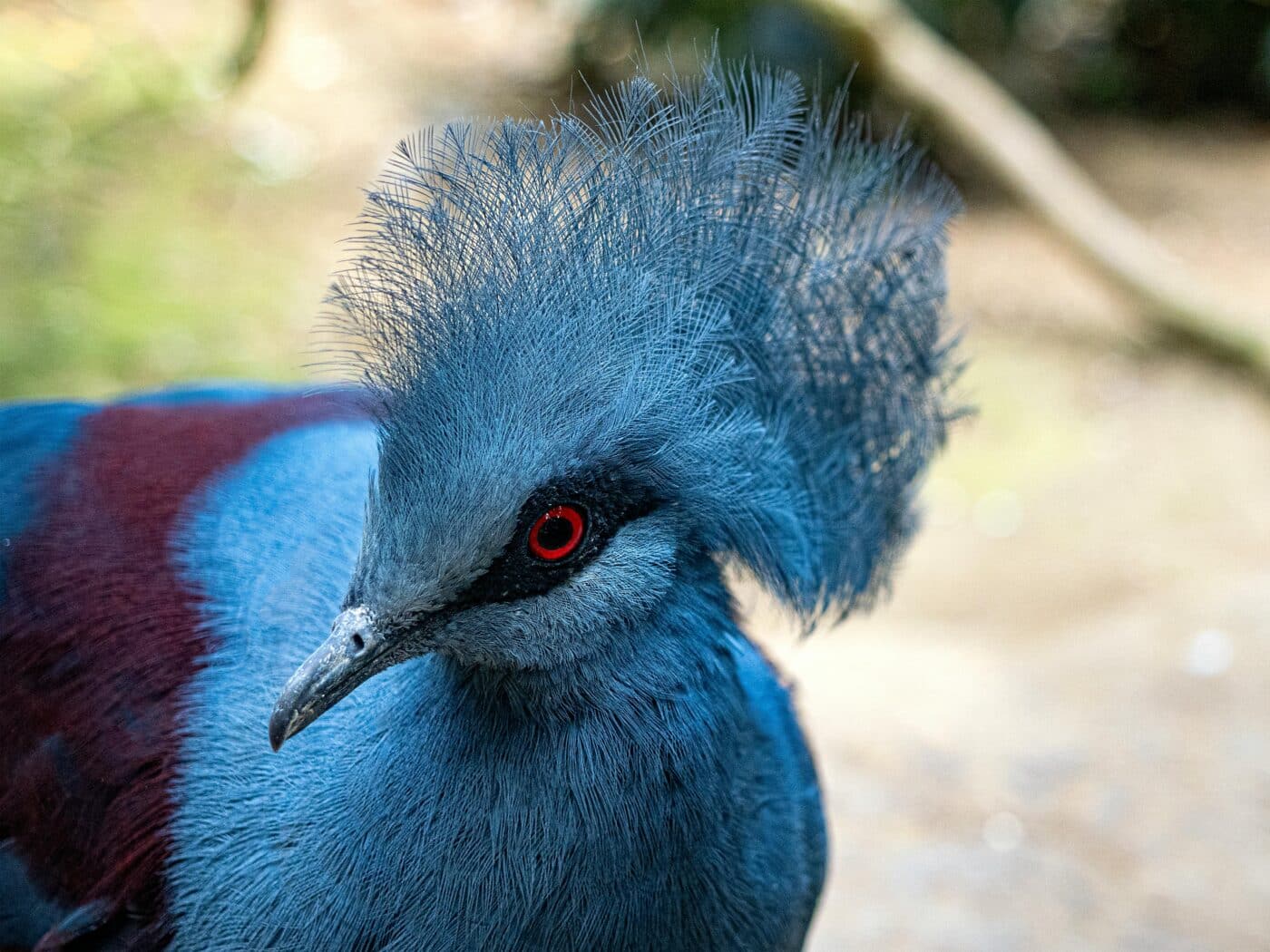
Most people don’t think “pigeon” when they think beautiful wildlife. The Victoria Crowned Pigeon wants to change that opinion immediately. Native to the rainforests of New Guinea, this bird wears a fan-shaped crest of delicate blue feathers that looks hand-crafted — like something a royal milliner might design for a very fancy hat. Their body is deep blue-grey, their eyes are a vivid red, and they’re the largest pigeon species alive today.
They walk the forest floor with a slow, dignified pace that suits the name perfectly. Named after Queen Victoria, they look like they expect to be addressed formally.
12. Mandrill
 Shutterstock
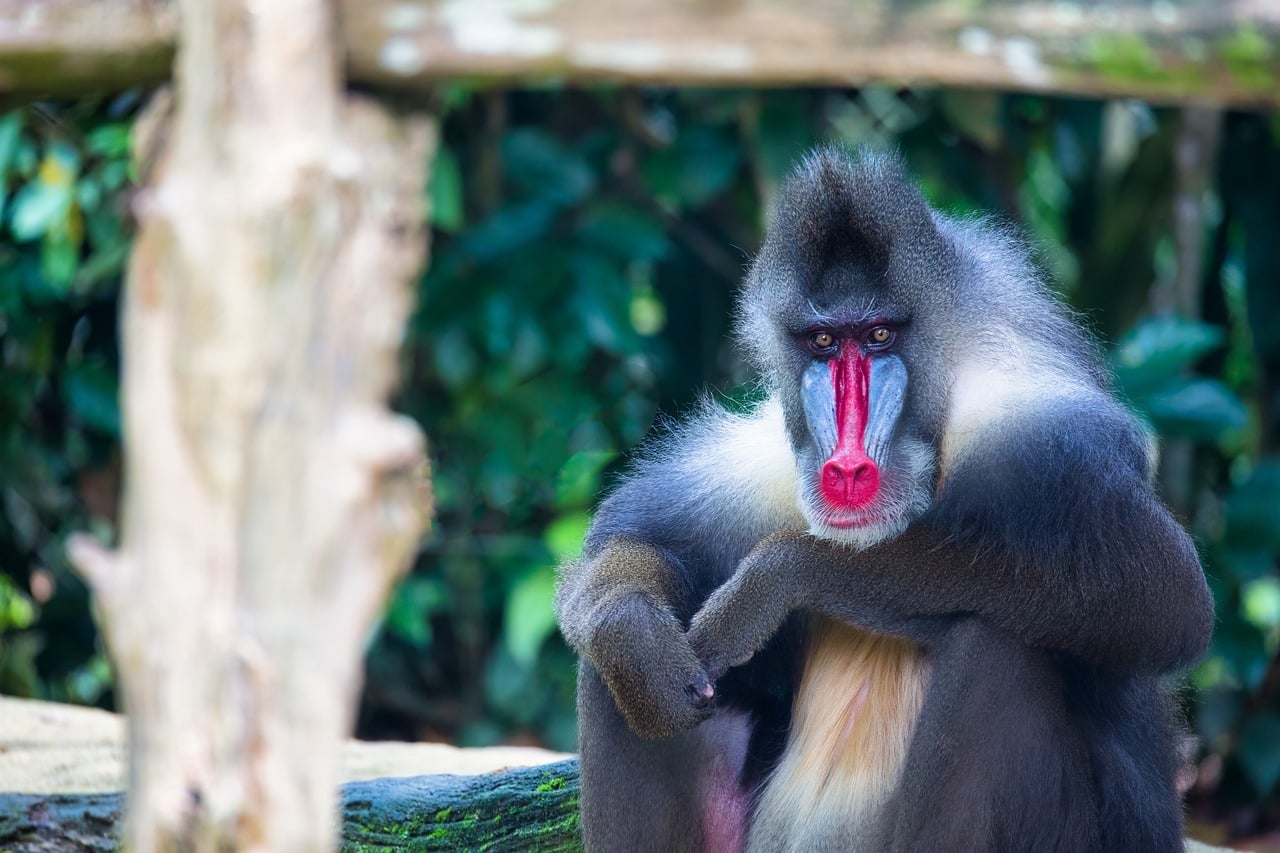
The Mandrill is the most colorful mammal on the planet. Full stop. The face on a mature male — electric blue ridges flanking a vivid red stripe down the nose, a yellow beard — looks like something a special effects team designed. But it’s 100% real and 100% natural. Found in Central Africa’s equatorial rainforests, these large primates live in troops and use their bold coloring to signal dominance and attract mates.
The brighter the face, the higher the male’s testosterone. Beauty has a purpose here. It’s not just for show.
13. Okapi
 Shutterstock
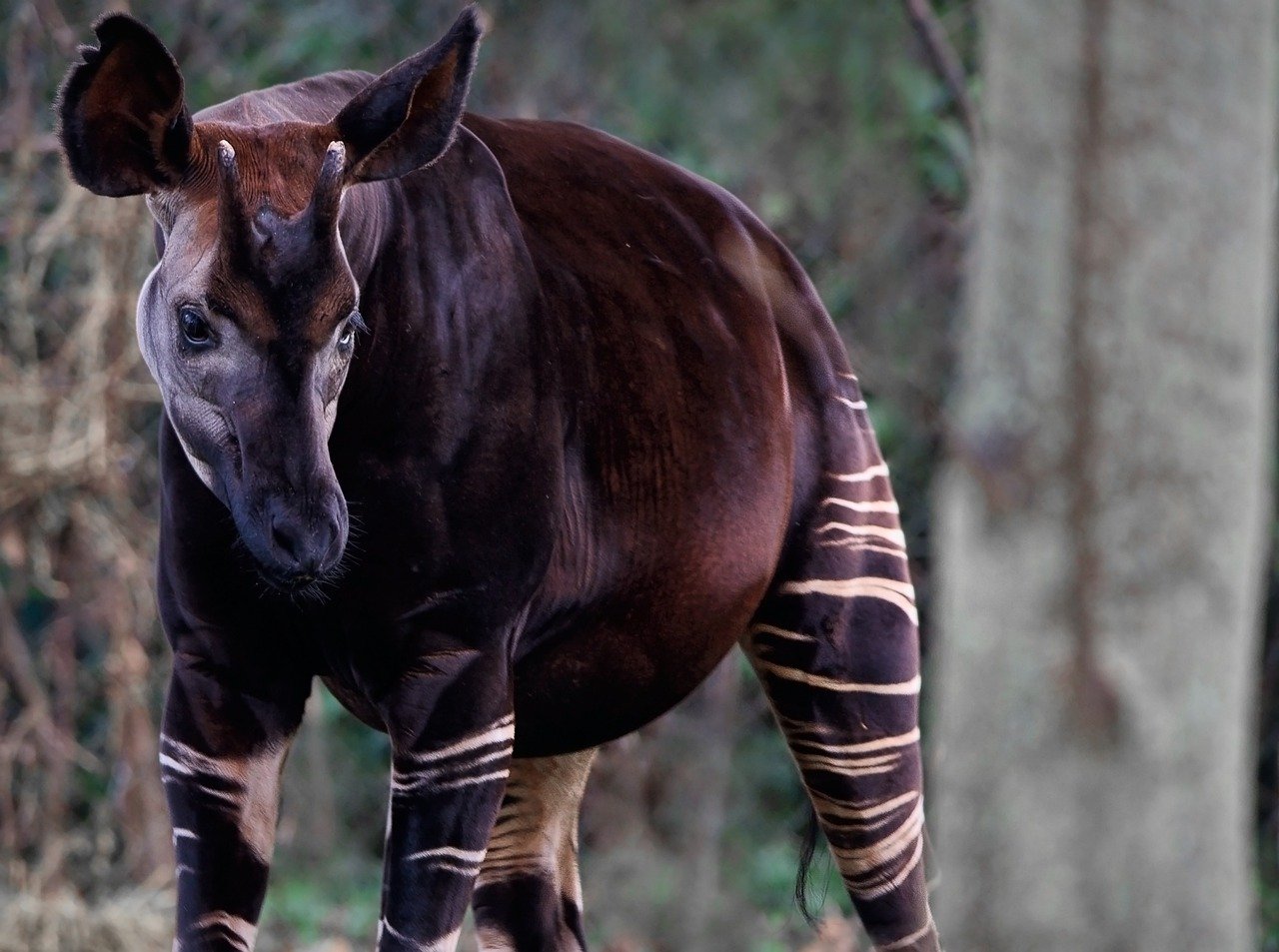
Western science didn’t officially describe the Okapi until 1901. A large mammal that managed to stay hidden from European naturalists into the 20th century — that tells you something about the Congo rainforest and something about the Okapi’s ability to disappear into it. This animal looks like a design experiment: the body of a horse, the neck of a giraffe (they’re actually giraffe relatives), and the rear leg markings of a zebra.
Shy and solitary, they’re rarely seen in the wild. Their patterning is so distinctive that even knowing what you’re looking at, your brain briefly misfires. There’s nothing else quite like them.
14. Kingfisher
 Shutterstock
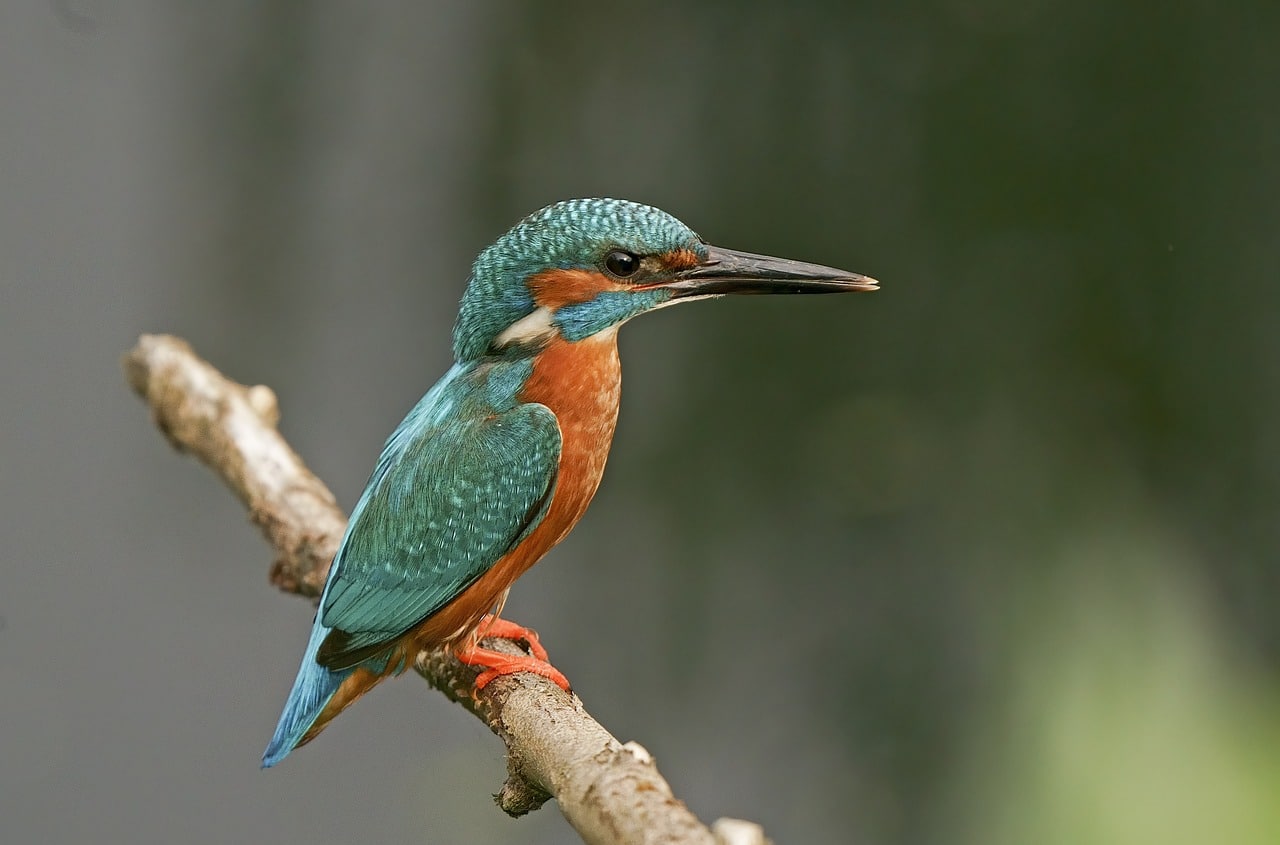
The Common Kingfisher is tiny — about the size of a sparrow — but their iridescent blue back and burnt orange chest pack more color per square inch than almost any bird on the planet. They perch motionless over rivers and streams, and when they dive, it’s so fast you’ll miss it if you blink. Maybe 0.4 seconds from perch to water to back with a fish.
Engineers actually studied the Kingfisher’s bill shape when designing the nose of Japan’s Shinkansen bullet train. The beak cuts through air-to-water transitions with minimal resistance. Beautiful and aerodynamically brilliant.
15. Snowy Owl
 Shutterstock
The Snowy Owl is striking in a way that’s almost unsettling. Pure white feathers, piercing yellow eyes, a perfectly round face that tracks movement with uncanny precision — they look less like a bird and more like something from a myth. Native to Arctic tundra, they occasionally irrupt south during years when prey is scarce, and people who’ve never seen an owl outside a zoo suddenly find one perched on a highway sign.
Their flight is nearly silent — specialized feathers break up turbulence so their approach is essentially soundless. They hear everything. You’ll never hear them coming.
16. Golden Retriever
 Shutterstock
Yes, dogs belong on this list. The Golden Retriever consistently ranks among the most beautiful dog breeds on the planet, and it’s not close. That flowing golden coat, the dark warm eyes, the easy smile they seem to wear constantly — Goldens are genuinely beautiful animals. But what separates them from a pretty painting is that their beauty extends all the way down to their personality.
They’re patient, gentle, joyful, and deeply bonded to the people they love. If you’re looking for the best food for a Golden Retriever to keep that coat shining and that energy high, what they eat matters more than most people realize. Their outer beauty really does follow their inner health.
17. Black Swan
 Shutterstock
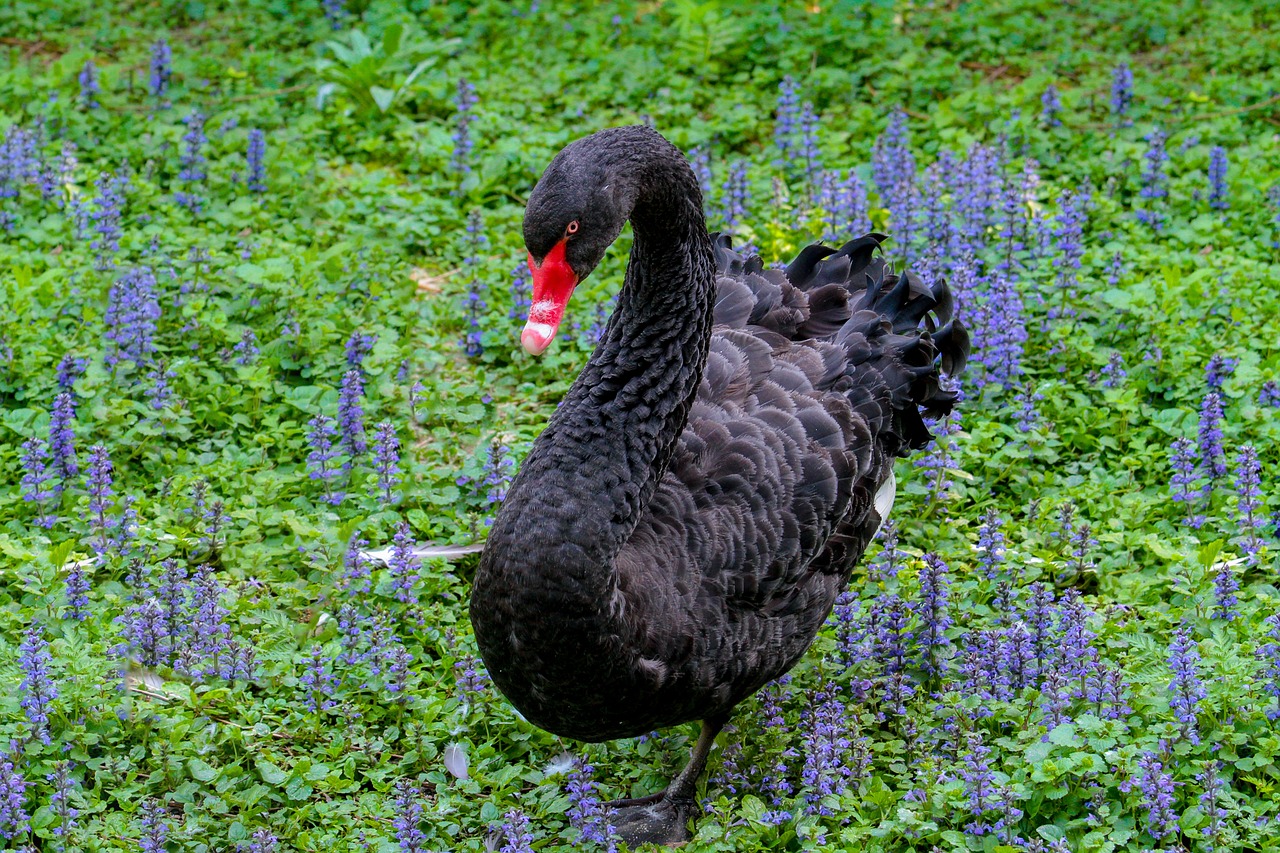
For centuries, Europeans believed all swans were white. They were wrong. The Black Swan of Australia — jet black feathers, bright red bill, red eyes — is a stunning counterpoint to everything expected about these birds. When Europeans first encountered them in 1697, it was a genuine shock. The phrase “black swan” entered the language as a metaphor for the impossible made real.
On water, they’re simply gorgeous. The black plumage creates a striking contrast against any backdrop, and their long arching necks give them the same natural elegance as their white relatives — just with more drama.
18. Indian Elephant
 Shutterstock
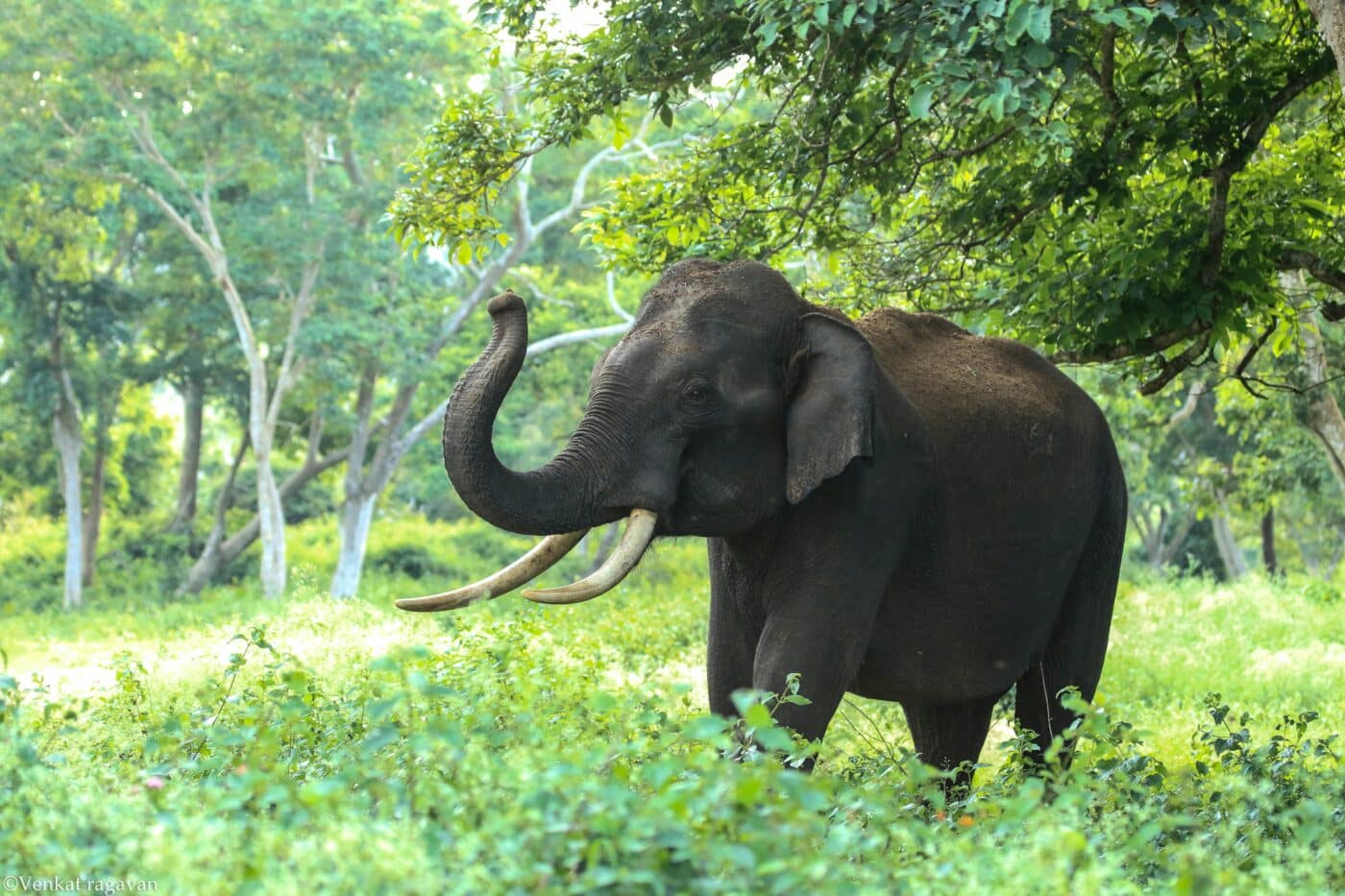
Beauty doesn’t require bright colors. The Indian Elephant proves that completely. Their grey, wrinkled skin tells the story of a life lived hard and long. Their eyes — small, dark, and deeply expressive — carry something that genuinely resembles wisdom. Watch one move through forest or along a riverbank and you’ll understand why they’ve been revered in South Asian cultures for millennia.
Elephants grieve their dead, recognize themselves in mirrors, and form bonds that last decades. That’s not just beautiful to look at. It’s beautiful to think about.
19. Harpy Eagle
 Shutterstock
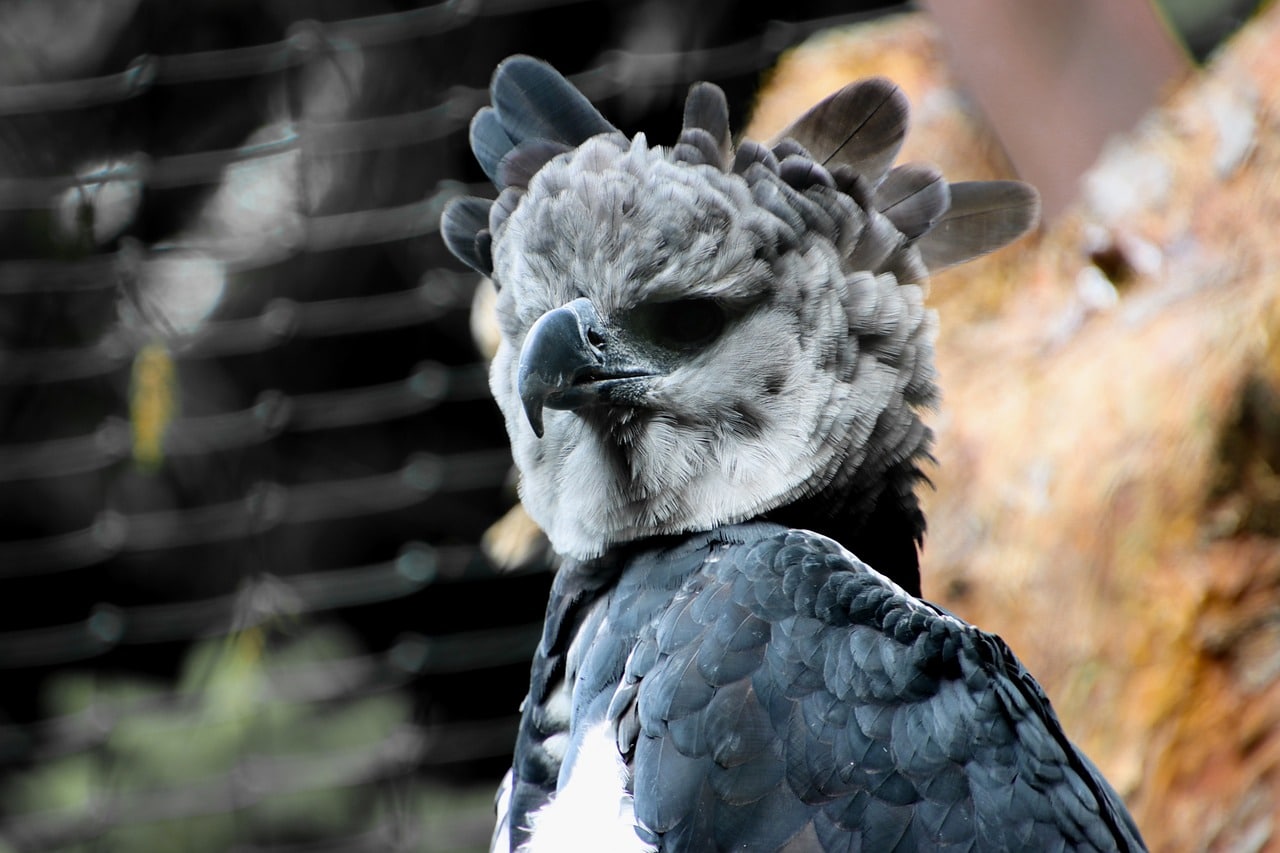
First-time photos of the Harpy Eagle tend to go viral because people don’t believe it’s a real bird. The face — framed by a distinct feather crest that fans out like a disc, dark eyes staring with absolute focus — looks almost human. Found in the tropical rainforests of Central and South America, these are among the largest and most powerful raptors on the planet.
Their talons can reach the size of a grizzly bear’s claws. Their wingspans approach seven feet. They hunt monkeys and sloths. Beautiful, yes. But also genuinely formidable in a way most animals on this list aren’t.
20. Lion
 Shutterstock
A male lion at rest is one of the great natural spectacles. That full mane — darker as the lion ages, a reliable signal of testosterone and fighting experience — frames a face built for command. Lions don’t hurry. They don’t need to. Watch a pride move across open savanna in the golden hour just before sunset and you’ll understand why lions have symbolized royalty across cultures and centuries.
Females do most of the hunting. Males protect the pride. Both carry a casual authority that’s genuinely magnetic to watch — the kind of confidence you feel from twenty meters away.
21. Arctic Wolf
 Shutterstock
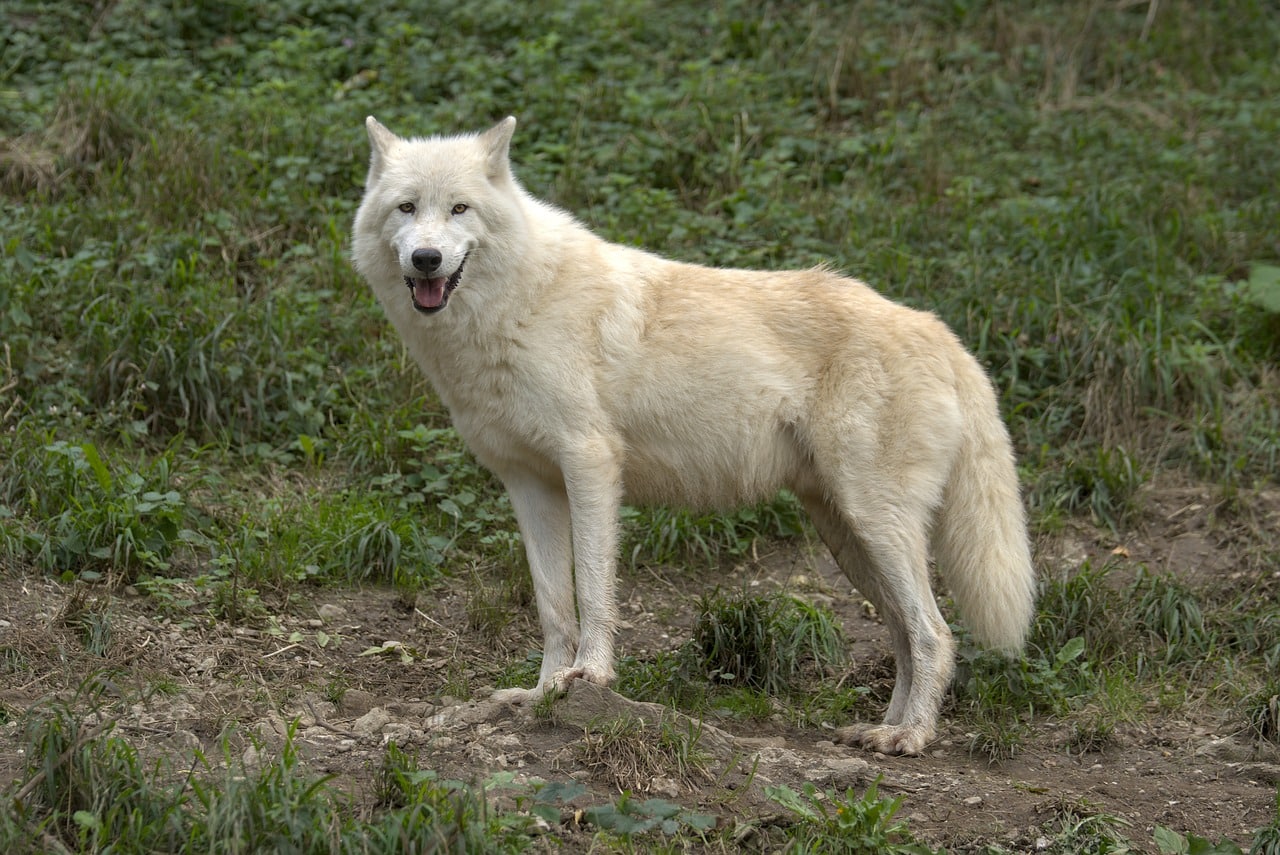
The Arctic Wolf lives exclusively north of the Arctic Circle, which means they’ve never been hunted by humans to the same extent as wolves in more accessible regions. Their all-white coats and piercing pale eyes make them look like something sculpted from the ice itself. They move together across the tundra in coordinated packs, hunting musk ox and Arctic hare with a precision built over thousands of years.
If you love wolf-like dogs, you’ll appreciate this: dogs share 99.9% of their DNA with wolves, and certain rugged dog breeds that thrive in harsh terrain carry unmistakable echoes of this wild ancestor. The hardiest dog breeds built for endurance owe a lot to the wolf’s blueprint.
22. Red Fox
 Shutterstock
The Red Fox is one of the most successful wild mammals on the planet — found across North America, Europe, Asia, and even northern Africa and parts of Australia. Their adaptability is remarkable. But what makes them genuinely beautiful is that orange-red coat glowing against a snowy field at dusk, or those sharp amber eyes catching light from a hedgerow.
They’re another canid, like our dogs, which makes them interesting to dog lovers. Many dog breeds share that same foxy coloring and sharp alertness — the resemblance isn’t coincidental. Foxes and dogs share a common ancestor, and it shows in the cheekbones.
23. Blue Whale
 Shutterstock
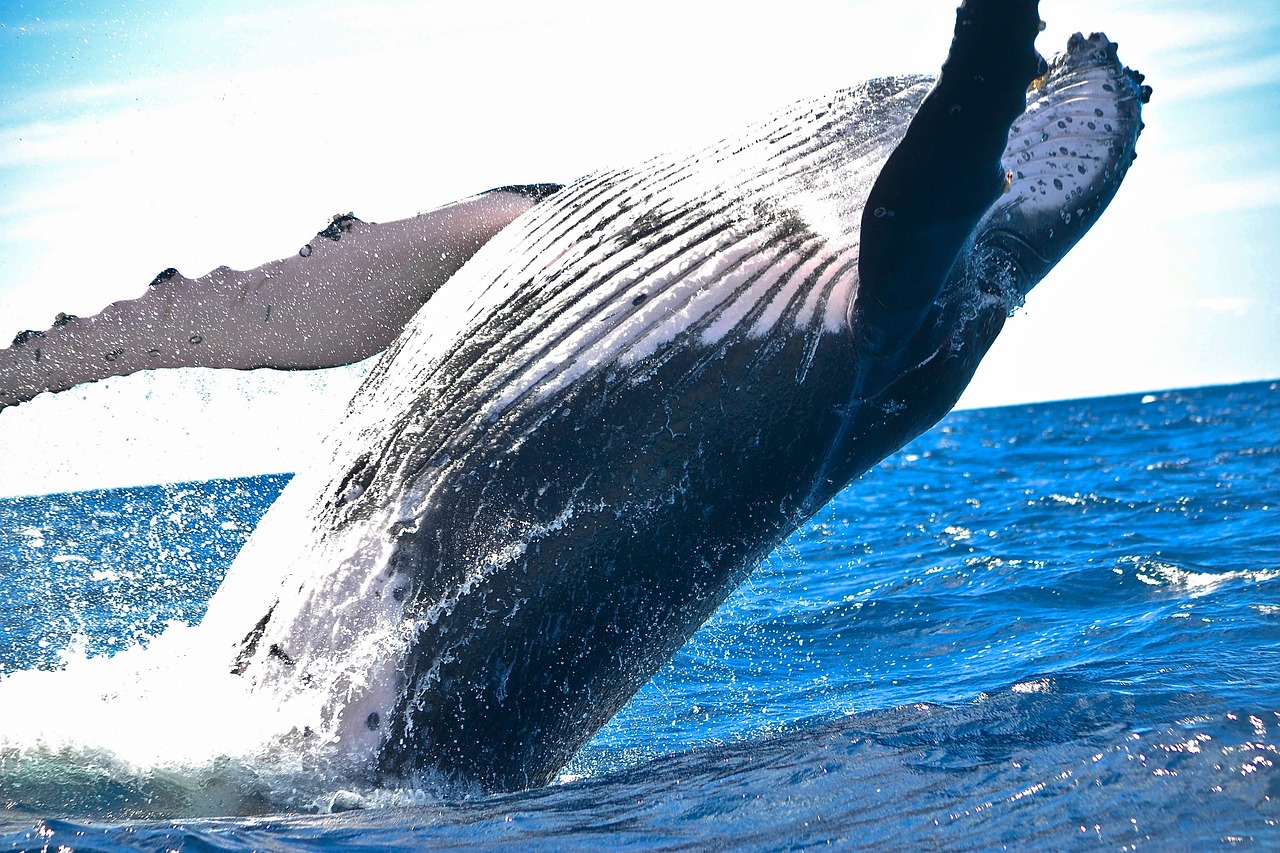
The Blue Whale is the largest animal that has ever existed on Earth — up to 100 feet long, up to 200 tons. Their blue-grey skin, dappled with lighter patches, is the same color as deep ocean water on a clear day. Watching one surface — the slow rise, the enormous back breaking the water, the spout reaching 30 feet high — is one of those experiences that puts human problems into perspective very quickly.
Their hearts weigh up to 400 pounds. Their calls can travel 1,000 miles through ocean water. The scale of this animal is genuinely hard to hold in your mind. And still, underwater, they move with a fluid grace that seems completely at odds with their size.
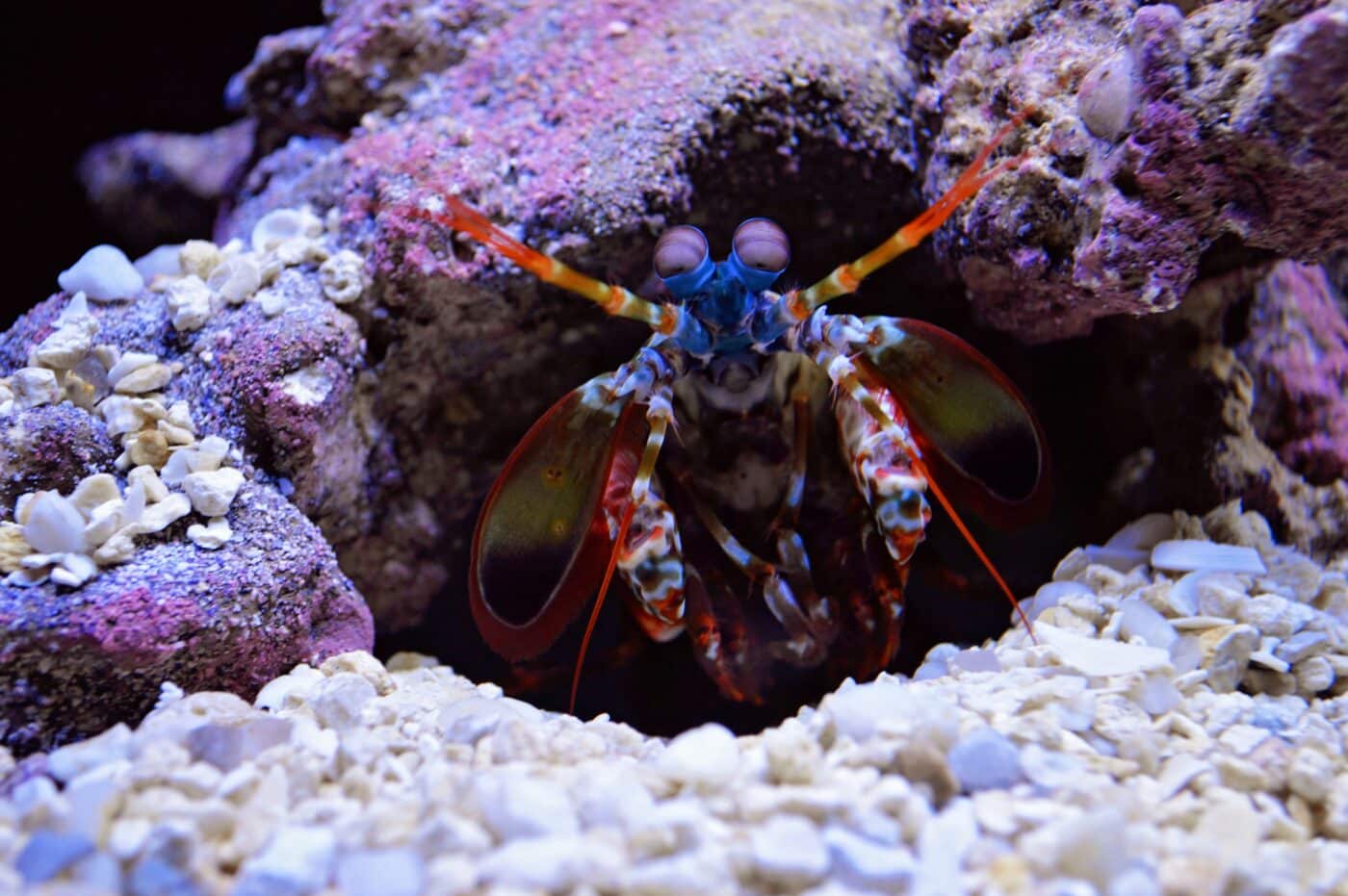
24. Mantis Shrimp
 Shutterstock
At six to twelve inches long, the Mantis Shrimp doesn’t look like it belongs in the “most beautiful” conversation. Then you see the colors. Blues, greens, oranges, reds, purples — stacked in banded patterns across their shell like something a conceptual artist painted. They’re genuinely astonishing.
What’s even wilder: Mantis Shrimp have 16 types of photoreceptors in their eyes. Humans have 3. What they actually see when they look at each other or their environment is something we literally cannot imagine — a visual experience we don’t have the hardware to process. They might be seeing colors that don’t even have names in any human language.
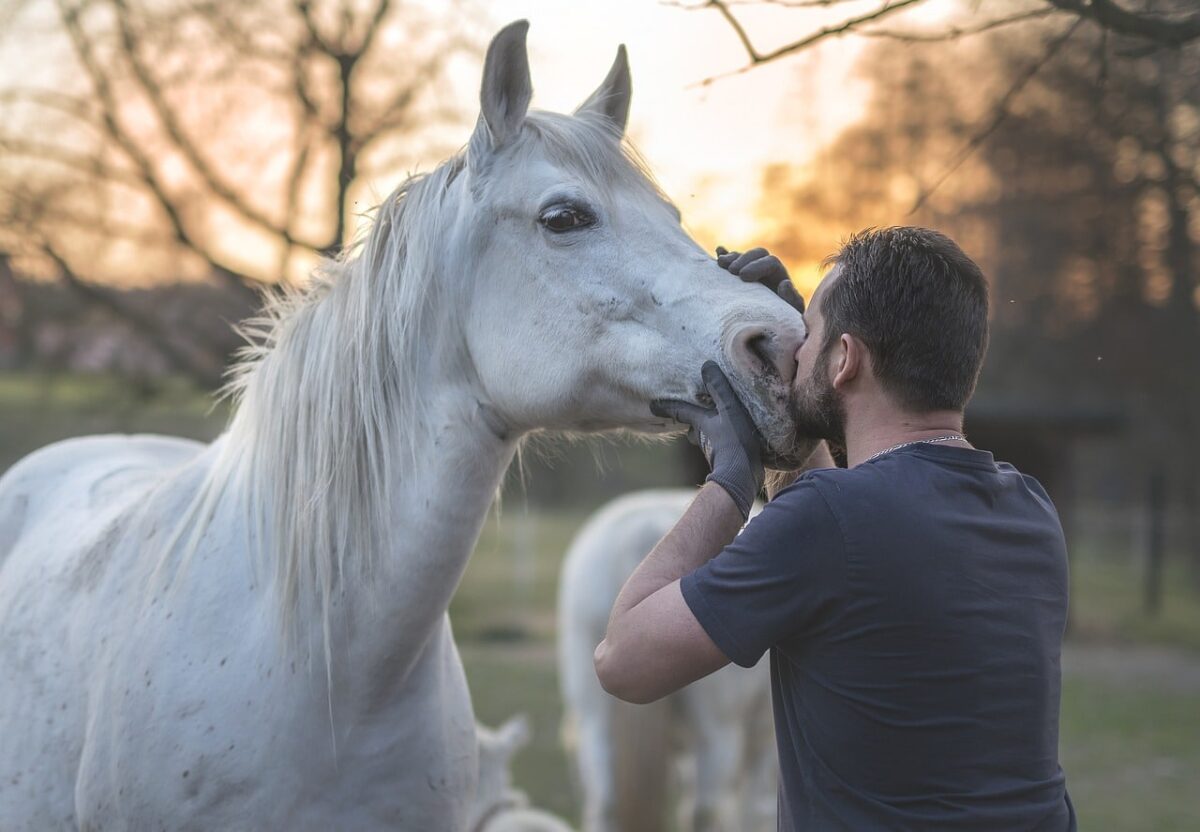
25. Arabian Horse
 Shutterstock
The Arabian Horse is one of the oldest domesticated breeds in the world — bred by Bedouin peoples on the Arabian Peninsula for over 4,500 years. That lineage shows in every line of the horse: the dished face, the large nostrils, the arched neck, the high tail carriage. They move like they know they’re being watched. And they usually are.
Arabian bloodlines influenced virtually every modern light horse breed — thoroughbreds, quarter horses, warmbloods — because the combination of beauty, speed, and endurance they carry is simply hard to improve on. Some things really are that good.
26. Golden Eagle
 Shutterstock
Watch a Golden Eagle soar over a mountain ridge and something in your brain instinctively responds. Those broad wings — up to seven and a half feet across — barely moving as they ride thermals. The golden-brown nape feathers catching the light. The effortless command of enormous altitude and airspeed. It’s one of those sights that makes the word “majestic” feel earned rather than cliched.
Golden Eagles hunt with eyesight eight times sharper than a human’s, and they’ve been used in falconry for thousands of years across Europe, Asia, and the Middle East. They’re the national symbol of Mexico, Germany, Austria, Albania, and several other countries. Basically everyone agrees on this one.
27. Zebra
 Shutterstock
No two zebras have exactly the same stripe pattern. Each one is unique, like a fingerprint. That fact alone makes them more interesting — but the visual impact of a herd of zebras running across open African grassland needs no backstory. The bold black-and-white contrast is clean, graphic, and striking in a way that feels almost designed.
Researchers believe the stripes may confuse biting insects, reduce heat absorption, or help with visual cohesion within the herd. Possibly all three. Whatever the evolutionary reason, the result is one of the most recognizable and beautiful animal patterns on Earth.
🌍 Conservation Status — Animals On This List
| Snow Leopard | Vulnerable | ~4,000 |
| Siberian Tiger | Endangered | ~500 |
| Red Panda | Endangered | <2,500 |
| Blue Whale | Endangered | ~10,000–25,000 |
| Harpy Eagle | Vulnerable | Unknown (declining) |
| Mandrill | Vulnerable | Unknown (declining) |
| Okapi | Endangered | <10,000 |
Shutterstock
Frequently Asked Questions About the Most Beautiful Animals
What is the most beautiful animal in the world?
There’s no single answer — it depends on what you find striking. The Mandarin Duck, Peacock, and Snow Leopard are consistently named among the most beautiful by wildlife photographers and naturalists. Beauty in the animal kingdom takes dozens of forms, from vivid color to elegant movement to sheer scale.
Which dog breed is the most beautiful?
Beauty is subjective, but Golden Retrievers, Siberian Huskies, and Afghan Hounds consistently rank at the top. Some dog breeds genuinely look like they belong in magazines — the combination of coat, build, and expression is that striking. The AKC’s most popular dog breeds list often reflects a mix of beauty and temperament.
Are any beautiful animals endangered?
Yes, several on this list are threatened or endangered. Snow Leopards have fewer than 4,000 individuals remaining. Siberian Tigers number around 500. Red Pandas have fewer than 2,500 in the wild. The Okapi and Blue Whale are also endangered. Conservation efforts for all of these species are active and ongoing.
What makes an animal beautiful?
Color and pattern are the obvious factors — vivid plumage, striking markings, iridescent scales. But movement matters too: a Snow Leopard traversing a cliff face, a Blue Whale surfacing, a Golden Eagle riding a thermal. Size, rarity, and emotional resonance all play a role. Beauty in the animal kingdom is genuinely multi-dimensional.
What is the most colorful animal on Earth?
The Mandrill is often cited as the most colorful mammal. For birds, the Mandarin Duck and Scarlet Macaw are strong contenders. For sea creatures, the Mantis Shrimp sees 16 types of color receptors and displays colors that may not even have human names — making it possibly the most visually complex animal on the planet, even if we can’t fully appreciate it.
Do any ocean animals make this list?
Two: the Blue Whale for its breathtaking scale and graceful movement, and the Mantis Shrimp for its extraordinary rainbow coloring. The ocean holds thousands more stunning species — clownfish, nudibranchs, leafy sea dragons — that could easily fill a list of their own.
 Shutterstock
The World Is Full of Beautiful Animals — Including Yours
From iridescent butterfly wings to the quiet dignity of an elephant, the variety of beauty on this planet is genuinely hard to wrap your head around. These 27 animals represent just a fraction of what’s out there.
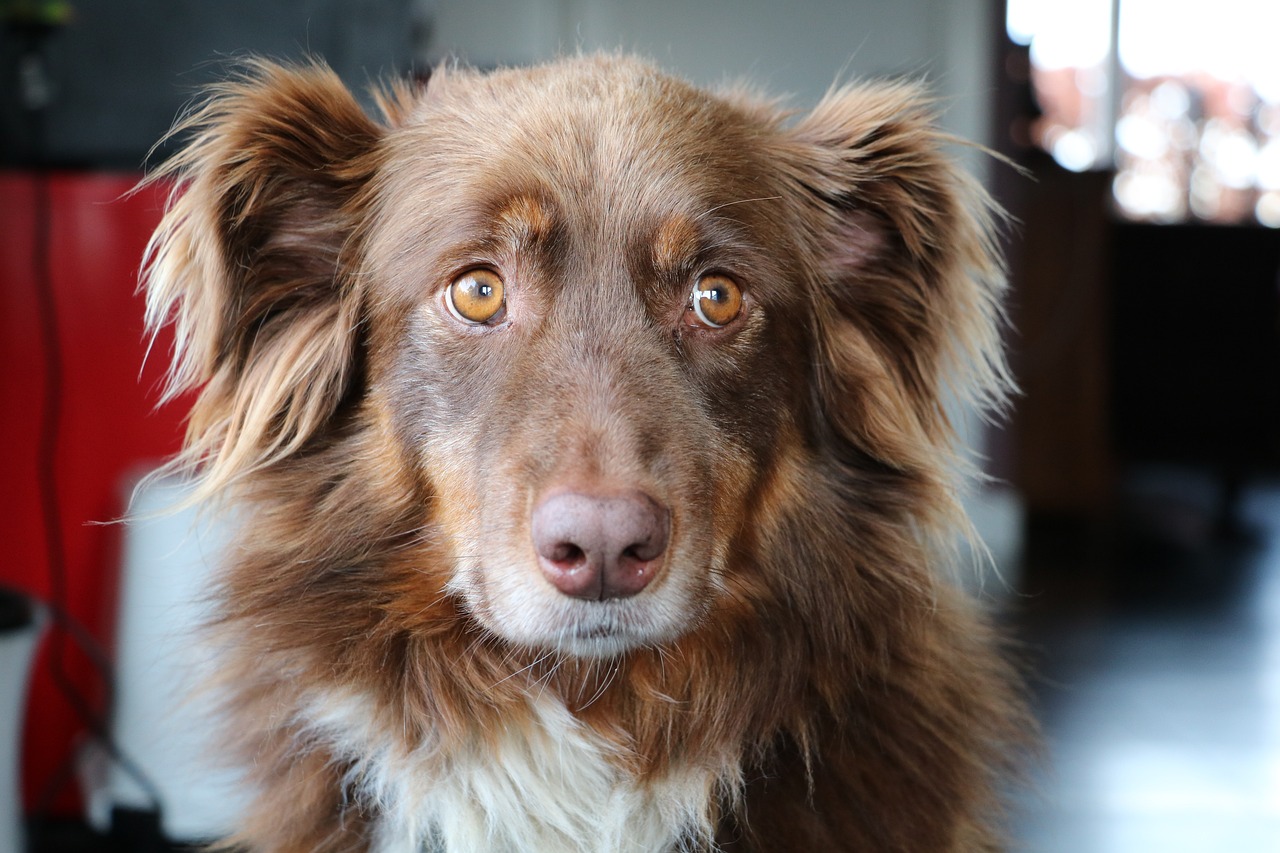
But here’s the thing — you probably already share your home with one of the most beautiful animals in the world. Dogs have been companions to humans for at least 15,000 years, and they’ve only gotten more beautiful. That flowing Golden Retriever coat, a Husky’s piercing blue eyes, the impossibly soft ears on a Basset Hound — beauty really does come in every form.
If you want to keep that at-home beauty at its best, what your dog eats matters. A healthy coat, bright eyes, and that effortless glow all start with good nutrition. And if this list reminded you that the natural world is worth protecting, consider supporting organizations like WWF, Snow Leopard Trust, or the Red Panda Network. These animals are worth it.














 English (US) ·