
 1 day ago
5
1 day ago
5
If you’ve just brought home a Doberman puppy, chances are you’re watching that little bundle of gangly legs and enormous paws and wondering: “Is this normal?” The answer is almost always yes. Dobermans grow at a wild pace in their first year, and tracking Doberman weight by age helps you stay ahead of any real problems before they become costly vet visits.
This guide covers everything: male and female weight charts from newborn to 3 years, height milestones, daily feeding amounts, muscle development timelines, and what “healthy weight” actually looks like on a Dobe. We’ve also included a FAQ section at the end with the questions owners ask most.
Doberman Size At-a-Glance (2026)
- Adult male weight: 75-100 lbs (34-45 kg)
- Adult female weight: 60-80 lbs (27-36 kg)
- Adult male height: 26-28 inches at the shoulder
- Adult female height: 24-26 inches at the shoulder
- Full physical maturity: 18-24 months
- Full muscle development: 2-3 years
- Growth spurts: Most noticeable at 4-6 months and 9-11 months
Male Doberman Weight by Age (Newborn to 3 Years)
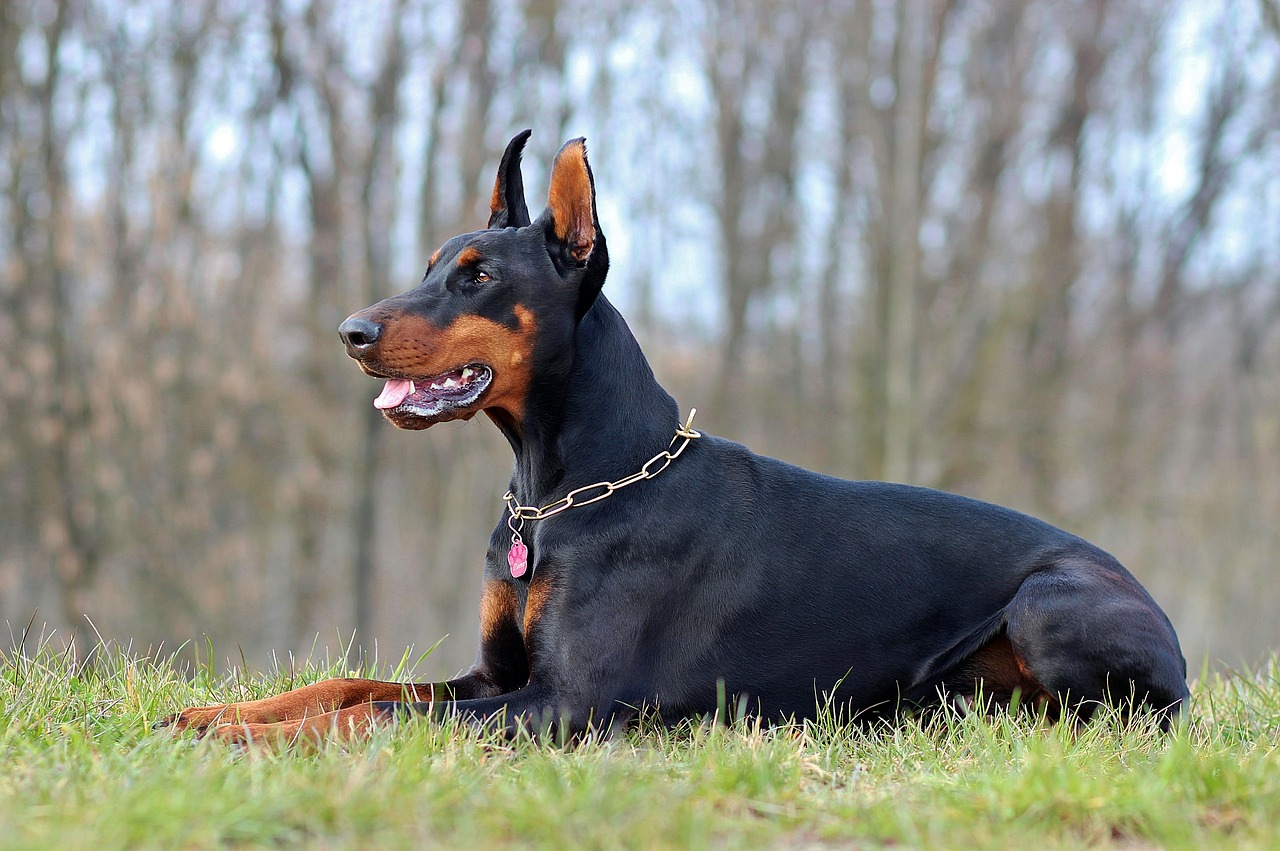
Male Dobermans are noticeably heavier and taller than females throughout every stage of growth. They tend to put on weight quickly between 3-9 months. Use the table below as a rough guideline, not a hard rule. A few pounds above or below is usually nothing to worry about.
| Newborn | 1.0 – 1.5 | 0.45 – 0.68 | 4 – 6 | 10 – 15 |
| 1 Month | 5 – 9 | 2.3 – 4.1 | 7 – 9 | 18 – 23 |
| 2 Months | 16 – 20 | 7.3 – 9.1 | 10 – 12 | 25 – 30 |
| 3 Months | 24 – 30 | 10.9 – 13.6 | 14 – 17 | 35 – 43 |
| 4 Months | 32 – 42 | 14.5 – 19 | 18 – 21 | 46 – 53 |
| 5 Months | 40 – 52 | 18.1 – 23.6 | 21 – 24 | 53 – 61 |
| 6 Months | 48 – 60 | 21.8 – 27.2 | 23 – 26 | 58 – 66 |
| 9 Months | 60 – 75 | 27.2 – 34 | 25 – 28 | 64 – 71 |
| 12 Months | 70 – 85 | 31.8 – 38.6 | 26 – 29 | 66 – 74 |
| 18 Months | 75 – 92 | 34 – 41.7 | 27 – 30 | 69 – 76 |
| 2 Years | 75 – 95 | 34 – 43.1 | 27 – 30 | 69 – 76 |
| 3 Years | 80 – 100 | 36.3 – 45.4 | 27 – 31 | 69 – 79 |
Notice that height mostly stabilizes by 12-18 months. The weight gains you’ll see between 12 and 36 months are almost entirely from muscle filling in, not bone growth. That’s why a 1-year-old Dobe can look surprisingly lean even at a healthy weight.
Female Doberman Weight by Age (Newborn to 3 Years)
Female Dobermans are lighter and slightly shorter but no less athletic. They typically reach their full height a bit earlier than males and fill out with muscle through their second year. If your girl looks “thin” at 14 months, she’s probably just still developing.
| Newborn | 0.9 – 1.3 | 0.41 – 0.59 | 3.5 – 5.5 | 9 – 14 |
| 1 Month | 4.5 – 8 | 2 – 3.6 | 6 – 8 | 15 – 20 |
| 2 Months | 15 – 18 | 6.8 – 8.2 | 9 – 11 | 23 – 28 |
| 3 Months | 22 – 27 | 10 – 12.3 | 12 – 15 | 30 – 38 |
| 4 Months | 29 – 38 | 13.2 – 17.2 | 16 – 19 | 41 – 48 |
| 5 Months | 35 – 47 | 15.9 – 21.3 | 18 – 21 | 46 – 53 |
| 6 Months | 42 – 53 | 19 – 24 | 20 – 23 | 51 – 58 |
| 9 Months | 50 – 63 | 22.7 – 28.6 | 22 – 25 | 56 – 64 |
| 12 Months | 55 – 70 | 25 – 31.8 | 23 – 26 | 58 – 66 |
| 18 Months | 58 – 75 | 26.3 – 34 | 24 – 27 | 61 – 69 |
| 2 Years | 60 – 77 | 27.2 – 34.9 | 24 – 27 | 61 – 69 |
| 3 Years | 62 – 80 | 28.1 – 36.3 | 24 – 28 | 61 – 71 |
These numbers are based on breed standards and real-world breeder data. Your vet is still the best resource if you’re seeing consistent deviations from these ranges, especially if your dog is eating well but not gaining weight.
What to Feed Your Doberman at Each Stage
Feeding a Doberman isn’t complicated, but it matters a lot. Too little and they won’t reach their genetic potential. Too much and you risk joint stress on those fast-growing bones.
The best puppy foods for Dobermans are specifically formulated for large breeds. Large-breed puppy formulas control calcium and phosphorus levels to support steady bone development rather than forcing rapid growth. This is important because overly fast growth in large breeds can lead to hip and elbow problems down the road.
| 8-12 Weeks | 1.5 – 2 cups | 4 | Large-breed puppy formula |
| 3-4 Months | 2 – 3 cups | 3 | Transition to 3 meals |
| 4-6 Months | 3 – 4 cups | 3 | High growth phase |
| 6-12 Months | 4 – 5 cups | 2-3 | Monitor for bloat risk |
| 12-18 Months | 3.5 – 5 cups | 2 | Transition to adult food |
| 18+ Months (Adult) | 3 – 5 cups | 2 | Adjust for activity level |
Dobermans are among the breeds prone to bloat (gastric dilatation-volvulus), which is a life-threatening condition. Always split meals into at least two sittings and avoid vigorous exercise for 60 minutes before and after eating. If you’re using a high-quality kibble, you likely won’t need to add Doberman puppy supplements unless your vet recommends it.
Muscle Development: When Do Dobermans Fill Out?
This is probably the most common question from first-time Dobe owners. Your puppy will look awkward and leggy for longer than you’d expect.
Here’s the real timeline:
- 0-6 months: Bone growth is the priority. Don’t expect any real muscle definition.
- 6-12 months: You’ll start seeing the first hints of that athletic Doberman shape. Still lean.
- 12-18 months: Muscle starts filling in noticeably, especially in the chest and hindquarters.
- 18-24 months: Most Dobes look like “real” Dobermans now. Chest is broader, neck is thicker.
- 2-3 years: Full adult muscle mass. Males especially tend to keep gaining definition into their third year.
During the muscle-building phase, a high-quality adult dog food for Dobermans with 25-30% protein supports muscle maintenance. Daily exercise helps too, but keep impact activities moderate until growth plates close around 14-18 months. Your vet can confirm closure with a simple X-ray if you’re unsure.
What’s a Healthy Weight for an Adult Doberman?
The scale number matters less than body condition. A 90-lb male Dobe could be perfectly healthy or morbidly obese depending on their build. Learn the body condition score (BCS) system instead.
Doberman Body Condition Score Quick Guide
- Too thin (BCS 1-3): Ribs visible from a distance, spine prominent, no waist curve. Increase food or check for underlying health issues.
- Ideal (BCS 4-5): Ribs easily felt but not visible. Defined waist when viewed from above. Slight tuck in abdomen. This is your goal.
- Overweight (BCS 6-7): Ribs felt only with firm pressure. Waist barely visible. Abdomen starting to sag.
- Obese (BCS 8-9): Ribs not palpable. No waist. Heavy fat deposits. Significant health risk.
Run your hands along your dog’s ribs every week. It takes 10 seconds and tells you more than the scale.
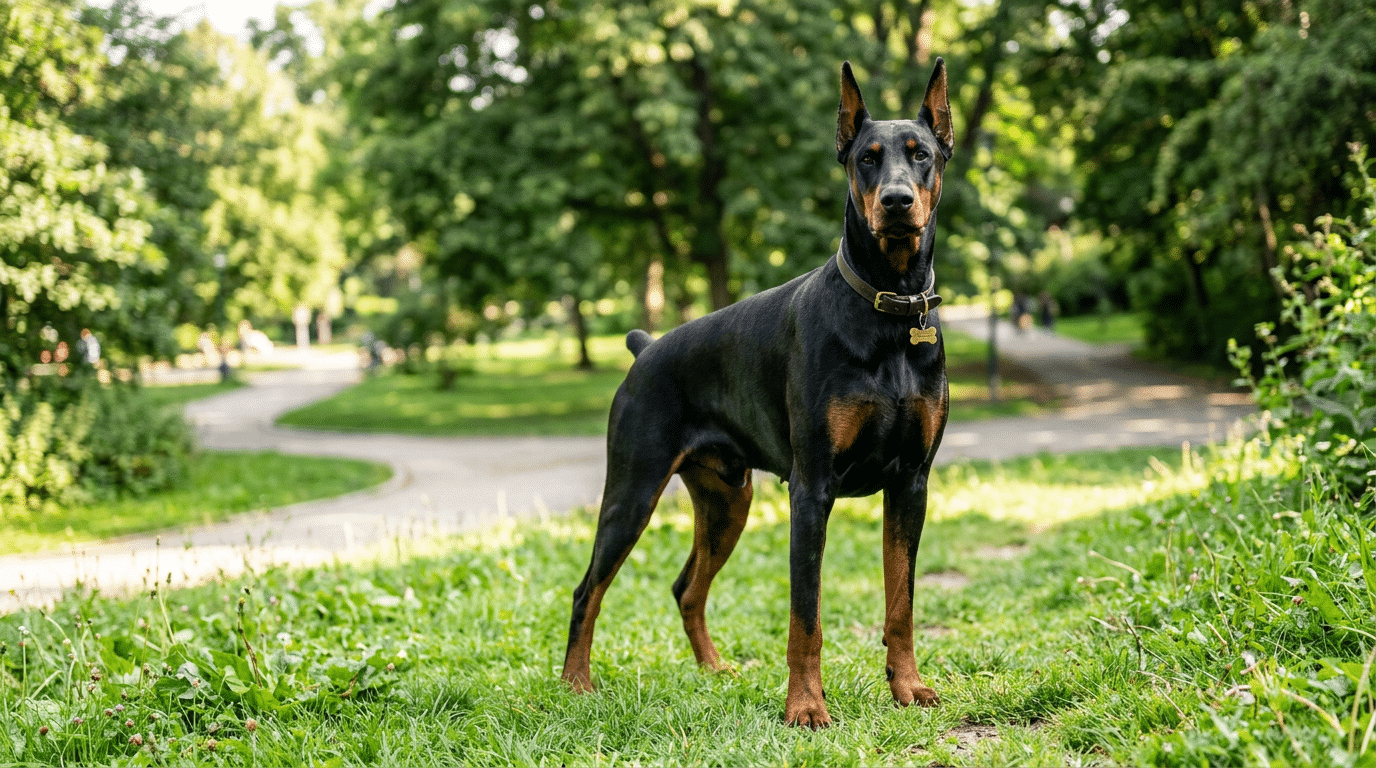
Dobermans naturally look lean. A BCS of 5 on a Dobe means you can see a slight rib outline when they stretch or run, especially in short-coated blacks. If a vet sees this and says “ideal weight,” trust that over your instinct that they look underfed.
Joint health is closely tied to weight. Even 10% excess body weight adds significant stress to hips, elbows, and knees. If your Dobe is carrying extra pounds, a good Doberman joint supplement can help protect those joints while you work on weight management.
Key Growth Milestones to Watch For
Most Doberman growth concerns fall into three buckets: puppies growing too fast, too slow, or unevenly. Here’s what’s normal at each stage:
2-4 months: This is when puppies gain weight the fastest, sometimes 2-3 lbs per week. Their paws will look comically large. That’s normal. Big paws just mean more growing to do.
4-6 months: First major growth spurt. Height increases fast. Your puppy might seem clumsy for a few weeks while their body catches up with their legs. Don’t over-exercise during this phase.
6-9 months: Growth slows slightly. You’ll notice your pup eating less some weeks. That’s also normal. Appetite fluctuates with growth rate.
9-12 months: Second noticeable growth spurt. Most Dobes hit close to their adult height by 12 months. Training becomes easier now too, since they’re starting to mentally mature. If you haven’t started formal training, the best online dog training courses for Dobermans are a good investment at this stage.
12-18 months: Height mostly done, weight still increasing. This is when Dobes sometimes get mistaken for being too thin because they’re tall but not yet filled out. Patient owners get rewarded here.
2-3 years: Full physical and mental maturity. Some males don’t fully settle mentally until 3 years old. Give them good food, consistent training, and a comfortable dog bed built for large breeds, and you’ll have a truly exceptional dog.
Factors That Affect Doberman Growth
Not every Doberman grows to the same size, even in the same litter. Several things play into final adult weight and height:
- Genetics: The single biggest factor. Looking at the parents gives you the most reliable preview of adult size.
- Nutrition: Underfeeding puppies can stunt growth. Overfeeding can speed it up too fast and cause joint problems.
- Spay/neuter timing: Dogs altered before growth plates close (typically 14-18 months) may grow slightly taller. Some studies suggest this is because sex hormones normally signal plates to close. Talk to your vet about timing.
- Health conditions: Intestinal parasites, thyroid issues, and other conditions can all interfere with growth. If your puppy is consistently below the lower end of these ranges, a vet checkup is worth it.
- Exercise: Appropriate exercise builds muscle. Over-exercise on hard surfaces before growth plates close can cause real damage.
Senior Dobermans (7+ years) will naturally lose some muscle mass and may benefit from supplements designed for senior Dobermans to maintain joint function and muscle condition as they age.
Frequently Asked Questions About Doberman Weight by Age
What is the average weight of a Doberman at 6 months?
A male Doberman at 6 months typically weighs 48-60 lbs (22-27 kg). Females run lighter at 42-53 lbs (19-24 kg). Both are still months away from their adult weight, so don’t stress if they’re lean at this stage.
How much should a 1-year-old Doberman weigh?
At 12 months, males are generally in the 70-85 lb range and females are in the 55-70 lb range. They’re close to full height by now but won’t finish building muscle mass for another year or two.
When do Dobermans stop growing?
Height mostly tops out by 12-14 months. Weight keeps increasing through 2-3 years as muscle fills in. Males take longer to fully develop than females. Don’t expect your male Dobe to look like a show dog until he’s at least 2.
Is my Doberman too thin?
Probably not. Dobermans are naturally lean dogs. Feel the ribs with your hands. If you can feel them easily but can’t see them at rest, and there’s a clear waist visible from above, your dog is at an ideal weight. If the ribs are prominently visible from across the room, that’s worth a vet call.
Do male and female Dobermans grow at different rates?
Yes, males are consistently heavier at every age and take longer to fully mature. Both genders hit close to full height by 12 months, but males continue putting on muscle well into year three.
How much should I feed my Doberman puppy each day?
Roughly 2-3 cups daily at 3-4 months (3 meals), rising to 4-5 cups by 6-12 months (split across 2-3 meals). Use a large-breed puppy formula, not a generic formula. The calcium-to-phosphorus ratio matters for joint development in large breeds.
When do Dobermans start looking muscular?
Somewhere between 18 and 24 months you’ll start seeing that classic Doberman physique really emerge. Males especially keep filling out into year three. The “too skinny teenager” phase is totally normal and doesn’t mean anything is wrong.
Can spaying or neutering affect growth?
Yes. Early spay or neuter before growth plates close can result in a slightly taller dog due to delayed plate closure. Some research links early altering in large breeds to higher rates of joint problems. Talk to your vet about the best timing for your specific dog.
What are signs of unhealthy weight in a Doberman?
Ribs visible from a distance, sharp hip bones sticking out, and a severely tucked abdomen suggest underweight. No visible waist, ribs you can’t feel under fat, and a saggy belly suggest overweight. Both are worth a vet visit.
How do growth spurts affect behavior?
Puppies during growth spurts often sleep more, eat inconsistently, and seem temporarily uncoordinated. This is normal. Their joints may also be more sensitive, so back off on hard running or jumping during these phases.

Bottom Line
Tracking your Doberman’s weight by age takes the guesswork out of a genuinely confusing growth process. Males and females follow different curves, and both look deceptively thin through their first 18 months. Use the charts as a baseline, run the rib check weekly, and bring your vet into any conversation about consistent deviations.
Feed them right, move them appropriately for their age, and don’t skip the regular checkups. Dobermans are one of the most rewarding dogs you can own. Getting the growth phase right sets them up for a decade or more of great health.










 English (US) ·