
I get this question more than almost any other: "Dr. Dobias, is fermentation actually good for my dog, or is it something I should avoid?" I understand the confusion — if you search online, you'll see two completely different stories. One article calls fermented foods a miracle for gut health, another warns they're a histamine bomb. This is why I want to walk you through what fermentation is, what the peer-reviewed research shows, and what I've seen in decades of practice.
What Is Fermentation, Really?
Fermentation is simply this: tiny living organisms — bacteria or yeast — that break down food before your dog's body has to.
Imagine a restaurant kitchen:
Behind the scenes, the team chops, marinates, and preps ingredients long before a meal reaches the table. Fermentation is that back-room prep work. By the time fermented food or supplements reach the gut, much of the hard work is already done.
Not all of these “kitchen staff” work the same way, though. Bacterial fermentation (like sauerkraut or kefir) turn sugars into acids, producing short-chain fatty acids (SCFAs) — the primary metabolic output of bacterial fermentation in the gut.[1] Others are yeasts, like Saccharomyces cerevisiae, which work through a different pathway entirely. This distinction becomes very important when we talk about histamine in the next article.
How Fermentation Changes Food
Fermentation doesn’t just leave food as it was. It transforms it.
1. Fewer anti-nutrients, better mineral absorption
Raw plant foods often contain phytic acid — a natural compound that binds minerals such as calcium, iron, magnesium, and zinc so the body can’t fully access them.
Phytic acid acts like a nutrient lock, and based on multiple studies, fermentation unlocks that lock.
A review in the Journal of Food Science and Technology documented that fermentation of grains substantially reduces phytic acid content and improves the bioavailability of minerals bound by it
.
[2] Furthermore, sourdough fermentation studies have shown even more specific numbers: one study found a 70% reduction in phytic acid and roughly a 30% increase in the bioaccessibility of minerals like magnesium, calcium, and zinc after 24 hours of fermentation
.
[3] Another peer-reviewed analysis of maize fermentation confirmed reduced phytate levels and enhanced estimated iron and zinc bioavailability
.
[4]
This matters especially for dogs. As carnivores, they have a shorter digestive tract than we do and less time to work around these natural blockers especially in nutrient loaded vegetables and supplements.
Fermentation is the friendly ally, that helps to maximize nutrient absorption.
2. More bioavailable B vitamins (including folate and B12)
Fermentation doesn’t just preserve nutrients — it can also create new ones.[6][7] Reviews of fermented starchy and vegetable foods show that vitamin content often rises during fermentation, largely because the fermenting microorganisms synthesize these vitamins as they grow.
Research on cereal‑based fermented foods goes even further. Certain fermenting bacteria, including Propionibacterium freudenreichii, have been shown to actively produce the active forms of vitamin B12 (cobalamin) and folate during fermentation – nutrients that are key for intestinal health and were barely present in the unfermented starting material.
In practical terms, fermentation can turn a modest plant ingredient into a more vitamin‑rich, biologically active food for your dog.
Fermentation and the Microbiome: Why the Gut Loves It
When bacteria ferment fibres in the colon, they produce short-chain fatty acids like acetate, propionate, and butyrate. These SCFAs serve as fuel for the cells lining the gut wall and help regulate metabolic and immune health. Reviews on SCFAs and human metabolic health concluded that increasing SCFA production through fermentation could be a valuable strategy for preventing gastrointestinal dysfunction.[9][10]
Feeding beneficial microbes and lowering inflammation
The most compelling human evidence on this comes from a controlled study at Stanford University School of Medicine, published in Cell. Researchers found that a 10-week diet high in fermented foods (yogurt, kefir, fermented vegetables, kombucha) increased overall gut microbial diversity, with stronger effects at higher intake. Notably, four types of immune cells showed less activation, and levels of 19 different inflammatory proteins in the blood decreased. Interestingly, a high-fiber diet alone did not produce the same anti-inflammatory effect.[8]
A diverse, well supported microbiome is exactly what our dogs need to extract, process and utilize nutrients from both food and supplements.
What This Means For Dogs
All of the above is interesting, but what does it mean for us and our dogs?
Research using Saccharomyces cerevisiae fermentation products (SCFP) specifically in dogs has found measurable effects on gut and immune parameters. A study examining dogs undergoing transport stress found that SCFP supplementation supported fecal quality and improved markers of oxidative stress and immune activation during the stress period.[12]
A broader review in Frontiers in Veterinary Science on yeast Saccharomyces and its derivatives similarly reported improvement of immune markers in dogs under physiological stress.[13]
Fermented Vitamins vs Synthetic Vitamins
Most conventional pet multivitamins rely on synthetic premixes – isolated vitamins pieced together in a lab. These compounds are stripped of their natural context: no co-factors, no enzymes no phytonutrients. They are pure chemicals.
Fermented, whole food vitamins change that picture. Peer reviewed studies on fermentation show two consistent patterns:
- Anti-nutrients like phytic acid are broken down, freeing minerals such as calcium iron, magnesium and zinc for absorption.
- New nutrients, including vitamins are generated by the fermenting organisms themselves.
Fermented vitamins are embedded in a biological matrix that your dog’s digestive system is already equipped to recognize and process. Instead of isolated molecules that the body must work harder to interpret, they arrive as part of a food‑like structure, accompanied by naturally occurring co‑factors.
Bioavailability – what the body can actually absorb and use – matters more than the milligrams printed on a label. Fermentation is one of the most time‑tested ways we have of improving that bioavailability.
Quick Comparison of Conventional and Fermented Vitamins
| Nutrient form | Embedded in food matrix with co-factors | Isolated single molecules |
| Mineral absorption | Enhanced via phytate breakdown [1] [2] [3] | No inherent enhancement |
| Vitamin content | Increased through fermentation [4] [5] | Fixed, added synthetically |
| Gut microbiome effect | Supports diversity [6] | No documented microbiome benefit |
| Species specificity | Formulated for dogs | Maybe formulated for dogs or not |
Why I Use Fermented Multivitamins
Here is why I have been so passionate about helping you understand the difference.
Many people are unaware that a carefully controlled fermentation process — using Saccharomyces cerevisiae cultures on organic, whole-food substrates — is very different from a jar of sauerkraut.
SoulFood Multivitamin was built around this science.
A certified-organic, fermented multivitamin for dogs and people. Delivering nutrients the way nature intended — highly bioavailable, bound to natural co-factors, and gentle on the digestive system.
Fermented with Saccharomyces cerevisiae, the same category of fermentation shown to reduce anti‑nutrients, increase B‑vitamin content, and support gut microbial diversity and stress‑related immune balance.
So instead of isolated synthetic vitamins pieced together in a lab, SoulFood delivers nutrients in a fermented food‑based matrix, freed from many of the natural locks that block absorption and enriched with fermented vitamins.
In my experience, fermented vitamins are a clear winner to conventional counterparts that make us and our dog nauseous.
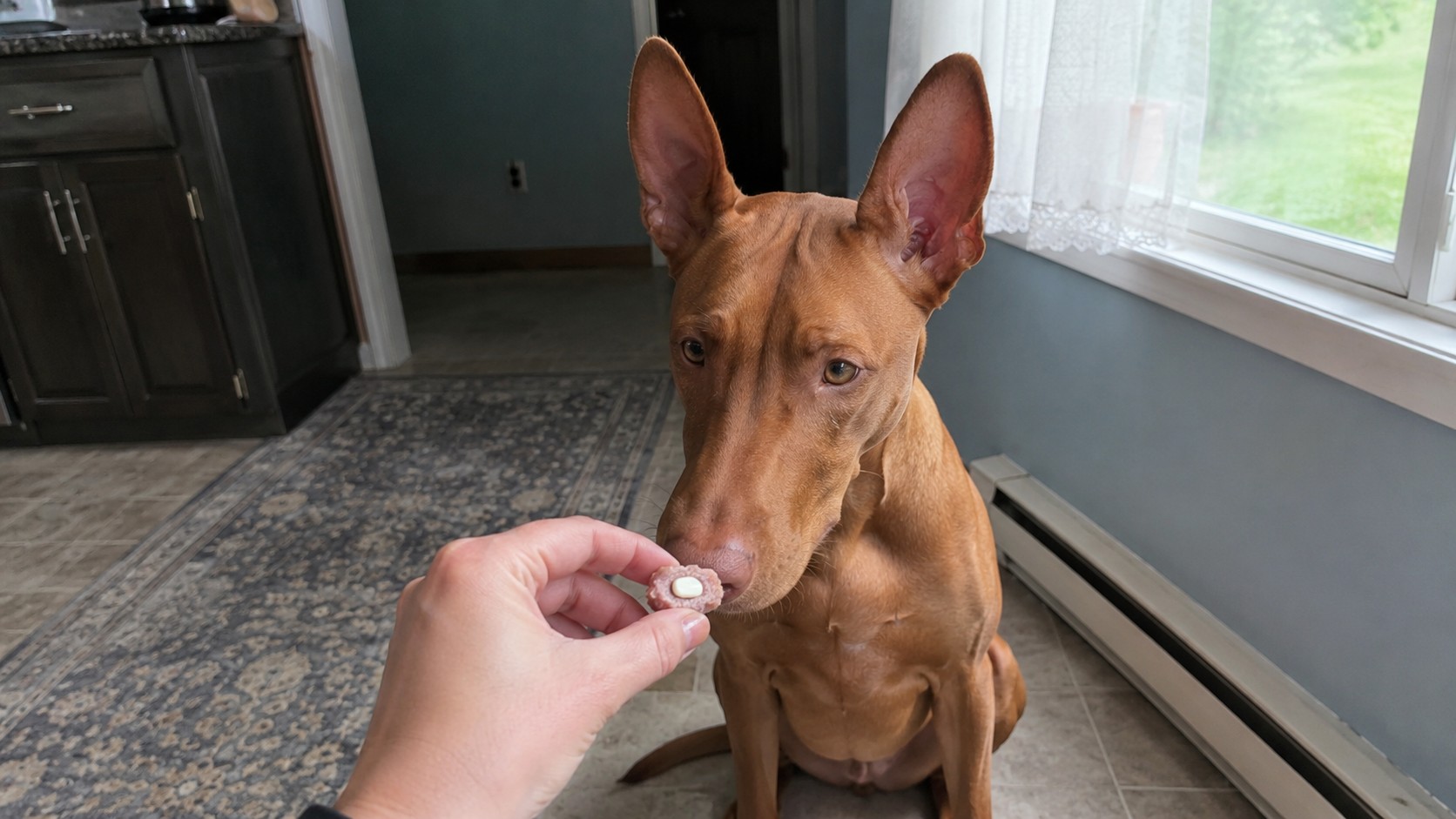
I give SoulFood Multivitamin to my dog, Pax, and my family and I take SoulFood H+ because the research is solid.
Where Histamine Fits (And What Comes Next)
In the next article, I’ll take you deeper into the histamine question.
It is a common reason I hear, worrying about fermented foods altogether, especially when it comes to histamine and allergies. There is a difference between the sauerkraut like fermentation and the one using Saccharomyces cerevisiae.
While some microbes are histamine producers, others including Saccharomyces cerevisiae, are histamine degraders, actively breaking histamine down!
In the next article, I’ll walk you through:
- The difference between histamine‑producing and histamine‑degrading microbes.
- Why certain Saccharomyces cerevisiae strains have been shown to reduce histamine, not add to it.
- What this means for dogs with sensitivities, and for fermented vitamins like SoulFood.
If you’ve been told to avoid all fermented foods because of histamine worries, I think you’ll find this next part genuinely eye-opening, maybe even shocking.
If you’re curious to see what a carefully designed fermented multivitamin looks like in practice, you can explore SoulFood and SoulFood H+ here:

References:
1. Arome Science. Short-chain fatty acids in the human gut: from microbial fermentation to systemic health. 2026.
2. Gupta RK, Gangoliya SS, Singh NK. Reduction of phytic acid and enhancement of bioavailable micronutrients in food grains. J Food Sci Technol. 2015;52(2):676-684. Available from: PMC4325021.
3. Lesaffre Institute. Effects of sourdough fermentation on phytic acid and mineral bioaccessibility. 2026.
4. Frontiers in Nutrition. Enhancing iron and zinc bioavailability in maize (Zea mays) through fermentation, soaking, and germination. Front Nutr. 2024.
5. Frontiers in Nutrition. Effects of sourdough- or regular-bread fermentation, and phytate reduction, on iron bioavailability and status in humans: a systematic review of human intervention studies (1970–2024). Front Nutr. 2026.
6. Ekpa O, et al. B-vitamins and heat-processed fermented starchy and vegetable foods: a review. J Food Sci. 2023;88(8).
7. Ashagrie D, et al. Cereal-based fermented foods as a source of folate and cobalamin. Food Res Int. 2025.
8. Wastyk HC, Fragiadakis GK, Perelman D, et al. Gut-microbiota-targeted diets modulate human immune status. Cell. 2021;184(16):4137-4153.
9. Cronin P, Joyce SA, O’Toole PW, O’Connor EM. Dietary fibre modulates the gut microbiota. Cell Metab. 2021.
10. Maastricht University. Short chain fatty acids in human gut and metabolic health. Nutr Res Rev. 2013.
11. Effect of fermentation on the nutritional quality of selected vegetables. Foods. 2023;12(5). Available from: PMC10051273.
12. American Society of Animal Science. Interpretive summary: effects of a Saccharomyces cerevisiae fermentation product on fecal characteristics and oxidative stress in dogs undergoing transport stress. J Anim Sci. 2023.
13. Frontiers in Veterinary Science. Potential benefits of yeast Saccharomyces and their derivatives in dogs and cats. Front Vet Sci. 2023;10:1279506.
14. Zhao Y, et al. The characteristics of histamine and tyramine degradation of Saccharomyces cerevisiae strains HL10 and HL17. Food Chem. 2025. PubMed ID: 40484525.

About the author
Dr. Peter Dobias, DVM, is an integrative veterinarian with more than three decades of clinical experience spanning conventional and integrative small animal medicine. He is the founder and CEO of Dr. Dobias International and PeterDobias.com, a global education and natural health products platform serving dog owners and veterinary professionals across North America and Europe. He is the host of the long-running Not Just About Dogs podcast and a frequent international speaker on canine nutrition, Integrative veterinary medicine, and hormone replacement therapy in dogs.















 English (US) ·