
 1 month ago
39
1 month ago
39
Some of the most visually striking dogs in the world owe their appearance to a single genetic factor: the piebald pattern. Large patches of white alongside splashes of color, often distributed in unpredictable ways, create coats that look almost painted on. No two piebald dogs look exactly the same – that’s part of what makes this pattern so captivating.
But what exactly causes piebald? And which breeds are most well-known for it? Here’s what you need to know about piebald dog breeds, the genetics behind the pattern, and what makes each of these dogs special.
Piebald Pattern: Quick Facts
- What it is: Large irregular patches of white against a colored background (or colored patches on white)
- Caused by: The MITF gene (melanocyte-inhibiting transcription factor), which affects where pigment cells migrate during embryonic development
- Inheritance: Autosomal recessive in most breeds – a dog needs two copies of the piebald allele (s/s) to express the pattern
- Related patterns: Irish spotting (symmetrical white markings), extreme white (nearly all white)
- Health connection: Extreme white expression can sometimes correlate with deafness in heavily depigmented areas (particularly in Dalmatians and white Bull Terriers)
The Genetics Behind the Piebald Pattern
The piebald pattern comes down to what happens during a dog’s embryonic development – specifically, where pigment-producing cells called melanocytes end up migrating. Melanocytes originate near the spine and travel outward to populate the skin, hair follicles, and eyes. When the MITF gene produces a piebald variant, it inhibits this migration, leaving patches of skin without pigment.
The result is white fur in areas where melanocytes never arrived, and colored fur where they did. Since the migration is partly random, the exact pattern varies from dog to dog – even within the same litter.
Geneticists use the “S locus” to classify white spotting in dogs:
- S (solid): No white markings
- s^i (Irish spotting): Symmetrical white on face, chest, paws, and tail tip
- s^p (piebald): Larger, irregular white patches
- s^w (extreme white): Nearly all-white coat with minimal color patches
A dog with two copies of the piebald allele (s^p/s^p) will show piebald patterning. Extreme white (s^w) is essentially an amplified form of piebald and carries a higher risk of congenital deafness in heavily white-coated areas because the inner ear also depends on melanocytes for certain functional structures.
The merle pattern is a separate genetic mutation that also creates a patchy, speckled appearance – but it works through a completely different mechanism. Piebald and merle can occur simultaneously in some dogs, creating particularly striking multi-patterned coats.
1. Dalmatian
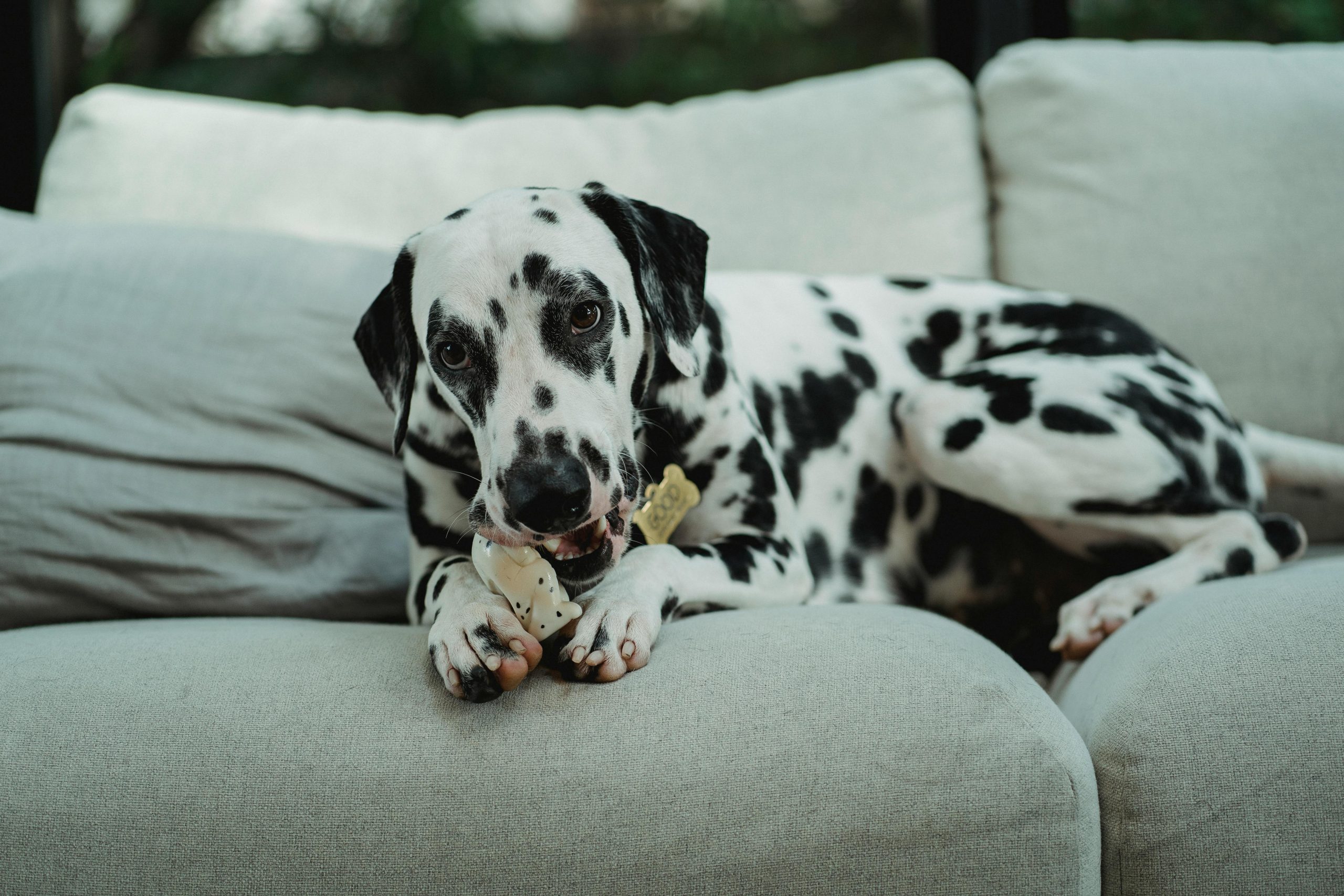
The Dalmatian is the most recognizable piebald dog in the world – so iconic that most people don’t think of them as “piebald” at all, they just think of them as Dalmatians. The crisp white base coat covered in evenly distributed black or liver spots is genuinely unique in the canine world.
What makes the Dalmatian’s spotting pattern different from other piebald dogs is its distinctive ticking – small, evenly distributed spots rather than the large irregular patches typical of standard piebald. Dalmatian puppies are actually born white; the spots appear over the first few weeks of life as pigmentation develops. No two Dalmatians have the same spot pattern, making every individual uniquely identifiable.
The health connection is real here: roughly 8% of Dalmatians are born bilaterally deaf, and around 22-24% are unilaterally deaf in one ear. This deafness is directly linked to the extreme depigmentation of the breed’s coat – the inner ear structures that require melanocytes for proper function are affected. Reputable breeders test puppies via BAER (Brainstem Auditory Evoked Response) testing before placement.
2. English Setter
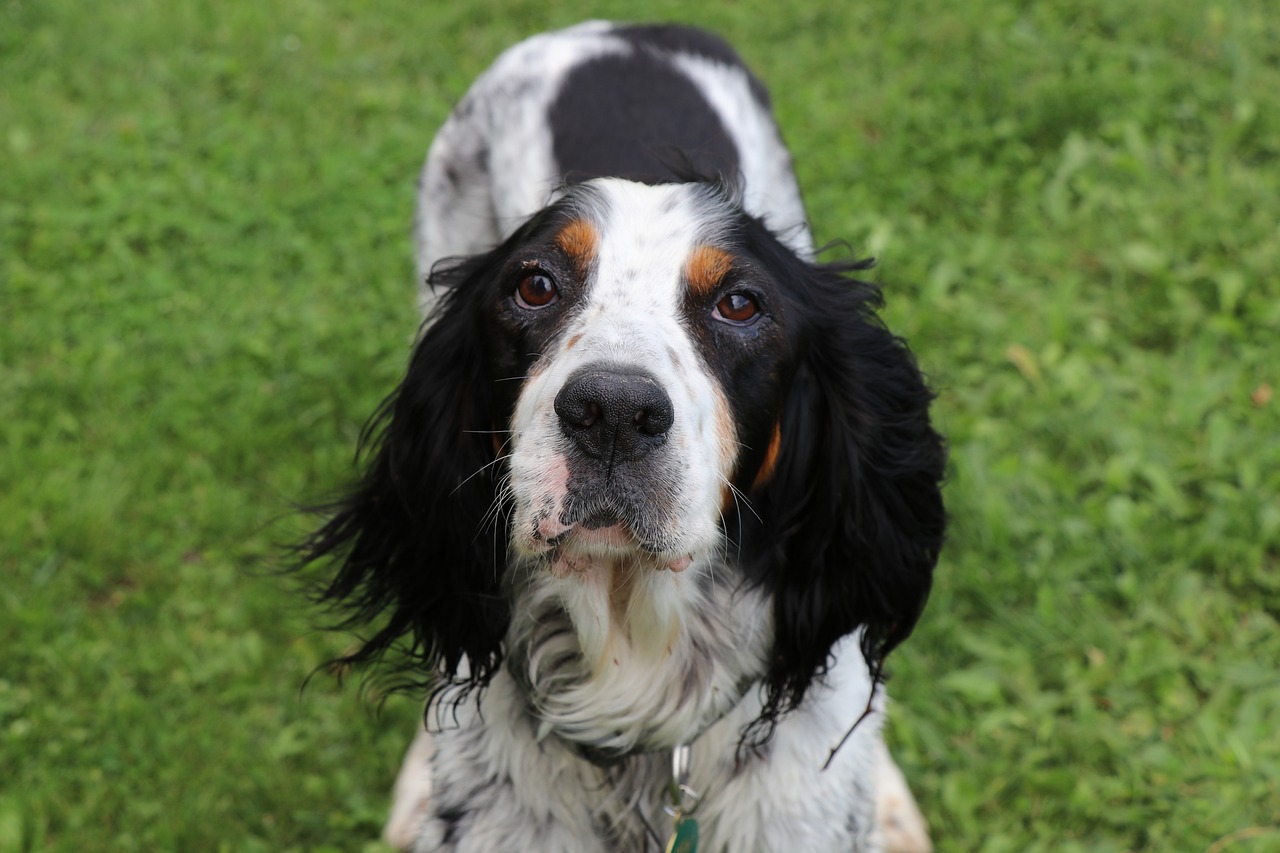
The English Setter has its own name for its piebald pattern: “belton.” The term – named after a town in Northumberland, England – describes the breed’s characteristic flecked coat, where the white base is intermixed with small colored ticks rather than large patches.
Belton can appear in several color combinations: blue belton (white with black flecking), orange belton (white with orange), lemon belton (white with pale yellow), liver belton (white with liver/brown), and tricolor (blue belton with tan points). Each creates a subtly different effect – all distinctly beautiful.
English Setters are elegant bird dogs bred for endurance and a calm hunting style. They “set” game – crouching low to mark birds rather than flushing them dramatically. Their gentle temperament and striking coats have made them popular as both working dogs and show dogs, though field and bench lines have diverged significantly in type over the decades.
3. American Pit Bull Terrier
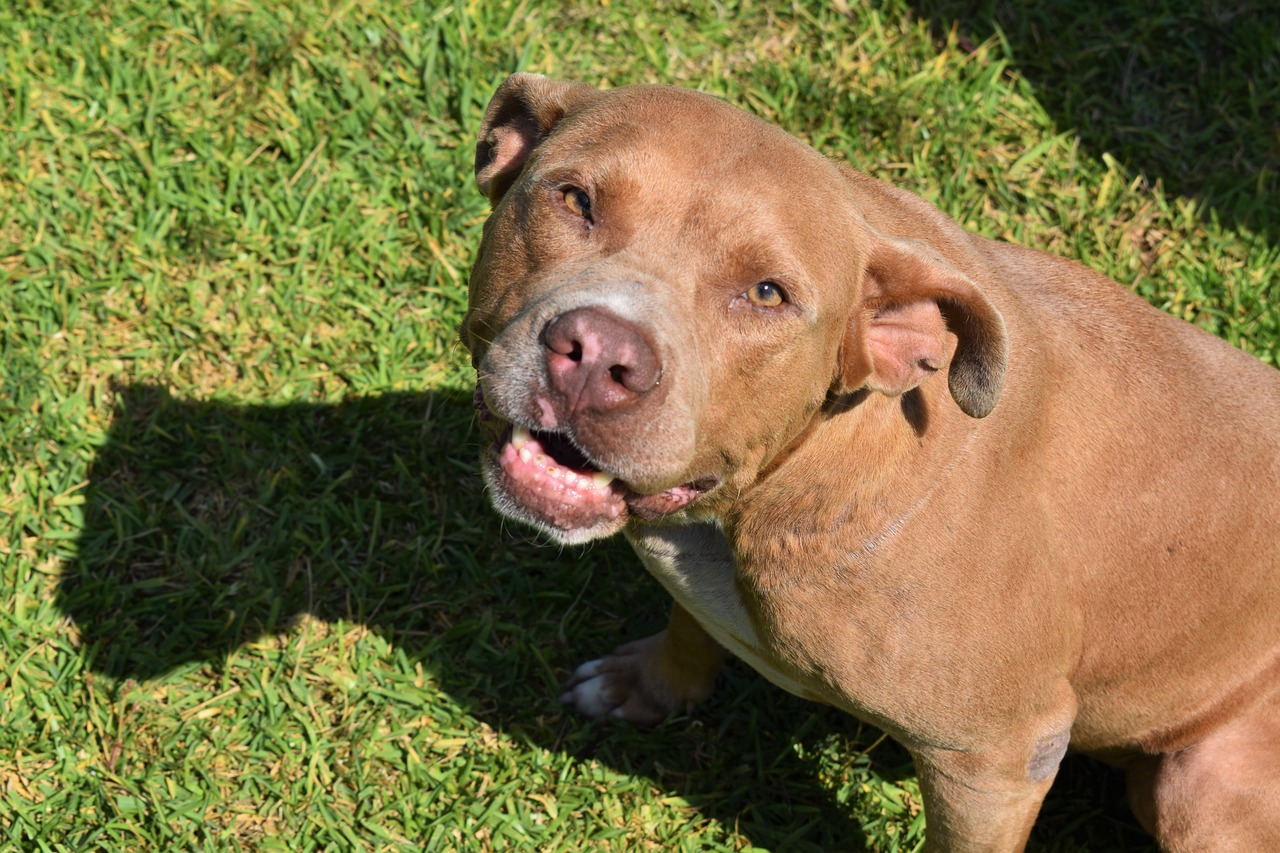
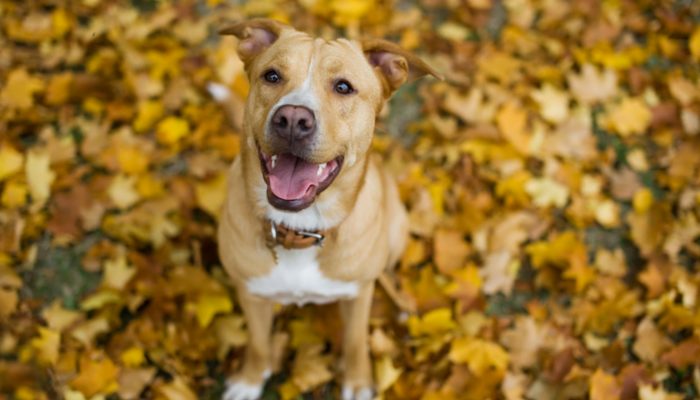
American Pit Bull Terriers come in a wide range of colors and patterns, and the piebald expression is among the most striking. Large white patches against black, blue, red, or fawn create high-contrast coats that complement the breed’s athletic, muscular build.
In Pit Bulls, the piebald pattern often produces a specific look: a colored head with white blaze, white chest and belly, and colored patches on the back and flanks. The white often reaches the legs as well, creating the appearance of the dog wearing socks. Combined with the breed’s powerful physique and expressive face, it makes for an eye-catching dog.
Piebald patterning in Pit Bulls follows the same genetic rules as in other breeds – it’s a naturally occurring coat variant with no specific health risks beyond what applies to the breed generally.
4. Bull Terrier
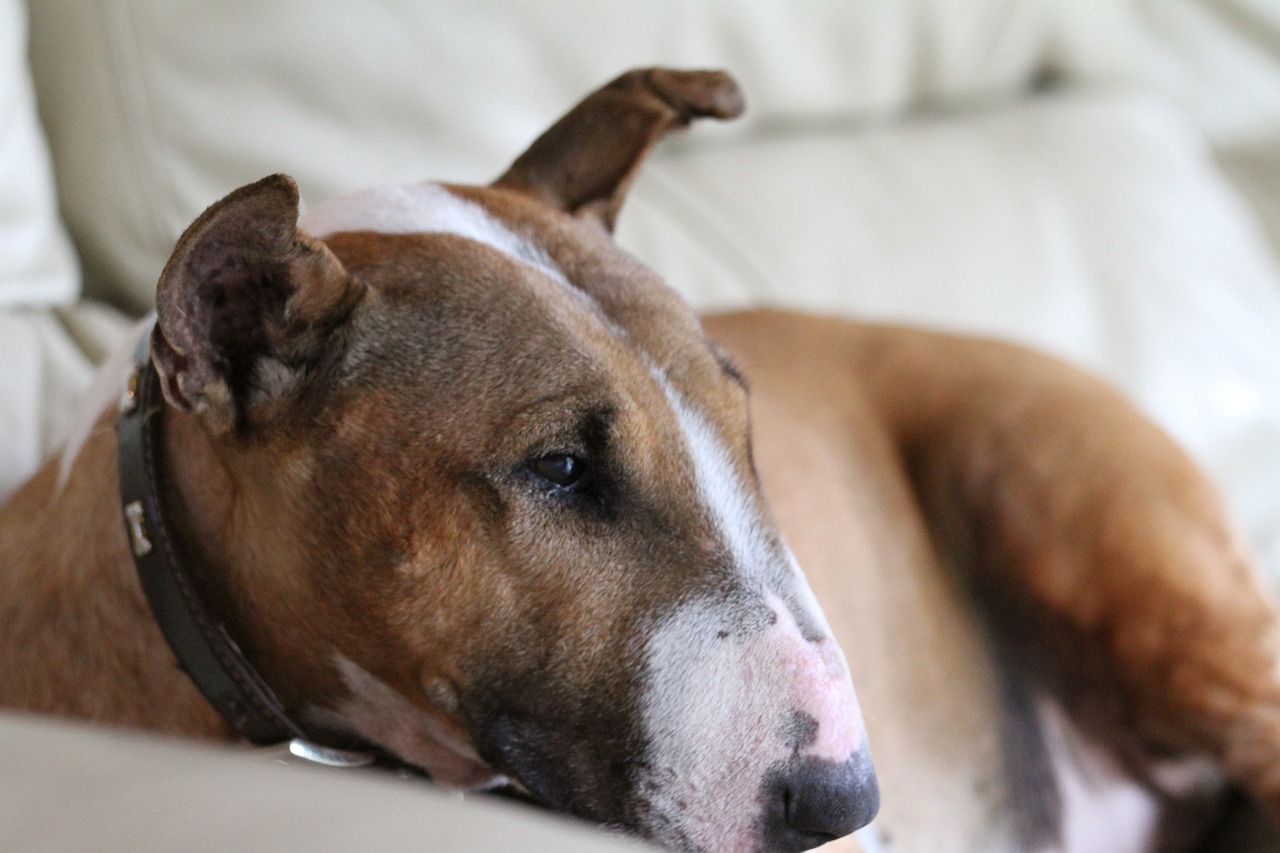
The Bull Terrier’s egg-shaped head and muscular body are striking enough on their own. Add a piebald coat and you have one of the most distinctively shaped and patterned dogs in existence. Bull Terriers with piebald patterns typically show predominantly white bodies with colored markings concentrated on the head – often a color patch around one or both eyes, over one or both ears, or at the base of the tail.
Purely white Bull Terriers (the extreme white expression) carry a higher deafness risk, similar to Dalmatians. Responsible breeders BAER-test white Bull Terrier puppies before placement. Piebald Bull Terriers with meaningful color patches have lower deafness rates than extreme whites.
Despite their tough-looking appearance, Bull Terriers are famously goofy and playful – often described by owners as perpetual toddlers in dog form. They’re comedically expressive, deeply loyal, and surprisingly affectionate.
5. Basenji
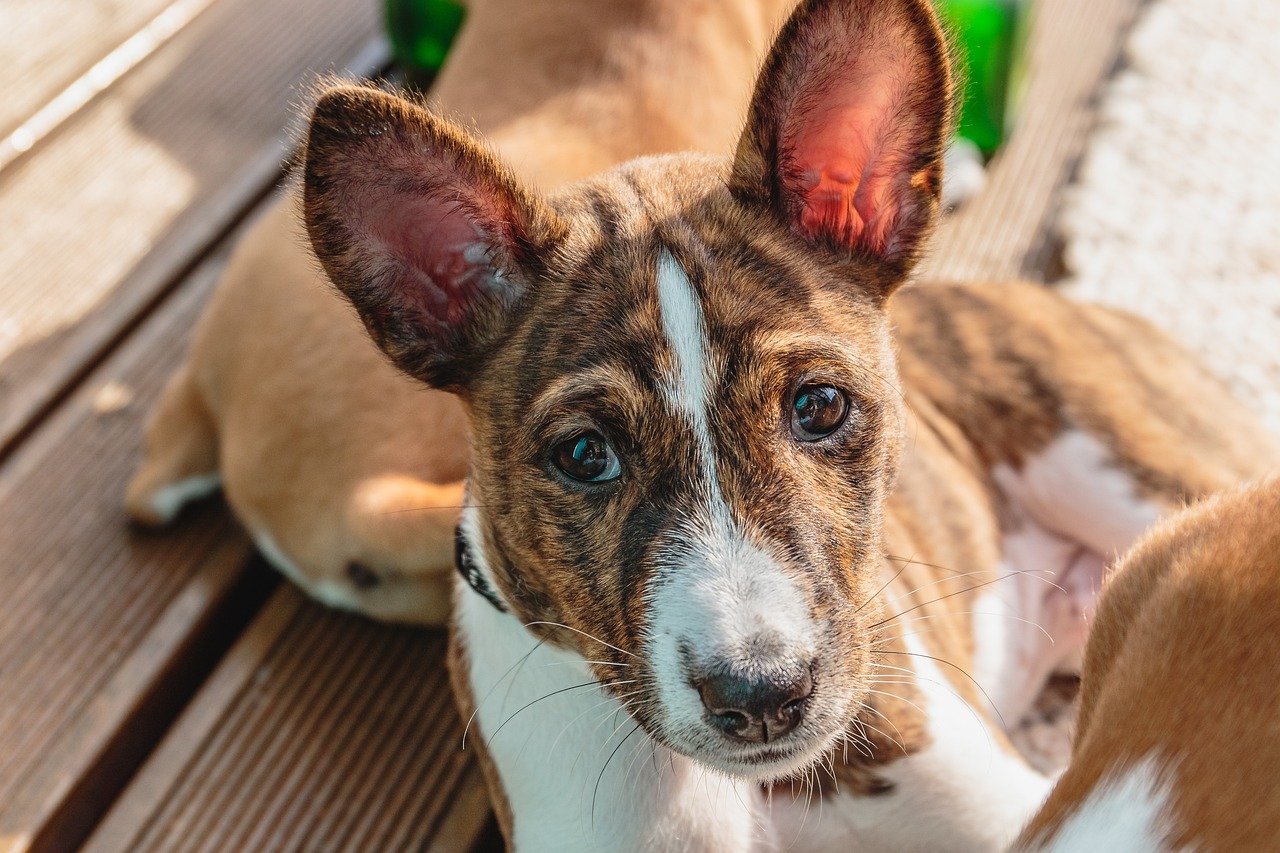
The Basenji is ancient – one of the oldest domestic dog breeds in the world, originating from Central Africa where they were used as hunting dogs by indigenous peoples for thousands of years. They’re famously the “barkless dog,” producing a unique sound called a “barroo” instead of a traditional bark.
In Basenjis, the piebald pattern creates crisp white markings against a base of black, red, brindle, or tricolor. The contrast is particularly striking because Basenji coats are short and glossy – the white catches light cleanly against the dark base colors. The white is typically expressed on the feet, chest, tail tip, and sometimes as a blaze on the face.
Basenjis are fastidiously clean dogs – cat-like in their self-grooming – and their low-maintenance coats show off the piebald patterning beautifully. They’re also highly intelligent and independent, which makes them a rewarding but sometimes challenging breed for first-time dog owners.
6. Border Collie
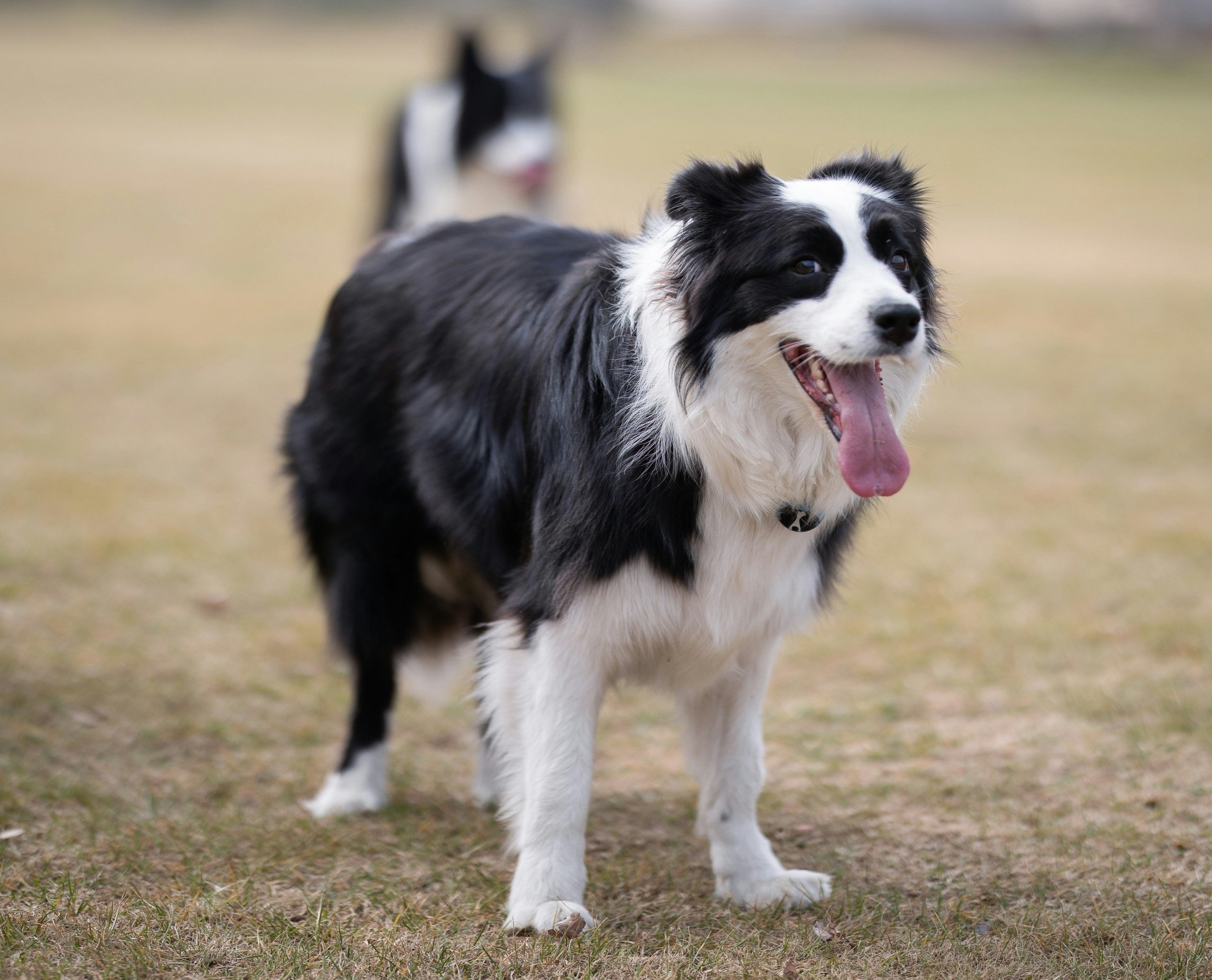
Border Collies are probably the most common working dog to display piebald patterning, and the classic black-and-white Border Collie is a piebald expression. The white collar, blaze, chest, and feet against a black or blue body is the result of the Irish spotting or piebald pattern – often indistinguishable in their expression in this breed.
Border Collies also come in piebald merle (where the colored patches are also merled/diluted), creating coats that are truly one of a kind. The coat can be rough (medium-length with feathering) or smooth (shorter and coarser), and both coat types show off the piebald patterning beautifully.
What makes a piebald Border Collie particularly striking is that the colored patches are often concentrated on the head and saddle, with white flowing across the face, neck, chest, and legs – creating the appearance of wearing a distinctly asymmetrical pattern. No two look the same. They’re one of the smartest dog breeds in the world, which only adds to their appeal.
7. Dachshund
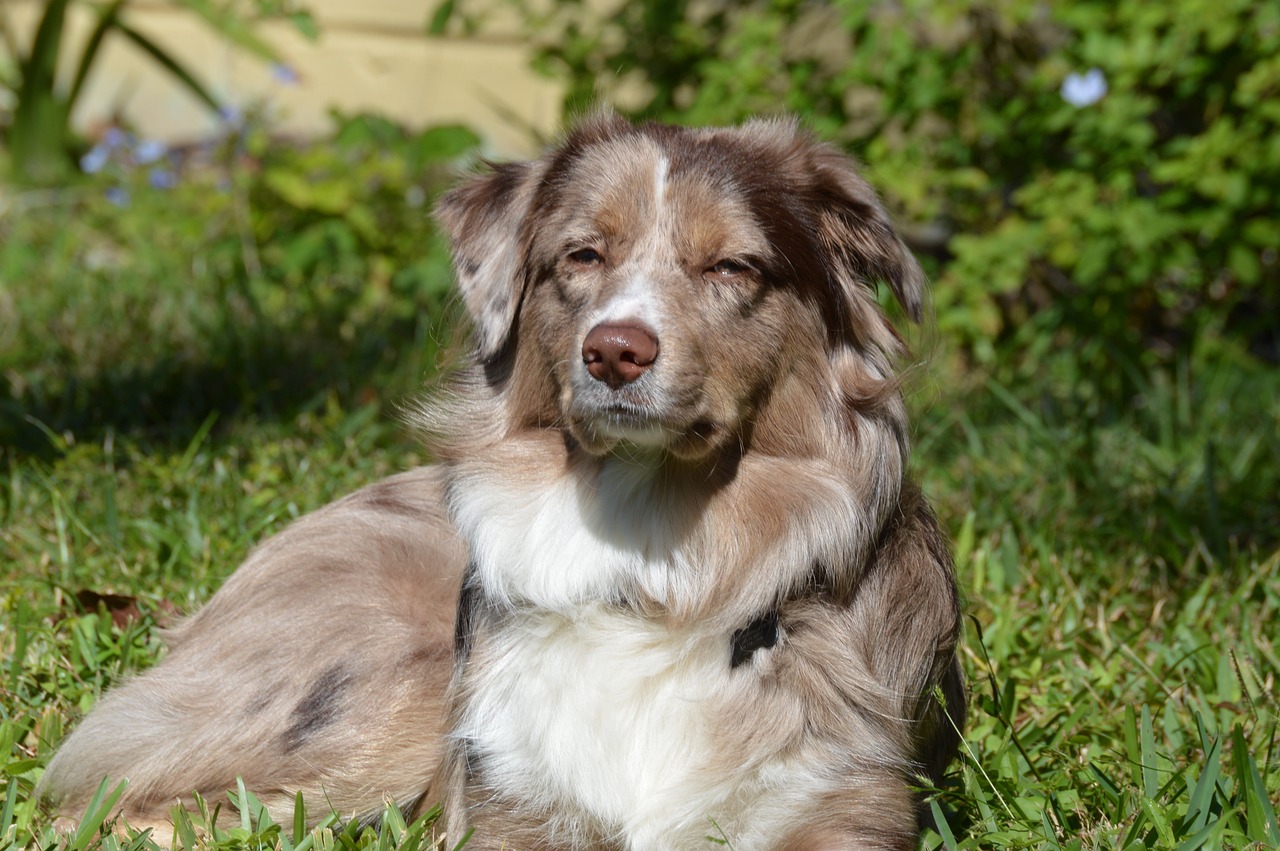
Piebald is one of the most recognized coat patterns in Dachshunds, and it’s formally recognized by the AKC. A piebald Dachshund has a white or cream base coat covered with clearly defined patches of their base color – which can be black and tan, chocolate and tan, red, or cream.
The distribution of the patches varies dramatically. Some piebald Dachshunds have small, tight patches concentrated on the head and body. Others are mostly white with just a few colored spots. The pattern is crisp and clear-edged in Dachshunds – quite different from the dapple (merle) pattern, which produces irregular diluted patches with a marbled appearance. You can see how piebald compares to dapple in full Dachshund color documentation.
One important note for Dachshund owners: double dapple (two copies of the merle gene) causes significant health problems including blindness and deafness. Piebald is genetically unrelated to dapple and carries no equivalent health risk from the pattern itself.
8. Beagle
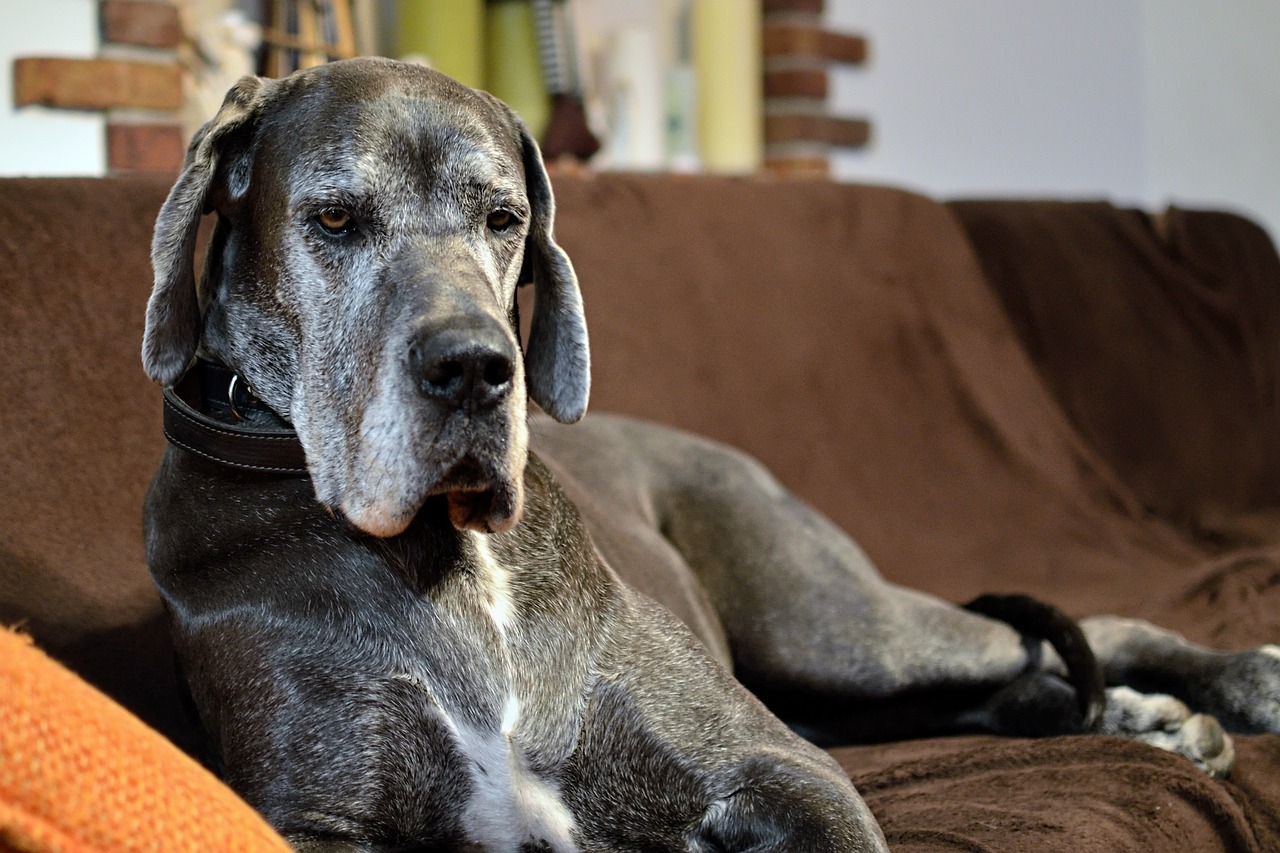
Most Beagles are tricolor – black, white, and tan – and that tricolor pattern is a form of piebald. The white is produced by the piebald gene (S locus), while the tan points are produced by the agouti gene separately. The result is the classic hound pattern: white base with a black saddle, tan accents on the face, legs, and chest.
Beagles can also come in bi-color piebald variations: lemon and white, red and white, or chocolate and white. In each case, the white is the piebald expression. The patterning in Beagles tends to be fairly consistent across the breed – white on the chest, belly, face blaze, and paws is standard – but the distribution of the darker patches varies enough to make each dog individual.
Beagles are scent hounds with extraordinary noses and strong pack instincts. Their vocal nature (they’re bred to bay when tracking game) combined with their friendly, curious personality makes them one of the most popular family dogs in America.
9. Australian Shepherd
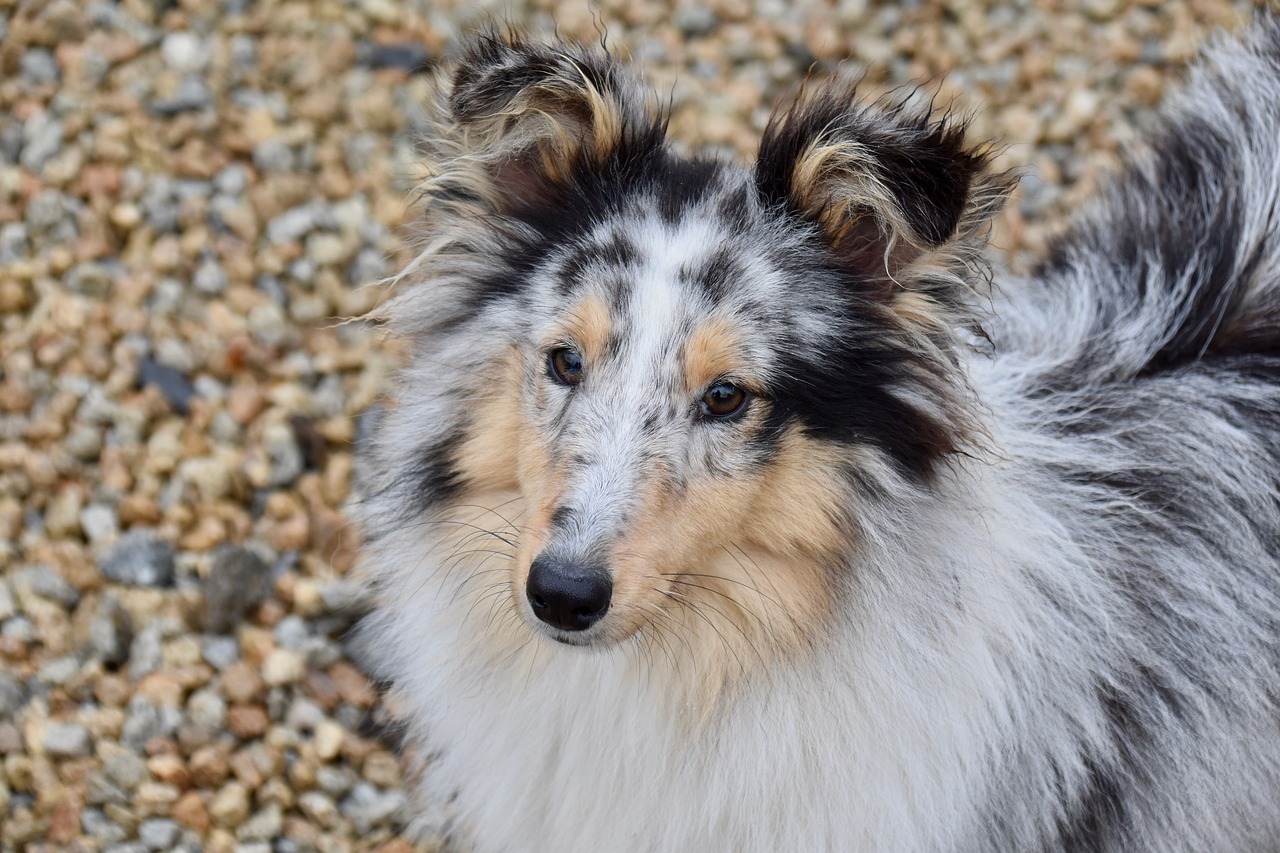
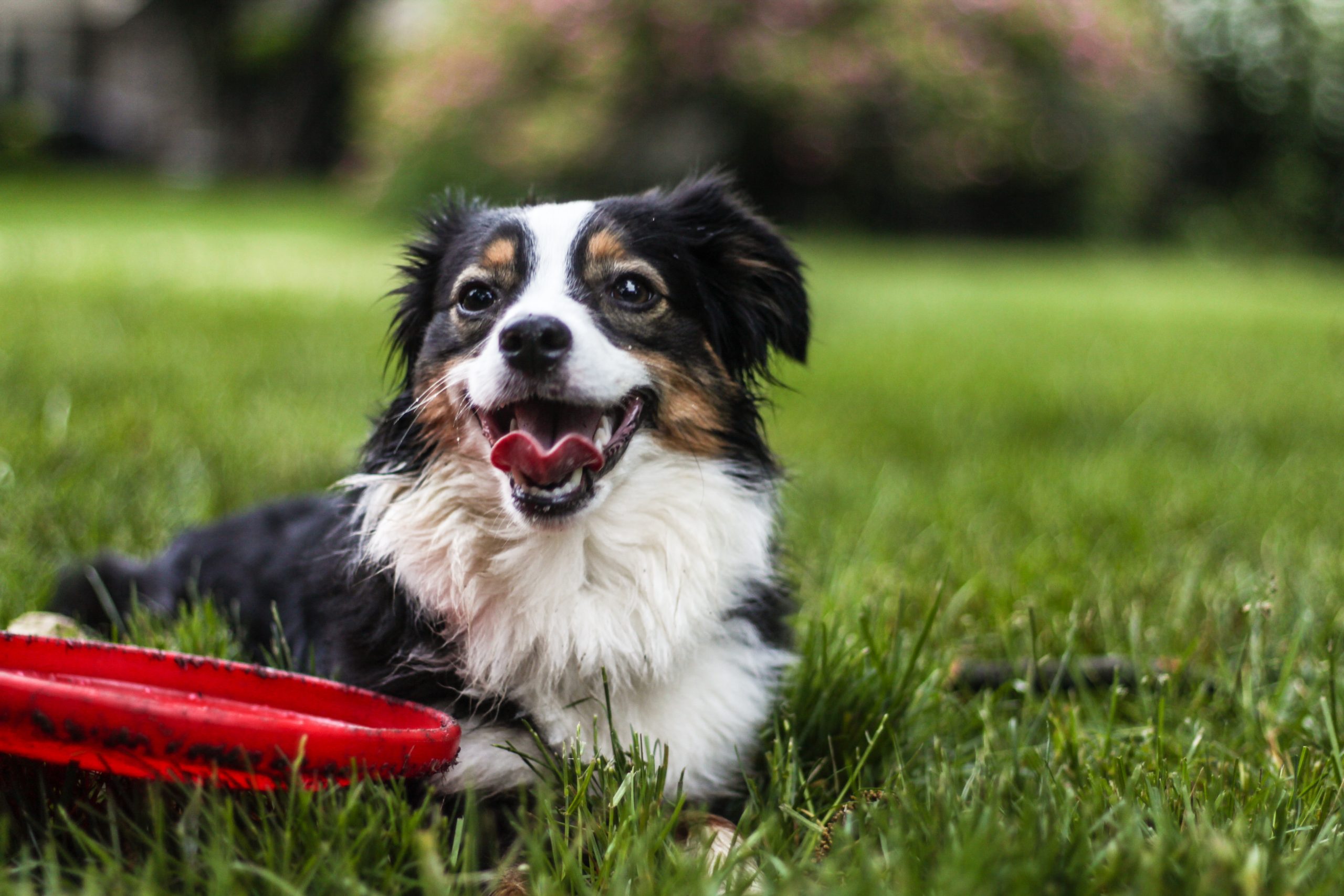
Australian Shepherds display some of the most complex and visually striking coat patterns in the dog world – and white spotting (the piebald S locus) is a major contributor. The white collar, blaze, chest, and leg markings seen on most Aussies are piebald expressions, often combined with the merle pattern for maximum visual complexity.
A blue merle with piebald markings, for example, shows gray and black marbling (from the merle gene) overlaid with large white patches (from piebald). Add copper tan points from the agouti gene, and you have a tricolored, bipattern dog with a coat that looks like an abstract painting.
Aussies also illustrate the health risk side of extreme white expression: excessive white on the head, particularly covering both eyes and ears, is associated with higher deafness and blindness risk in the breed. This is why the breed standard discourages excessive white on the head in show dogs. Reputable breeders pay close attention to the placement of white markings when planning litters.
What Else Can Cause a Piebald-Like Appearance?
A few other genetic factors can create white patches that look like piebald but have different underlying genetics:
- Merle (M locus): Creates irregular diluted patches but works through a different gene entirely. Double merle (two copies) can produce extensive white, sometimes visually similar to extreme piebald
- Brindle overlay: Can interact with white spotting to create more complex patterns
- White (W locus): A separate gene that creates all-white coats in some breeds, different from piebald but sometimes confused with it
If you’re interested in coat genetics beyond piebald, the full breakdown of merle dog breeds and patterns covers the most visually dramatic of the other coat variation genes.
Frequently Asked Questions About Piebald Dog Breeds
What causes the piebald pattern in dogs?
Piebald is caused by the MITF gene at the S locus, which controls where pigment-producing cells (melanocytes) migrate during embryonic development. In piebald dogs, this migration is partially inhibited, leaving patches of skin and fur without pigment – which appear white.
Is piebald the same as merle?
No – they’re completely different genetic mechanisms. Piebald (S locus) creates large patches of white by preventing melanocyte migration. Merle (M locus) dilutes and marbles the color in pigmented areas. A dog can express both patterns simultaneously, which creates especially complex coats. Check out merle dog breeds for a detailed comparison.
Are piebald dogs more likely to be deaf?
Extreme piebald expression – particularly large amounts of white on the head – can correlate with deafness in some breeds. This is because the inner ear structures require melanocytes to develop properly. Dalmatians and white Bull Terriers are the breeds where this connection is most studied. Piebald with more balanced color distribution carries much lower risk.
What breeds are most commonly piebald?
Many breeds carry piebald genetics – Dalmatians, Beagles, Border Collies, Dachshunds, Australian Shepherds, Bull Terriers, and Basenjis are among the most well-known. The pattern shows up in dozens of breeds and mixed-breed dogs.
Is piebald a rare pattern in dogs?
Not particularly – piebald is one of the most common white-spotting patterns in dogs, appearing in numerous breeds. What varies is the degree of expression: from modest Irish spotting to extensive piebald patches to extreme white.
Can two solid-colored dogs produce a piebald puppy?
Yes, if both parents carry the piebald allele (s^p) without expressing it themselves. A dog can carry one piebald allele and show minimal white spotting, but if two such dogs breed, some puppies can inherit two copies of the piebald allele and show full piebald patterning.
Every Pattern Tells a Story
Piebald patterns aren’t random accidents – they’re the visible result of genetics playing out during the earliest stages of a dog’s development, shaped by thousands of years of selective breeding and natural variation. The fact that no two piebald dogs look exactly alike is one of the pattern’s most appealing qualities.
Whether you’re drawn to the perfectly spotted Dalmatian, the elegantly ticked English Setter, or the complex layered coat of a piebald Australian Shepherd, these dogs share something remarkable: a coat that’s genuinely unique to each individual. That’s pretty hard to argue with.
If coat patterns fascinate you, it’s worth exploring how merle genetics compare to piebald – together, they produce some of the most visually spectacular dogs in the world.











 English (US) ·