
 3 weeks ago
44
3 weeks ago
44
iHeartDogs is reader-supported. When you buy via links on our site, we may earn an affiliate commission at no extra cost to you.
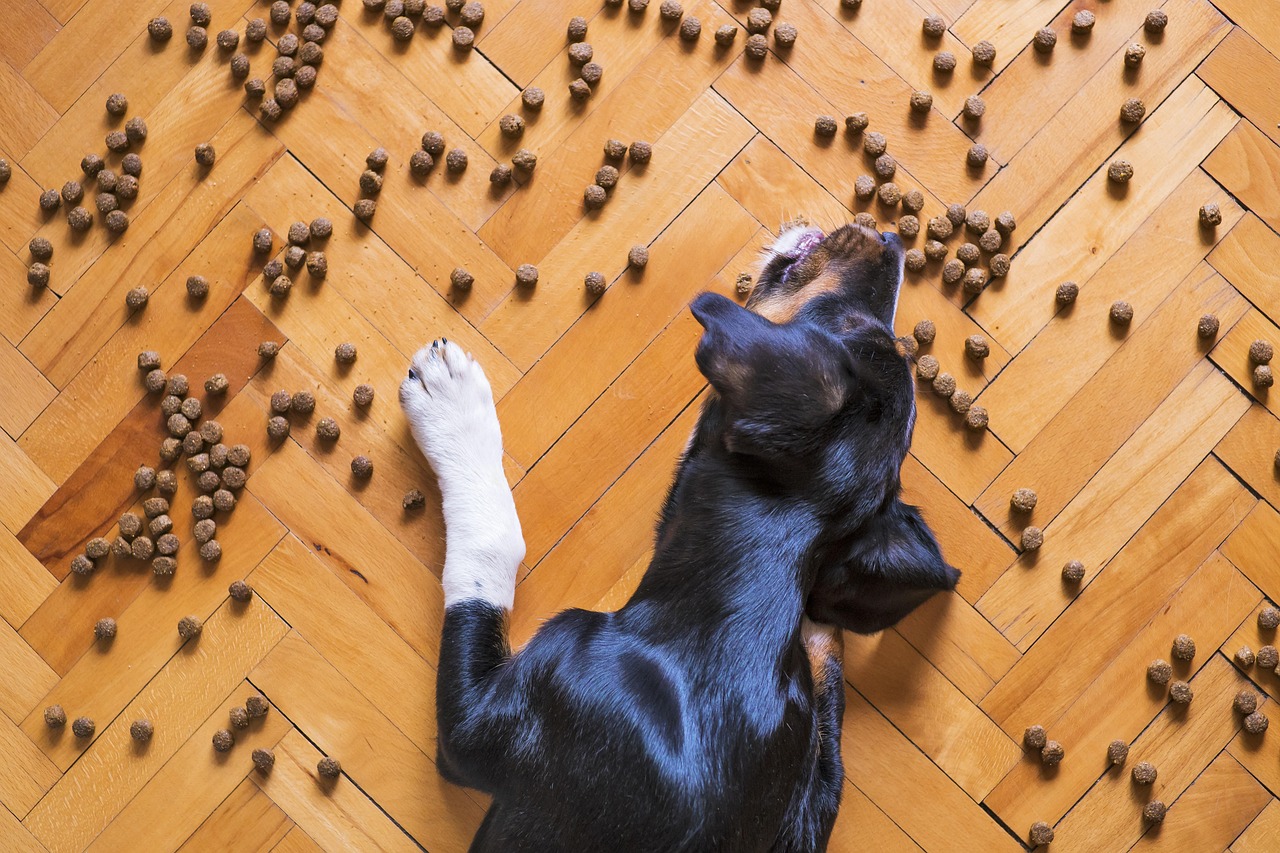
Picture this: you set your dog’s bowl down, turn around to grab a glass of water, and by the time you come back, the food is gone. Not eaten. Inhaled. Thirty seconds, maybe less. Sound familiar? You’re not alone, and it’s not just a funny quirk. Fast eating causes dogs to swallow excess air with every gulp, which stresses the digestive system and, in some cases, contributes to a condition that can be fatal within hours. The solution is simpler than you’d expect: a slow feeder dog bowl.
These bowls use ridges, mazes, spirals, and raised obstacles to force dogs to work for each bite. A meal that vanished in 30 seconds suddenly takes 5 to 10 minutes. That slowdown reduces air intake, supports digestion, and gives your dog real mental enrichment at every meal. What goes in the bowl matters just as much as how fast it goes down, so it’s worth reading up on harmful dog food ingredients to avoid. But first, let’s get into the bowls.
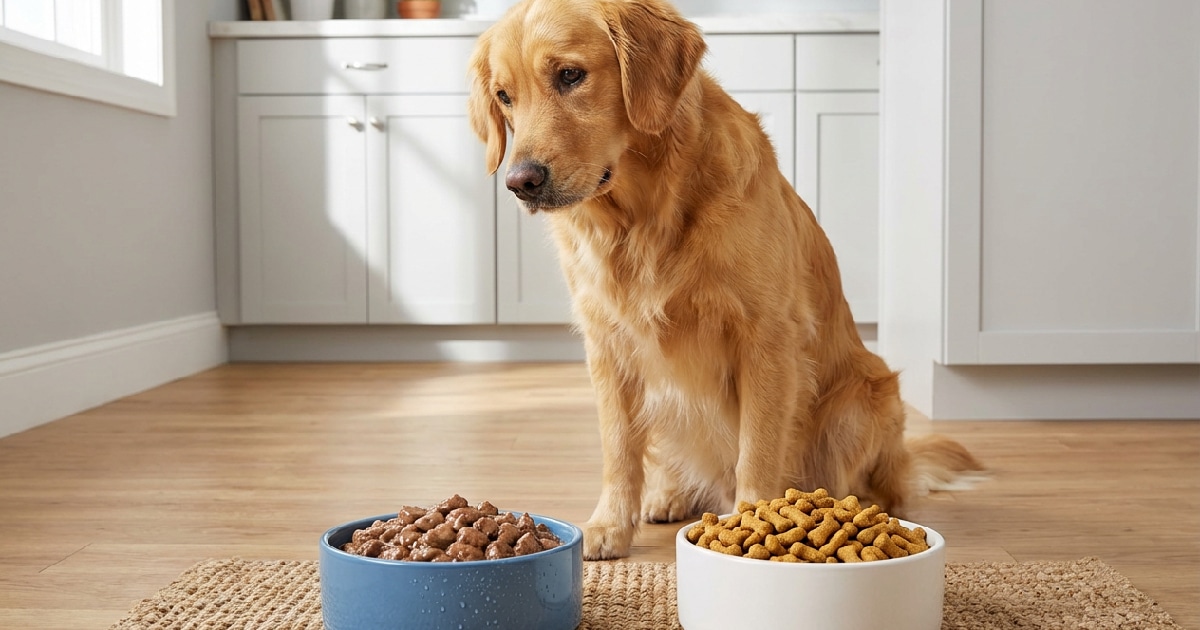
We’ve rounded up the best slow feeder dog bowls for 2026, from straightforward ridged designs to multi-level puzzle feeders that keep even the most persistent chow-hounds working. Whether you’re feeding kibble or wet food, there’s an option here that fits. Not sure which food type suits your dog? Our breakdown of wet vs dry dog food is a good starting point.
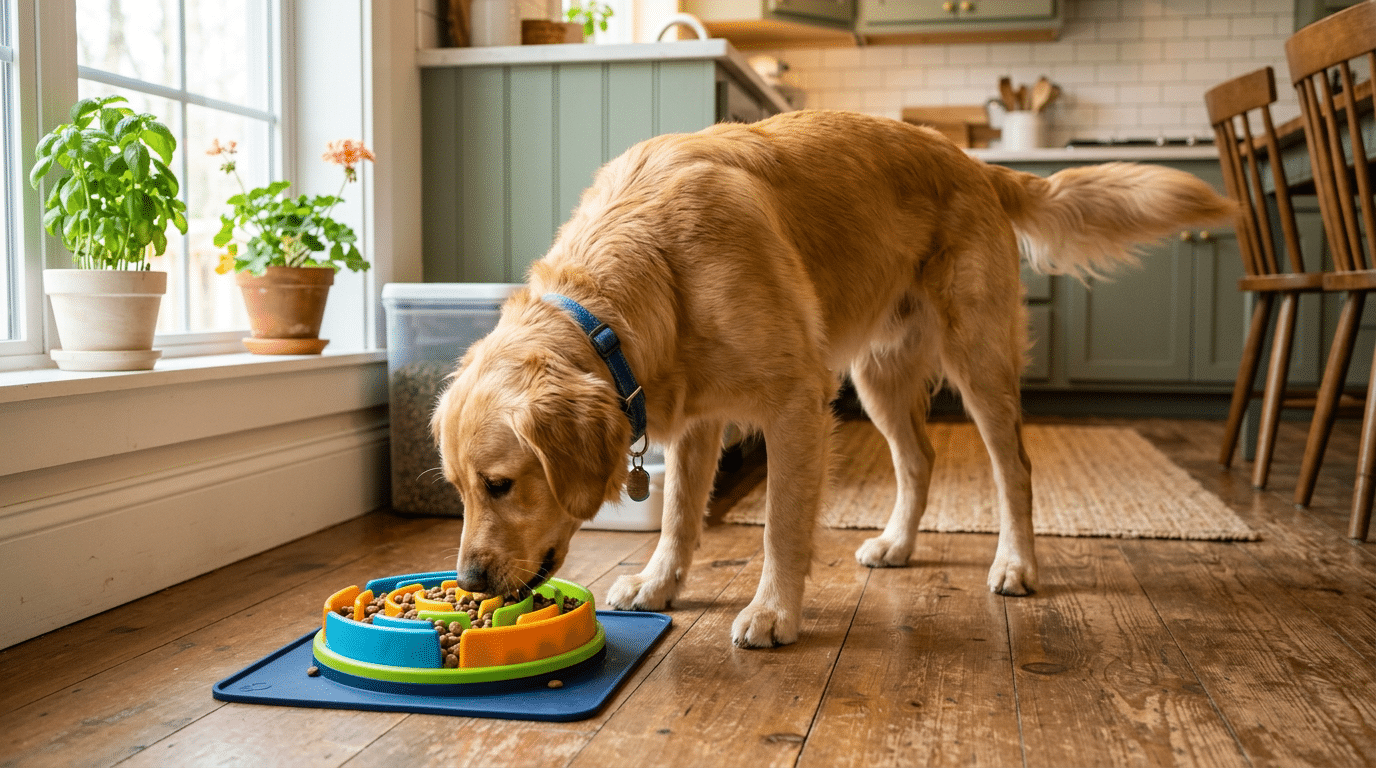
What Is a Slow Feeder Dog Bowl?
A slow feeder dog bowl is a feeding dish with built-in obstacles that dogs must navigate around to reach their food. Designs vary: some use raised maze patterns, others feature spiral ridges, multi-level compartments, or puzzle-style spinning sections. The idea behind all of them is the same: make eating take effort. Dogs slow from inhaling their food to actually working for it, which extends mealtime from seconds to several minutes and results in noticeably better digestion.
The Real Risk of Eating Too Fast: Bloat and GDV
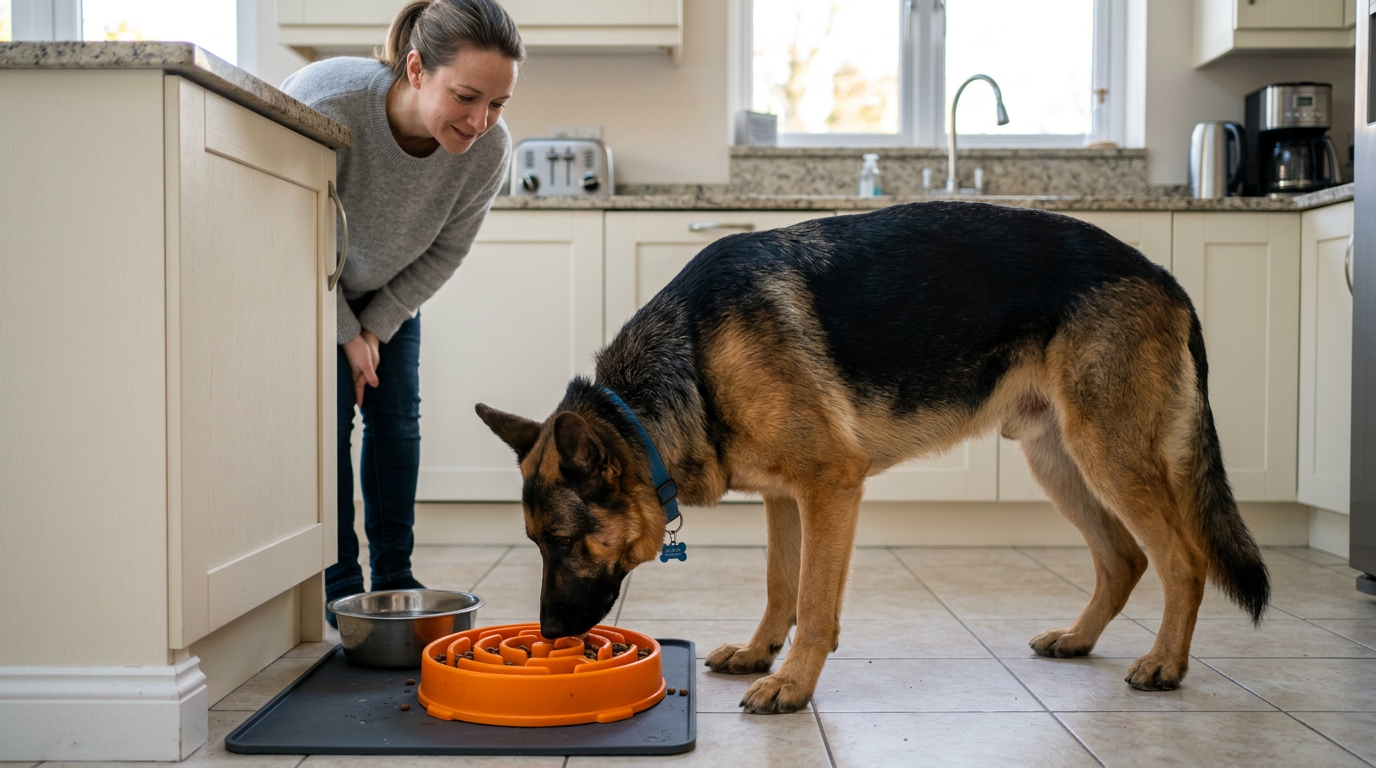
Most dog owners know fast eating isn’t great for digestion. Fewer realize it can kill a dog. When a dog gulps food at speed, they swallow significant amounts of air with every mouthful. That trapped air causes the stomach to expand rapidly, a condition known as bloat. In its most severe form, the stomach doesn’t just distend; it rotates on itself. That’s Gastric Dilatation-Volvulus, better known as GDV, and it’s a surgical emergency.
GDV cuts off blood supply to the stomach and spleen. Without immediate surgery, it’s fatal, often within hours of the first symptoms appearing. For large, deep-chested breeds, this isn’t some remote worst-case scenario; it’s a real and statistically significant cause of death. Understanding your dog’s full dietary picture matters too, and some surprising kibble facts shed light on how feeding habits connect to stomach health in ways most owners don’t expect.
So how does a slow feeder actually help? Two ways. The obstacle layout forces smaller bites, which means far less air gets swallowed per mouthful. The extended mealtime also reduces the volume hitting the stomach all at once, lowering the risk of rapid distension. Research shows dogs eating from slow feeders average 5 to 15 minutes slower than from standard bowls. That’s a meaningful reduction in gulping behavior, not just a marginal one.
Important: Slow feeder bowls reduce bloat risk but don’t eliminate it. If your dog is a high-risk breed or has a family history of GDV, talk to your vet about preventive gastropexy. This surgical procedure permanently anchors the stomach in place and dramatically lowers GDV risk for dogs who need that extra layer of protection.
Which Dogs Need a Slow Feeder Most?
Any dog that finishes their meal in under two minutes is a good candidate. The stakes get higher for large, deep-chested breeds, whose anatomy creates extra room for the stomach to shift and twist. But smaller dogs aren’t excluded from the risk, either. If your pup regularly regurgitates within 15 minutes of eating, burps excessively, or seems restless and uncomfortable after meals, a slow feeder is worth trying regardless of size. These are the breeds vets watch most closely:
⚠️ Dog Breeds Most at Risk for Bloat (GDV)
| Great Dane | Giant | Very High |
| German Shepherd | Large | High |
| Labrador Retriever | Large | High |
| Boxer | Large | High |
| Standard Poodle | Large | High |
| Doberman Pinscher | Large | High |
| Weimaraner | Large | High |
| Bloodhound | Large | High |
| Akita | Large | Moderate-High |
| Irish Setter | Large | Moderate-High |
All large, deep-chested dogs benefit from a slow feeder bowl.
Other red flags: your dog tries to raid other pets’ bowls the moment they finish their own, they eat so fast they choke or cough, or they visibly pace after meals with a distended belly. These habits aren’t just annoying. They’re warning signs worth taking seriously.
How to Choose the Right Slow Feeder Bowl
Not every slow feeder works for every dog. Four things are worth checking before you commit:
Size and capacity. The bowl needs to hold your dog’s full meal comfortably. If it’s too small, food gets packed in too tightly and dogs can’t actually navigate the obstacles. Large breeds eating 3 to 5 cups per meal need a bowl rated for 4+ cups. Small dogs eating half a cup do fine with a compact design.
Material. Stainless steel is the most durable and bacteria-resistant choice. Ceramic is attractive and hygienic, and it won’t absorb odors. Silicone is flexible and perfect for dogs that like to flip their bowls. If you go plastic, confirm it’s BPA-free.
Difficulty level. Start with an easier design, especially if your dog is new to slow feeders. A bowl that’s too complex from day one can cause frustration and may lead your dog to refuse meals or attempt to flip the bowl instead. Several options on this list offer adjustable difficulty or multiple inserts so you can build up gradually.
Ease of cleaning. Those same ridges and maze channels that slow down eating also trap food. Dishwasher-safe bowls are the practical choice for most households. Hand-wash options should have crevices smooth enough to clean with a regular brush without a lot of effort.
Best Slow Feeder Dog Bowls for 2026
Outward Hound Large Slow Feeder Bowl

Outward Hound’s maze-style design is one of the most recognized slow feeder layouts on the market, and for good reason. Raised ridges and islands spread across the bowl force dogs to navigate carefully rather than scoop up big bites, turning what used to be a 30-second sprint into a 5 to 10 minute meal. It’s especially well-suited for medium to large breeds that tend to bolt food before you’ve even walked away. BPA-free plastic and dishwasher-safe construction make it a practical everyday option, not just a one-time novelty.


Slow Feeder Dog Bowl 3 Levels

Three distinct maze levels set this bowl apart from single-difficulty designs. Start your dog on the easiest setting while they get used to working for their food, then increase the challenge as they build confidence. That built-in progression matters, because a bowl that’s too hard right out of the gate often leads to frustration or bowl-flipping rather than actual slower eating. Solid construction, dishwasher-safe, and compatible with both wet and dry food. It’s a longer-term investment in your dog’s eating habits rather than a quick fix.
The Slowdown Bowl Silicone Slow Feeder

Silicone is the standout here. Unlike plastic or ceramic, the soft material is gentle on snouts and teeth, which makes it a particularly good pick for puppies, senior dogs, or brachycephalic breeds that need a little extra care around the face. Gentle ridges guide dogs to slow their pace without the frustration of a hard-edged maze. It’s lightweight, rolls up for travel, and goes straight in the dishwasher. If your dog is picky about textures or tends to be rough with their bowl, this is worth a closer look.
Stainless Steel Slow Feeder Dog Bowls with Non-Slip Silicone Base
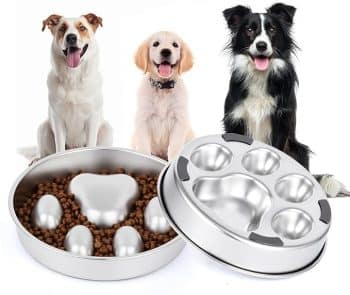
Stainless steel is the gold standard for food safety, and this bowl brings that hygiene advantage to the slow feeder category. The raised interior pattern slows down even the most determined gulpers, while the non-slip silicone base keeps the bowl planted even when your dog is working hard to get to every last bite. No more bowl chasing across the kitchen floor. Rust-resistant and dishwasher-safe, it’s built to hold up to daily use without showing wear, which makes it a solid choice for dogs who treat their feeding equipment roughly.
WOOF LickMat

Technically a lick mat rather than a bowl, the WOOF LickMat earns its spot here because it genuinely slows eating and also has a documented calming effect. Spread peanut butter, wet food, plain yogurt, or a pureed treat across the textured surface and your dog works for every lick rather than scooping mouthfuls. Licking releases serotonin, so dogs often finish mealtime more relaxed than they started. If you want to explore more options in this format, check out our picks for top-rated lick mats. Dishwasher-safe and suction-cup ready for surfaces like the floor or tub wall during baths.
3 in 1 Stainless Steel Slow Feeder and Water Bowls with Non-Skid Silicone Mat

You get two stainless steel bowls plus a slow feeder insert, all sitting in a non-skid silicone mat that catches spills and keeps everything in one spot. For households juggling food, water, and enrichment for one dog (or multiple), this all-in-one setup cuts down on the clutter. The mat prevents sliding even when dogs are working hard for their kibble, and the stainless steel bowls are rust-resistant and easy to sanitize. It’s a tidy, practical solution that covers hydration and gulping prevention without requiring multiple separate purchases.
LE TAUCI Slow Feeder Ceramic Dog Bowls

Ceramic doesn’t leach chemicals, doesn’t scratch and harbor bacteria the way plastic does, and genuinely looks good sitting out in a kitchen. LE TAUCI’s slow feeder bowls bring that material advantage to the anti-gulping category with a thoughtful design that paces even enthusiastic eaters. The raised center post forces dogs to work around it for access to food on all sides, extending mealtime without causing frustration. Heavy enough to stay put during feeding, easy to clean, and attractive enough that you won’t mind having it on the floor in full view.
Dog Spinning Puzzle Feeder Slow Bowl

Dogs nose or paw at spinning sections to reveal kibble hidden underneath, which makes this one of the most interactive options on the list. The spinning mechanic engages a dog’s natural problem-solving instinct, so mealtime doubles as a brain workout. Research on the brain-boosting benefits of puzzle toys shows that mental engagement like this reduces boredom-related anxiety and destructive behavior in dogs. If your dog tends to act out between meals or needs more daily stimulation, a puzzle feeder is often more effective than adding another walk. Durable and easy to disassemble for cleaning.
LickiMat Wobble Slow Feeder Dog Bowl
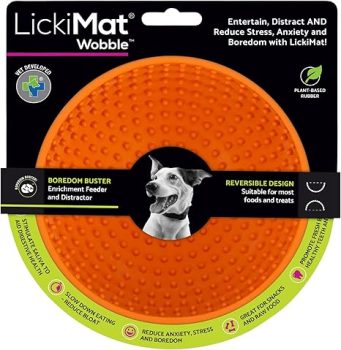
The wobble is what makes this feeder different. Its rounded base rocks gently as dogs eat, which adds an extra layer of unpredictability that keeps them engaged and slows down their pace naturally. Fill it with kibble for a slow-feeding bowl, spread on soft treats or wet food for a lick mat experience, or use it during bath time or vet visits to keep anxious dogs calm and focused. It’s one of the few feeders that genuinely works across multiple use cases without being mediocre at any of them. Dishwasher-safe and built from non-toxic materials throughout.
Disney Mickey Mouse Slow Feeder Dog & Cat Bowl
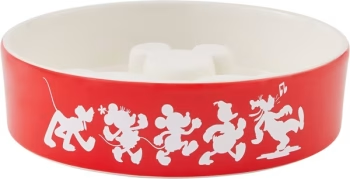
Function and personality aren’t mutually exclusive, and this Disney bowl is proof. Shaped after Mickey’s iconic silhouette, the slow-feed ridges built into the base encourage dogs to eat at a safer pace while giving your space a cheerful touch. It works for both dogs and cats, making it a nice pick for multi-pet households where feeding stations are shared. The novelty doesn’t come at the expense of quality; it’s durable, easy to clean, and actually effective at slowing down fast eaters. A solid choice for households where fun is a feature, not an afterthought.
Slow Feeder Dog Bowl with Lick Mat and Puzzle Inserts

Three enrichment formats in one purchase: a slow-feeding maze, a lick mat surface, and interchangeable puzzle inserts that change up the challenge. Dogs that get bored with the same feeder pattern every day do a lot better with variety, and this setup delivers exactly that. Swap inserts throughout the week to keep mealtime from feeling routine. It’s particularly good for high-energy dogs that need more than a basic ridged bowl to genuinely slow down. All parts are dishwasher-safe and built to hold up to dogs who treat their feeders as chew targets, not just food puzzles.
Elevated Slow Feeder Ceramic Dog Bowl

Raising the bowl off the floor reduces neck strain during eating, which benefits older dogs with arthritis and larger breeds that have to stoop significantly for a ground-level bowl. This elevated ceramic version combines that posture advantage with a slow-feed design, making it one of the more thoughtful picks for senior dogs or dogs recovering from neck and spine issues. Ceramic construction keeps it hygienic and free from plastic leaching. Sturdy enough to stay put during meals, attractive enough to leave out without hiding it in a cabinet. A genuinely practical upgrade for the right dog.
Frisco Bone Shaped Ridges Slow Feed Bowl, 3 cup
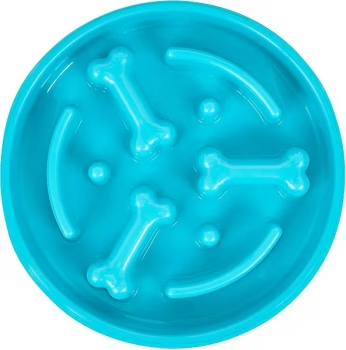
Frisco is a Chewy-exclusive brand with a strong track record for quality at an accessible price, and this bone-shaped slow feeder delivers on both. The ridged bone pattern spreads food across the bowl and forces dogs to navigate the contours rather than scoop straight down. At 3 cups, it’s sized well for medium breeds and on the larger end for small breeds eating bigger portions. No-fuss design, dishwasher-safe, and available in a few colors. For dogs that don’t need a complex puzzle to slow down, just something that puts a few obstacles in the way, this is a sensible, wallet-friendly starting point.
These options will surely slow your dog’s food roll, but there are plenty more options. Explore Amazon’s full lineup of slow feeders.
Frequently Asked Questions About Slow Feeder Dog Bowls
Do slow feeder bowls prevent bloat in dogs?
Slow feeder bowls significantly reduce the risk of bloat by cutting eating speed and minimizing the air swallowed with each mouthful. Most dogs eat 5 to 15 minutes more slowly from a slow feeder than from a standard bowl, which lowers the chance of rapid stomach distension. That said, slow feeders don’t guarantee protection against GDV. Dogs in high-risk breeds like Great Danes, German Shepherds, and Standard Poodles should also talk to their vet about preventive gastropexy surgery for the strongest protection available.
What size slow feeder bowl does my dog need?
Match the bowl’s capacity to your dog’s full meal size. Small dogs eating half a cup to 1 cup per meal do fine with compact designs. Medium dogs eating 2 to 3 cups need a mid-sized bowl. Large breeds eating 3 to 5 cups per meal need a bowl rated for 4 cups or more. A bowl that’s too small packs food in too tightly for dogs to navigate the obstacles properly, which defeats the purpose.
Are slow feeder bowls safe for puppies?
Yes, slow feeder bowls are safe for puppies, but start on the easiest difficulty level you can find. Young puppies need to be able to access all their food without undue frustration. If the design is too complex, they may skip portions of their meal or give up entirely. Silicone slow feeders tend to be the gentlest option for young pups given the soft surfaces. Watch the first few mealtimes to confirm they’re eating their full portion.
How do I clean a slow feeder dog bowl?
Most slow feeder bowls are dishwasher-safe, which is by far the easiest option. Silicone and plastic bowls go on the top rack; stainless steel and ceramic generally handle either rack. For hand-washing, use a bottle brush to get into ridges and maze channels where wet food can get stuck. Clean after every meal. Those crevices that slow eating also trap bacteria if you let food residue sit.
How much does a slow feeder dog bowl slow down eating?
Most dogs slow down significantly, anywhere from 5 to 15 minutes compared to a standard bowl. Dogs that previously finished a full cup of kibble in under 30 seconds often take 5 to 8 minutes with a basic ridged design, and up to 10 to 15 minutes with a more complex maze. The more intricate the obstacle pattern, the slower the pace. Even the simplest ridged design typically cuts eating speed by 50% or more for determined fast eaters.
Can a slow feeder bowl help with dog anxiety at mealtime?
Slow feeders, particularly lick mats and wobble feeders, can genuinely reduce mealtime anxiety. Licking triggers the release of serotonin, which is why vets often recommend lick mats for dogs dealing with separation anxiety, noise phobias, or general stress. Puzzle-style feeders redirect nervous energy into focused problem-solving, which leaves many anxious dogs calmer after eating than before. Not every dog responds the same way, but for dogs that pace, bark, or show resource-guarding behavior around their bowl, a slow feeder is often worth trying first.
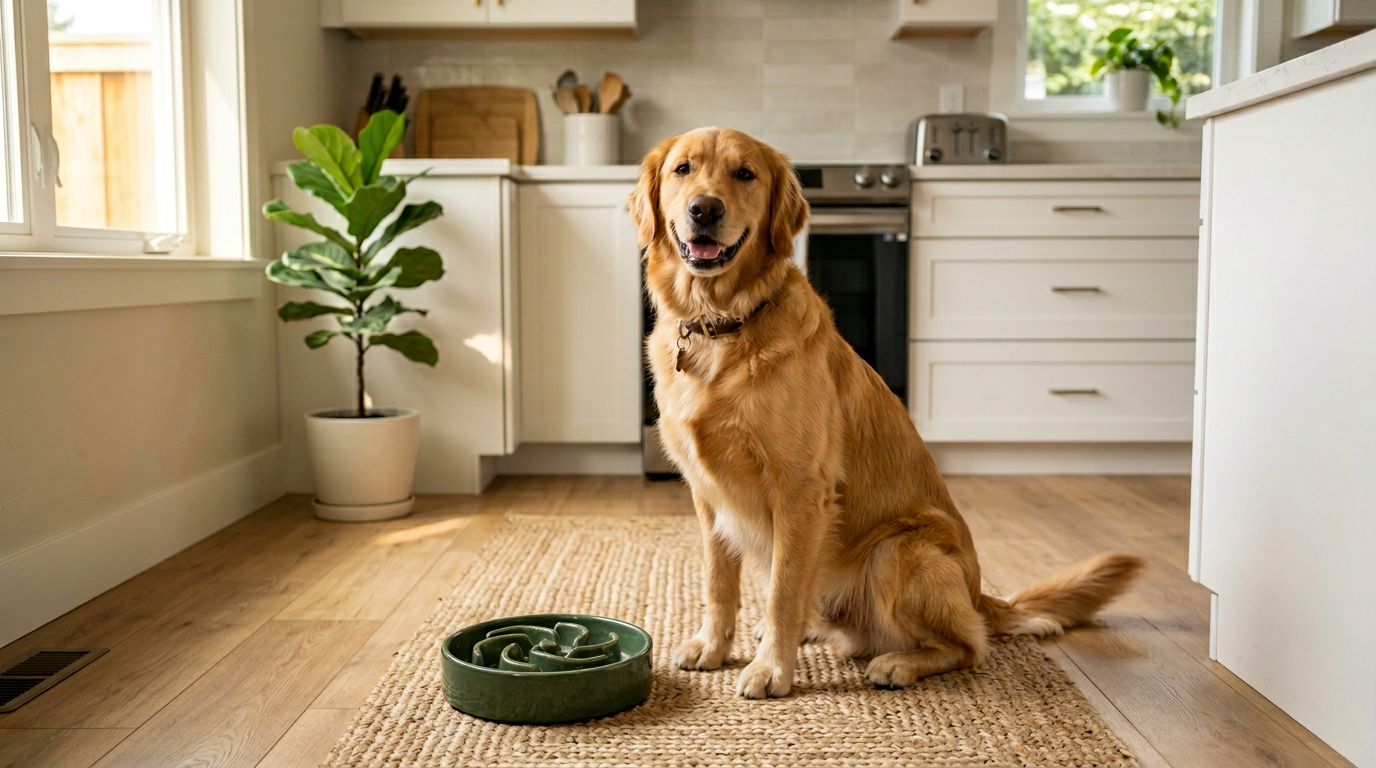
Final Thoughts on Slow Feeder Bowls
A slow feeder dog bowl won’t solve every health problem your dog might have. But for dogs that eat too fast, which is most of them, it’s one of the highest-impact, lowest-cost changes you can make to their daily routine. Slower eating means less air swallowed, better digestion, and real mental enrichment at every meal. For large and deep-chested breeds, it’s also a meaningful step toward reducing the risk of a life-threatening condition.
Start simple if your dog is new to this. A basic ridged bowl that slows them down by even 50% is a genuine win. Then, as they get the hang of it, you can move toward puzzle feeders or multi-level designs that give them a real workout. And while you’re upgrading mealtime habits, it’s worth taking a closer look at what goes in the bowl too. Our complete dog food guide covers everything from reading ingredient labels to choosing the right formula for your dog’s age and size. You can also add real nutritional value to every meal with these healthy kibble toppers.
At iHeartDogs, we believe mealtime is more than just feeding. It’s one of the most routine moments you share with your dog every single day. The right slow feeder bowl helps you make that moment healthier, calmer, and genuinely more enriching for both of you.




 English (US) ·