
 1 month ago
70
1 month ago
70
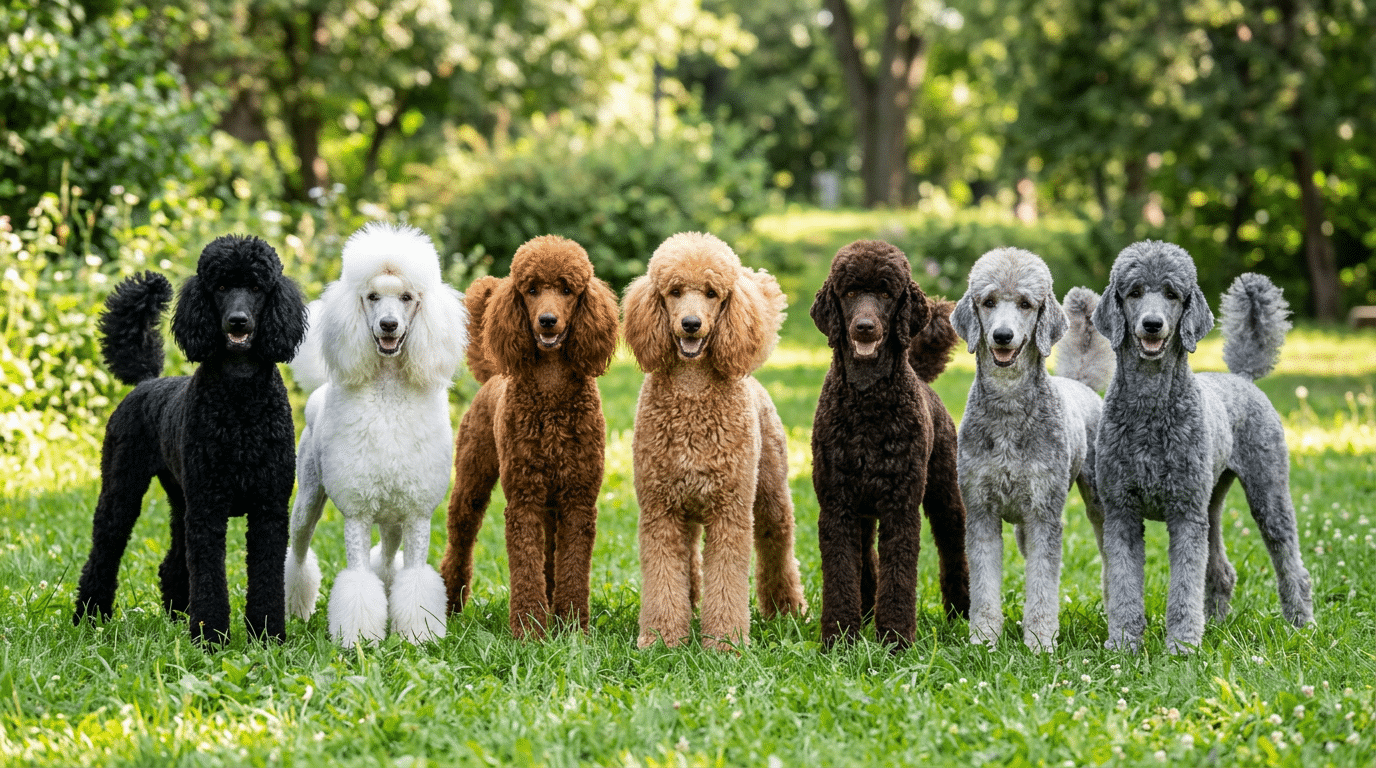
Poodles come in more colors than most people realize. Ask a first-time buyer about poodle colors and they’ll probably say “black or white.” That’s a fraction of the picture. The AKC officially recognizes 10 solid coat colors for Poodles, plus several distinct patterns that can appear on top of those base colors. If you’re picking a puppy or just trying to understand what you’ve got, this guide covers every recognized shade, how rare each one is, what to expect as your dog ages, and the basic genetics that drive it all.
One thing that surprises a lot of owners: your Poodle’s color today might not be its color in two years. Several Poodle shades fade, lighten, or shift dramatically as puppies grow into adults. Knowing what’s coming saves a lot of confusion down the road.
If you’re also curious about dog breeds similar to Poodles that share some of those same gorgeous coats, that’s worth a look too.
Poodle Color Rarity Rankings (AKC Standard)
| Black | Very Common | Most common; dominant genetics |
| White | Common | Popular show color |
| Apricot | Moderately common | Fades significantly with age |
| Chocolate/Brown | Moderately common | Recessive gene; fades over time |
| Cream | Moderately common | Often mistaken for white |
| Silver | Less common | Born black; clears by age 2 |
| Gray | Less common | Darker than silver; also clears from black |
| Blue | Uncommon | Deep slate gray; fades from black |
| Red | Uncommon | Recognized only since 1980; fades |
| Cafe au Lait | Rare | Warm milky brown; fades considerably |
The 10 AKC-Recognized Poodle Colors
1. Black
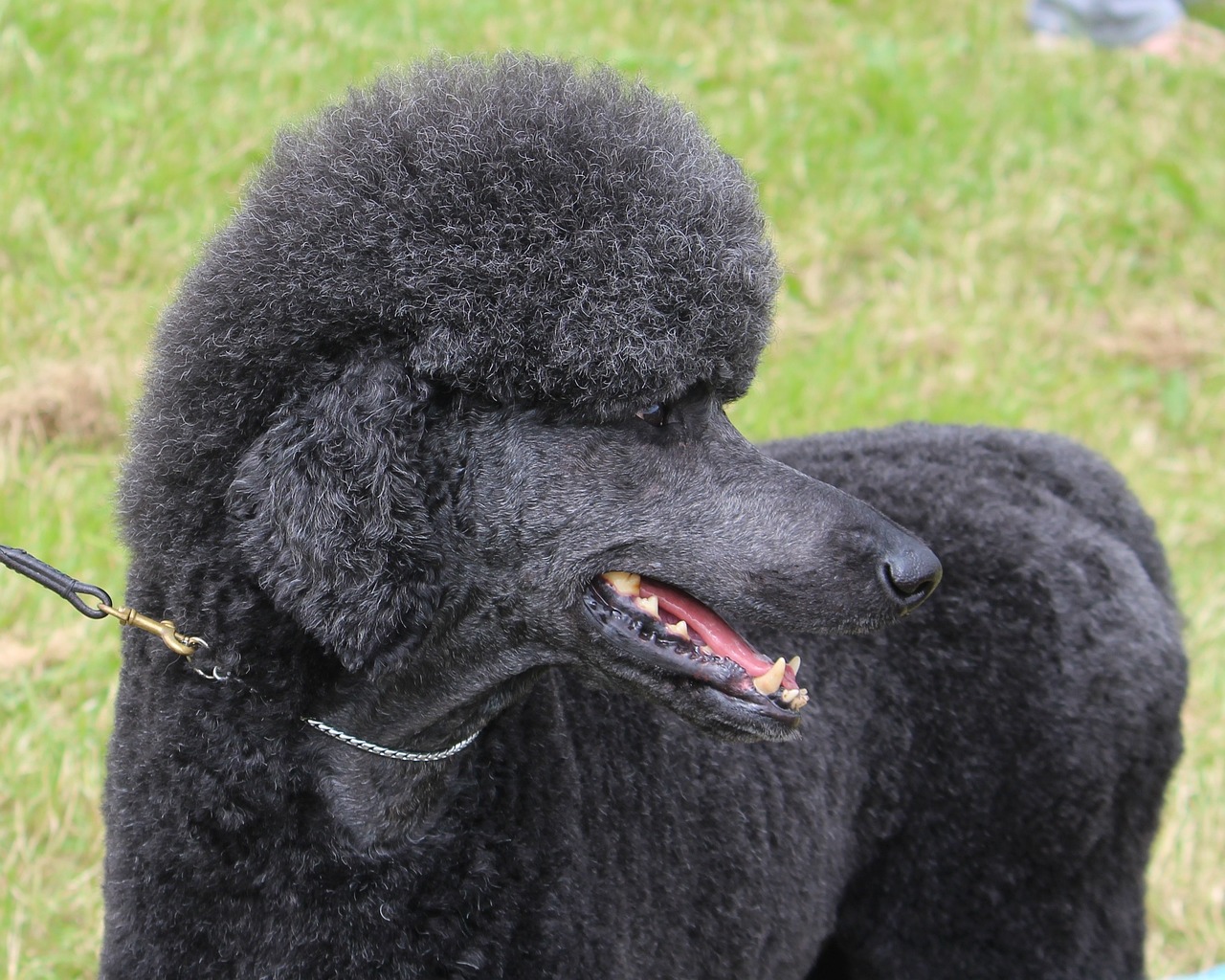
Black is the most common poodle color, and it’s dominant in the genetics. A show-quality black Poodle should be jet black from nose to tail with no silver, blue, or brownish tinting. The skin underneath also needs to be dark. Black coats can look dull without proper grooming, so regular bathing and conditioning make a real difference. One thing to know: some black Poodles develop a slight blue or gray sheen as they age, which is normal but may affect their competitiveness in the show ring.
Black Poodles tend to show dust and pet dander more than lighter colors. If you’re particular about that, it’s something to factor in.
2. White
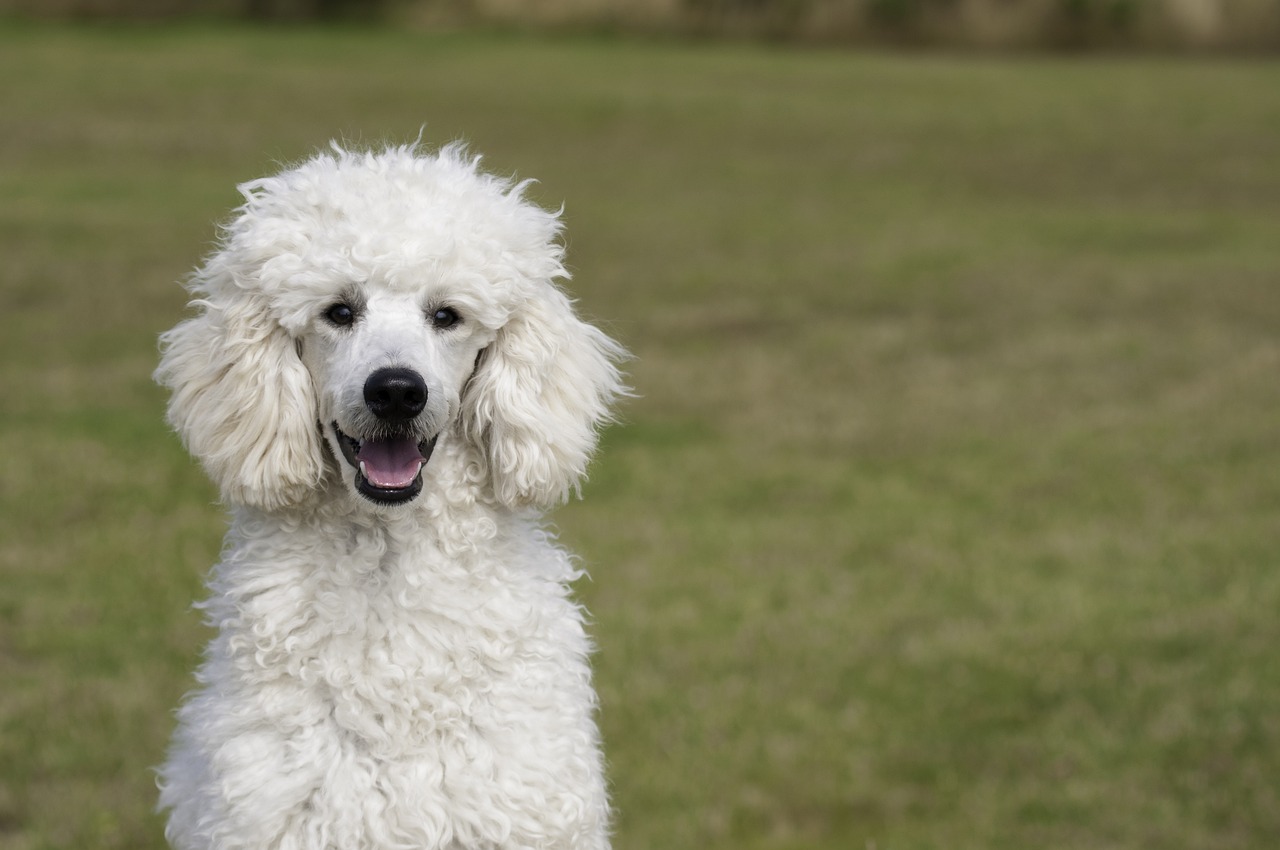
White Poodles are a show ring staple. True white should be pure and bright, with no yellow or cream tinging anywhere in the coat. Honestly, white is one of the hardest colors to maintain. Tear staining under the eyes, grass stains on the legs, and general outdoor grime show up fast. White Poodles also need protection from prolonged sun exposure, since they can sunburn more easily than darker-coated dogs.
People sometimes confuse cream and white Poodles. They’re not the same. White has a noticeably cooler, brighter tone. Cream leans warm and golden.
3. Apricot
Apricot sits between cream and red. It’s a warm, peachy orange that ranges from barely-there pale apricot to a richer, more saturated shade. Apricot was the last solid color to receive AKC recognition, getting the nod in 1975. It’s also one of the most popular colors for Toy and Miniature Poodles today.
The catch with apricot: it fades. A puppy that looks vivid apricot at 8 weeks may be nearly cream by its second birthday. Breeders who specialize in apricot Poodles select heavily for darker-starting puppies to help maintain that color over time. If you want an apricot that holds its richness, look for a breeder who tracks multi-generational color retention.
4. Red
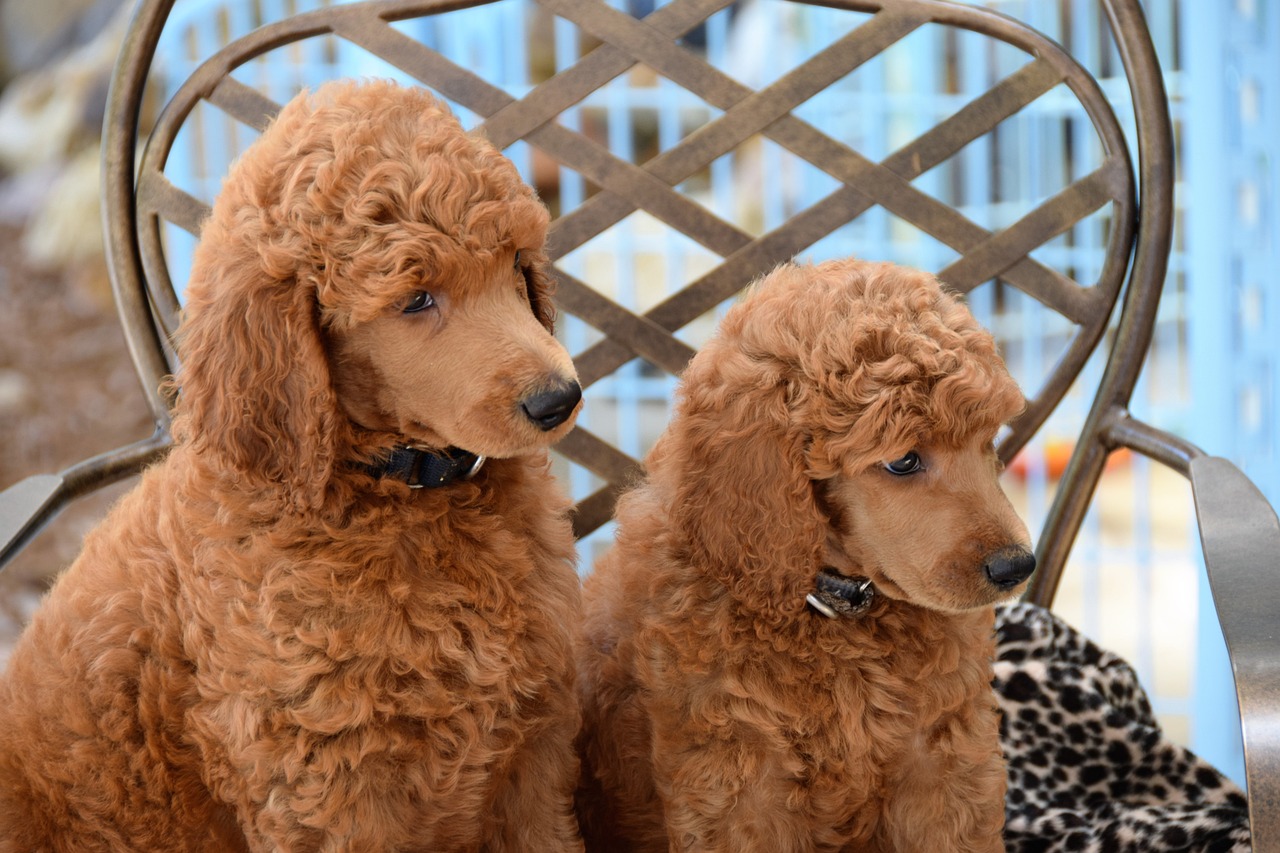
Red is the newest color in the AKC standard, officially recognized in 1980. True red Poodles have a deep, rusty auburn coat that’s distinct from apricot. Think of it as a darker, richer version, closer to a dark chestnut than a peachy tan. Red is uncommon, and it fades too, which is why responsible breeders track color depth across generations.
A vibrant red Poodle in full coat is genuinely striking. The color and the voluminous curly coat together create a look that’s hard to miss at a dog show or at the dog park.
5. Chocolate (Brown)
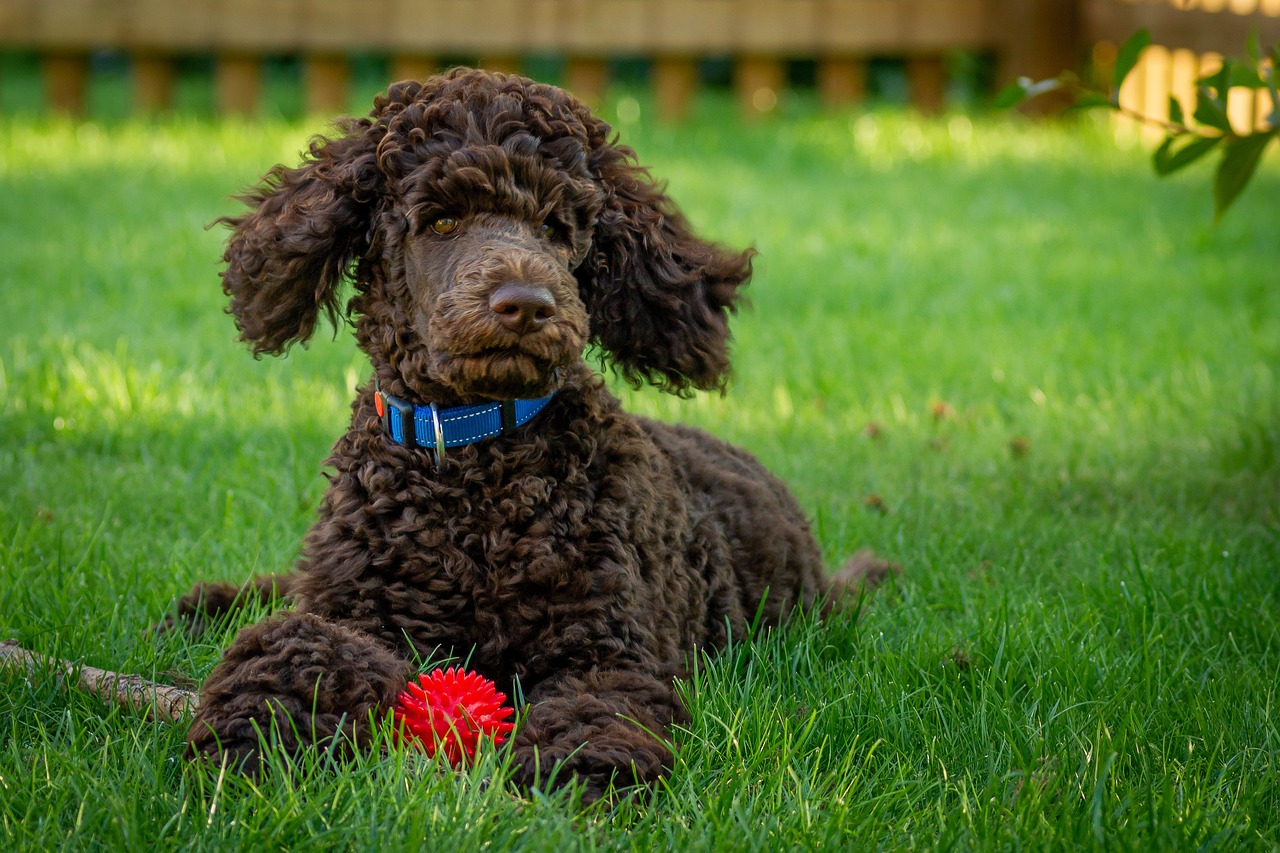
Chocolate is the AKC’s official term for what most people call brown. It’s a recessive color, which means both parents need to carry the gene for a chocolate puppy to appear. Chocolate Poodles often have amber or hazel eyes instead of the dark brown eyes seen on black dogs, and their noses, eye rims, and foot pads tend to be liver-colored rather than black.
Dark chocolates are gorgeous, but this color fades too. A deep espresso puppy can lighten to a milky cafe au lait tone by adulthood. It’s not a defect, just genetics doing its thing. A diet rich in quality protein can help support coat health and pigment in all colors, including chocolate.
6. Cafe au Lait
Cafe au lait is the rarest of the AKC-recognized solid colors. It’s a warm, milky beige-brown that’s lighter than chocolate and warmer than silver. Cafe au lait Poodles have the same liver-colored points (nose, eye rims, pads) as chocolate dogs, but their coats are noticeably paler. The color fades significantly with age, often shifting toward a washed-out buff by middle age.
Finding a reputable breeder who produces true cafe au lait can take real effort. Some breeders market faded chocolates as cafe au lait, so if this color matters to you, ask to see the parents and previous litters.
7. Silver
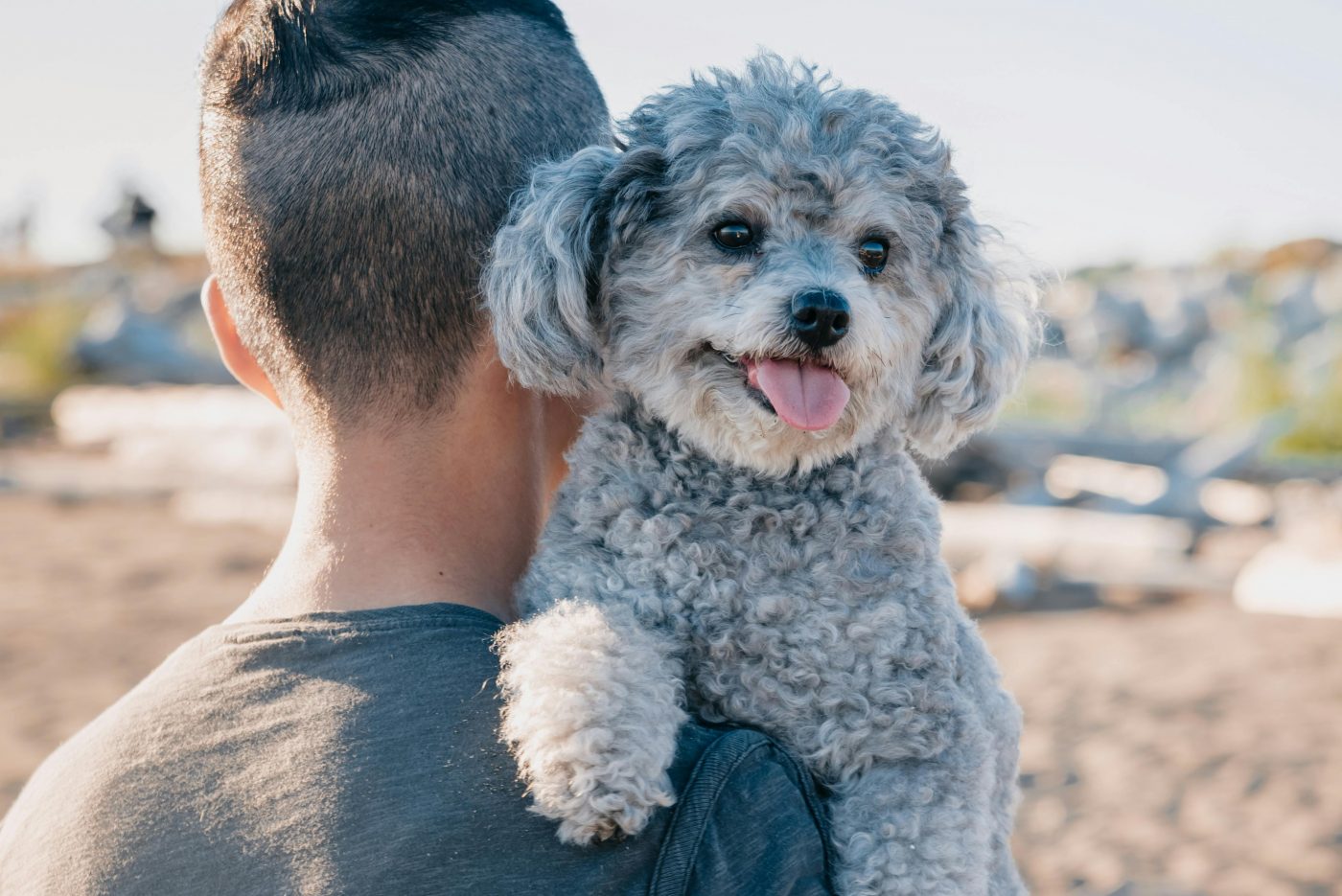
Silver Poodles are born black. That’s not a mistake. At birth they look identical to black puppies, but by 6 weeks the muzzle and feet start showing a lighter silvering that signals what’s coming. The full silver coat typically develops by 18-24 months. It’s one of the most striking examples of Poodle color transformation, and it can be confusing for first-time buyers who weren’t expecting it.
A mature silver Poodle has an even, shimmery light gray coat that’s quite distinctive. Grooming products that enhance cool-toned coats work well for maintaining that metallic sheen. Good quality dog clippers designed for dense coats are especially useful for keeping silver Poodles looking sharp at home.
8. Blue

Despite the name, blue Poodles don’t have a blue coat. They’re a deep slate gray, and at certain angles in certain lighting you might catch a slightly bluish cast. Like silver, blue Poodles are born black and clear over time. Blue tends to clear more slowly and settle into a darker final shade than silver. Blue and silver are related but distinct colors, and they’re judged separately in AKC competition.
So how do you tell a young blue Poodle from a black one? At 6 weeks, look for a brownish or rusty shading at the roots. That’s an early indicator of clearing. By 18 months, the blue should be clearly visible at least on the face and feet.
9. Cream
Cream Poodles have a warm off-white coat that’s noticeably warmer in tone than white. It can range from a very pale vanilla to a richer buttercream. Most people can’t tell a light cream from white at a distance, but they’re genetically distinct and judged separately at shows.
Cream is moderately common, especially in Toy and Miniature Poodles. It tends to be stable, meaning it doesn’t usually fade dramatically the way apricot or red does. Puppies may start slightly darker and lighten in their first year, but after that the color stays pretty consistent.
10. Gray
Gray Poodles are another born-black color. They sit between blue and silver on the spectrum, clearing to a medium gray rather than the lighter silver or the deeper blue-gray. Gray can be tricky to identify in young puppies because the clearing process looks similar across blue, silver, and gray in the early weeks.
Gray is less common than silver and often overlooked by buyers chasing the shinier silver coat. But a well-groomed gray Poodle with an even, consistent coat is a handsome dog by any measure.
Poodle Color Patterns: Parti, Phantom, and Abstract
Beyond the 10 solid colors, Poodles can carry patterns. These aren’t separate colors so much as genetic overlays that affect how colors appear on the dog. The three main ones you’ll run into are parti, phantom, and abstract.
Parti Poodles

A parti Poodle has at least 50% white on its body, with patches of a second solid color. The contrast between white and black, white and red, or white and chocolate can be dramatic and eye-catching. Parti is caused by a recessive gene. Both parents must carry it for parti puppies to appear.
The AKC recognizes parti Poodles in AKC shows, but they’re judged separately from solid-colored dogs. In terms of temperament and health, a parti Poodle is exactly the same as its solid-colored counterpart. The coat just has more visual variety. Grooming a parti coat requires keeping both sections vibrant, which can mean different products for the white sections versus the darker patches.
Parti Poodles look nothing like merle-patterned dog breeds despite what some ads might suggest. Merle is a completely different genetic pattern not recognized in Poodles by the AKC, and merle Poodles often carry health risks linked to that gene.
Phantom Poodles
Phantom is a specific two-color marking pattern. The base color is solid, and distinct markings appear on 6 specific points: above each eye, on the sides of the muzzle, on the throat, on the forechest, and on all four legs. If you’ve ever seen a Doberman Pinscher, you know exactly what phantom markings look like. Same concept, different dog.
Phantom is relatively rare and quite popular with buyers who want something distinctive. Common phantom combinations include black with tan, chocolate with tan, and silver with cream. The markings should be clearly defined, not blurred or fading into the base coat.
Abstract Poodles
Abstract (also called mismark) Poodles have small white markings that make up less than 50% of the coat. They might have a white blaze on the face, a patch on the chest, or white toes. Since the white is under 50%, they don’t qualify as parti. The AKC doesn’t show abstract Poodles in the conformation ring, but they’re perfectly healthy and quite common in pet-quality litters where both color genetics are in play.
How Poodle Colors Change as They Age
Which Poodle Colors Fade or Change With Age
| Black (fading gene) | Blue or Gray | 18-24 months |
| Black (silver gene) | Silver | 6 weeks to 2 years |
| Chocolate | Lighter brown or cafe au lait | 2-4 years |
| Dark Apricot | Light Apricot or Cream | 6-18 months |
| Dark Red | Medium or light red | 1-3 years |
| True Black / White / Cream | Stays the same | Stable throughout life |
Color change in Poodles isn’t random. It’s driven by specific genes. The “progressive greying” gene causes black pigment to fade, which is why you can end up with a silver, blue, or gray adult from a black puppy. The fading gene that affects red and apricot is a separate mechanism, lightening those warm tones toward cream over the dog’s first few years.
Most of the dramatic color change happens before age 2. After that, some gradual lightening continues but it’s less obvious. One thing that surprises owners: the first few haircuts can accelerate how quickly the new color shows, since clipping removes the outer pigmented layer faster than natural shedding.
If you want a Poodle that stays its puppy color, black, white, and cream are your safest bets. They’re genetically stable and won’t surprise you at the 18-month mark.
The Basics of Poodle Color Genetics
You don’t need a genetics degree to understand this. Here’s the simplified version.
Poodle coat color is driven by two main pigments: eumelanin (black/brown) and phaeomelanin (red/yellow). Different genes control how much of each pigment is produced and how it’s distributed. The E-locus gene determines whether a dog can express black pigment at all. The B-locus controls whether black is expressed as black or diluted to brown/chocolate. The G-locus is the progressive greying gene, producing silver, blue, and gray from black-born puppies.
Parti, phantom, and abstract patterns are controlled by separate genes that affect where pigment appears on the body, not what color it is. Two solid-colored parents can produce parti puppies if both carry the recessive parti gene.
The upshot: when a breeder says “I can’t guarantee what color the puppy will be as an adult,” they’re telling you the truth. You can make educated predictions based on known genetics, but fading and clearing involve multiple gene interactions that aren’t always perfectly predictable.
Proper nutrition supports healthy pigment development. If you’re raising a Poodle puppy, checking out the best puppy foods for Poodles is a good starting point. Supporting gut health through quality probiotics for Poodles also helps the overall coat condition that keeps whatever color your dog has looking its best. And once your Poodle’s diet is dialed in, dog food toppers for Poodles can give the coat an extra boost.
Frequently Asked Questions About Poodle Colors
What is the most common poodle color?
Black is the most common poodle color. It’s genetically dominant, which means it shows up more frequently across all sizes from Toy to Standard. Black Poodles have jet-black coats, dark eyes, and black noses. They’re popular in the show ring and with pet owners alike.
What is the rarest poodle color?
Cafe au lait is the rarest of the 10 AKC-recognized solid colors. It’s a warm milky brown that’s lighter than chocolate and harder to maintain through generations without significant fading. Some breeders also consider true red to be nearly as rare in its deepest, most saturated form.
Do all poodles change color as they age?
No, not all of them. Black, white, and cream Poodles are generally color-stable throughout their lives. Colors like silver, blue, gray, apricot, red, chocolate, and cafe au lait all fade or shift over the first 1-3 years. Some continue lightening slowly throughout life.
What’s the difference between parti and phantom Poodles?
Parti Poodles have a coat that’s at least 50% white with patches of a second solid color distributed across the body. Phantom Poodles have a solid base color with distinct markings on exactly 6 specific points (above the eyes, muzzle, throat, chest, and all four legs), similar to Doberman markings. Both are AKC-recognized patterns.
Are silver and blue poodles the same color?
They’re related but not the same. Both start as black puppies and clear over time, but silver lightens to a brighter, shinier light gray while blue settles into a deeper, darker slate gray. They’re genetically distinct and judged separately in AKC competition.
Can a poodle’s color predict health issues?
In most cases, no. However, there is a known link between white coats and deafness in some dog breeds, particularly when the dog lacks pigment in the inner ear. This is more common in breeds with the merle gene (which isn’t standard in Poodles). Responsibly bred Poodles of all colors are generally equally healthy. If you’re buying a white Poodle, a hearing test (BAER test) from a reputable breeder is worth asking about.
What color poodle is easiest to keep clean?
Darker colors like black and chocolate hide dirt better between grooming sessions. White and cream are the most demanding, showing staining and discoloration quickly. Apricot and red fall somewhere in the middle. Honestly, all Poodles need regular grooming regardless of color, so this should be a secondary consideration when choosing.
Is apricot the same as red in Poodles?
No. Apricot is a lighter, peachy-warm tone. Red is distinctly darker and more saturated, closer to a chestnut or auburn. The AKC recognizes them as separate colors. Both fade over time, but apricot tends to fade faster and to a lighter endpoint than red.
Can two black poodles produce a silver puppy?
Yes, if both parents carry the recessive gene for the progressive greying (G-locus). You can have two black adults produce puppies that clear to silver, blue, or gray by adulthood. This is why DNA testing for color genetics is useful for breeders who want to predict litter outcomes.
What poodle color is best for show competitions?
Black and white are the most competitive in AKC conformation because the solid, stable color shows off the Poodle’s structure and grooming most clearly. That said, any of the 10 AKC-recognized colors can compete in the show ring. The quality of structure and grooming matters far more than color preference.
Bottom Line
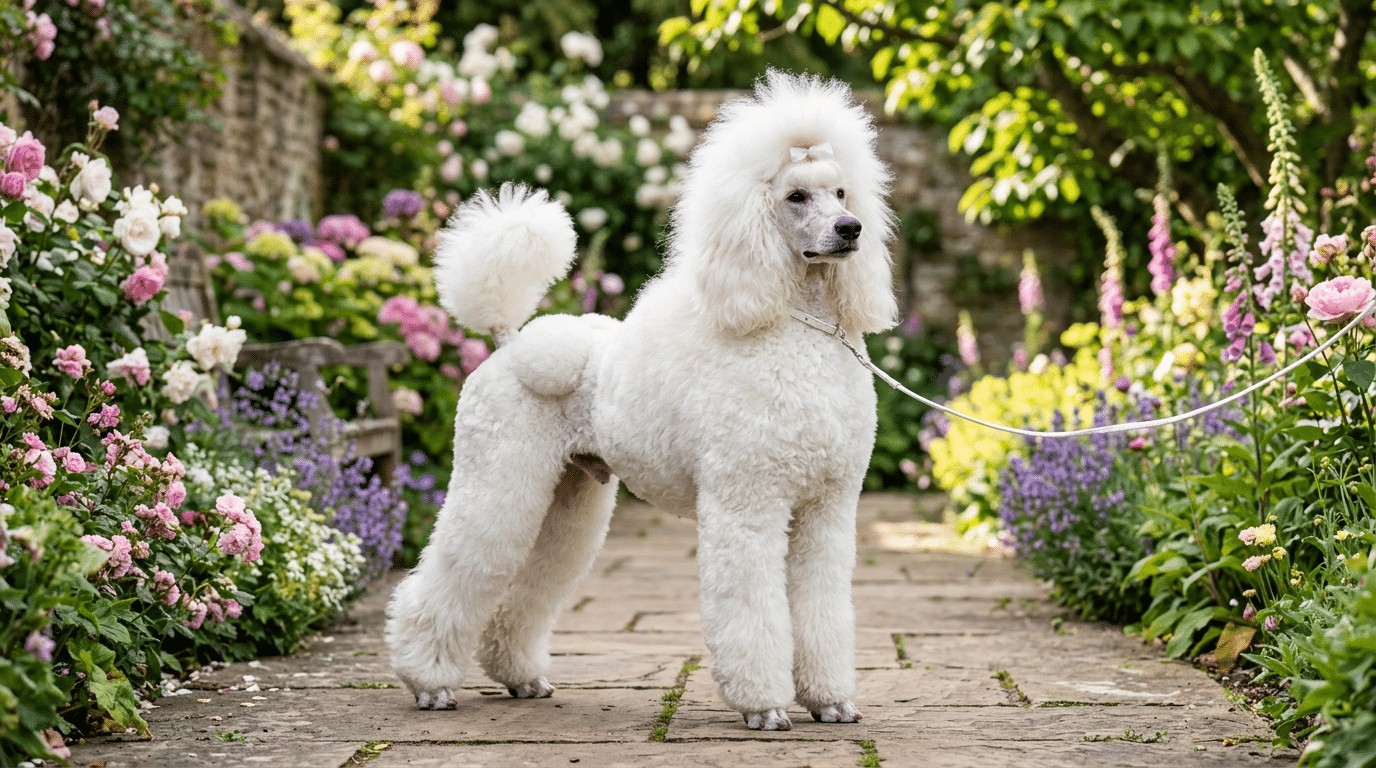
Poodles offer one of the widest color ranges of any breed. Ten AKC-recognized solids, plus patterns like parti, phantom, and abstract, mean you’ve got a lot of real variety to choose from. And unlike many breeds where “what you see at 8 weeks is what you get,” Poodle color is genuinely dynamic. Silver puppies start black. Apricot pups fade toward cream. Chocolates lighten as they age.
If you want a color that holds, go with black, white, or cream. If you love the look of silver, blue, or red, just know the final shade takes 1-2 years to settle in. Either way, the color doesn’t affect your dog’s personality, intelligence, or health. Poodles are one of the smartest and most adaptable breeds regardless of what shade they come in.
If you want to explore more, take a look at dog breeds similar to Poodles that share that curly-coated, low-shedding appeal. And once you’ve got your Poodle home, check out the best raw dog food for Poodles to keep that coat looking its best from the inside out.





 English (US) ·