
 1 month ago
33
1 month ago
33
If you’ve got an Australian Kelpie puppy or you’re thinking about getting one, tracking their growth is one of the most useful things you can do. These dogs are built to work – lean, muscular, and endlessly athletic – so knowing what a healthy australian kelpie weight by age looks like helps you catch problems early and keep them on track. This 2026 guide covers everything: male and female weight charts, height milestones, feeding amounts, growth stages, and how to tell if your Kelpie is right where they should be.
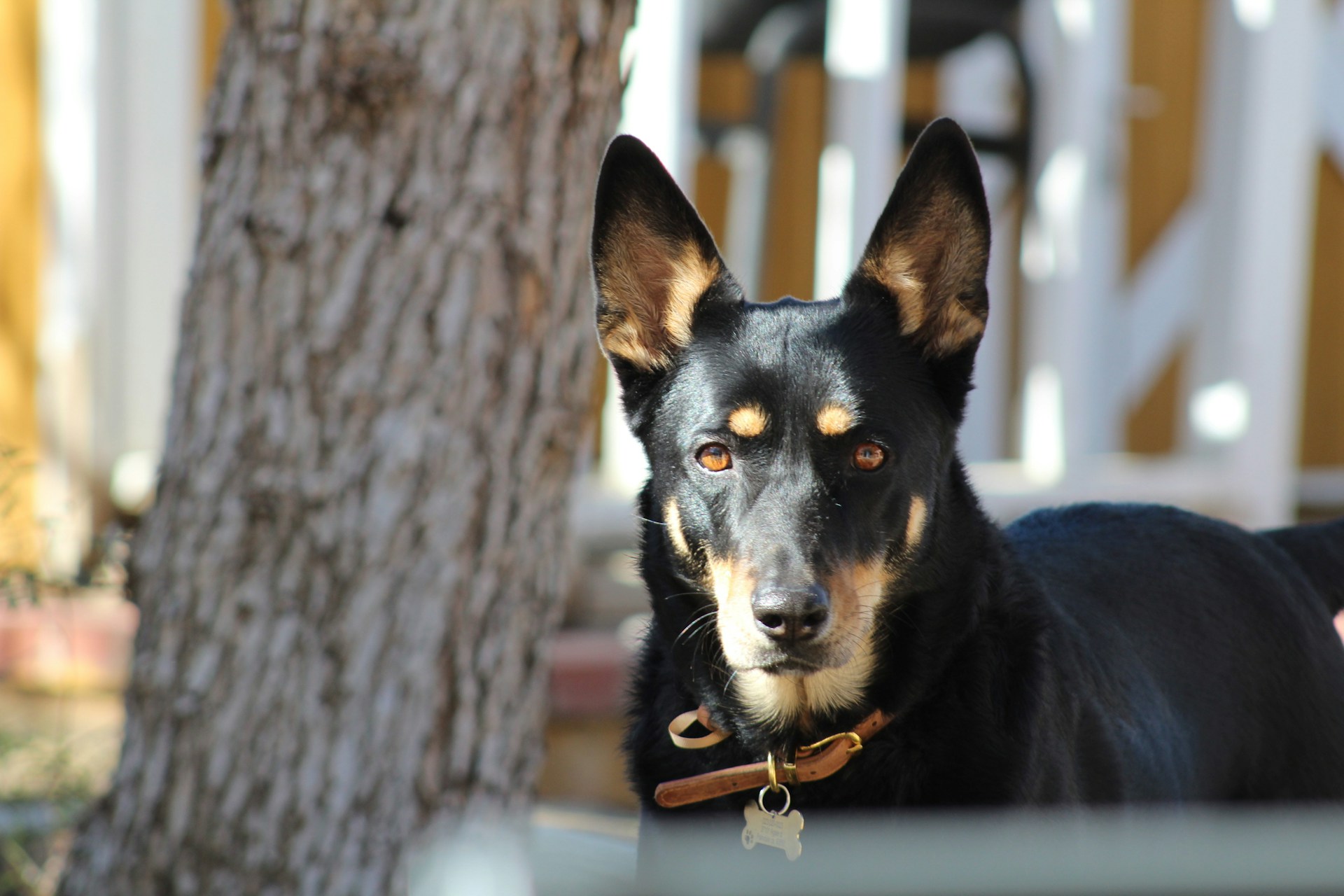
Australian Kelpie: Quick Size Facts
- Male weight: 30-45 lbs (13.6-20.4 kg) at full maturity
- Female weight: 25-35 lbs (11.3-15.9 kg) at full maturity
- Height (both sexes): 17-20 inches (43-51 cm) at the shoulder
- Full grown: Height by 12 months, muscle fill by 18-24 months
- Body type: Athletic, lean, medium-boned – built for endurance, not bulk
- AKC size classification: Medium
Australian Kelpie Growth Stages: What to Expect
Kelpies grow fast. Really fast, actually. Most of the height gain happens in the first six months, which can feel like your puppy doubles in size every few weeks. Here’s a quick breakdown of what’s happening at each stage and what to watch for.
Birth to 8 weeks: Newborn Kelpies weigh just 2-4 lbs. By 8 weeks – when most go home to new families – they’re typically 10-15 lbs. They’re eating puppy kibble by week 4-5 and growing visibly day to day.
3 to 6 months: This is the rapid-growth window. Your Kelpie will be adding weight and height quickly, and their legs may look slightly disproportionate at times. That’s normal. Their joints are still developing, so this isn’t the time for long runs or intense jumping. These high-energy breeds need appropriate outlets without the orthopedic risk.
6 to 12 months: Growth slows but doesn’t stop. Most Kelpies reach their adult height somewhere in this window. They start looking more like the lean, athletic dogs you recognize – less puppy fluff, more working-dog build.
12 to 24 months: Height is done, but the body is still maturing. Kelpies fill out with muscle during this period, especially if they’re active. A 12-month Kelpie may weigh a few pounds less than the same dog at 18-24 months.
2 years and beyond: Your Kelpie has hit adult size. Weight should stay stable with consistent feeding and exercise. As natural herding breeds, they stay muscular and trim well into their senior years when well-exercised.
Male Australian Kelpie Weight and Height by Age 2026
The chart below shows average weights and heights for male Australian Kelpies from birth through 3 years. These are ranges based on typical breed standards – your dog’s individual genetics, diet, and activity level will influence where they fall. Always check with your vet if something seems off.
| Newborn | 2-4 | 0.9-1.8 | 8-10 | 20-25 |
| 1 month | 8-12 | 3.6-5.4 | 10-12 | 25-30 |
| 2 months | 15-20 | 6.8-9.1 | 12-14 | 30-35 |
| 3 months | 20-25 | 9.1-11.3 | 14-16 | 35-40 |
| 6 months | 25-32 | 11.3-14.5 | 16-18 | 40-46 |
| 9 months | 30-38 | 13.6-17.2 | 17-19 | 43-48 |
| 12 months | 33-42 | 15.0-19.1 | 17-20 | 43-51 |
| 18 months | 30-44 | 13.6-20.0 | 17-20 | 43-51 |
| 2 years | 30-45 | 13.6-20.4 | 17-20 | 43-51 |
| 3 years | 30-45 | 13.6-20.4 | 17-20 | 43-51 |
Female Australian Kelpie Weight and Height by Age 2026
Female Kelpies are generally slightly lighter and a bit narrower in frame than males, but the difference isn’t dramatic. Both sexes are athletic and compact. Here are the average measurements for females from birth through adulthood.
| Newborn | 2-4 | 0.9-1.8 | 8-10 | 20-25 |
| 1 month | 7-11 | 3.2-5.0 | 10-12 | 25-30 |
| 2 months | 13-18 | 5.9-8.2 | 12-14 | 30-35 |
| 3 months | 18-22 | 8.2-10.0 | 13-15 | 33-38 |
| 6 months | 20-27 | 9.1-12.2 | 15-18 | 38-46 |
| 9 months | 25-32 | 11.3-14.5 | 16-19 | 40-48 |
| 12 months | 28-35 | 12.7-15.9 | 17-20 | 43-51 |
| 18 months | 25-35 | 11.3-15.9 | 17-20 | 43-51 |
| 2 years | 25-35 | 11.3-15.9 | 17-20 | 43-51 |
| 3 years | 25-35 | 11.3-15.9 | 17-20 | 43-51 |
Kelpies are similar in size to other medium working breeds – if you’ve looked at a Poodle weight chart by age, you’ll notice the growth pattern is similar even though the body types differ significantly.
Feeding Amounts for Australian Kelpies by Age
What you feed your Kelpie has a direct impact on how they grow. Underfeeding slows development. Overfeeding during the rapid-growth phase can stress developing joints. Here are general feeding guidelines based on age and typical high-quality dry kibble (around 350-400 calories per cup).
These are starting points, not rules. Your dog’s specific food will have its own feeding guide, and energy level matters a lot for Kelpies since they burn more than most breeds. A working farm dog needs significantly more than a backyard pet.
| 8-12 weeks | 3/4 – 1 cup | 4 meals | Puppy formula, high protein |
| 3-4 months | 1 – 1.5 cups | 3 meals | Growth phase, don’t restrict |
| 5-6 months | 1.5 – 2 cups | 3 meals | Increase as activity increases |
| 7-12 months | 1.5 – 2.5 cups | 2-3 meals | Transition to 2x daily at 9-12 months |
| 1-2 years | 1.5 – 2.5 cups | 2 meals | Shift to adult formula around 12 months |
| 2+ years (low activity) | 1.5 – 2 cups | 2 meals | Adjust down if gaining weight |
| 2+ years (high activity) | 2 – 3 cups | 2 meals | Working or sport dogs need more |
Choosing the right food makes a real difference. Check out this Blue Buffalo vs Purina Pro Plan comparison to see how some of the top brands stack up for active breeds. And if you’re just getting started with a new puppy, the Australian Kelpie puppy shopping list covers everything you’ll need in those first weeks.
Healthy Weight Ranges: Is Your Kelpie the Right Size?
The scale tells you the number, but it doesn’t tell you everything. Kelpies are lean dogs – there’s a big difference between a fit, muscular 35-lb Kelpie and an overweight one at the same weight. Body condition score matters just as much as actual weight.
Here’s how to do a quick body condition check at home:
- Ribs: You should be able to feel each rib easily with light pressure. You shouldn’t have to dig in. If you can’t feel ribs at all, your dog is overweight.
- Waist: Looking down from above, your Kelpie should have a visible tuck behind the ribs. An oval shape from above usually means excess weight.
- Belly tuck: From the side, there should be a clear upward curve from the chest to the belly. A flat or sagging underline is a red flag.
- Spine: You should feel the vertebrae, but they shouldn’t be sharply prominent. If the spine is very visible with no muscle coverage, the dog may be underweight.
Kelpies are one of the most intelligent working breeds, and they’ll tell you in their own ways when something is off – low energy, reluctance to exercise, or behavioral changes often signal physical issues including weight problems. Trust your instincts and talk to your vet if something doesn’t seem right.
Healthy Adult Weight Reference
| Male | Under 28 lbs | 30-45 lbs | Over 48 lbs |
| Female | Under 22 lbs | 25-35 lbs | Over 38 lbs |
Note: Highly active working Kelpies often sit at the higher end of the ideal range due to muscle mass. Athletic build, not just weight, is the best indicator of health.
Why Kelpies Run Lean (and What That Means for You)
If you compare your Kelpie to, say, a Labrador at the same age, your dog will probably look significantly lighter. That’s not a problem – it’s the breed. Australian Kelpies were developed to work sheep in the Australian outback for hours on end. They’re built for endurance, not size.
A typical adult male Lab weighs 65-80 lbs. A healthy adult male Kelpie? 30-45 lbs. Same height range, dramatically different build. The Kelpie carries almost all of that weight in muscle with very little body fat, which is exactly how they should be. Herding breeds are among the leanest dogs per inch of height of any group.
What this means practically: don’t overfeed your Kelpie trying to bulk them up. Extra weight doesn’t help them – it actually slows them down and stresses their joints. A lean Kelpie is a healthy Kelpie. This breed also has impressive jumping ability for their size, which is easiest to maintain at a healthy weight.
When Should You Be Concerned About Your Kelpie’s Weight?
Growth charts are averages. Your dog may be a bit above or below and be completely fine. But there are situations where it’s worth calling your vet.
Call your vet if:
- Your puppy drops off the growth curve significantly between checkups (not just a slow week, but consistently falling behind)
- Your adult Kelpie gains or loses more than 3-4 lbs over 4-6 weeks without a change in diet or exercise
- You notice your dog’s ribs are becoming very prominent despite normal feeding
- Your dog is eating well but not gaining weight
- There’s a sudden appetite drop combined with weight loss
Kelpies can be prone to intestinal parasites, which can affect absorption and cause weight loss even when eating. Regular deworming and annual fecal checks are worth keeping up with.
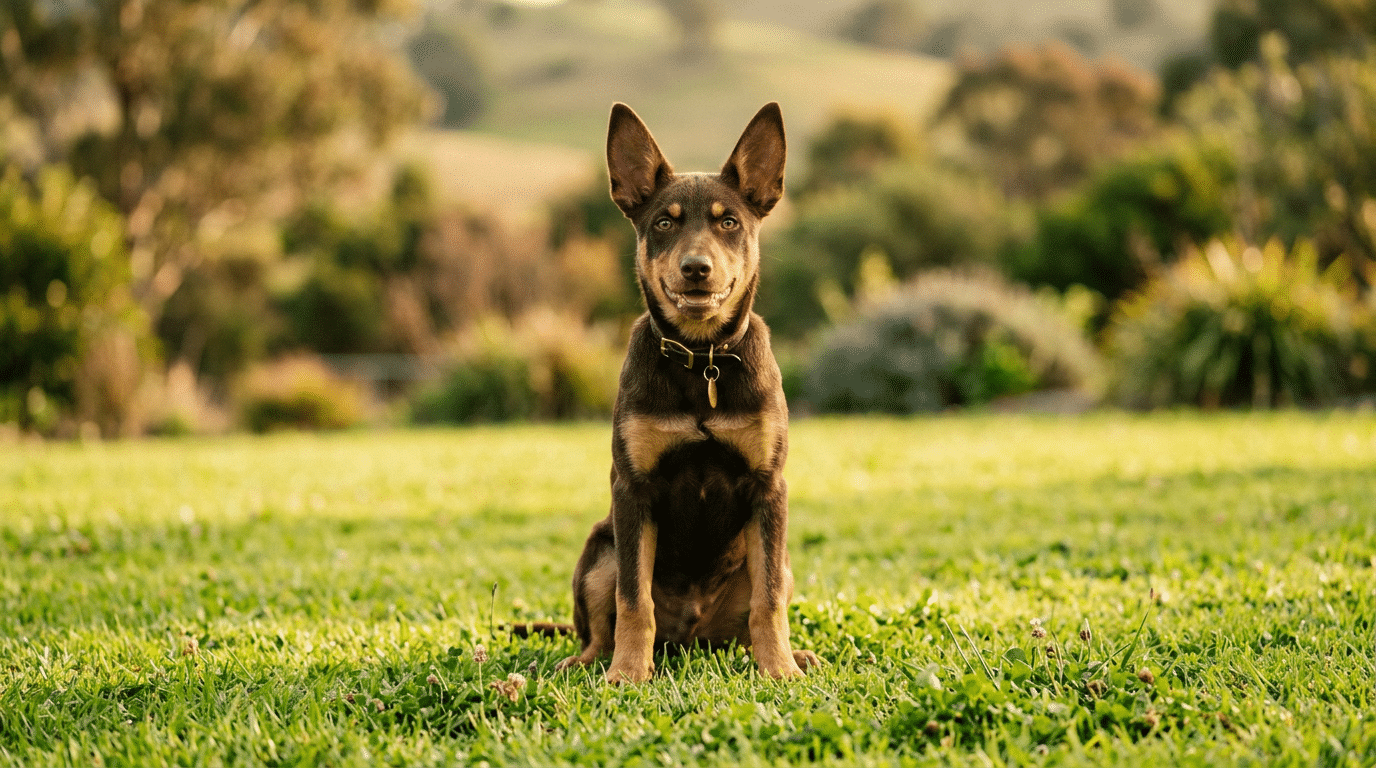
Frequently Asked Questions: Australian Kelpie Weight by Age
How much should a 6-month-old Australian Kelpie weigh?
At 6 months, male Kelpies typically weigh 25-32 lbs and females 20-27 lbs. This is the middle of the rapid-growth phase, so don’t be surprised if your dog seems to change week to week. Height gain slows after this point, but weight will keep increasing as muscle develops.
When do Australian Kelpies stop growing?
Most Kelpies reach their adult height by 12 months. They keep adding muscle mass and filling out until around 18-24 months. If your 2-year-old Kelpie weighs 3-4 lbs more than they did at 12 months, that’s completely normal.
Is my Kelpie too skinny?
Maybe, or maybe not. Kelpies are naturally lean. If you can feel the ribs easily with light pressure but can’t see them prominently, and there’s a visible waist tuck, your dog is probably at a healthy weight. If ribs are very visible, bones are prominent, and there’s no waist definition, talk to your vet.
How do I know if my Kelpie is overweight?
You can’t easily feel the ribs, there’s no waist visible from above, and the belly doesn’t tuck up from the side. Some Kelpies also lose their characteristic energetic bounce when overweight. Extra weight is harder on this breed than many others because they’re built for agility and endurance.
What’s a healthy weight for an adult female Kelpie?
Adult females typically weigh 25-35 lbs. Very active or working females may sit at the higher end due to muscle. Smaller females from lighter-framed parents may be at the lower end and still be completely healthy. Body condition matters more than the exact number.
Do male and female Kelpies grow at the same rate?
Pretty much, yes. The timeline is nearly identical – rapid growth in months 1-6, height stabilization around 12 months, muscle fill through 24 months. Males end up about 5-10 lbs heavier on average at full maturity, and may be slightly taller, but the growth curve looks very similar.
Can a Kelpie be too muscular or too heavy for their joints?
In adults, no – a well-muscled Kelpie is a healthy one. The concern is during puppyhood, when too much intense exercise before bones finish developing can cause orthopedic issues. Keep exercise moderate (no long runs, no repetitive jumping) until at least 12-14 months.
Should I feed my Kelpie more if they’re very active?
Yes. A Kelpie doing agility, herding work, or intense daily exercise needs more calories than a less active pet. Start with the amounts on your dog food label, then adjust based on body condition. If you can start to see ribs, add a bit more. If the waist is disappearing, cut back slightly.
What’s the best food for Kelpie puppy growth?
Look for a high-quality puppy food with real protein (chicken, beef, or fish) as the first ingredient. Medium-breed puppy formulas work well for Kelpies. Avoid overfeeding large-breed formulas designed to slow growth in giant breeds – that’s not what Kelpies need.
At what age should I switch my Kelpie from puppy to adult food?
Around 12 months is standard for Kelpies. You can transition gradually over 1-2 weeks by mixing increasing amounts of adult food with the puppy formula. If your dog is still very lean at 12 months or seems to still be filling out significantly, ask your vet about waiting until 14-15 months.
Bottom Line
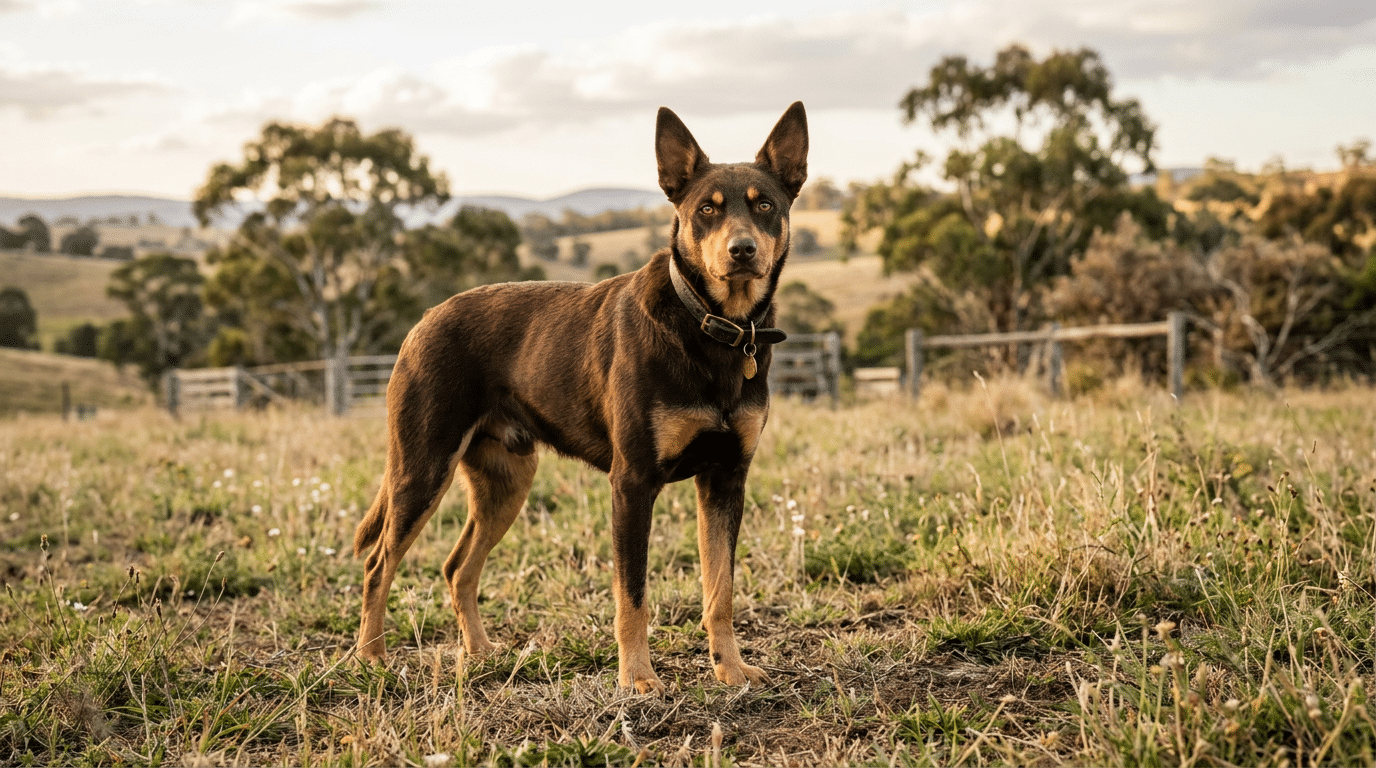
Australian Kelpies are lean, muscular, medium-sized dogs that grow fast and level off at 12-24 months. Males typically settle at 30-45 lbs and females at 25-35 lbs, both standing 17-20 inches tall. The numbers matter less than body condition – a well-muscled Kelpie that’s easy to feel ribs on (but not see) is right where they should be.
Keep up with regular vet check-ins, adjust feeding based on activity level (these dogs work hard and need fuel), and don’t stress if your Kelpie runs lean. That’s the breed. If you’re still in the early days with a new puppy, make sure you’ve got everything you need with this complete Australian Kelpie puppy checklist. And if you’ve got questions about growth that your vet hasn’t addressed yet, use the FAQ above as a starting point for that conversation.



![Purina Pro Plan vs. Purina One: Who Wins? [2026]](https://iheartdogs.com/wp-content/uploads/2023/09/dog-1535905_1280-1.jpg)






 English (US) ·