
 1 month ago
40
1 month ago
40
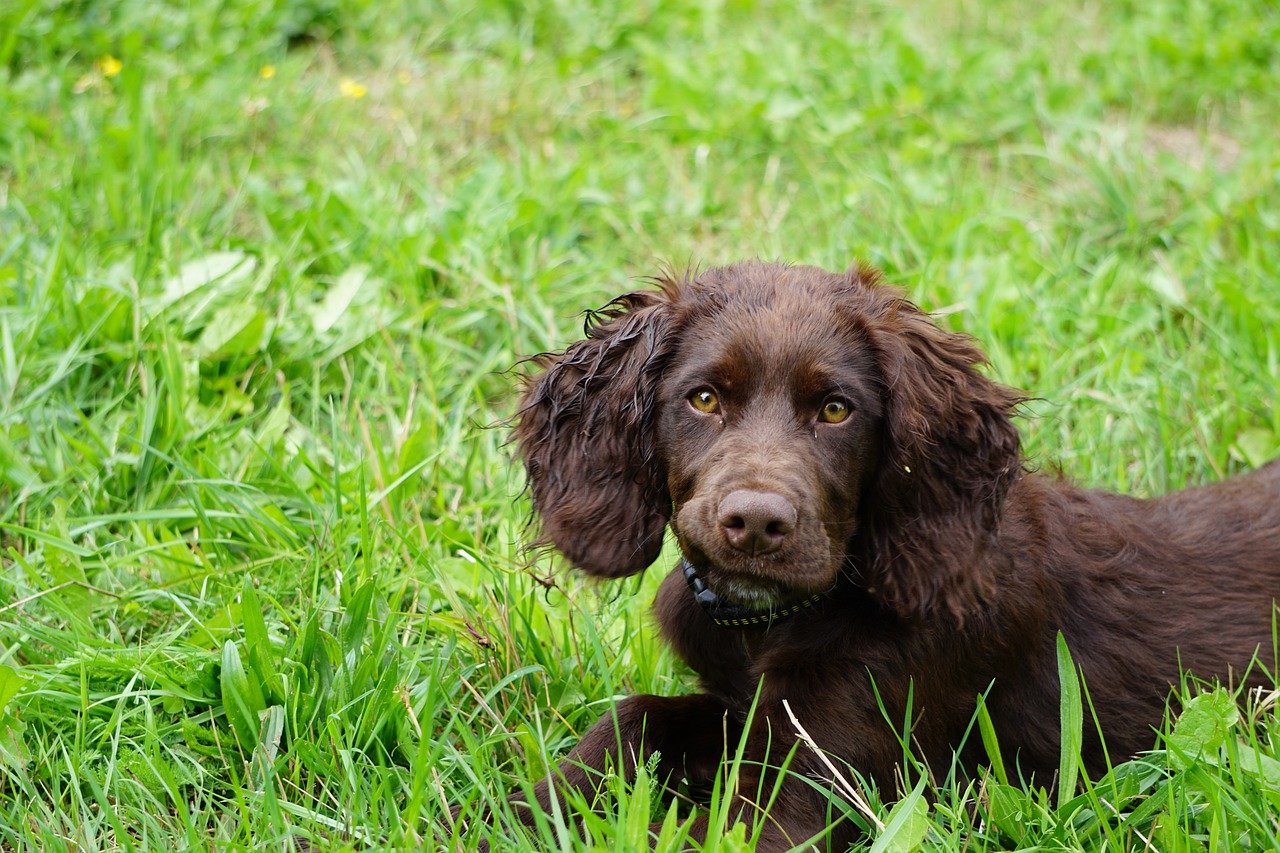
Q is the awkward middle child of the dog breed alphabet. There are no Labs, no Goldens, no Poodles starting with Q. But that doesn’t mean the letter is completely empty. There are real dog breeds that start with Q — some well-known (if you ask the right crowd), some so obscure they don’t even have AKC recognition.
So let’s settle this once and for all. Here are all the legitimate dog breeds that start with the letter Q, with honest details on each one — what they’re like, where they come from, and whether they’d actually work as a pet.
Dog Breeds That Start With Q: Quick Reference
| Queensland Heeler | Australia | Medium | Active owners, herding | Yes (as ACD) |
| Quinta Portuguesa | Portugal | Medium | Farm dog, working | No |
| Qinhuangdao Purebred | China | Medium-Large | Guarding | No |
| Quanzhou Lion Dog | China | Small-Medium | Companion | No |
| Quebecois Dog (Chien du Quebec) | Canada | Medium-Large | Sled/working | No (breed efforts ongoing) |
1. Queensland Heeler (Australian Cattle Dog)
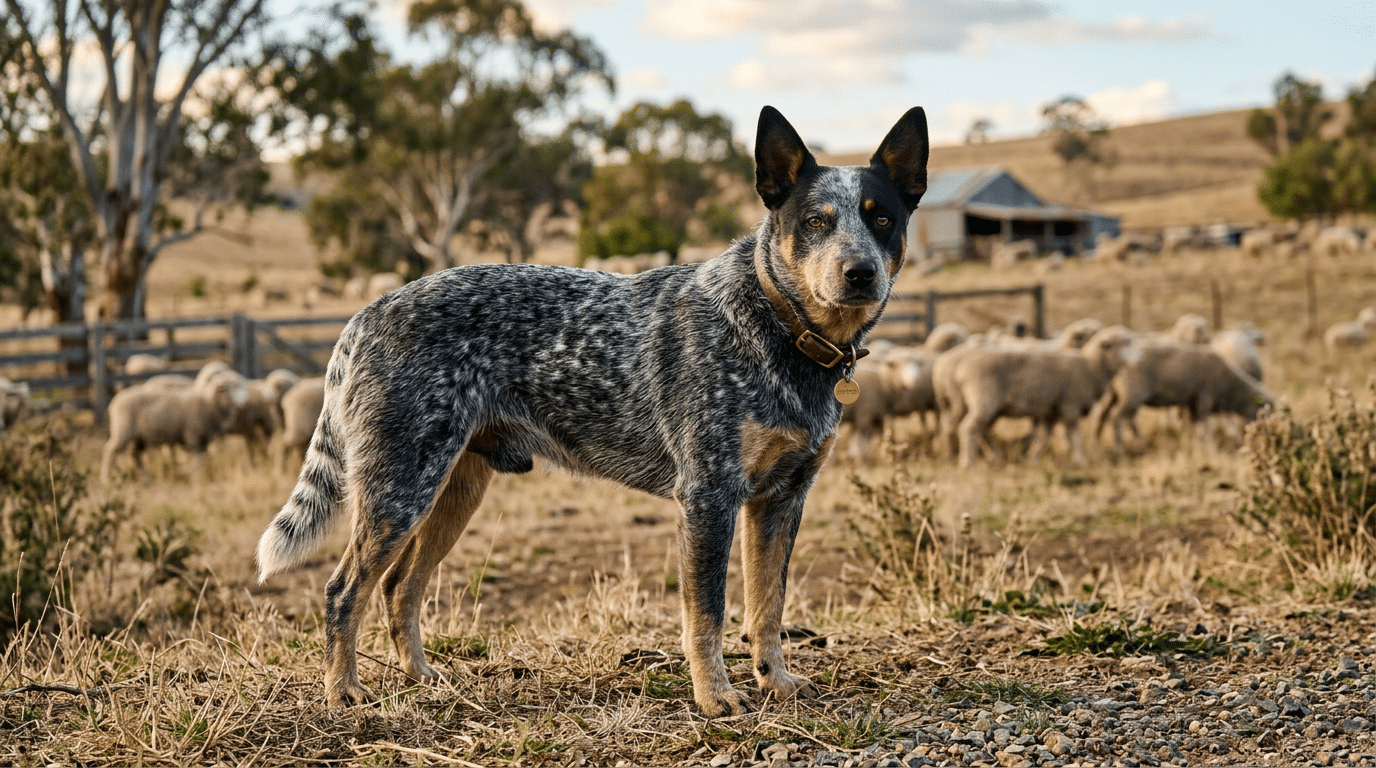
The Queensland Heeler is the big name on this list. If you’ve ever heard someone say “Blue Heeler” or “Red Heeler,” they’re talking about this breed. The AKC officially knows them as the Australian Cattle Dog, but the Queensland Heeler nickname is more common in actual ranch communities.
These dogs were developed in Australia in the 19th century by crossing British herding dogs with the native Dingo. The goal was a dog that could handle the brutal Australian Outback conditions while moving cattle across massive distances. They nailed it.
What they’re like: Extremely intelligent, intensely energetic, and deeply loyal to their person. They’re also stubborn in the best and worst ways. They’ll outsmart a fence, figure out your routine, and decide for themselves whether they feel like listening to you today.
Size: 35–50 pounds, 17–20 inches at the shoulder
Life expectancy: 12–16 years (one of the longest-lived medium-large breeds)
Energy level: Very high. This is not a 20-minute-walk breed. They need sustained exercise and a job to do.
Good fit for: Experienced owners, active households, anyone with a farm or large yard. They’ll run next to a horse, herd children, and probably reorder your kitchen cabinets if you give them an idle afternoon.
Not ideal for: Apartments, sedentary owners, homes with very small children (they have a nipping instinct from herding). If you’re looking for similar active breeds, check out our article on dog breeds similar to Border Collies.
The Blue Heeler has a salt-and-pepper blue or mottled coat. The Red Heeler is a brown-red speckle. Both are born white and develop their color over weeks. Their eyes are often intensely alert — there’s always something going on in there.
2. Quinta Portuguesa
The Quinta Portuguesa (“quinta” means farm or country estate in Portuguese) is a working farm dog from Portugal that never made it onto any AKC or FCI recognized breed list. They’re defined more by function than pedigree — medium-sized, multipurpose farm dogs bred for watchdog and herding duties on rural Portuguese properties.
Think of them like a regional landrace dog. Their look varies considerably depending on the region, but they’re typically medium-sized with short to medium coats, alert expression, and moderate build. They’re not one specific dog — they’re the result of centuries of practical breeding in Portugal’s agricultural interior.
What they’re like: Watchful, territorial, and independent. They take their guarding duties seriously and tend to be reserved with strangers.
Good fit for: Farm owners, rural properties, experienced working-dog handlers. They’re not aggressive without cause, but they’re not push-button easy either.
Availability: Extremely rare outside of Portugal. If you’re in North America and you meet one, ask your vet — and cherish the encounter.
3. Qinhuangdao Purebred (Qinhuangdao Dog)
The Qinhuangdao Purebred (named after the coastal city of Qinhuangdao in Hebei Province, China) is a large guardian breed developed in northeastern China. They’re not recognized by international kennel clubs but are considered a traditional working breed in the regions where they’ve been kept for generations.
These are big, powerful dogs with heavy bone structure and thick double coats suited for cold northern Chinese winters. Historically they were used to guard homes and farmsteads — a classic Molossoid-type guardian for a northern climate.
What they’re like: Calm and steady when raised well, but territorial and protective by instinct. Like most guardian breeds, they require early socialization and experienced ownership.
Size: Large — males can reach 80–100+ pounds
Energy level: Moderate. Guardian breeds tend to conserve energy and move when needed rather than running constantly.
Good fit for: Experienced owners who want a serious working guardian dog. Not a first-time dog breed.
4. Quanzhou Lion Dog
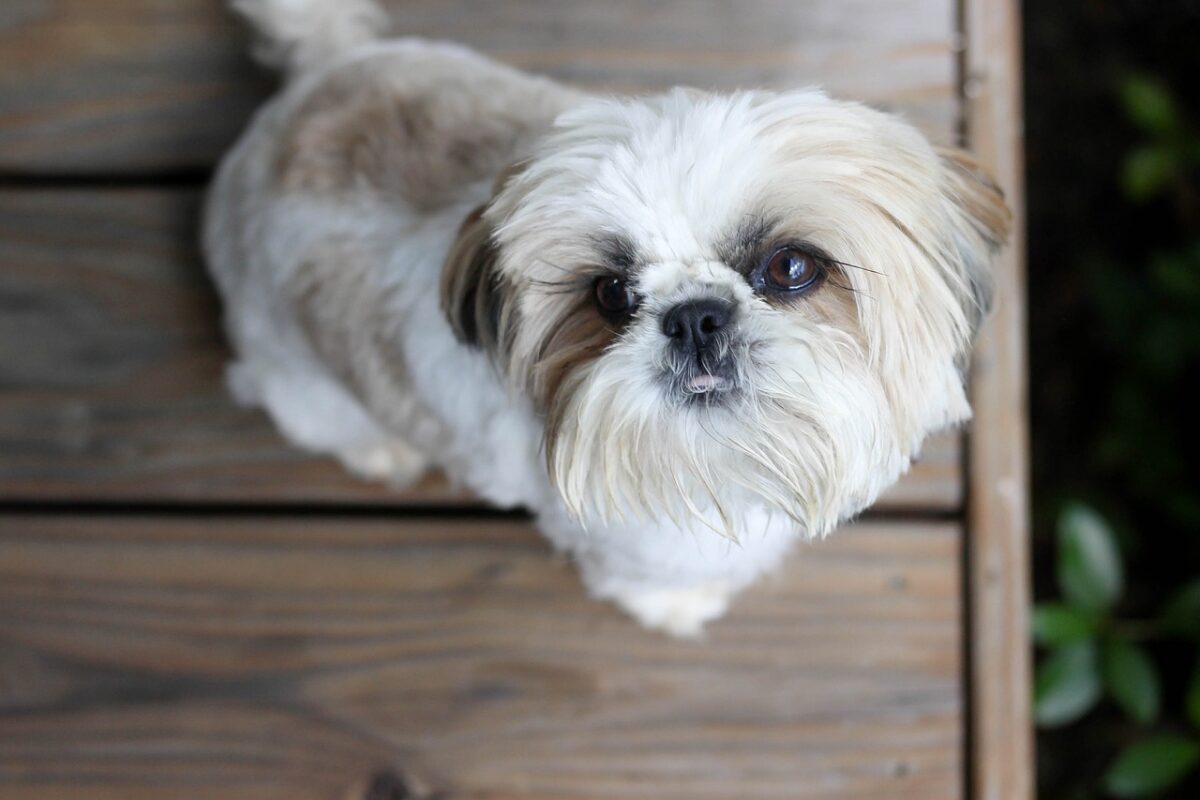
The Quanzhou Lion Dog comes from Quanzhou in Fujian Province, China. It’s an ancient companion breed with a history that may trace back centuries to the same root breeds as the Shih Tzu and the Pekingese. They share that small, slightly smooshed face and flowing coat characteristic of the old Chinese toy/companion breeds.
They were historically kept by Chinese nobility as companion animals — a similar role to the Pekingese at the Imperial Court. Today they’re extremely rare even within China, and finding one in North America or Europe is essentially impossible.
What they’re like: Gentle, calm, devoted to their family. They want to be with you. On your lap is preferable. On your feet is fine too. The floor in general is beneath them.
Size: Small — typically 10–20 pounds
Energy level: Low to moderate. Daily walks and indoor play cover their needs.
Good fit for: The historical record, mostly. These dogs are so rare that recommending one as a pet option is somewhat theoretical. If you love the personality type, the Shih Tzu or Pekingese will give you similar traits with actual availability.
5. Québécois Dog (Chien du Québec)
This one gets complicated. The Chien du Québec is not a single established breed but rather a name used to describe the general regional working dogs of Quebec, Canada — descendants of dogs brought by French colonists in the 17th century, mixed with local breeds and sled dogs over generations.
There have been efforts in Quebec to define and register a “Québécois Dog” as an official breed, similar to how other nations have formalized regional dogs. As of 2026, this hasn’t reached full international recognition, but the dogs themselves are real and have a distinctive working-dog character: sturdy, thick-coated, cold-hardy, and bred for northern conditions.
What they’re like: Hardworking, weather-resistant, social with familiar people. They have the independence typical of sled dog lineages but are more manageable than some Arctic breeds.
Size: Medium to large
Energy level: High — these are northern working dogs, not lap dogs
Good fit for: Active owners in cold climates. They’re happy outdoors in winter conditions that would make most dogs reconsider the whole enterprise.
6. Qashqai Sheepdog
The Qashqai Sheepdog is named after the Qashqai tribal people of Iran, who have used these dogs to guard and herd their sheep herds across the rugged Zagros Mountains. They’re a type of livestock guardian dog — big, brave, and deeply bonded to their flock.
These dogs are genetically ancient. They share ancestry with other Middle Eastern livestock guardians and likely predate most formal breed registries by centuries. They’re still actively working in Iran today, though they’re essentially unknown in Western countries.
What they’re like: Independent, calm under normal conditions, explosively protective when threats appear. Classic livestock guardian temperament — they don’t need you to tell them what to do.
Size: Large — males 80–120 pounds
Coat: Medium to long, weather-resistant, often cream or fawn
Energy level: Moderate but with intense bursts
Good fit for: Working situations with livestock. These are not pet dogs in the conventional sense — they’re working dogs that happen to live around people.
7. Quesal Dog (Huemul Dog / Andean Dog)
The Quesal or Andean Dog is another regional working landrace — this one from the Andean mountain regions of South America. These dogs have herded llamas, alpacas, and sheep in high-altitude conditions for generations. They’re not officially recognized by any major kennel club but are kept and valued in Andean communities in Peru, Bolivia, and Ecuador.
They tend to be medium-sized, agile, and extraordinarily cold-tolerant. Their appearance varies considerably but they often have thick coats and an alert, watchful expression.
Good fit for: Working farm settings in mountainous or cold environments. Like most landrace breeds, they’re deeply tied to their working context.
Bonus: Breeds Often Called Q Names
A few other dogs show up in Q-breed searches worth addressing honestly:
- Quail Dog — not a breed but a job description. Various pointing and flushing breeds are used for quail hunting, including the English Pointer, Brittany, and Boykin Spaniel. There’s no single breed called “the Quail Dog.”
- Quimby Terrier — fictional. It was invented as filler content on websites. It doesn’t exist.
- Quill Dog — also not a real breed. Another placeholder that circulates in low-quality breed list articles.
This matters because some readers are genuinely curious whether they can adopt a dog breed starting with Q. Fictional breeds waste their time. The real answer is: the Queensland Heeler is your only realistic option in North America, and it’s a fantastic dog for the right owner.
Finding Q Breed Articles for Other Letters
If you’re working through the alphabet, we’ve covered other letters too. Check out dog breeds that start with P, dog breeds that start with B, dog breeds that start with C, and dog breeds that start with S for more full lists. And if the Queensland Heeler caught your eye, our guide to breeds similar to Border Collies covers several high-drive herding breeds you might love.
Frequently Asked Questions About Dog Breeds That Start With Q
How many dog breeds start with the letter Q?
Realistically, 5-7 depending on how you count regional/landrace breeds versus formally recognized breeds. The only breed with widespread AKC recognition starting with Q is the Queensland Heeler (Australian Cattle Dog). Several other Q breeds exist as working or regional dogs but aren’t internationally recognized.
Is the Queensland Heeler the same as the Blue Heeler?
Yes. Blue Heeler, Red Heeler, Queensland Heeler, and Australian Cattle Dog all refer to the same breed. The AKC uses “Australian Cattle Dog” as the official name. Blue Heelers have a blue-gray mottled coat; Red Heelers have reddish-brown speckles. Both are born white.
Are there any small dog breeds starting with Q?
The Quanzhou Lion Dog is historically a small companion breed, but it’s extremely rare and not practically available. For a small dog with a Q connection, your best option is looking at breeds that share ancestral origins — the Shih Tzu or Pekingese offer similar personalities with far better availability.
Is the Quimby Terrier a real breed?
No. It was invented as placeholder content on AI-generated breed lists. There is no breed called the Quimby Terrier. Same goes for the “Quill Dog” — not real.
Do any Q dog breeds make good family pets?
The Queensland Heeler can be an excellent family dog for active families. They’re loyal, intelligent, and entertaining. That said, they have high energy demands and a herding instinct that can manifest as nipping at children’s heels. Early socialization and training matters a lot.
What is the rarest dog breed starting with Q?
Probably the Quanzhou Lion Dog — an ancient Chinese companion breed that’s essentially functionally extinct outside China and barely present within it. The Quinta Portuguesa and Qashqai Sheepdog are also quite rare outside their native regions.
Q Is for Quality Over Quantity
Look, Q is never going to beat B, D, or G in the dog breed alphabet race. That’s just math. But what the letter lacks in numbers it makes up for in interest. You’ve got one of the hardest-working, most intelligent medium-sized breeds in the world (the Queensland Heeler), a handful of ancient working breeds from cultures as far apart as Iran and Peru, and a pair of fictional breeds that prove the internet will invent dogs when real ones run out.
If you’re seriously interested in a breed starting with Q, the Queensland Heeler is the one answer that’s actually actionable. Do some homework on whether an intensely active herding dog fits your life. If it does, they’re rewarding in a way that few breeds match. If it doesn’t, the other Q breeds are wonderful to know about — and mostly impossible to find.









 English (US) ·