
 1 month ago
49
1 month ago
49
The English Bulldog looks tough. That wide, powerful jaw, the stocky build, the permanent scowl — it all reads “serious dog.” But ask anyone who actually owns one, and the picture changes fast. Bulldogs are affectionate, goofy, and surprisingly gentle with their families. So what’s the actual English Bulldog bite force in PSI, and how does it match up with their reputation? Let’s get into the real numbers and what they actually mean.
English Bulldog Bite Force: The PSI Number
Bite force is measured in pounds per square inch (PSI), tracking how much jaw pressure a dog can apply. English Bulldogs land around 305 PSI — a number that places them significantly above average and above many much larger dogs. For context, humans bite at 120-140 PSI. German Shepherds, trained for police work, bite at around 238 PSI. An English Bulldog at 305 PSI is biting harder than a German Shepherd. Not what most people expect from a dog that spends most of its day napping.
English Bulldog Bite Force vs. Other Breeds
| Kangal | 743 PSI |
| Mastiff | 556 PSI |
| Rottweiler | 328 PSI |
| English Bulldog | 305 PSI |
| German Shepherd | 238 PSI |
| Rhodesian Ridgeback | 224 PSI |
| Labrador Retriever | 230 PSI |
| Dachshund | ~100 PSI |
| Human | 120-140 PSI |
The Bulldog’s PSI is a surprise to most people. Their stocky, wide jaw structure concentrates jaw pressure in a way that thin-snouted breeds can’t match. And because Bulldogs were historically bred to latch and hold — not just snap — they can maintain grip under pressure in a way that many other breeds can’t.
Why the English Bulldog Jaw Is Built Different
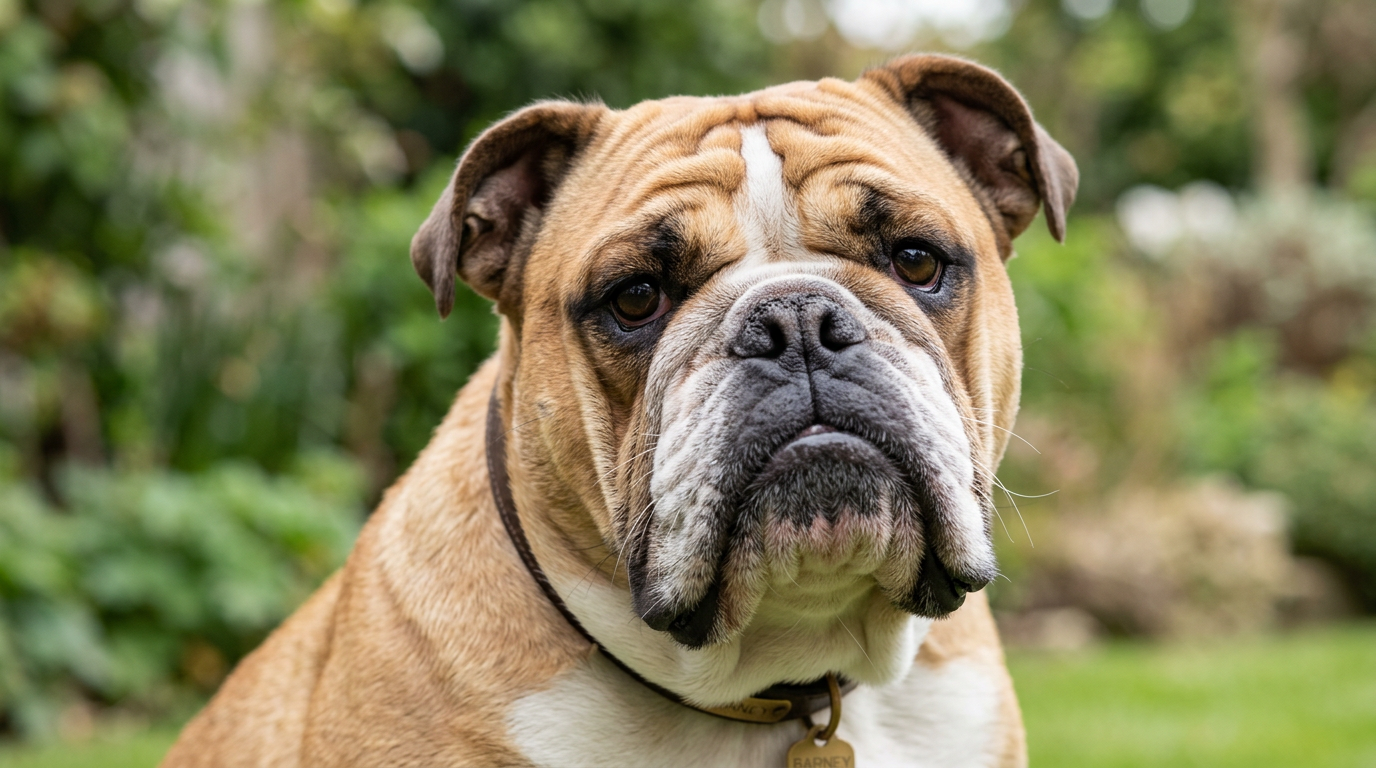
The Bulldog’s anatomy explains everything. Their skull is wide and the jaw is undershot, meaning the lower jaw protrudes slightly beyond the upper. This isn’t a defect — it was a design choice. Bull-baiting, the sport these dogs were bred for, required a dog that could latch onto the nose of a bull without being thrown. A wide underbite lets the dog breathe through its nose while biting. It also distributes jaw force across a wider surface area, generating more crushing power.
The same anatomy that made them effective bull-baiters now makes them snore, overheat easily, and struggle in humid weather. The trade-off between form and function is real. But it also explains why even a gentle play bite from a Bulldog feels firmer and more persistent than a bite from another dog of similar size.
Does an English Bulldog Bite Hurt?
Short answer: yes, it can.
A play bite from a well-socialized Bulldog is usually softer than the PSI number suggests — they have good bite inhibition when trained. But a bite with intent? At 305 PSI, that’s a serious injury waiting to happen. The Bulldog’s grip doesn’t release easily. Their wide jaw creates broad, crushing pressure rather than the narrow puncture wounds of a Dachshund or terrier.
The good news is that Bulldogs almost never bite with intent. They’re not reactive dogs. They’re not fear-biters by nature. The circumstances where a Bulldog bites hard are relatively rare and usually involve pain, resource guarding, or severe provocation. Understanding those triggers lets you prevent most incidents before they happen.
Bulldog Temperament: Where the Bite Risk Actually Comes From
The English Bulldog’s temperament is one of the most misunderstood in the dog world. People see the jaw size and the bull-baiting history and assume “dangerous.” The reality is almost the opposite. Bulldogs are patient, low-energy, and deeply attached to their families. They’re rated among the best dogs for first-time owners and families with children.
That said, bite risk comes from a few specific places:
Resource Guarding
Some Bulldogs are possessive of food, toys, or sleeping spots. A dog that growls when you approach their bowl is showing early resource guarding behavior. This needs to be addressed with training — don’t assume it’ll fade on its own. It usually escalates without intervention.
Pain
Bulldogs have a lot of health issues: hip dysplasia, cherry eye, skin fold infections, breathing difficulties, and more. A dog in chronic pain can become irritable and bite when touched in sensitive areas. If your normally gentle Bulldog suddenly starts snapping, rule out pain before assuming a behavior problem.
Fear
Even confident breeds can bite from fear. Bulldogs that weren’t well-socialized as puppies may bite in unfamiliar situations. Exposure to diverse environments, people, and other animals during the 8-14 week socialization window makes a massive difference in how a Bulldog handles the unexpected. Read more about how to properly socialize your dog.
Teething and Puppy Play
Bulldog puppies are mouthy. Their teeth come in between 3-6 months old, and they explore everything with their mouths during this time. This is normal, but it needs to be redirected — especially given how strong their jaw will become.
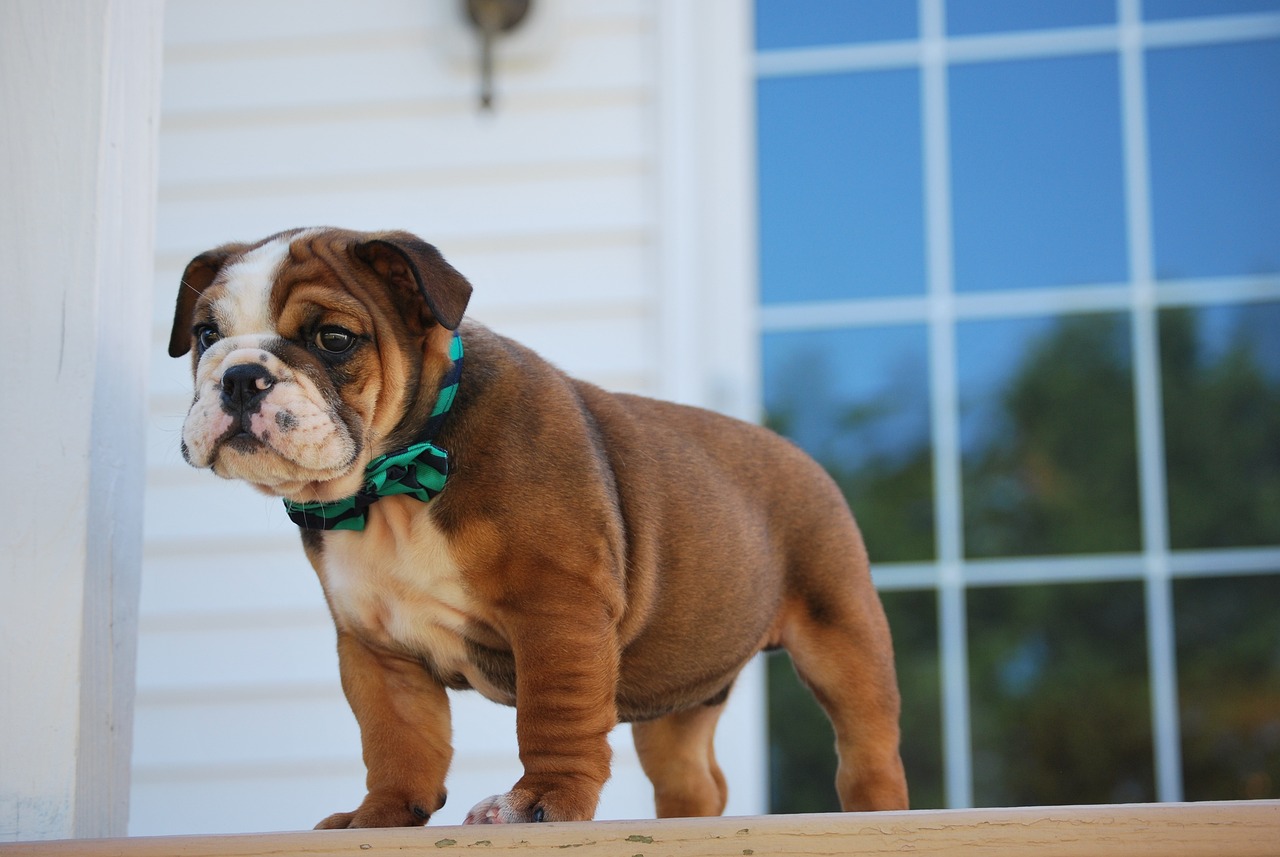
Bite Inhibition Training for English Bulldogs
Given the Bulldog’s jaw strength, bite inhibition training is important — not because they’re aggressive, but because a Bulldog that doesn’t know its own strength can hurt people accidentally.
Here’s what works:
- Start the day you bring them home. Puppies as young as 8 weeks can start learning that hard bites end playtime.
- The yelp method: When your puppy bites too hard, say “ouch!” sharply and stop play immediately. Don’t scold — just withdraw. Wait 30-60 seconds, then resume.
- Consistent redirection: Keep chew toys everywhere. The moment your puppy goes for your hand, put a toy in their mouth. Don’t use hands as toys, ever.
- No roughhousing: Bulldogs love to roughhouse. But wrestling with your hands teaches them that hands are fair game. Use toys for all tug-of-war and rough play.
- Reward gentleness specifically: When your Bulldog takes something from your hand gently, or mouths without pressure, praise and treat. Make “soft mouth” the rewarded behavior.
- Enroll in puppy class: The structured training environment of a puppy obedience class builds impulse control and social skills simultaneously. Both matter for a Bulldog.
For adult Bulldogs that have developed biting habits, it takes longer, but the same principles apply. Add patience and possibly a consultation with a certified trainer. Don’t give up — Bulldogs are trainable, especially with positive reinforcement.
English Bulldogs vs. Other Strong-Bite Breeds
At 305 PSI, the English Bulldog is close to the Rottweiler’s bite force at 328 PSI. Both dogs have higher PSI than the German Shepherd at 238 PSI. And compare both to the Dachshund’s 100 PSI — which bites more frequently despite the lower force. This pattern repeats across dog breeds: bite force and bite likelihood are independent variables. The Bulldog’s high PSI is a historical artifact, not a personality trait.
Are English Bulldogs Good Family Dogs Despite Their Bite Force?
Absolutely. The English Bulldog is consistently ranked among the top family dogs. They’re patient with children, tolerant of noise and chaos, and genuinely enjoy the company of people. Their moderate energy level means they’re not knocking kids over with excitement, and their loyal temperament means they form strong bonds with the whole family.
The bite force is a number. The personality is what you actually live with. And the English Bulldog’s personality is one of the most family-friendly in the dog world. The key is good early training, proper socialization, and regular vet care to catch pain-related behavior changes early.
What to Do If an English Bulldog Bites You
If a Bulldog bites hard enough to break skin:
- Wash the wound immediately with soap and water for at least 5 minutes
- Apply antibiotic ointment and a clean bandage
- See a doctor — Bulldog bites can go deep due to the crushing mechanism, and infection risk is real
- Note whether the dog’s vaccinations are current, especially rabies
- Follow up on dog bite prevention — see these guidelines for reporting requirements in your area
Frequently Asked Questions About English Bulldog Bite Force
What is the English Bulldog bite force in PSI?
About 305 PSI. This is higher than many larger breeds, driven by their wide, powerful underbite jaw that was purpose-built for bull-baiting. Despite this, English Bulldogs are not considered aggressive biters.
Does an English Bulldog bite hurt?
Yes, a deliberate bite at 305 PSI causes real pain and can break skin, bruise deeply, and leave lasting injury. Play bites from a trained Bulldog are softer, but always take bite prevention seriously given their jaw strength.
Are English Bulldogs aggressive?
Not typically. They’re one of the more docile breeds despite their intimidating jaw. Proper training, socialization, and vet care keeps most Bulldogs gentle throughout their lives. Aggression in Bulldogs usually has a cause — pain, fear, or guarding behavior — rather than being random.
Why does my English Bulldog keep biting or nipping?
In puppies, it’s almost always teething and play behavior. In adults, biting usually comes from resource guarding, pain, or inadequate socialization. A sudden change in biting behavior in an adult Bulldog is a vet visit, not just a training problem.
How do I stop my Bulldog puppy from biting?
Yelp-and-withdraw, redirect to toys, stop roughhousing with hands, enroll in puppy class. Consistency over several weeks builds the habit. Start at 8 weeks — don’t wait until it becomes a problem.
Are English Bulldogs good with children?
Yes — one of the best choices for families with young children. Patient, sturdy, gentle, and tolerant. Supervise all interactions and teach children to respect the dog’s food and sleep space.
The Jaw Says One Thing, the Dog Says Another
305 PSI is a number worth knowing if you own or are considering an English Bulldog. It tells you to take bite inhibition training seriously, to never roughhouse with hands, and to respect the dog’s physical capability.
What it doesn’t tell you is that you’re getting a naturally aggressive dog. You’re not. English Bulldogs are couch companions who want to be near their people, not trouble-seekers. The gap between their jaw strength and their typical personality is one of the most surprising things about this breed — and one of the best. Train them early, keep them healthy, and a Bulldog will be one of the gentlest, most devoted dogs you’ve ever known.










 English (US) ·