
 1 month ago
45
1 month ago
45
If you love German Shepherds but you’re exploring your options, you’re not alone. Maybe you want a slightly calmer temperament, a different coat, or a breed that’s just a little easier to find. Whatever your reason, there are some truly excellent alternatives out there. We’ve rounded up the 10 best dog breeds similar to German Shepherds in 2026 and ranked them by what matters most: loyalty, intelligence, and real-world working ability.
Each breed on this list shares the core qualities that make German Shepherds so beloved. They’re smart, trainable, and deeply bonded to their people. But each one brings something a little different to the table too.
Quick Breed Comparison: German Shepherd Alternatives
| Belgian Malinois | ★★★★★ | ★★★★★ | ★★★★★ | Very High |
| Dutch Shepherd | ★★★★★ | ★★★★★ | ★★★★★ | Very High |
| Belgian Tervuren | ★★★★★ | ★★★★★ | ★★★★☆ | High |
| Australian Shepherd | ★★★★★ | ★★★★★ | ★★★★☆ | Very High |
| Collie | ★★★★★ | ★★★★☆ | ★★★☆☆ | Moderate |
| Shetland Sheepdog | ★★★★★ | ★★★★★ | ★★★☆☆ | Moderate-High |
| Doberman Pinscher | ★★★★★ | ★★★★★ | ★★★★☆ | High |
| Siberian Husky | ★★★★☆ | ★★★★☆ | ★★★★☆ | Very High |
| Akita | ★★★★★ | ★★★★☆ | ★★★☆☆ | Moderate |
| Alaskan Malamute | ★★★★☆ | ★★★☆☆ | ★★★★☆ | High |
10 Dog Breeds Similar to German Shepherds (2026): Ranked by Loyalty, Intelligence & Working Ability
1. Belgian Malinois
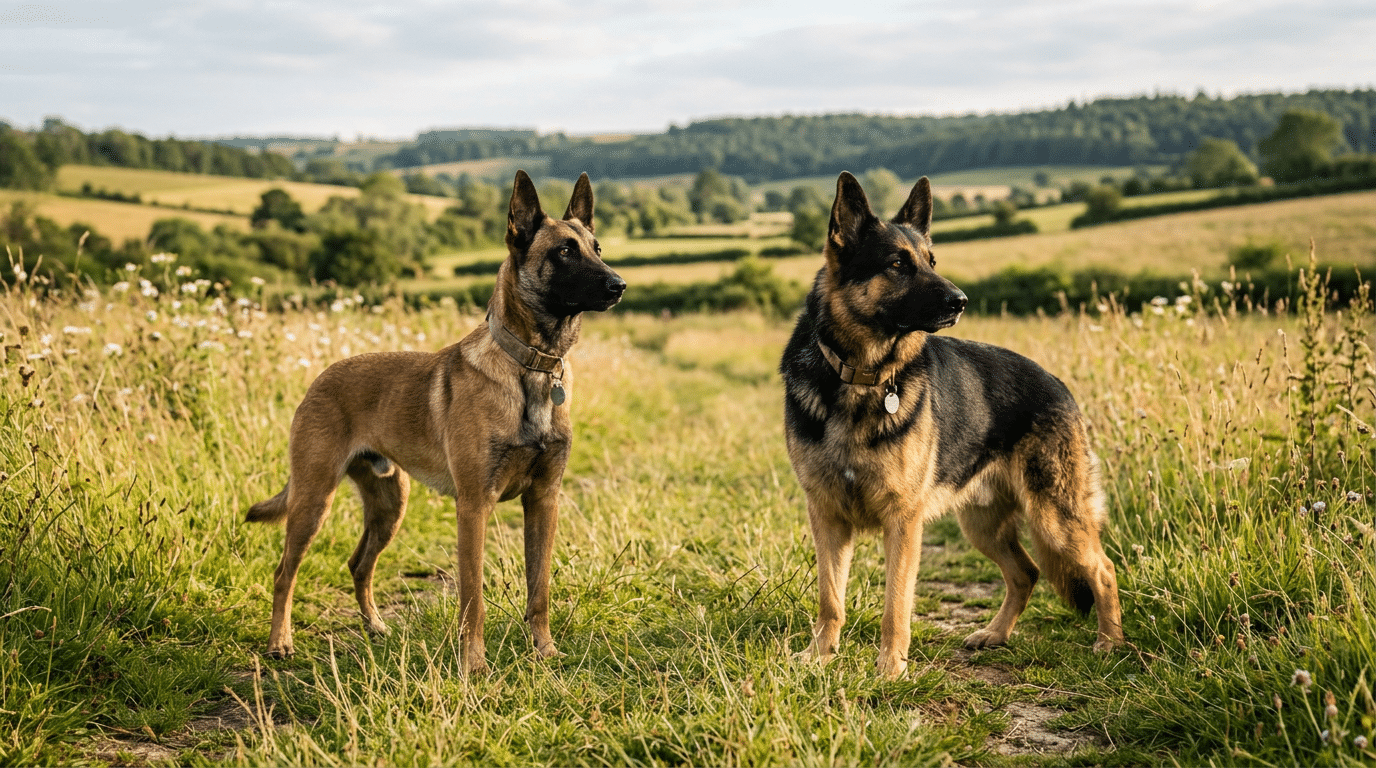
If you’ve seen videos of military or police dogs in action, there’s a good chance it was a Belgian Malinois, not a German Shepherd. People mix them up constantly. The Malinois is leaner, faster, and even more intense than a GSD, but the structural similarities are striking: erect ears, a confident stance, a double coat, and that serious working-dog gaze.
Malinois are ranked #1 on this list because they match or exceed the German Shepherd on every performance metric. Law enforcement agencies worldwide have shifted heavily toward Mals because they’re lighter on their feet and have extraordinary endurance. They can learn a new command in 5 repetitions or fewer.
That said, they’re not for everyone. A Malinois needs 2+ hours of vigorous exercise daily, consistent mental challenges, and an owner who knows what they’re doing. If you leave one bored at home, it’ll redecorate your house. Fast. But in the right hands? There’s no more capable dog.
Best for: Experienced active owners, police/military handlers, sport dog competitors (Schutzhund, agility, bitework).
2. Dutch Shepherd
The Dutch Shepherd is one of the most underrated dogs on this entire list. It’s less famous than the Malinois, but it shares nearly the same working ability, loyalty, and drive. The main visual difference is the brindle coat, which gives Dutch Shepherds a striking, almost tiger-striped look.
Dutch Shepherds have been used as herders, police dogs, search-and-rescue workers, and personal protection dogs for over a century. They’re highly adaptable and tend to be slightly calmer off-duty than a Malinois, which makes them a great fit for working families who want a serious dog that can also relax on the couch at the end of the day.
Want to see what goes into raising one? Check out this complete Dutch Shepherd puppy shopping checklist before you bring one home.
Best for: Active families, working dog enthusiasts, owners who want Malinois-level ability with a touch more chill.
3. Belgian Tervuren
The Belgian Tervuren is essentially the long-coated, more elegant sibling of the Malinois. Same family, same intelligence, same loyalty. But the Tervuren has a flowing mahogany-and-black coat that makes it one of the most beautiful herding breeds around.
They excel in obedience, agility, herding trials, and protection sports. Unlike the raw intensity of a Malinois, Tervurens tend to be a bit more approachable and easier to integrate into family life, especially if socialized young. They form deep bonds with their people and can be somewhat reserved around strangers, much like a German Shepherd.
They need a solid 60-90 minutes of exercise daily. Skip that, and you’ll hear about it.
Best for: Families who want a smart, loyal working-type dog with an elegant appearance and manageable (not explosive) energy.
4. Australian Shepherd
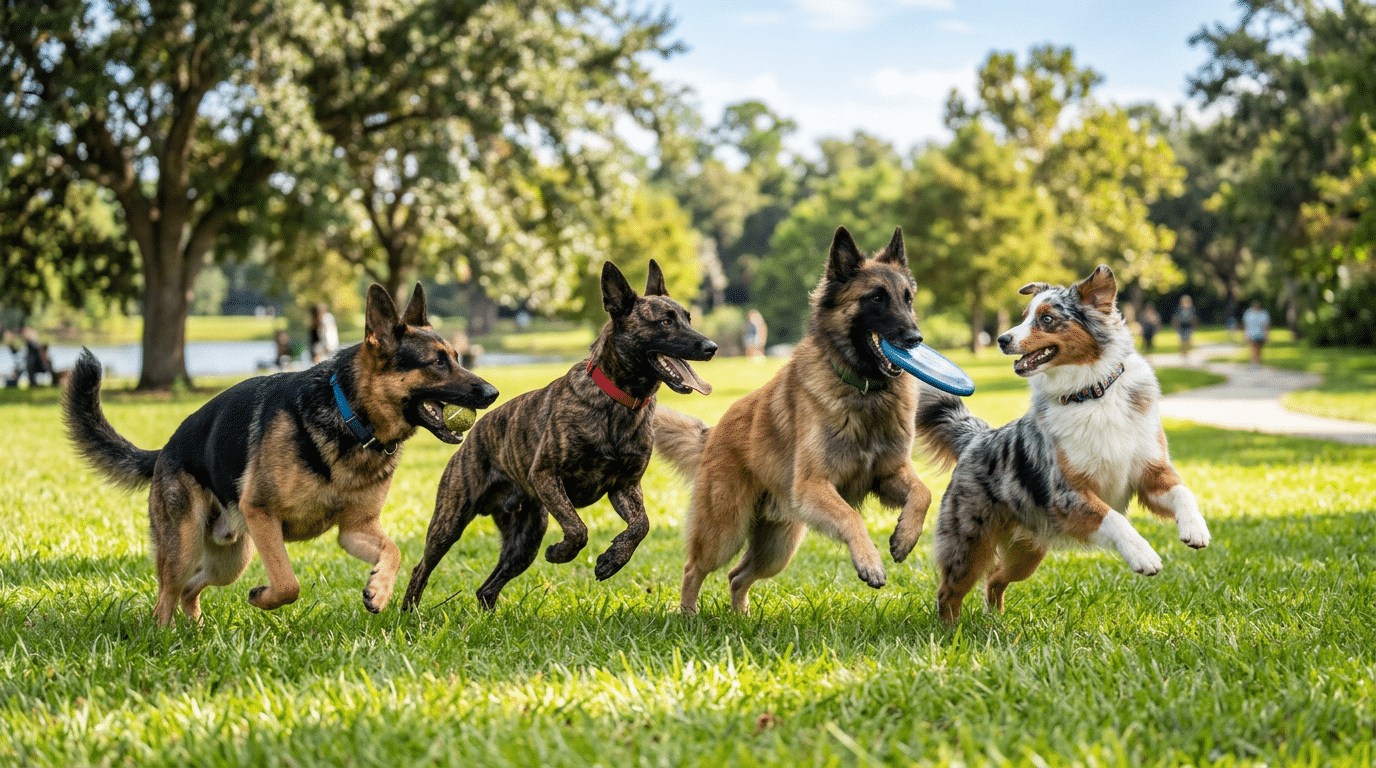
Don’t let the cheerful, merle-coated exterior fool you. The Australian Shepherd is a relentless herding machine with one of the sharpest minds in the dog world. Aussies rank among the top 5 most trainable breeds, and they thrive in environments where they have a job to do.
They share the German Shepherd’s intensity, protectiveness, and velcro-dog tendencies. They want to be wherever you are. Aussies are also a bit more playful and clownish than GSDs, which makes them popular with active families who want a dog that’s as fun as it is smart.
Love the striking coat patterns? You’ll definitely want to explore our full guide to merle dog breeds and their coat colors.
Best for: Active families, hikers, agility competitors, and anyone who wants a German Shepherd’s brains in a slightly smaller, fluffier package.
5. Collie (Rough & Smooth)
Most people picture Lassie when they hear “Collie,” and that image is pretty accurate. Collies are gentle, deeply loyal, and surprisingly intelligent dogs. They don’t carry the Malinois-level intensity, but they’re responsive, easy to train, and fantastic with kids.
What Collies share with German Shepherds: fierce devotion to family, a natural herding instinct, and an alert, responsive temperament. They’re also excellent watchdogs even though they’re not guard dogs. A Collie will absolutely let you know when something’s off.
The Rough Collie has that famous flowing coat. The Smooth Collie is the same dog with a short, dense coat and is often easier to groom. Both are solid choices if you love the German Shepherd’s loyalty and intelligence but prefer a calmer, softer temperament overall.
Best for: Families with kids, first-time owners who want a smart but not overwhelming dog, those who prefer a gentler personality.
6. Shetland Sheepdog (Sheltie)
Think of the Shetland Sheepdog as a German Shepherd that got scaled down to apartment-friendly size. Shelties consistently rank in the top 6 most intelligent dog breeds in the world. They’re fast learners, incredibly loyal, and deeply attached to their families.
They look like a miniature Rough Collie, not a miniature GSD, but the personality overlap with German Shepherds is real. Both breeds are responsive, watchful, and prone to being a little suspicious of strangers until they’ve made up their minds about you. Both are also known for vocalizing. Your neighbors will know when the Sheltie has an opinion.
At 15-25 pounds, a Sheltie works well in smaller spaces where a full-sized GSD wouldn’t be practical. But don’t underestimate the energy level. They still need daily exercise and mental engagement.
Best for: Apartment dwellers, families with limited space, anyone who wants GSD-level intelligence in a compact, manageable dog.
7. Doberman Pinscher
The Doberman is one of the most loyal dogs alive. Full stop. They’re famous for their protectiveness, but what’s less well-known is just how affectionate and people-focused Dobermans actually are. They don’t do well when left alone for long periods because they genuinely need human connection.
Like German Shepherds, Dobermans are serious working dogs with strong protective instincts and exceptional trainability. They’ve served in police, military, and personal protection roles for decades. They’re also sleeker and more aerodynamic than GSDs, built for speed rather than endurance.
If you’re looking at other protective, powerful breeds, you might also enjoy this comparison of dog breeds similar to Rottweilers, another classic working dog group.
Best for: Experienced owners who want a devoted, protective companion with high trainability and an athletic build.
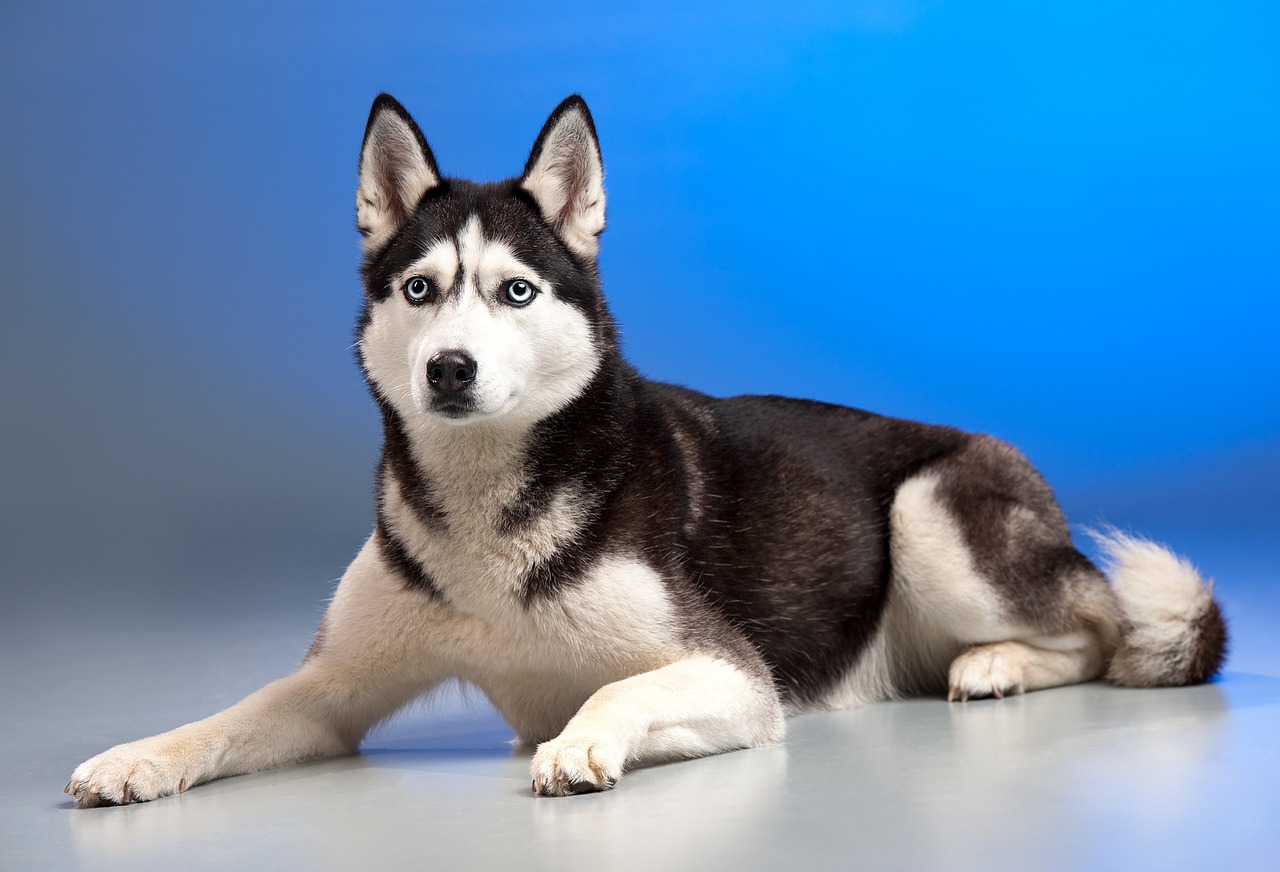
8. Siberian Husky
Here’s where things get a little different. The Siberian Husky shares the German Shepherd’s athleticism, energy, and striking appearance, but the personality is quite different in key ways.
Huskies are pack-oriented, friendly to a fault (they’d probably give a burglar a tour of your house), and notoriously independent. Training them requires patience because they were bred to make their own decisions while pulling sleds in the Arctic. They don’t take commands as readily as a GSD does.
That said, Huskies are deeply social, loyal to their families, and endlessly entertaining. If you’ve ever tried to drag a Husky inside during a snowstorm, you already know what you’re dealing with. Check out our guide to German Shepherd Husky mixes (Gerberian Shepsky) to see what happens when these two breeds combine.
Best for: Active owners who can handle an independent streak, cold climates, multi-dog households where pack energy is welcome.
9. Akita
The Akita is a quietly powerful dog with enormous loyalty and dignity. They don’t wear their emotions on their sleeve the way a Labrador does, but make no mistake: Akitas form some of the deepest bonds in the dog world. The story of Hachiko, the Akita who waited for his owner at a train station for 9 years, is famous for a reason.
Akitas are bigger than German Shepherds and considerably more independent. They can be reserved or even dominant with other dogs, so socialization matters a lot. With their family, though, they’re fiercely devoted and surprisingly gentle.
They don’t require Malinois-level exercise. A couple of solid walks daily and some yard time keeps them happy. But they do need an experienced owner who can provide calm, consistent leadership.
Best for: Experienced owners who want a devoted, dignified guardian and don’t need a “working dog” intensity level.
10. Alaskan Malamute
The Alaskan Malamute shares the German Shepherd’s impressive size, thick double coat, and wolf-like appearance. They were built for serious work too, specifically pulling heavy freight across long distances in Arctic conditions.
Malamutes are affectionate, loyal, and great with families. The big difference is that they’re not as trainable as a GSD. They’re strong-willed and easily bored by repetitive obedience work. Think of them as the laid-back laborer to the German Shepherd’s eager-to-please overachiever.
They’re also heavily social. A lonely Malamute is a destructive Malamute. They need company, exercise, and mental stimulation to stay out of trouble. If you’re interested in which dogs are most likely to end up in shelters due to mismatched owner expectations, this list of most abandoned dog breeds in the US is a sobering read.
Best for: Cold climate owners, families who want a powerful, affectionate dog that’s more companion than performance athlete.
Which German Shepherd Alternative Is Right for You?
| High-energy, experienced handler | Belgian Malinois or Dutch Shepherd | Matches the drive; rewards serious training |
| Active family with kids | Australian Shepherd or Collie | Loyal, smart, and kid-friendly |
| Small home or apartment | Shetland Sheepdog | GSD-level smarts in a compact size |
| Want a guardian/protector | Doberman Pinscher or Akita | Loyal, alert, and protective without GSD intensity |
| Cold climate + outdoor adventurer | Siberian Husky or Alaskan Malamute | Built for outdoor endurance in harsh weather |
| First-time owner who wants smart but manageable | Collie or Belgian Tervuren | Responsive, trainable, not overwhelming |
What Makes a German Shepherd a German Shepherd?
Before picking an alternative, it helps to know exactly what you’re trying to replicate. German Shepherds aren’t just one thing. They’re a package deal: herding instinct, working-dog drive, protective loyalty, high intelligence, and a strong need for both physical and mental engagement.
GSDs were developed in late 19th-century Germany by Captain Max von Stephanitz, who wanted to create the perfect all-purpose working dog. He succeeded. German Shepherds went on to serve in two World Wars, become the backbone of police K-9 programs worldwide, and land starring roles as service and therapy dogs.
Physically, they’re large and athletic, typically 50-90 pounds, with a powerful build, erect ears, and a dense double coat that sheds constantly. (If you have a GSD, you already know about the fur.) They live 7-10 years on average and do have some hereditary health concerns, particularly hip and elbow dysplasia. Feeding them right matters more than people realize. Our guide to the best dog foods for German Shepherds with no fillers covers this in depth.
What All These Breeds Have in Common
Every dog on this list shares a few traits with German Shepherds: they’re intelligent (and let you know it), they need regular exercise, and they form strong bonds with their people. None of them are low-maintenance breeds. These are dogs that need engagement.
If you’re comparing this group to other herding and protection breeds, our guide to breeds similar to Border Collies covers some overlapping territory, especially in the herding and intelligence department. And for dogs that look tough but have a softer side at home, check out this piece on dog breeds with soft temperaments and tough exteriors.
Bottom line: the right alternative to a German Shepherd depends on what specific quality you’re drawn to. Want the raw working performance? Go with the Belgian Malinois or Dutch Shepherd. Want the loyal family dog without the intensity? The Collie or Aussie fits better. Want something compact? The Sheltie delivers.
Frequently Asked Questions: Dog Breeds Similar to German Shepherds
What dog is most similar to a German Shepherd?
The Belgian Malinois is the most similar to a German Shepherd in terms of intelligence, working ability, and drive. They’re often confused for each other at a distance. The Malinois is leaner and more intense, but if you want a GSD-level working dog, the Mal is the closest match.
What dog looks like a German Shepherd but isn’t one?
The Belgian Malinois, Belgian Tervuren, and Dutch Shepherd all resemble German Shepherds closely. The Malinois has a lighter, more athletic frame. The Tervuren has a longer, more luxurious coat. The Dutch Shepherd has a distinctive brindle coat pattern.
What breed is calmer than a German Shepherd but just as loyal?
The Collie and the Akita are both deeply loyal breeds with calmer overall temperaments than a GSD. Collies are gentler and more family-friendly. Akitas are more reserved but form incredibly deep bonds with their people.
Are Belgian Malinois harder to train than German Shepherds?
Not harder, but different. Both breeds are highly trainable. A Malinois has more raw drive, which is an advantage in performance work but can be challenging for inexperienced owners. A German Shepherd tends to be slightly more forgiving and patient in training. For first-time owners, the GSD is usually the better starting point.
Which German Shepherd alternative is best for families with kids?
The Australian Shepherd and the Collie are the most family-friendly options on this list. Both are loyal, playful, and great with children. The Sheltie is a good pick if you have limited space. The Belgian Malinois and Dutch Shepherd are generally better suited for experienced handlers rather than households with young kids.
Do any of these breeds shed as much as a German Shepherd?
Yes, several do. The Alaskan Malamute and Siberian Husky are heavy shedders, especially during seasonal blowouts. The Belgian Tervuren and Rough Collie also shed significantly. The Doberman and Dutch Shepherd (short coat variety) shed considerably less.
Finding the Right German Shepherd Alternative for Your Life
There’s no single right answer here. The best breed for you depends on your experience level, your living situation, and what you actually want from a dog.
Want a dog that performs at the highest level? The Belgian Malinois and Dutch Shepherd will challenge and reward you like almost nothing else in the dog world. Want something devoted and smart but a bit calmer? The Belgian Tervuren, Collie, or Shetland Sheepdog might be your sweet spot. Looking for a guardian with a quieter presence? The Akita is worth serious consideration.
Whatever you choose, do the research before you bring one home. Every breed on this list has specific exercise, training, and socialization needs. Meeting those needs is the difference between a great dog experience and a frustrating one.
All 10 of these breeds share one thing with German Shepherds that matters more than anything else: they want to be your dog. They’re loyal, engaged, and ready to work alongside you. Give them what they need, and they’ll give you everything they’ve got.







 English (US) ·