
 1 month ago
40
1 month ago
40
If your dog is dealing with a nagging injury, stiff joints, or the slow grind of aging, you’ve probably done some late-night research. TB-500 keeps coming up. And for good reason. It’s not the next supplement fad sitting on a pet store shelf. It’s a synthetic peptide that mimics part of a protein your dog’s body already makes, and it’s getting serious attention from holistic vets and dog owners who’ve tried everything else.
This guide breaks down what TB-500 actually is, how it works in dogs, what conditions it may help with, and what you need to know before trying it. No hype, no vague promises. Just the real picture of where the research stands and what owners report on the ground.
If you want the broader context first, check out this complete guide to peptides for dogs covering the whole landscape of regenerative peptide therapy in canine health.
What Is TB-500 for Dogs?
TB-500 is a synthetic version of the active region of thymosin beta-4, a protein found in nearly every cell in the mammalian body. Your dog already produces thymosin beta-4 naturally. TB-500 isolates the part of that protein responsible for repair and regeneration, concentrating those effects for therapeutic use.
Thymosin beta-4 plays a role in cell migration, blood vessel formation, wound healing, and inflammation control. When tissue gets damaged, it’s part of what coordinates the body’s response. TB-500 is designed to amplify that process, directing repair cells to injured areas and creating conditions where tissue can regenerate more efficiently.
It’s been studied in horses, rodents, and humans, with promising results in wound closure, tendon repair, and cardiac tissue recovery. Veterinary research specifically in dogs is still early, but the underlying biology carries over. Dogs have the same thymosin beta-4 system, and what works for equine ligament injuries tends to show up in canine protocols too.
TB-500 isn’t FDA-approved for veterinary use. It’s sold as a research compound, and that matters for how you source it. But it’s actively used in integrative veterinary practice, and more holistic vets are including it in recovery protocols for dogs who’ve hit a wall with conventional treatments.
How Does TB-500 Work in a Dog’s Body?

The core mechanism of TB-500 is tissue regeneration through three pathways: angiogenesis (forming new blood vessels), cell migration (moving repair cells to the injury site), and anti-inflammatory action. Together, these create a better environment for the body to actually fix damaged tissue rather than just patch it.
Think of a ligament tear in a 7-year-old Labrador. The body sends signals to heal it. Blood flow increases, fibroblasts migrate in, collagen gets laid down. But that process is slow, incomplete, and often produces scar tissue instead of healthy connective tissue. TB-500 may speed up and improve that process. It helps more repair cells get to the right place, faster, with better blood supply to support them.
This is different from how NSAIDs or steroids work. Those suppress symptoms. They cut inflammation, which reduces pain, but they don’t help the tissue heal better or faster. TB-500 works upstream on the actual repair process. That’s why it gets attention for recovery use, not just pain management.
It also crosses the blood-brain barrier, which has some researchers interested in its potential effects on nerve tissue and spinal injuries. That’s an area where the research is thinner, but early animal studies show some nerve regeneration activity, which matters for dogs recovering from IVDD or spinal trauma.
TB-500 Quick Reference: What You Need to Know
| What it is | Synthetic peptide derived from thymosin beta-4 |
| Primary effects | Tissue repair, angiogenesis, anti-inflammation |
| Administration | Subcutaneous injection (under skin) |
| FDA status | Not approved for veterinary use; used as research compound |
| Research base | Studied in horses, rodents, humans; canine studies emerging |
| Typical cycle | 4-6 weeks loading, then maintenance as needed |
| Caution | Avoid in dogs with active cancer |
| Works best with | Vet supervision, physical therapy, proper sourcing |
What Conditions Might TB-500 Help in Dogs?
Based on current research and clinical use, TB-500 is being explored for several common issues in dogs. Here’s a breakdown of where it’s showing the most potential.
Cruciate Ligament Tears and Joint Injuries
Cruciate tears are one of the most common serious orthopedic injuries in dogs, especially in large breeds like Labs, Goldens, and Rottweilers. Surgery is often recommended, but recovery is slow and painful. TB-500 is being used in some post-surgical protocols to help tissue heal faster and more completely. Some vets also try it in cases where surgery isn’t an option, to see if conservative management plus peptide therapy can maintain or improve function.
Arthritis and Degenerative Joint Disease
TB-500 won’t cure arthritis. But it may slow the inflammatory cycle and support some degree of cartilage and synovial tissue repair. Owners with arthritic dogs often report improved mobility and less stiffness after a loading phase, though results vary a lot. It tends to work better as part of a larger plan that includes quality joint supplements for dogs, low-impact exercise, and vet guidance.
Hip Dysplasia
TB-500 can’t fix malformed hip joints structurally. But it can help reduce the soft tissue inflammation that makes hip dysplasia so painful day to day. Dogs with hip dysplasia often experience significant soft tissue strain around the joint, and that’s where TB-500 may help. Some owners report their dogs moving more freely after a course of treatment, even without changes to the joint itself.
Spinal Injuries and IVDD
Intervertebral disc disease is brutal. Dogs with IVDD can lose function fast, and recovery even after surgery can be incomplete. TB-500’s potential nerve-regenerative effects make it interesting for spinal cases, though the evidence here is less developed. A few integrative vets include it in IVDD recovery plans alongside laser therapy and hydrotherapy.
Slow-Healing Wounds
Senior dogs and those with immune suppression often struggle with wounds that just won’t close properly. TB-500’s angiogenic properties, promoting new blood vessel formation into healing tissue, may help chronic wounds finally close. It’s used topically in some protocols but more commonly injected for systemic effect.
TB-500 for Dogs Dosing Guide 2026

Dosing for dogs is based on body weight and the severity of what’s being treated. There’s no official veterinary standard yet, but here are the ranges used most commonly in integrative practice.
TB-500 Dosing by Dog Weight
| Under 20 lbs | 0.5-1.0 mg | 0.5-1.0 mg |
| 20-50 lbs | 1.0-2.0 mg | 1.0-1.5 mg |
| 50-80 lbs | 2.0-2.5 mg | 1.5-2.0 mg |
| 80-120 lbs | 2.5-3.0 mg | 2.0-2.5 mg |
| Over 120 lbs | 3.0-5.0 mg | 2.5-3.5 mg |
These are general estimates from integrative veterinary practice. Always confirm dosing with a vet who has experience with peptide therapy.
TB-500 comes as a lyophilized powder (freeze-dried). You reconstitute it with bacteriostatic water before use. Most people give it as a subcutaneous injection, meaning just under the skin, not into muscle. It sounds scarier than it is. A vet or vet tech can walk you through the technique, and most owners get comfortable with it quickly.
Store reconstituted TB-500 in the fridge. Use it within 20-30 days. Don’t freeze it once it’s mixed. The peptide degrades easily if mishandled, which is one reason sourcing quality product matters so much.
Safety and Side Effects in Dogs
TB-500 appears well-tolerated in dogs. Reported side effects are mild and temporary. The most common ones include brief lethargy after an injection, slight swelling or tenderness at the injection site, and occasional mild digestive upset. None of these are common, and most dogs show no noticeable reaction at all.
The main safety concern is cancer. TB-500 promotes cell growth and blood vessel formation. That’s exactly what makes it useful for healing, but it also means it could theoretically stimulate tumor growth in a dog with existing cancer. Most integrative vets are firm on this: don’t use TB-500 in dogs with active tumors or a recent cancer diagnosis. It’s not proven to cause cancer, but the risk isn’t worth it when you don’t know what’s going on at the cellular level.
Long-term safety data in dogs specifically is limited. Most of what’s known comes from human and equine use. That’s not a reason to avoid it, but it is a reason to use it with a vet in the loop, start with conservative dosing, and monitor your dog’s response throughout the protocol.
Also worth noting: if your dog is on immunosuppressive drugs, has a compromised immune system, or is pregnant or nursing, check with your vet before starting. These aren’t hard contraindications, but they’re situations where extra caution makes sense.
Sourcing and Quality Control
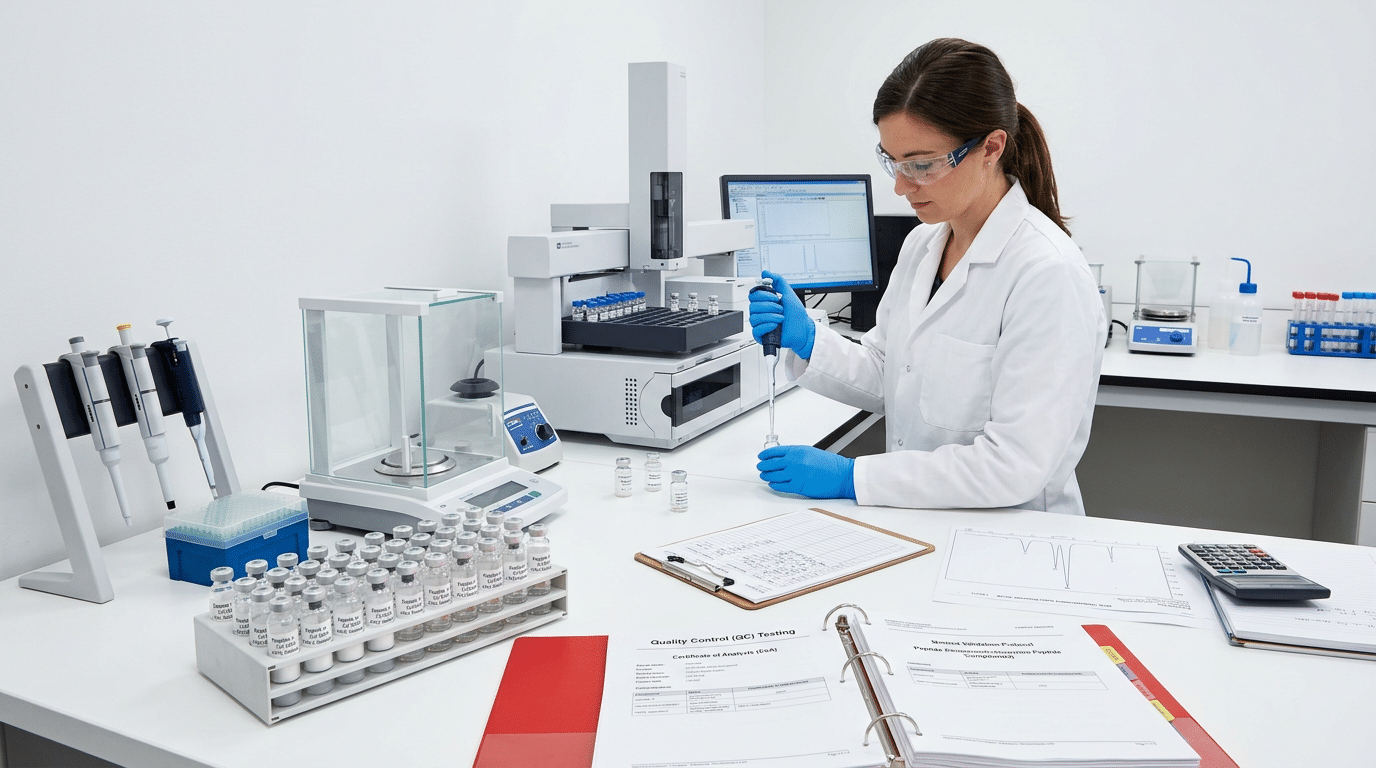
The peptide market has a serious quality problem. TB-500 isn’t regulated like a pharmaceutical, so suppliers range from excellent to genuinely dangerous. Some products are underdosed. Some are contaminated. A few aren’t even what the label says.
Here’s what to look for when choosing a supplier:
- Third-party testing with batch-specific Certificates of Analysis (COAs)
- HPLC purity testing showing 98%+ purity
- US-based labs using pharmaceutical-grade manufacturing
- No wild medical claims on the product page (that’s a red flag, not a green one)
- Clear handling and storage instructions
Working with a compounding pharmacy that partners with veterinarians is often the cleanest route. They handle reconstitution, proper labeling, and can provide dosing guidance. It costs more than buying raw powder from a research peptide site, but for your dog, the quality assurance is worth it.
How TB-500 Compares to BPC-157 and GHK-Cu
If you’ve spent any time in the peptide space, you’ve seen BPC-157 for dogs come up alongside TB-500 constantly. They’re both regenerative peptides, but they work differently and shine in different situations.
BPC-157 is derived from gastric proteins and has particularly strong effects on the GI tract, tendons, and ligaments. It’s excellent for dogs with leaky gut, chronic digestive issues, or specific tendon injuries. If your dog’s main issue is gut-related or a localized tendon problem, BPC-157 might be the better starting point. Check out the best BPC-157 products for dogs if you want to compare options.
TB-500 has a broader, more systemic reach. It affects muscles, fascia, nerve tissue, and cardiovascular tissue, not just tendons and gut. For system-wide recovery, major injuries, or aging dogs dealing with multiple issues at once, TB-500 tends to be the better fit.
Many integrative vets use them together. The idea is that BPC-157 handles precision repair at specific injury sites while TB-500 improves overall tissue health and speeds the body’s healing capacity. A typical combined protocol runs 4-6 weeks with both, then maintenance doses of TB-500 alone as needed.
GHK-Cu is a copper-binding peptide with a different focus. It’s known for skin regeneration, wound healing, anti-aging effects, and some cognitive support. It’s topical or injectable and particularly useful for older dogs with coat or skin problems, slow-healing wounds, or early cognitive decline. Learn more about GHK-Cu for dogs and how it fits into a broader peptide approach.
What Does TB-500 Cost for Dogs?
Cost depends on supplier, vial size, and how long a protocol you’re running. Here’s a realistic breakdown:
- 2 mg vial: $25-$45 from a quality research peptide supplier
- 10 mg vial: $80-$120
- Full 6-week loading cycle: $150-$400 depending on your dog’s size
- Supplies (syringes, bacteriostatic water): $15-$30
- Vet consultation: varies, often $75-$200 for an integrative vet visit
That’s not cheap. But for context, a TPLO surgery for a cruciate tear typically runs $3,500-$6,000. Long-term NSAID prescriptions cost $50-$150/month and carry real side effects. For some dogs, TB-500 represents a meaningful alternative or complement to those options, and the cost looks different when you run those numbers.
What Vets Think About TB-500
Traditional vets mostly haven’t caught up to peptide therapy yet. The research is early, it’s not part of standard veterinary curriculum, and there’s no FDA approval to point to. If you bring it up at a conventional vet appointment, expect skepticism or a blank look.
Integrative and holistic veterinarians, especially those focused on sports medicine, rehabilitation, or geriatric care, are a different story. Many of them use TB-500 regularly, often alongside other modalities: laser therapy, acupuncture, hydrotherapy, chiropractic adjustments, and anti-inflammatory diets. In that context, TB-500 isn’t a standalone fix. It’s one tool in a broader recovery and maintenance plan.
The most important thing is working with someone who actually knows this stuff. Ask about their experience with peptide protocols, what monitoring they recommend, and how they adjust dosing based on response. A vet who’s never used it and read a warning label isn’t the same as one who has used it in dozens of cases and knows what to watch for.
What to Realistically Expect
TB-500 isn’t magic. It won’t reverse bone-on-bone arthritis, fix a genetic deformity, or replace surgery for a severe cruciate tear. It also doesn’t work the same for every dog. Some owners report significant improvement within 2-3 weeks. Others need the full 6-week loading cycle before they notice anything. A few dogs don’t respond meaningfully at all.
What it may do, based on what owners and integrative vets report most consistently, is help dogs bounce back faster after surgery, maintain muscle mass as they age, move with less visible pain and stiffness, and have better quality of life during the later years when things start breaking down.
That’s not nothing. For a dog that once ran laps around the yard and now struggles with stairs, even modest improvement matters a lot.

Frequently Asked Questions About TB-500 for Dogs
Is TB-500 safe for dogs?
TB-500 is generally well-tolerated in dogs with minimal reported side effects. The main safety concern is in dogs with active cancer, as TB-500 promotes cell growth and blood vessel formation. Always work with a veterinarian experienced in integrative or regenerative medicine before starting a TB-500 protocol.
How do you give TB-500 to a dog?
TB-500 is given as a subcutaneous injection, meaning just under the skin. You reconstitute the lyophilized powder with bacteriostatic water first. A vet or vet tech can teach you the technique. Most owners find it easy to do at home after a short demonstration. The needle is very small and most dogs tolerate it without issue.
How long does it take for TB-500 to work in dogs?
Some dogs show noticeable improvement within 1-2 weeks of starting the loading phase. For others, meaningful change takes the full 4-6 week loading cycle. Dogs with severe or chronic conditions may need a second cycle before seeing significant results. If there’s no change after a complete protocol, it may not be the right fit for that dog’s specific issue.
Can you use TB-500 and BPC-157 together for dogs?
Yes. Many integrative vets use them together. TB-500 provides broader, systemic regenerative support while BPC-157 targets specific tissue repair, particularly in tendons, ligaments, and the GI tract. Running both for 4-6 weeks is a common protocol, and many owners report better results from the combination than from either peptide alone.
Where can I buy TB-500 for my dog?
TB-500 is available from research peptide suppliers and some compounding pharmacies that work with veterinarians. It’s not sold in pet stores or on Amazon. Look for suppliers with third-party Certificates of Analysis, HPLC purity testing at 98% or higher, and US-based manufacturing. Working through a compounding pharmacy gives you the best quality control.
Can TB-500 help an older dog with arthritis?
It may help, though results vary. TB-500 can reduce joint inflammation and support tissue repair, which may improve mobility and comfort in arthritic dogs. It works best as part of a broader plan that includes appropriate exercise, joint supplements, weight management, and veterinary oversight. It won’t reverse joint damage, but it may make the day-to-day more comfortable.
Does TB-500 require a prescription for dogs?
TB-500 is not FDA-approved for veterinary use, so it’s sold as a research compound and doesn’t require a traditional prescription. However, a vet’s involvement is strongly recommended for proper dosing, protocol design, and monitoring. Some compounding pharmacies require a vet’s authorization to dispense it, which is actually a good sign of quality and accountability.

Bottom Line on TB-500 for Dogs
TB-500 isn’t for every dog or every situation. But for dogs dealing with stubborn injuries, slow surgical recovery, or the daily struggle of aging joints, it’s one of the more interesting tools now available to dog owners who are willing to go beyond the standard options.
The research is still developing. You won’t find a vet who says “yes, definitely, here’s your prescription.” What you will find, if you look, is a growing number of integrative practitioners who’ve seen real results and are using it thoughtfully as part of broader recovery and wellness protocols.
Get a vet involved. Source your product carefully. Start with the loading phase and give it the full 4-6 weeks before deciding if it’s working. And if your dog’s primary issue is digestive or tendon-related, also look at BPC-157 for dogs, which may be a better fit or a strong complement to TB-500 therapy.
Your dog got you through a lot. When their body starts slowing down, it’s worth exploring what’s out there to help them stay comfortable, mobile, and present for as long as possible.
Reader-Supported Notice: iHeartDogs is reader supported. Some of the links above may be affiliate links, which means we earn a small commission at no extra cost to you. We only recommend products and resources we believe in.














 English (US) ·